Many businesses receive funding shortly after approval
Built to help businesses explore realistic financing options
Business owners trust EquipFlow to simplify financing decisions
National and specialty lenders across industries
Your fastest route to the right lender — and the equipment your business needs.
Share your equipment type, business info, and location — it takes less than 60 seconds.
We instantly compare national and specialty lenders to find your best funding options.
Review offers, choose your lender, and get approved with fast turnaround times.
Auger financing rates in 2026 run from 6% APR for top-tier credit to 18% for startups (rates subject to credit approval and may vary)—a 12-point spread that translates to roughly $400/month difference on a $35,000 machine over 48 months. That's $19,200 in interest you either keep or hand to the wrong lender. Most contractors don't realize this gap exists because every auger financing page on Google promises 'competitive rates' without ever publishing what those rates actually are.
Here's what most people miss: the IRS made financing mathematically dumber to ignore in 2026. Section 179 lets you expense up to $2,560,000 in equipment in Year 1, and 100% bonus depreciation is back. According to IRS Publication 946, that means a $35,000 auger generates roughly $7,350 in immediate tax savings at the 21% corporate rate. Pair that with financing at 6-10% (OAC) and you're effectively borrowing money the IRS subsidizes.
[Apply for Pre-Qualification in 2 Minutes]
Let me be direct: if you're shopping augers and considering paying cash, you're leaving money on the table twice—once in opportunity cost on tied-up capital, and again in foregone tax leverage. This page lays out the actual rate tiers, payment math by loan size, lender comparisons, and the OSHA compliance traps that can wipe out your savings if you pick the wrong financing structure. Then Ava matches you with 3-4 competing lenders so they fight for your deal instead of the other way around.
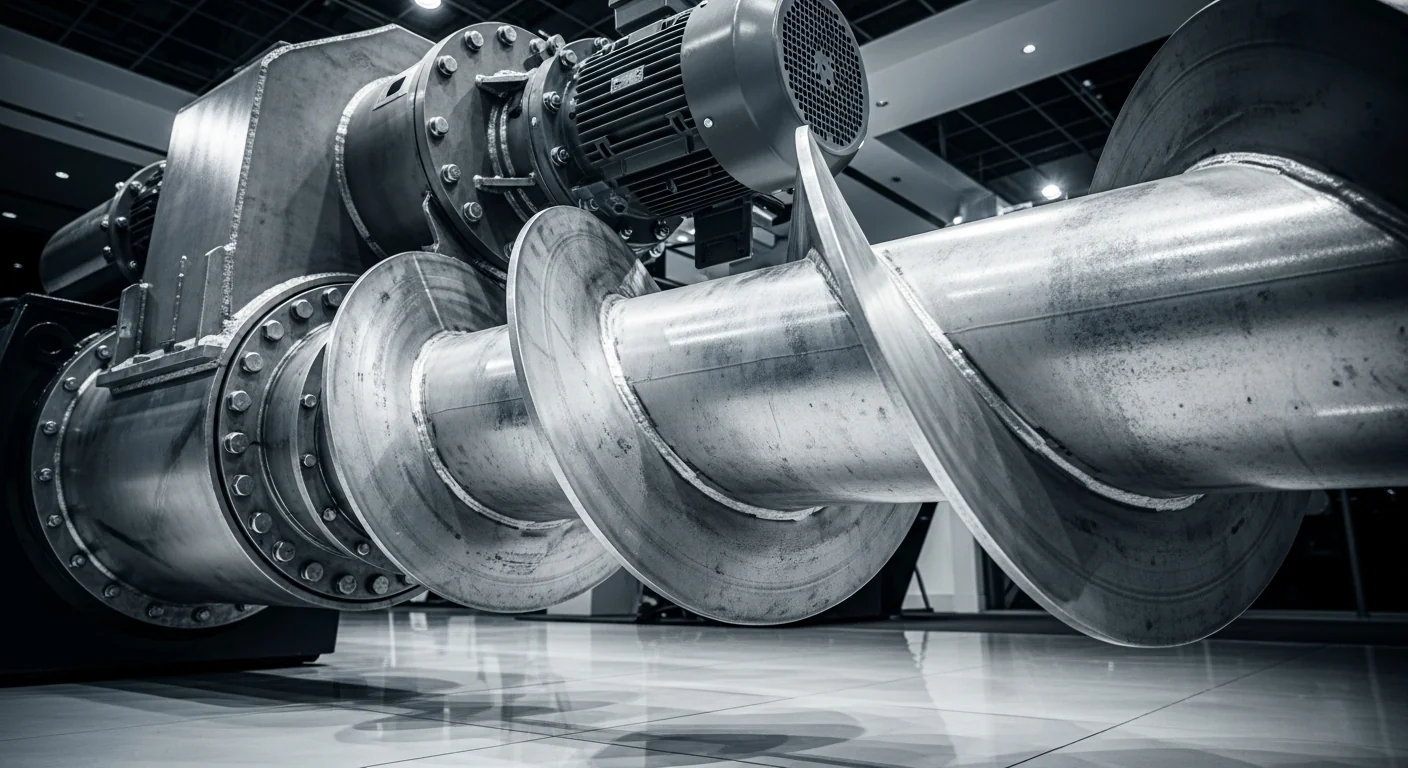
Every competitor page promises 'competitive rates.' None publish numbers. Here's what we typically see in our network (all rates subject to credit approval and may vary by lender):
A-Tier (700+ FICO, 2+ years in business): 6-10% APR (OAC). This is your sweet spot. On a $50,000 auger at 8% over 60 months, you're paying $1,014/month—roughly $260 of which is interest in month one. By year two, you're mostly paying principal.
B-Tier (640-699 FICO, 1-2 years in business): 10-14% APR (subject to approval). Same $50,000 auger at 12% over 60 months jumps to $1,112/month. That extra $98/month is $5,880 over the loan life. Painful but workable if the auger generates revenue.
Startup tier (under 640 FICO or under 12 months in business): 12-18% APR (rates may vary). Now you're at $1,268/month on the same machine at 18%. Here's where lender competition matters most—the spread between the worst and best offer at this tier can be 4-5 points. That's $300+/month difference.
Most auger equipment loans are fixed-rate. Variable exists on lines of credit, but for direct equipment financing, you want fixed so your payment doesn't move when the Fed does.
A $40,000 approval (subject to final credit review) doesn't mean $40,000 in your account. Origination fees run 1-3%. Doc fees: $250-$750. Some lenders hit you with prepayment penalties that erase the savings of paying off early. Ava flags these before you sign—not after you discover them mid-closing.
[Calculate Your Auger Payment Now]
Here's the math that matters by loan size at A-tier rates (8% APR, subject to credit approval):
$5,000 auger (think RYOBI 40V HP Ice Auger at $299 plus accessories, or a small dirt auger kit at $398): At 24 months, you're at $226/month. Under SBA Microloan territory and easy to absorb against any landscaping or fence-building revenue.
$15,000 auger: 36 months at 8% = $470/month. 48 months = $366/month. The longer term saves $104/month in cash flow but costs $1,000 more in total interest.
$35,000 auger (mid-range used grain auger or new mid-duty hydraulic system): 48 months at 8% = $854/month. 60 months = $710/month. 84 months = $546/month. That 84-month option keeps cash free for working capital—critical if your auger is one piece of a larger operation.
$50,000 auger (top of SBA Microloan range per SBA.gov): 60 months at 8% = $1,014/month. This is the threshold where SBA 7(a) (up to $5M) starts making sense over Microloan limits.
$95,000 auger (premium new grain handling system): 84 months at 8% = $1,481/month. Now you're in SBA 7(a) or 504 territory, and Farm Credit becomes a serious option for ag operators.
Worked example most contractors find clarifying: $35,000 auger at 6.5% over 48 months = $834/month (subject to credit approval). If that auger generates $3,000/month in billings or replaces $1,500/month in rental costs, you're cash-flow positive from day one and own the asset at month 49.
This is where financing crushes paying cash. According to IRS Publication 946, the 2026 Section 179 deduction limit is $2,560,000—meaning virtually any auger purchase qualifies for full Year-1 expensing. Bonus depreciation is back at 100% for 2026, covering anything Section 179 doesn't.
$35,000 auger purchase, financed at 8% over 48 months (actual rates subject to credit approval):
- Year 1 Section 179 deduction: $35,000
- Tax savings at 21% corporate rate: $7,350
- Effective Year-1 out-of-pocket: $10,008 in payments minus $7,350 tax savings = $2,658 net cash outlay in Year 1
Compare to paying cash: $35,000 out the door, same $7,350 tax savings, but $27,650 in capital gone. If you could deploy that capital at 15% return, you just gave up $4,148/year in opportunity cost.
For a $95,000 premium grain auger, Section 179 generates $19,950 in first-year tax recovery at the 21% corporate rate—essentially a 21% rebate on acquisition. Action: place the auger in service before December 31 and file Form 4562. This converts what would otherwise be a 5-7 year MACRS recovery into immediate cash flow.
If you can't fully use Section 179 (say you have low taxable income), the MACRS 5-year schedule depreciates the auger across 5 years using a half-year convention.
[See My Tax Savings Calculator]
Let's break down a $40,000 auger four ways over 48 months:
Cash: $40,000 out today. Tax savings $8,400. Net cost $31,600 plus $24,000+ in opportunity cost (15% on $40K over 4 years). Real cost: $55,600.
Finance at 8% (OAC): Total payments $46,880. Tax savings $8,400 + interest deduction ~$1,400 = $9,800. Net cost $37,080. You keep $40K working in your business.
Lease (FMV): $750/month × 48 = $36,000. Full deductibility but no ownership at end. Net cost ~$28,440. Best if you cycle equipment every 3-5 years.
Rent: Augers run $300-500/day. Use it 60 days/year over 4 years = 240 days × $400 = $96,000. Building zero equity. The math says own at anything over 28 days/year of usage—that's the break-even rule.
Best for sub-$50K augers. Rates typically 8-13% (subject to credit approval), terms up to 6 years, often 10% down. Slower process (3-6 weeks) but flexible on credit.
Workhorse program for $50K-$5M deals. Rates run prime + 2-4.75% (actual rate may vary). Terms up to 10 years on equipment. 10% down typical.
For major operations buying real estate + equipment together. Below-market fixed rates (subject to approval), but heavier paperwork.
For ag operators, often beats commercial banks on grain augers. Patronage refunds effectively reduce APR by 0.5-1.5 points annually.
Westfield, Farm King, and IronCraft dealers run 0% APR promos (OAC)—but the catch is you forfeit cash rebates worth 4-6%. Run the math: cash discount + financing through a competing lender often beats 0% captive.
'Augerize' isn't industry jargon—it's the planning question every operator should ask: what specifically do you need to auger, how often, and at what scale? A landscaper boring 50 fence post holes a year doesn't need the same machine as a grain operation moving 10,000 bushels weekly. Match the auger to the job, then match the financing to the auger.
For light-duty work (fence posts, tree planting, deck footings), you're in the $300-$2,500 range—RYOBI 40V HP at $299 with battery, IronCraft 12-inch at $445, or the IronCraft 9400PHD at $1,576. These typically don't need financing—drop them on a business credit card or short-term Microloan and Section 179 the entire purchase.
For mid-duty (commercial fencing, utility work, light agriculture), hydraulic auger drives like the IronCraft Hydraulic at $2,537 plus a tractor PTO setup runs $5K-$15K total. SBA Microloan territory, 24-48 month terms.
For heavy-duty grain handling (13"x60' Westfield-class systems), you're at $25K-$95K and the financing decision drives profitability for years. This is where lender competition saves real money—2 points on $80,000 over 7 years is over $7,000.
Tree planting augers (typically 2-inch x standing-length bits) are a niche but growing category—nursery operations, reforestation contractors, and landscape installers running RYOBI ONE+ HP 18V systems ($269 tool only, $329 with battery) plus specialty bits like the 21-inch RYOBI extension at $60.
For a tree planting outfit running 4-6 of these systems, total kit cost lands around $2,500-$4,000. Here's where most operators get the strategy wrong: they buy this off a personal credit card and miss Section 179. According to IRS Publication 946, even sub-$5K equipment qualifies for full Year-1 expensing if used >50% for business. On a $4,000 kit at 25% personal bracket, that's $1,000 in tax savings you walked away from.
For larger tree planting operations adding tractor-mounted IronCraft 9400PHD systems with 12-inch augers ($1,576), bundle the bits, the auger, and the hydraulic drive ($2,537) into a single equipment loan and finance the whole package at 8-10% (subject to credit approval) over 36-48 months. Lenders prefer bundled equipment loans because they consolidate collateral. Ava can match you with lenders who specifically finance specialty horticultural equipment.
[Get Financing for Specialty Equipment]
Lowes auger rental is one of the most-searched queries in this space, and for good reason—rental feels low-commitment. But here's what most people miss: Lowes Tool Rental charges roughly $69-$89/day for a one-man earth auger and $129-$179/day for a two-man unit. Use it 6 weekends a year and you're at $828-$2,148/year in rental fees with zero equity built.
A RYOBI 40V HP 8-inch auger costs $299. You break even versus rental in 4 days of use. Same calculation for the lowes stump grinder rental crowd—rental at $150-$200/day means anyone using equipment more than 10-15 days/year is bleeding money to rent. The math says own.
Same logic applies across the Lowes tool rental auger category, lowes dump trailer rental, floor scrubber rental at Lowes, and lowe's trailer rental price points—all priced for occasional use. If you're searching 'lowes auger rental' more than twice a year, you should be financing instead. Ava matches you with lenders for purchases as small as $2,500.
Here's what 90% of buyers miss: financing the cheapest auger possible can backfire if it doesn't meet OSHA requirements. According to OSHA's penalty schedule, a single serious violation runs up to $16,550, and willful or repeat violations hit $165,514. That's 95× the typical down payment on a $35,000 auger.
Operator training (29 CFR 1926.21(b)(2) and 1926.20(b)(4)): Documented training required. Lenders increasingly request proof.
Underground utility location (29 CFR 1926.651(b)(1)): Locate before you drill. Period.
Power line clearance (29 CFR 1926.550(a)(15)): Minimum 10 feet from lines 50kV or below.
Grain bin sweep auger lockout (29 CFR 1910.272(g)): All mechanical equipment must be de-energized, locked out, tagged before any worker enters.
One willful violation can default your equipment loan via collateral coverage clauses. Cheap financing on non-compliant equipment is the most expensive financing there is.
EquipFlow is a matching platform—we don't lend money, we don't underwrite. What we do is force lenders to compete for your auger deal so you stop overpaying by 1-2 points.
Ava is our AI advisor. In about 3 minutes, she diagnoses your specific situation: equipment cost ($556 RYOBI bit to $95,000 grain auger), business vintage, credit profile, down payment available, and time horizon. The mistake 90% of buyers make is applying to one bank and accepting whatever they offer. Ava starts by understanding what lenders WILL approve based on your profile (subject to final lender credit review)—before any credit pulls.
Ava matches you with 3-4 lenders in our network who actively finance augers in your size and credit tier. Why competition matters: when lenders know they're bidding against three others for the same deal, rates typically drop 0.5-2 percentage points (actual rate may vary by lender). On a $50,000 auger over 60 months, that's $1,800-$3,600 you keep.
You get real offers in 24-48 hours—APR, term, monthly payment, fees, prepayment terms—side by side (all subject to credit approval). No more wondering if 9% is good or if you're getting hosed. You see exactly how each offer affects monthly cash flow against your auger's billable revenue.
You pick. No pressure, no obligation, no commitment to the matching process itself. Lender funds (subject to final approval), you place the auger in service, and if you do it before December 31, you file Form 4562 and capture full Section 179 expensing this tax year.
[Get Matched With Competing Lenders Today]
EquipFlow is a matching platform—we don't lend money, we don't underwrite. What we do is force lenders to compete for your auger deal so you stop overpaying by 1-2 points.
Ava is our AI advisor. In about 3 minutes, she diagnoses your specific situation: equipment cost ($556 RYOBI bit to $95,000 grain auger), business vintage, credit profile, down payment available, and time horizon. The mistake 90% of buyers make is applying to one bank and accepting whatever they offer. Ava starts by understanding what lenders WILL approve based on your profile (subject to final lender credit review)—before any credit pulls.
Ava matches you with 3-4 lenders in our network who actively finance augers in your size and credit tier. Why competition matters: when lenders know they're bidding against three others for the same deal, rates typically drop 0.5-2 percentage points (actual rate may vary by lender). On a $50,000 auger over 60 months, that's $1,800-$3,600 you keep.
You get real offers in 24-48 hours—APR, term, monthly payment, fees, prepayment terms—side by side (all subject to credit approval). No more wondering if 9% is good or if you're getting hosed. You see exactly how each offer affects monthly cash flow against your auger's billable revenue.
You pick. No pressure, no obligation, no commitment to the matching process itself. Lender funds (subject to final approval), you place the auger in service, and if you do it before December 31, you file Form 4562 and capture full Section 179 expensing this tax year.
[Get Matched With Competing Lenders Today]
EquipFlow is a matching platform—we don't lend money, we don't underwrite. What we do is force lenders to compete for your auger deal so you stop overpaying by 1-2 points.
Ava is our AI advisor. In about 3 minutes, she diagnoses your specific situation: equipment cost ($556 RYOBI bit to $95,000 grain auger), business vintage, credit profile, down payment available, and time horizon. The mistake 90% of buyers make is applying to one bank and accepting whatever they offer. Ava starts by understanding what lenders WILL approve based on your profile (subject to final lender credit review)—before any credit pulls.
Ava matches you with 3-4 lenders in our network who actively finance augers in your size and credit tier. Why competition matters: when lenders know they're bidding against three others for the same deal, rates typically drop 0.5-2 percentage points (actual rate may vary by lender). On a $50,000 auger over 60 months, that's $1,800-$3,600 you keep.
You get real offers in 24-48 hours—APR, term, monthly payment, fees, prepayment terms—side by side (all subject to credit approval). No more wondering if 9% is good or if you're getting hosed. You see exactly how each offer affects monthly cash flow against your auger's billable revenue.
You pick. No pressure, no obligation, no commitment to the matching process itself. Lender funds (subject to final approval), you place the auger in service, and if you do it before December 31, you file Form 4562 and capture full Section 179 expensing this tax year.
[Get Matched With Competing Lenders Today]
When 3-4 lenders in our network bid for your deal, rates compress (actual savings subject to credit approval). On a $50,000 auger over 60 months, dropping from 12% to 10% saves $2,832 over the loan life. That's not theory—that's what we typically see when lenders know they're competing.
Banks reject roughly 67% of used equipment loans on machines over 7 years old. Ava is our AI advisor, and she matches you specifically with lenders who DO finance older augers, specialty hydraulic drives, and brand-specific used equipment (Westfield, Farm King, IronCraft). She filters out lenders who'll waste your time before any credit pull happens (qualification subject to final lender review).
Every week without your auger is real money—rental fees, missed projects, lost billing. Most users get matched with lenders within 24 hours and have firm offers within 48 (subject to credit approval). Compare that to walking into one bank and waiting two weeks for a 'maybe.'
Getting matched and reviewing offers doesn't hit your credit. You only formally apply with the lender you choose. The matching process itself is free, no commitment. Worst case you spend 5 minutes and learn what you actually qualify for (subject to lender review).
[Start Your No-Obligation Match Today]
When 3-4 lenders in our network bid for your deal, rates compress (actual savings subject to credit approval). On a $50,000 auger over 60 months, dropping from 12% to 10% saves $2,832 over the loan life. That's not theory—that's what we typically see when lenders know they're competing.
Banks reject roughly 67% of used equipment loans on machines over 7 years old. Ava is our AI advisor, and she matches you specifically with lenders who DO finance older augers, specialty hydraulic drives, and brand-specific used equipment (Westfield, Farm King, IronCraft). She filters out lenders who'll waste your time before any credit pull happens (qualification subject to final lender review).
Every week without your auger is real money—rental fees, missed projects, lost billing. Most users get matched with lenders within 24 hours and have firm offers within 48 (subject to credit approval). Compare that to walking into one bank and waiting two weeks for a 'maybe.'
Getting matched and reviewing offers doesn't hit your credit. You only formally apply with the lender you choose. The matching process itself is free, no commitment. Worst case you spend 5 minutes and learn what you actually qualify for (subject to lender review).
[Start Your No-Obligation Match Today]
When 3-4 lenders in our network bid for your deal, rates compress (actual savings subject to credit approval). On a $50,000 auger over 60 months, dropping from 12% to 10% saves $2,832 over the loan life. That's not theory—that's what we typically see when lenders know they're competing.
Banks reject roughly 67% of used equipment loans on machines over 7 years old. Ava is our AI advisor, and she matches you specifically with lenders who DO finance older augers, specialty hydraulic drives, and brand-specific used equipment (Westfield, Farm King, IronCraft). She filters out lenders who'll waste your time before any credit pull happens (qualification subject to final lender review).
Every week without your auger is real money—rental fees, missed projects, lost billing. Most users get matched with lenders within 24 hours and have firm offers within 48 (subject to credit approval). Compare that to walking into one bank and waiting two weeks for a 'maybe.'
Getting matched and reviewing offers doesn't hit your credit. You only formally apply with the lender you choose. The matching process itself is free, no commitment. Worst case you spend 5 minutes and learn what you actually qualify for (subject to lender review).
[Start Your No-Obligation Match Today]
When 3-4 lenders in our network bid for your deal, rates compress (actual savings subject to credit approval). On a $50,000 auger over 60 months, dropping from 12% to 10% saves $2,832 over the loan life. That's not theory—that's what we typically see when lenders know they're competing.
Banks reject roughly 67% of used equipment loans on machines over 7 years old. Ava is our AI advisor, and she matches you specifically with lenders who DO finance older augers, specialty hydraulic drives, and brand-specific used equipment (Westfield, Farm King, IronCraft). She filters out lenders who'll waste your time before any credit pull happens (qualification subject to final lender review).
Every week without your auger is real money—rental fees, missed projects, lost billing. Most users get matched with lenders within 24 hours and have firm offers within 48 (subject to credit approval). Compare that to walking into one bank and waiting two weeks for a 'maybe.'
Getting matched and reviewing offers doesn't hit your credit. You only formally apply with the lender you choose. The matching process itself is free, no commitment. Worst case you spend 5 minutes and learn what you actually qualify for (subject to lender review).
[Start Your No-Obligation Match Today]
.png)