Many businesses receive funding shortly after approval
Built to help businesses explore realistic financing options
Business owners trust EquipFlow to simplify financing decisions
National and specialty lenders across industries
Your fastest route to the right lender — and the equipment your business needs.
Share your equipment type, business info, and location — it takes less than 60 seconds.
We instantly compare national and specialty lenders to find your best funding options.
Review offers, choose your lender, and get approved with fast turnaround times.
Trailer rental costs have surged 23% in the last 18 months, with basic utility trailers now starting at $14.95 per day and specialized dump trailers hitting $200+ daily. But here's what rental companies won't tell you: those advertised rates represent just 40-60% of your actual cost once you factor in damage waivers, mileage overages, environmental fees, and cleaning charges that can double your invoice.
Meanwhile, contractors renting equipment three days a week are paying $3,900 annually with zero equity to show for it. The same trailer financed at current rates costs $1,872 per year in payments—meaning you'd own it outright in five years for less than two years of rental costs. Yet most operators never run this math because rental feels 'safer' and financing feels complicated.
What's driving smart contractors away from rentals isn't just the hidden fee explosion—it's the realization that Section 179 tax deductions can recover up to 35% of equipment costs immediately, turning a $12,310 trailer purchase into a $3,077-4,308 first-year tax benefit depending on your bracket. When you combine immediate tax recovery with equity building and predictable monthly payments, the rent-versus-buy decision becomes mathematically obvious.
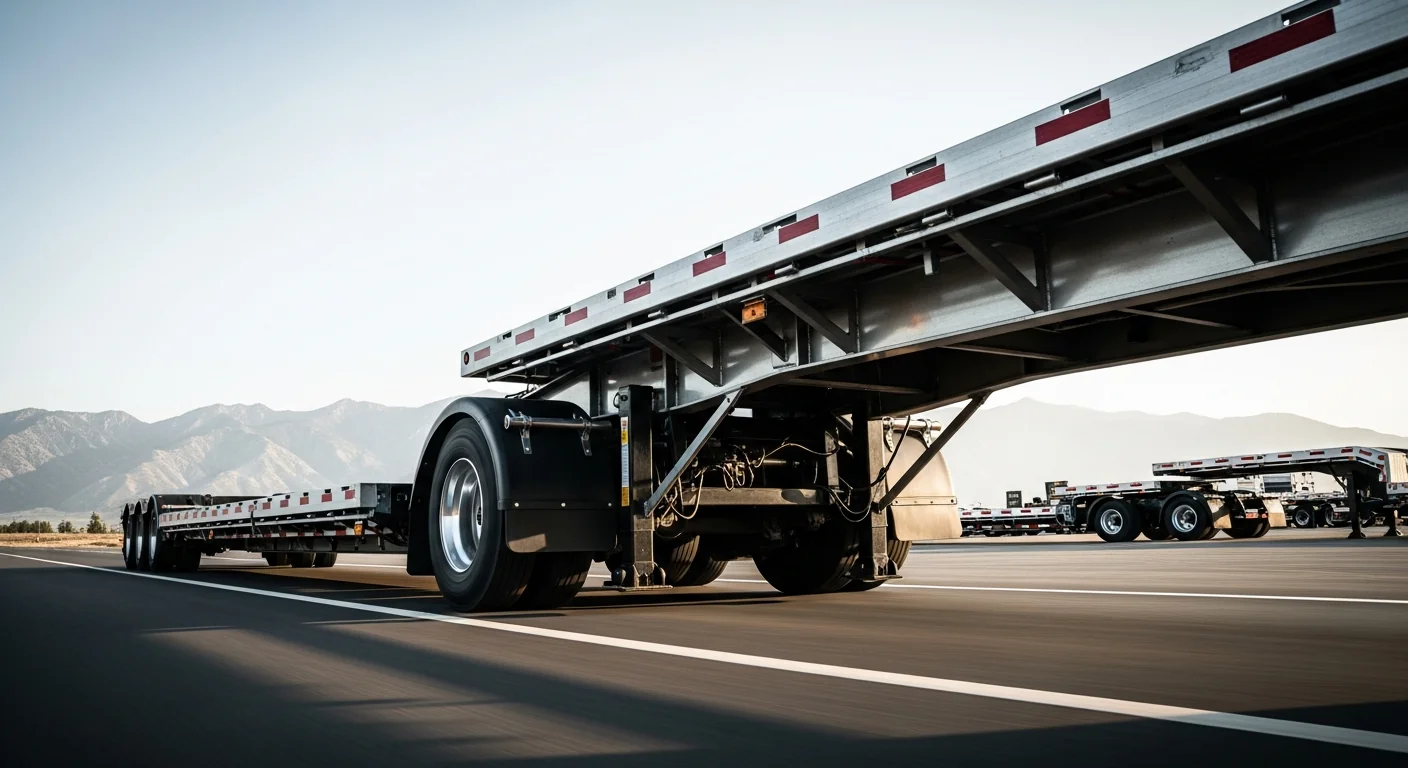
U-Haul advertises trailer rentals starting at $14.95 per day, and Home Depot charges $14.99 for basic utility trailers. But those headline rates apply only to their smallest 4×7 utility trailers for local, same-day returns. Once you need anything larger or more specialized, costs escalate quickly:
Daily Rental Rates by Trailer Type:
* Utility trailers: $14.95-$24.99/day for basic open trailers
* Enclosed cargo trailers: $59-$150/day depending on size (6×12 to 8.5×20)
* Dump trailers: $75-$200/day for hydraulic models
* Flatbed trailers: $50-$125/day for equipment transport
* Car haulers: $89-$180/day for auto transport
Weekly rentals typically offer 15-30% discounts off daily rates, while monthly agreements can reduce costs by 30-50%. But even with these discounts, the math becomes problematic for regular usage.
Every major rental provider buries substantial fees beyond their advertised daily rate. Based on fee schedules from U-Haul, Sunbelt Rentals, and regional providers, expect these additional charges:
Mandatory and Optional Fees:
* Damage waiver/LDW: $10-$25/day (often pushed as 'recommended')
* Environmental fees: $3-$8/day for disposal and cleaning
* Mileage overages: $0.50-$1.00/mile beyond included allowance
* One-way drop fees: $50-$300+ depending on distance
* After-hours return: $25-$75 if returned outside business hours
* Cleaning fees: $50-$150 for excessive dirt or debris
* Late return penalties: 1.5× daily rate per hour past deadline
A $49/day enclosed trailer rental quickly becomes $85-$112 once these fees are added—representing a 73-128% markup over the advertised price.
Trailer rental costs fluctuate significantly based on location and timing. During peak construction season (April-October), rental rates can spike 40-60% above off-season prices. Metropolitan areas typically charge 25-35% premiums over rural locations due to higher demand and operating costs.
Seasonal Price Multipliers:
* Peak construction months: 1.4-1.6× base rates
* Weekend premium: 15-25% surcharge Friday-Sunday
* Holiday weekends: 25-50% surcharge for Memorial Day, Labor Day
* Regional shortages: Up to 2× normal rates during disaster recovery
These unpredictable cost spikes make budgeting nearly impossible for contractors relying on rentals, while owned equipment provides consistent monthly payments regardless of market conditions.
For contractors using trailers regularly, the rental-versus-ownership calculation reveals surprising results. Consider a standard equipment trailer scenario:
Rental Math: At $25/day for a dump trailer used three days per week:
* Weekly cost: $75
* Monthly cost: $300-$325
* Annual cost: $3,900
Purchase Math: The same trailer priced at $7,800 financed at 7.74% over 60 months:
* Monthly payment: $156
* Annual payment: $1,872
* Total 5-year cost: $9,360
Breakeven Analysis: Ownership becomes cheaper at just 6.2 rental days per month. Any usage above twice weekly makes financing the mathematically superior choice—yet most contractors continue renting because they focus on daily cash flow rather than total cost of ownership.
According to IRS Publication 946, businesses can deduct up to $2,560,000 in equipment purchases through Section 179 in 2026, plus 20% bonus depreciation on qualifying trailers. For a $12,310 trailer purchase:
Tax Savings by Bracket:
* 25% bracket: $3,077 immediate tax reduction
* 32% bracket: $3,939 immediate tax reduction
* 35% bracket: $4,308 immediate tax reduction
These immediate tax benefits effectively reduce your net equipment cost by 25-35%, making the rent-versus-buy math even more compelling. Rental payments offer 100% business deduction as operating expenses, but provide no equity building or asset ownership.
Most contractors don't realize that trailer rental deposits range from $150 for basic utility trailers to $500+ for enclosed cargo and car haulers. These deposits are typically held as credit card authorizations and refunded within 5-14 business days after return—assuming no damage or violations.
Common Deposit Forfeitures:
* Interior damage or excessive wear
* Missing accessories (tie-downs, ramps, safety chains)
* Late return without approved extension
* Unreported damage discovered during inspection
* Excessive cleaning requirements beyond normal use
To ensure full deposit refund, conduct a thorough pre-return inspection, photograph the trailer's condition, and return during business hours with all original equipment included.
Specialized equipment lenders offer trailer financing with terms that make ownership accessible even for contractors with limited cash reserves:
Financing Terms by Credit Profile:
* A-Tier borrowers (700+ credit): 5.5-8.5% APR with 0-10% down, approved in 24-48 hours
* B-Tier borrowers (600-699 credit): 8.5-13% APR with 10-20% down, approved in 48-72 hours
* Startup/Sub-600 credit: 11-16% APR with 20-50% down, approved in 3-7 days
Finance Scope offers 100% financing on utility trailers, while TopMark Funding provides up to $250,000 in equipment financing with approvals within 24 hours. For qualifying small businesses, SBA Microloans up to $50,000 offer lower rates but longer approval timelines.
When multiple lenders compete for the same deal, rates typically drop 0.5-2 percentage points compared to single-lender applications. On a $15,000 trailer, the difference between 12% and 10% financing saves $600 annually—more than enough to offset any financing fees and closing costs.For contractors currently paying $300+ monthly in rental fees, financing that same equipment at $156/month immediately improves cash flow by $144 monthly while building equity instead of enriching rental companies.
Rather than getting locked into expensive rental cycles or settling for whatever financing your dealer offers, EquipFlow matches you with specialized lenders who compete for your business—typically dropping rates 0.5-2 percentage points through competition.
Our AI advisor analyzes your trailer needs, credit profile, and usage patterns to understand which lenders are most likely to approve your deal. Whether you need a basic utility trailer or a specialized dump trailer, Ava knows which lenders finance what equipment types and age ranges.
Instead of applying to one lender and hoping for approval, Ava connects you with 3-4 lenders who actively compete for your business. This competition typically saves borrowers 0.5-2 percentage points compared to single-lender applications—the difference between 12% and 10% on a $15,000 trailer is $600 in annual interest savings.
See exactly how each lender's terms affect your monthly cash flow, total interest cost, and tax implications. Compare financing offers across 60-month versus 84-month terms, different down payment options, and varying interest rates to find the structure that optimizes your working capital.
You maintain complete control—no obligation to accept any offer. Once you select the best terms, your chosen lender handles the closing process while you focus on growing your business instead of bleeding cash through rental fees.
Rather than getting locked into expensive rental cycles or settling for whatever financing your dealer offers, EquipFlow matches you with specialized lenders who compete for your business—typically dropping rates 0.5-2 percentage points through competition.
Our AI advisor analyzes your trailer needs, credit profile, and usage patterns to understand which lenders are most likely to approve your deal. Whether you need a basic utility trailer or a specialized dump trailer, Ava knows which lenders finance what equipment types and age ranges.
Instead of applying to one lender and hoping for approval, Ava connects you with 3-4 lenders who actively compete for your business. This competition typically saves borrowers 0.5-2 percentage points compared to single-lender applications—the difference between 12% and 10% on a $15,000 trailer is $600 in annual interest savings.
See exactly how each lender's terms affect your monthly cash flow, total interest cost, and tax implications. Compare financing offers across 60-month versus 84-month terms, different down payment options, and varying interest rates to find the structure that optimizes your working capital.
You maintain complete control—no obligation to accept any offer. Once you select the best terms, your chosen lender handles the closing process while you focus on growing your business instead of bleeding cash through rental fees.
Rather than getting locked into expensive rental cycles or settling for whatever financing your dealer offers, EquipFlow matches you with specialized lenders who compete for your business—typically dropping rates 0.5-2 percentage points through competition.
Our AI advisor analyzes your trailer needs, credit profile, and usage patterns to understand which lenders are most likely to approve your deal. Whether you need a basic utility trailer or a specialized dump trailer, Ava knows which lenders finance what equipment types and age ranges.
Instead of applying to one lender and hoping for approval, Ava connects you with 3-4 lenders who actively compete for your business. This competition typically saves borrowers 0.5-2 percentage points compared to single-lender applications—the difference between 12% and 10% on a $15,000 trailer is $600 in annual interest savings.
See exactly how each lender's terms affect your monthly cash flow, total interest cost, and tax implications. Compare financing offers across 60-month versus 84-month terms, different down payment options, and varying interest rates to find the structure that optimizes your working capital.
You maintain complete control—no obligation to accept any offer. Once you select the best terms, your chosen lender handles the closing process while you focus on growing your business instead of bleeding cash through rental fees.
Skipping the rental cycle and moving to equipment ownership requires the right financing structure—which is where lender competition creates measurable advantages over dealer financing or single-lender applications.
When 3-4 specialized lenders compete for your trailer financing, rates typically drop 0.5-2 percentage points below what you'd qualify for through individual applications. This competition effect occurs because lenders know they're bidding against others and adjust their terms accordingly to win the deal.
Our AI advisor knows which lenders finance different trailer types, age ranges, and credit profiles. While traditional banks often reject used trailers over 7-10 years old, Ava connects you with specialized lenders who finance 15+ year old equipment at competitive rates. She also identifies lenders offering 100% financing for qualified borrowers, eliminating the down payment barrier.
Every day spent in rental cycles costs $25-$200 in fees that build zero equity. Most contractors get matched with competing lenders within 24 hours, with formal approval decisions following 24-48 hours later. This speed advantage means you can transition from rental to ownership in under a week rather than waiting weeks for traditional bank approvals.
Comparing multiple financing offers doesn't obligate you to accept any deal. If rental still makes sense for your situation, you can decline all offers. But most contractors discover that ownership becomes mathematically obvious once they see the real terms available through lender competition.
Skipping the rental cycle and moving to equipment ownership requires the right financing structure—which is where lender competition creates measurable advantages over dealer financing or single-lender applications.
When 3-4 specialized lenders compete for your trailer financing, rates typically drop 0.5-2 percentage points below what you'd qualify for through individual applications. This competition effect occurs because lenders know they're bidding against others and adjust their terms accordingly to win the deal.
Our AI advisor knows which lenders finance different trailer types, age ranges, and credit profiles. While traditional banks often reject used trailers over 7-10 years old, Ava connects you with specialized lenders who finance 15+ year old equipment at competitive rates. She also identifies lenders offering 100% financing for qualified borrowers, eliminating the down payment barrier.
Every day spent in rental cycles costs $25-$200 in fees that build zero equity. Most contractors get matched with competing lenders within 24 hours, with formal approval decisions following 24-48 hours later. This speed advantage means you can transition from rental to ownership in under a week rather than waiting weeks for traditional bank approvals.
Comparing multiple financing offers doesn't obligate you to accept any deal. If rental still makes sense for your situation, you can decline all offers. But most contractors discover that ownership becomes mathematically obvious once they see the real terms available through lender competition.
Skipping the rental cycle and moving to equipment ownership requires the right financing structure—which is where lender competition creates measurable advantages over dealer financing or single-lender applications.
When 3-4 specialized lenders compete for your trailer financing, rates typically drop 0.5-2 percentage points below what you'd qualify for through individual applications. This competition effect occurs because lenders know they're bidding against others and adjust their terms accordingly to win the deal.
Our AI advisor knows which lenders finance different trailer types, age ranges, and credit profiles. While traditional banks often reject used trailers over 7-10 years old, Ava connects you with specialized lenders who finance 15+ year old equipment at competitive rates. She also identifies lenders offering 100% financing for qualified borrowers, eliminating the down payment barrier.
Every day spent in rental cycles costs $25-$200 in fees that build zero equity. Most contractors get matched with competing lenders within 24 hours, with formal approval decisions following 24-48 hours later. This speed advantage means you can transition from rental to ownership in under a week rather than waiting weeks for traditional bank approvals.
Comparing multiple financing offers doesn't obligate you to accept any deal. If rental still makes sense for your situation, you can decline all offers. But most contractors discover that ownership becomes mathematically obvious once they see the real terms available through lender competition.
Skipping the rental cycle and moving to equipment ownership requires the right financing structure—which is where lender competition creates measurable advantages over dealer financing or single-lender applications.
When 3-4 specialized lenders compete for your trailer financing, rates typically drop 0.5-2 percentage points below what you'd qualify for through individual applications. This competition effect occurs because lenders know they're bidding against others and adjust their terms accordingly to win the deal.
Our AI advisor knows which lenders finance different trailer types, age ranges, and credit profiles. While traditional banks often reject used trailers over 7-10 years old, Ava connects you with specialized lenders who finance 15+ year old equipment at competitive rates. She also identifies lenders offering 100% financing for qualified borrowers, eliminating the down payment barrier.
Every day spent in rental cycles costs $25-$200 in fees that build zero equity. Most contractors get matched with competing lenders within 24 hours, with formal approval decisions following 24-48 hours later. This speed advantage means you can transition from rental to ownership in under a week rather than waiting weeks for traditional bank approvals.
Comparing multiple financing offers doesn't obligate you to accept any deal. If rental still makes sense for your situation, you can decline all offers. But most contractors discover that ownership becomes mathematically obvious once they see the real terms available through lender competition.
.png)


