Many businesses receive funding shortly after approval
Built to help businesses explore realistic financing options
Business owners trust EquipFlow to simplify financing decisions
National and specialty lenders across industries
Your fastest route to the right lender — and the equipment your business needs.
Share your equipment type, business info, and location — it takes less than 60 seconds.
We instantly compare national and specialty lenders to find your best funding options.
Review offers, choose your lender, and get approved with fast turnaround times.
Truck financing just got more expensive—and more complicated. The average commercial truck buyer paid 11.2% APR in late 2025, up from 8.1% just two years earlier. But here's what most people miss: that rate assumes you're financing through a single lender without competition. When 3-4 lenders compete for the same deal, rates typically drop 0.5-2 percentage points. The math is simple—on a $50,000 truck, that's $1,500-$6,000 in interest savings over the loan term.
Meanwhile, according to IRS Publication 946, the 2026 Section 179 deduction limit is $2,560,000, allowing business buyers to deduct the full purchase price in year one. For a typical $32,000 work truck, that generates $7,997-$11,196 in immediate tax savings depending on your bracket. Combined with 100% bonus depreciation on any remaining balance, smart financing can actually put money back in your pocket while preserving working capital.
The mistake 90% of buyers make is walking into a dealership without knowing their real financing options. Dealer F&I departments mark up the buy rate by 1-3 points as standard practice—that's their profit margin, not your best deal. Understanding the actual rate landscape by credit tier, the hidden costs of truck ownership, and how to structure financing for maximum tax benefits can save you thousands. Here's everything you need to know.
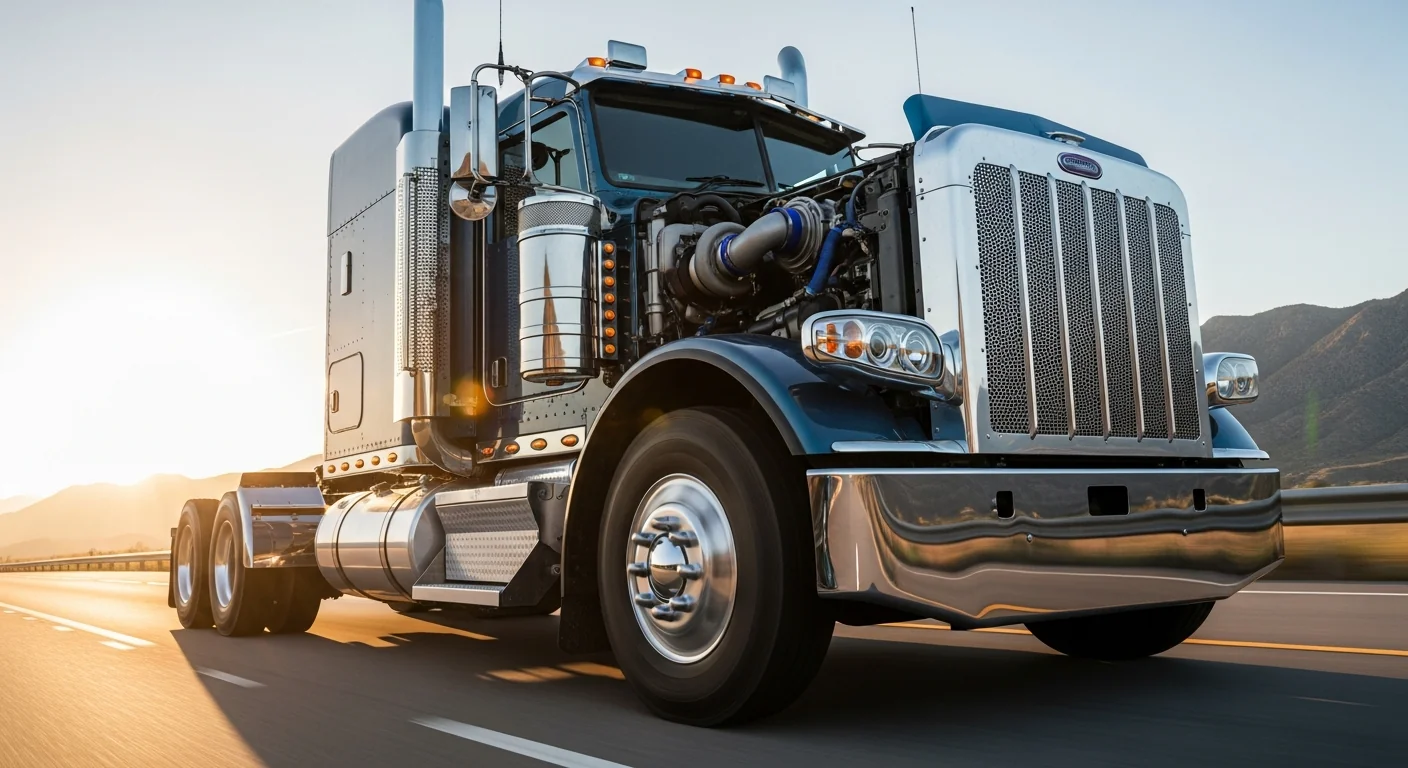
In our experience, rate shopping is where most truck buyers leave money on the table. Here's what lenders actually offer when they're competing for your business:
Borrowers with strong credit, 2+ years in business, and clean financial statements typically qualify for prime rates. Terms run 48-72 months with down payments as low as 0-10%. Monthly payment example: $50,000 truck at 6.5% for 60 months equals $979/month. These borrowers often get approval decisions within 24 hours from lenders like Northeast Bank.
This tier covers most small business owners with established operations but some credit blemishes. According to lending industry data, minimum credit score requirements typically start at 640 for commercial truck financing. Expect 36-60 month terms with 10-20% down payments. Same $50,000 truck at 10% for 60 months costs $1,062/month—still manageable for most commercial operations generating $8,000+ monthly revenue per truck.
New businesses under 2 years old or those with damaged credit face higher rates and shorter terms (24-48 months). Down payments typically run 20-35%, but financing from $20,000 to $250,000 remains available through specialized equipment lenders. The key is finding lenders who focus on your truck's value and business revenue rather than just credit scores.
Here's what the F&I office won't tell you: dealer markup adds 1-3 percentage points to the actual buy rate. That "special financing" at 8.9% might have been available at 6.9% if you'd shopped independently. Credit unions, SBA lenders, and equipment finance companies often beat dealer rates by significant margins—especially for commercial buyers who qualify for business lending programs.
This is the game-changer most truck buyers never hear about. According to IRS Publication 946, the 2026 Section 179 deduction limit is $2,560,000 for qualifying business equipment—including trucks over 6,000 pounds GVWR.
Based on EquipFlow's analysis of IRS data, here's what Section 179 actually puts back in your pocket:
• 25% Tax Bracket: $31,989 truck generates $7,997 in Year 1 tax savings
• 32% Tax Bracket: $31,989 truck generates $10,236 in Year 1 tax savings
• 35% Tax Bracket: $31,989 truck generates $11,196 in Year 1 tax savings
These aren't theoretical numbers—this is money that stays in your business account instead of going to Uncle Sam. The truck must be used 50%+ for business and placed in service during 2026 to qualify.
Trucks over 6,000 pounds GVWR (Ford F-250+, Chevy 2500+, RAM 2500+, most full-size SUVs) are exempt from luxury vehicle depreciation caps. For buyers choosing between an F-150 and F-250, the tax difference alone can justify the heavier truck. Plus, you get 100% bonus depreciation on any equipment cost exceeding the Section 179 limit.
Section 179 creates what we call a liquidity multiplier effect. For a $54,086 commercial truck, the deduction generates $11,358 in immediate tax savings at the 21% corporate rate. This means your true cash requirement drops to $42,728 while still capturing the full purchase price deduction—a 1.26x liquidity advantage over paying cash.
The math on truck ownership versus alternatives is more dramatic than most buyers realize. Here's the 5-year total cost breakdown on a typical $50,000 commercial truck:
• Monthly payment: ~$990
• Total 5-year cost: ~$59,400
• You own the truck with estimated $25,000 resale value
• Full Section 179 tax deduction applies
• Net 5-year cost after resale: ~$34,400
• Monthly payment: ~$700-850
• Total 5-year cost: ~$42,000-51,000 (including second lease)
• No ownership, no resale value
• Lease payments are tax-deductible expenses
• Mileage restrictions often problematic for commercial use
• Immediate outlay: $50,000
• Opportunity cost: $7,500-10,000 annually (15-20% ROI on working capital)
• Total 5-year opportunity cost: $37,500-50,000
• Same Section 179 benefits as financing
• True cost including opportunity cost: $62,500-75,000
A mid-range pickup at $39,330 financed at promotional rates costs approximately $676/month versus $2,670-$6,840/month for daily Enterprise rentals. Ownership breaks even within 1-2 weeks of commercial use, making purchase the obvious choice for regular operations.
Don't let poor credit or limited business history stop you from getting the equipment you need. Here's what we typically see work for challenging credit situations:
The SBA Microloan program provides up to $50,000 for businesses that can't qualify for conventional financing. These government-backed loans often have more flexible time-in-business requirements and focus on your business plan rather than just credit scores. Rates typically run 8-13%, which beats most subprime truck financing.
Some lenders specialize in truck financing and understand vehicle values better than traditional banks. They'll finance from $20,000 to $250,000 based primarily on the truck's worth and your business revenue—not arbitrary credit rules. If you're generating $400,000+ annually but have limited business history, these lenders often make sense.
For fleet purchases or expensive commercial trucks, SBA 7(a) loans go up to $5,000,000 with competitive rates and longer terms. The government guarantee reduces lender risk, which translates to better terms for borrowers who might not qualify for conventional commercial loans.
If you're ready to explore truck financing options for your next purchase, understanding your credit tier is the first step. Once you know where you stand, you can find a truck for sale near you and match it with the right lending program. For those who only need temporary equipment access, it may also make sense to find the right truck rental for your needs while building the credit history required for better financing terms.Subprime truck financing typically requires 20-35% down, carries 11-16% rates, and limits you to 24-48 month terms. But here's the key: every 5% increase in down payment can reduce your rate by 0.5-1 percentage point. If you can bring 30% down instead of 20%, you might drop from 14% to 12% APR—saving thousands over the loan term.
We connect business owners seeking truck financing with competing lenders who specialize in commercial vehicle loans. When lenders compete for your business, you win with better rates and terms.
Our AI advisor Ava analyzes your specific needs—truck type, price range, credit profile, and business use percentage. She considers factors most buyers miss: GVWR requirements for Section 179 eligibility, age limits that affect loan terms, and seasonal cash flow patterns that impact approval odds. This isn't a generic loan application—it's a strategic assessment of your financing landscape.
Ava connects you with 3-4 lenders who actively finance your truck type and credit profile. These aren't random referrals—she matches based on each lender's specific appetite for your deal. Banks reject 67% of used truck loans over 7 years old, but equipment-specific lenders in our network focus on the truck's value and your revenue, not arbitrary age cutoffs.
See exactly how each offer affects your monthly cash flow, total interest cost, and tax position. Compare financing offers at 7.5% versus 8.2%—the math matters when you're running a business. Most contractors get 3+ competing offers within 24 hours, giving you real negotiating power.
You control the process. No pressure, no obligation until you decide which offer makes the most sense for your operation. The lenders handle underwriting and funding—we just made sure you got their best offer through competition.
We connect business owners seeking truck financing with competing lenders who specialize in commercial vehicle loans. When lenders compete for your business, you win with better rates and terms.
Our AI advisor Ava analyzes your specific needs—truck type, price range, credit profile, and business use percentage. She considers factors most buyers miss: GVWR requirements for Section 179 eligibility, age limits that affect loan terms, and seasonal cash flow patterns that impact approval odds. This isn't a generic loan application—it's a strategic assessment of your financing landscape.
Ava connects you with 3-4 lenders who actively finance your truck type and credit profile. These aren't random referrals—she matches based on each lender's specific appetite for your deal. Banks reject 67% of used truck loans over 7 years old, but equipment-specific lenders in our network focus on the truck's value and your revenue, not arbitrary age cutoffs.
See exactly how each offer affects your monthly cash flow, total interest cost, and tax position. Compare financing offers at 7.5% versus 8.2%—the math matters when you're running a business. Most contractors get 3+ competing offers within 24 hours, giving you real negotiating power.
You control the process. No pressure, no obligation until you decide which offer makes the most sense for your operation. The lenders handle underwriting and funding—we just made sure you got their best offer through competition.
We connect business owners seeking truck financing with competing lenders who specialize in commercial vehicle loans. When lenders compete for your business, you win with better rates and terms.
Our AI advisor Ava analyzes your specific needs—truck type, price range, credit profile, and business use percentage. She considers factors most buyers miss: GVWR requirements for Section 179 eligibility, age limits that affect loan terms, and seasonal cash flow patterns that impact approval odds. This isn't a generic loan application—it's a strategic assessment of your financing landscape.
Ava connects you with 3-4 lenders who actively finance your truck type and credit profile. These aren't random referrals—she matches based on each lender's specific appetite for your deal. Banks reject 67% of used truck loans over 7 years old, but equipment-specific lenders in our network focus on the truck's value and your revenue, not arbitrary age cutoffs.
See exactly how each offer affects your monthly cash flow, total interest cost, and tax position. Compare financing offers at 7.5% versus 8.2%—the math matters when you're running a business. Most contractors get 3+ competing offers within 24 hours, giving you real negotiating power.
You control the process. No pressure, no obligation until you decide which offer makes the most sense for your operation. The lenders handle underwriting and funding—we just made sure you got their best offer through competition.
Most truck buyers get stuck with the first financing offer they receive. We believe you deserve better options—and better rates through lender competition.
When 3-4 lenders compete for the same deal, rates typically drop 0.5-2 percentage points. That's real money: on a $75,000 truck, a 1.5% rate reduction saves $3,600+ over a 60-month term. Our network includes banks, credit unions, SBA lenders, and equipment specialists—each with different appetites and rate structures.
Our AI advisor understands that a 2018 Ford F-350 with 80,000 miles gets different treatment than a 2015 Silverado 1500 with 120,000 miles. Banks reject 67% of used equipment loans over certain age thresholds, but Ava connects you with lenders who focus on vehicle condition and your business cash flow rather than arbitrary cutoffs. She factors in GVWR requirements for tax benefits, seasonal cash flow patterns, and industry-specific lending criteria most borrowers never consider.
When you need equipment to keep working, speed matters. Lenders in our network like Northeast Bank provide approval decisions within 24 hours for qualified borrowers. Compare that to traditional bank processes that can drag on for weeks—especially problematic when you're facing equipment downtime or missing seasonal opportunities.
Get matched with competing lenders and compare actual offers before committing to anything. See the real rates, terms, and monthly payments side-by-side. No pressure, no obligation, no impact to your credit score during the matching process. You maintain complete control over which offer makes sense for your operation.
Most truck buyers get stuck with the first financing offer they receive. We believe you deserve better options—and better rates through lender competition.
When 3-4 lenders compete for the same deal, rates typically drop 0.5-2 percentage points. That's real money: on a $75,000 truck, a 1.5% rate reduction saves $3,600+ over a 60-month term. Our network includes banks, credit unions, SBA lenders, and equipment specialists—each with different appetites and rate structures.
Our AI advisor understands that a 2018 Ford F-350 with 80,000 miles gets different treatment than a 2015 Silverado 1500 with 120,000 miles. Banks reject 67% of used equipment loans over certain age thresholds, but Ava connects you with lenders who focus on vehicle condition and your business cash flow rather than arbitrary cutoffs. She factors in GVWR requirements for tax benefits, seasonal cash flow patterns, and industry-specific lending criteria most borrowers never consider.
When you need equipment to keep working, speed matters. Lenders in our network like Northeast Bank provide approval decisions within 24 hours for qualified borrowers. Compare that to traditional bank processes that can drag on for weeks—especially problematic when you're facing equipment downtime or missing seasonal opportunities.
Get matched with competing lenders and compare actual offers before committing to anything. See the real rates, terms, and monthly payments side-by-side. No pressure, no obligation, no impact to your credit score during the matching process. You maintain complete control over which offer makes sense for your operation.
Most truck buyers get stuck with the first financing offer they receive. We believe you deserve better options—and better rates through lender competition.
When 3-4 lenders compete for the same deal, rates typically drop 0.5-2 percentage points. That's real money: on a $75,000 truck, a 1.5% rate reduction saves $3,600+ over a 60-month term. Our network includes banks, credit unions, SBA lenders, and equipment specialists—each with different appetites and rate structures.
Our AI advisor understands that a 2018 Ford F-350 with 80,000 miles gets different treatment than a 2015 Silverado 1500 with 120,000 miles. Banks reject 67% of used equipment loans over certain age thresholds, but Ava connects you with lenders who focus on vehicle condition and your business cash flow rather than arbitrary cutoffs. She factors in GVWR requirements for tax benefits, seasonal cash flow patterns, and industry-specific lending criteria most borrowers never consider.
When you need equipment to keep working, speed matters. Lenders in our network like Northeast Bank provide approval decisions within 24 hours for qualified borrowers. Compare that to traditional bank processes that can drag on for weeks—especially problematic when you're facing equipment downtime or missing seasonal opportunities.
Get matched with competing lenders and compare actual offers before committing to anything. See the real rates, terms, and monthly payments side-by-side. No pressure, no obligation, no impact to your credit score during the matching process. You maintain complete control over which offer makes sense for your operation.
Most truck buyers get stuck with the first financing offer they receive. We believe you deserve better options—and better rates through lender competition.
When 3-4 lenders compete for the same deal, rates typically drop 0.5-2 percentage points. That's real money: on a $75,000 truck, a 1.5% rate reduction saves $3,600+ over a 60-month term. Our network includes banks, credit unions, SBA lenders, and equipment specialists—each with different appetites and rate structures.
Our AI advisor understands that a 2018 Ford F-350 with 80,000 miles gets different treatment than a 2015 Silverado 1500 with 120,000 miles. Banks reject 67% of used equipment loans over certain age thresholds, but Ava connects you with lenders who focus on vehicle condition and your business cash flow rather than arbitrary cutoffs. She factors in GVWR requirements for tax benefits, seasonal cash flow patterns, and industry-specific lending criteria most borrowers never consider.
When you need equipment to keep working, speed matters. Lenders in our network like Northeast Bank provide approval decisions within 24 hours for qualified borrowers. Compare that to traditional bank processes that can drag on for weeks—especially problematic when you're facing equipment downtime or missing seasonal opportunities.
Get matched with competing lenders and compare actual offers before committing to anything. See the real rates, terms, and monthly payments side-by-side. No pressure, no obligation, no impact to your credit score during the matching process. You maintain complete control over which offer makes sense for your operation.
.png)