Many businesses receive funding shortly after approval
Built to help businesses explore realistic financing options
Business owners trust EquipFlow to simplify financing decisions
National and specialty lenders across industries
Your fastest route to the right lender — and the equipment your business needs.
Share your equipment type, business info, and location — it takes less than 60 seconds.
We instantly compare national and specialty lenders to find your best funding options.
Review offers, choose your lender, and get approved with fast turnaround times.
3D printer cost discussions miss the biggest expense of all—the $2,168 in interest you'll pay financing a $10,000 professional printer at 12% APR over 48 months. What we typically see is contractors and business owners focusing on sticker prices ($270 to $9,322 according to Versus.com's database) while completely ignoring the math that actually matters.
Here's what 90% of buyers miss: a standard 3DBenchy test print costs $0.51 in materials alone, but reducing infill from 20% to 10% saves 15-25% on filament costs. More importantly, OSHA compliance for resin-based printers can run $500-$5,000 in ventilation upgrades—and willful violations carry penalties up to $165,514. That's potentially 800 times your down payment on the equipment itself.
But here's the kicker most 3D printer guides won't tell you: Section 179 lets businesses deduct up to $2,560,000 in equipment purchases in Year 1. For a $10,000 professional printer, that's $2,100 in immediate tax savings at the 21% corporate rate—a liquidity multiplier that makes financing mathematically smarter than paying cash. The question isn't whether you can afford the printer. It's whether you can afford NOT to compare the best 3d printer options available to structure the purchase correctly.
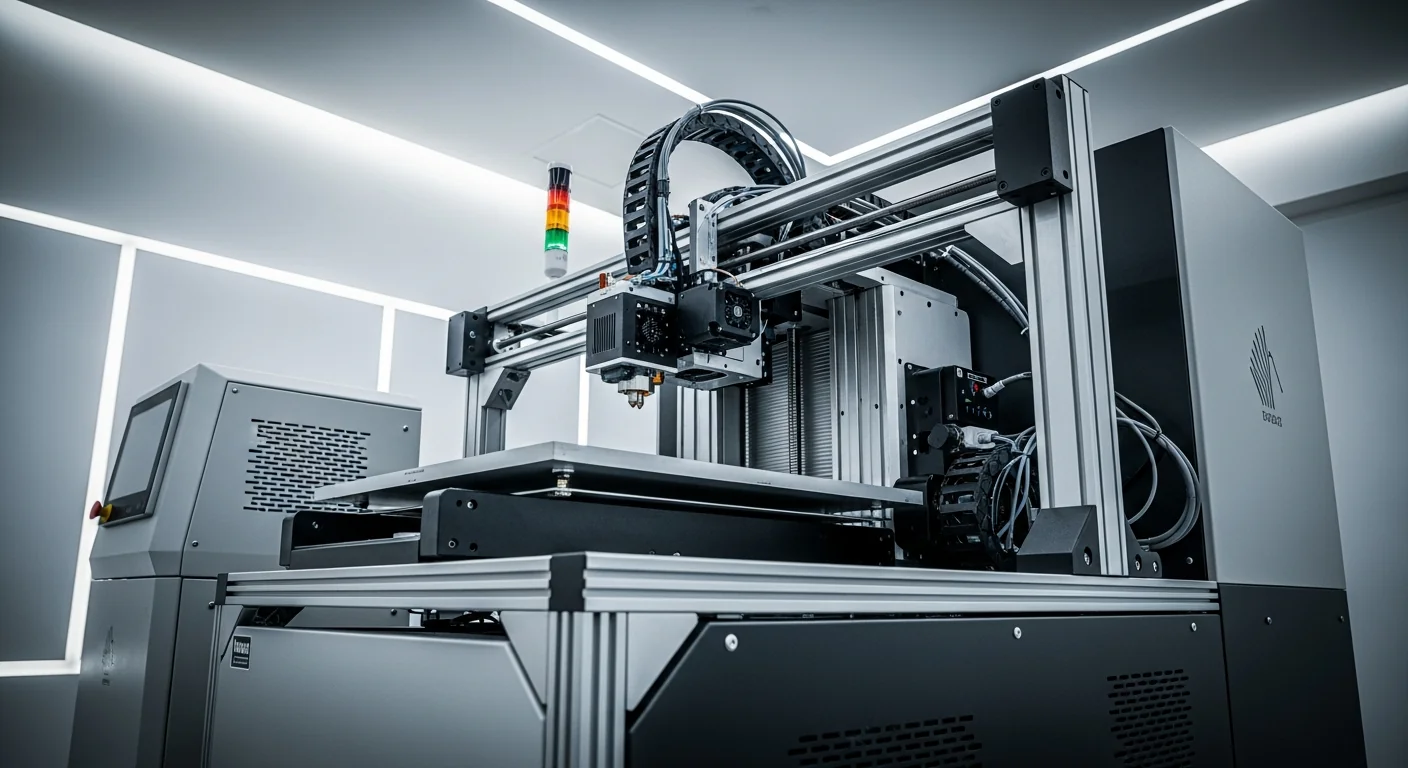
Let me be direct with you—the sticker price is maybe 60% of what you'll actually spend. According to Versus.com's database, 3D printers range from $270 to $9,322 for consumer-to-prosumer models, but that's where most guides stop. Here's the breakdown no competitor will show you:
The Sovol Zero currently sells for $359 (regular price $499), while Bambu Lab's entry models start at $549. These FDM printers handle basic prototyping and hobbyist work, but don't expect 24/7 production reliability. Build volumes max out around 220×220×250mm, and you'll spend 2-4 hours per print job on calibration and troubleshooting.
This is where businesses make money. The Bambu Lab X1 Carbon at $1,499 and Formlabs Form 3+ at $3,750 deliver consistent results with minimal babysitting. Print speeds jump to 200-300mm³/hour, and failure rates drop below 5% with proper maintenance. These machines pay for themselves if you're billing $75+ per hour for design services.
Stratasys and 3D Systems dominate here, with entry-level industrial FDM systems starting around $15,000. SLS powder bed systems begin at $25,000, while metal 3D printers start at $100,000. These aren't purchases—they're capital investments that require dedicated operators and climate-controlled environments.
Here's what 90% of buyers underestimate: material costs compound quickly. Standard PLA filament runs $20-$25 per kilogram, but specialty materials tell a different story. Carbon fiber reinforced PETG costs $80-$120/kg. Medical-grade resins hit $200-$400 per liter. Metal powders for DMLS systems? $300-$800 per kilogram.
A typical business running two 8-hour shifts daily consumes 15-25kg of filament monthly. At $40/kg average for engineering-grade materials, that's $600-$1,000 monthly just in raw materials. Resin printers are worse—a single liter of standard resin ($50-$80) yields maybe 25-30 small parts, making per-part material costs 3-4x higher than filament. To better understand total ownership expenses, estimate costs with our 3d printer calculator tool.
Post-processing equipment adds another $500-$3,000 depending on your quality standards. Resin printers require wash and cure stations ($200-$800), while support removal tools, sanders, and finishing equipment add up. Don't forget ventilation—OSHA compliance for resin printing requires proper fume extraction, running $1,500-$5,000 for professional installations.
Maintenance contracts on industrial systems cost 12-15% of purchase price annually. A $30,000 SLS system carries a $3,600-$4,500 yearly service contract, but skipping it voids your warranty and leads to $15,000+ repair bills when laser modules fail. Before committing, compare the best 3d printer options available to find the right fit for your needs.
Here's where most buyers make a costly mistake: they pay cash because it "feels safer." But tying up $25,000 in a 3D printer when you could finance at 8-10% APR and invest that cash in growth? The math doesn't work.
A $25,000 industrial printer financed at 9% over 48 months costs $622 monthly. If that equipment generates $2,000+ monthly in new revenue (easily achievable with rapid prototyping services), you're cash-flow positive from month one while preserving working capital for materials, labor, and marketing.
Smart operators ask: "What's my opportunity cost?" If you can generate 15-20% returns on working capital, paying 9% to finance equipment is mathematically obvious. The interest is tax-deductible, Section 179 still applies, and you maintain financial flexibility for unexpected opportunities. Ready to get started? Explore 3d printer financing options for your workshop to preserve your capital.
Smart 3D printer buyers don't guess which lender will approve their deal—they let lenders compete for it. Here's exactly how we match you with financing that makes mathematical sense:
Ava analyzes your specific 3D printer purchase, credit profile, and business use case. This isn't generic—we need to know if you're buying a $500 Bambu Lab A1 Mini or a $50,000 industrial SLS system, because different lenders specialize in different equipment tiers. Consumer-grade purchases under $2,500 often qualify for unsecured business credit lines, while industrial systems require asset-based financing with specific depreciation schedules. Ava factors in your industry (medical device prototyping gets different treatment than architectural models), planned usage hours, and whether you're an established business or startup.
Within 24 hours, Ava connects you with 3-4 lenders who actively compete for 3D printer financing. We're not talking generic equipment lenders—these are financial partners who understand that a Formlabs SLA printer holds value differently than a desktop FDM unit.
No more calling multiple lenders or filling out repetitive applications. You'll see actual terms: rates, payments, down payment requirements, and approval amounts. A-tier borrowers typically see rates between 6-12% depending on equipment age and loan term.
Select the offer that makes the most financial sense for your situation. Lenders handle all paperwork and fund directly to equipment sellers or your business account.
Smart 3D printer buyers don't guess which lender will approve their deal—they let lenders compete for it. Here's exactly how we match you with financing that makes mathematical sense:
Ava analyzes your specific 3D printer purchase, credit profile, and business use case. This isn't generic—we need to know if you're buying a $500 Bambu Lab A1 Mini or a $50,000 industrial SLS system, because different lenders specialize in different equipment tiers. Consumer-grade purchases under $2,500 often qualify for unsecured business credit lines, while industrial systems require asset-based financing with specific depreciation schedules. Ava factors in your industry (medical device prototyping gets different treatment than architectural models), planned usage hours, and whether you're an established business or startup.
Within 24 hours, Ava connects you with 3-4 lenders who actively compete for 3D printer financing. We're not talking generic equipment lenders—these are financial partners who understand that a Formlabs SLA printer holds value differently than a desktop FDM unit.
No more calling multiple lenders or filling out repetitive applications. You'll see actual terms: rates, payments, down payment requirements, and approval amounts. A-tier borrowers typically see rates between 6-12% depending on equipment age and loan term.
Select the offer that makes the most financial sense for your situation. Lenders handle all paperwork and fund directly to equipment sellers or your business account.
Smart 3D printer buyers don't guess which lender will approve their deal—they let lenders compete for it. Here's exactly how we match you with financing that makes mathematical sense:
Ava analyzes your specific 3D printer purchase, credit profile, and business use case. This isn't generic—we need to know if you're buying a $500 Bambu Lab A1 Mini or a $50,000 industrial SLS system, because different lenders specialize in different equipment tiers. Consumer-grade purchases under $2,500 often qualify for unsecured business credit lines, while industrial systems require asset-based financing with specific depreciation schedules. Ava factors in your industry (medical device prototyping gets different treatment than architectural models), planned usage hours, and whether you're an established business or startup.
Within 24 hours, Ava connects you with 3-4 lenders who actively compete for 3D printer financing. We're not talking generic equipment lenders—these are financial partners who understand that a Formlabs SLA printer holds value differently than a desktop FDM unit.
No more calling multiple lenders or filling out repetitive applications. You'll see actual terms: rates, payments, down payment requirements, and approval amounts. A-tier borrowers typically see rates between 6-12% depending on equipment age and loan term.
Select the offer that makes the most financial sense for your situation. Lenders handle all paperwork and fund directly to equipment sellers or your business account.
Most 3D printer buyers make the same mistake—they accept the first financing offer without understanding that lender competition is the key to better rates and terms.
When 3-4 lenders compete for the same deal, rates typically drop 0.5-2 percentage points. On a $10,000 professional printer, that's $300-$1,200 in interest savings over a 36-month term. We've seen A-tier borrowers secure rates as low as 6% through competition, while single-lender applicants accepted 9-11% from the same institutions. The math matters: every percentage point saved on a $25,000 industrial system equals $1,200+ over four years.
Not all lenders understand that a two-year-old Formlabs Form 3L retains 65-70% of original value, while consumer desktop units drop to 40% after 18 months. Ava matches you with lenders who price risk accurately based on equipment type, usage patterns, and resale markets.
Stop wasting time with lenders who don't finance your equipment category. Ava's soft credit pull reveals your approval odds and rate ranges without affecting your FICO score. Most borrowers know their options within one business day.
Most 3D printer buyers make the same mistake—they accept the first financing offer without understanding that lender competition is the key to better rates and terms.
When 3-4 lenders compete for the same deal, rates typically drop 0.5-2 percentage points. On a $10,000 professional printer, that's $300-$1,200 in interest savings over a 36-month term. We've seen A-tier borrowers secure rates as low as 6% through competition, while single-lender applicants accepted 9-11% from the same institutions. The math matters: every percentage point saved on a $25,000 industrial system equals $1,200+ over four years.
Not all lenders understand that a two-year-old Formlabs Form 3L retains 65-70% of original value, while consumer desktop units drop to 40% after 18 months. Ava matches you with lenders who price risk accurately based on equipment type, usage patterns, and resale markets.
Stop wasting time with lenders who don't finance your equipment category. Ava's soft credit pull reveals your approval odds and rate ranges without affecting your FICO score. Most borrowers know their options within one business day.
Most 3D printer buyers make the same mistake—they accept the first financing offer without understanding that lender competition is the key to better rates and terms.
When 3-4 lenders compete for the same deal, rates typically drop 0.5-2 percentage points. On a $10,000 professional printer, that's $300-$1,200 in interest savings over a 36-month term. We've seen A-tier borrowers secure rates as low as 6% through competition, while single-lender applicants accepted 9-11% from the same institutions. The math matters: every percentage point saved on a $25,000 industrial system equals $1,200+ over four years.
Not all lenders understand that a two-year-old Formlabs Form 3L retains 65-70% of original value, while consumer desktop units drop to 40% after 18 months. Ava matches you with lenders who price risk accurately based on equipment type, usage patterns, and resale markets.
Stop wasting time with lenders who don't finance your equipment category. Ava's soft credit pull reveals your approval odds and rate ranges without affecting your FICO score. Most borrowers know their options within one business day.
Most 3D printer buyers make the same mistake—they accept the first financing offer without understanding that lender competition is the key to better rates and terms.
When 3-4 lenders compete for the same deal, rates typically drop 0.5-2 percentage points. On a $10,000 professional printer, that's $300-$1,200 in interest savings over a 36-month term. We've seen A-tier borrowers secure rates as low as 6% through competition, while single-lender applicants accepted 9-11% from the same institutions. The math matters: every percentage point saved on a $25,000 industrial system equals $1,200+ over four years.
Not all lenders understand that a two-year-old Formlabs Form 3L retains 65-70% of original value, while consumer desktop units drop to 40% after 18 months. Ava matches you with lenders who price risk accurately based on equipment type, usage patterns, and resale markets.
Stop wasting time with lenders who don't finance your equipment category. Ava's soft credit pull reveals your approval odds and rate ranges without affecting your FICO score. Most borrowers know their options within one business day.
.png)