Many businesses receive funding shortly after approval
Built to help businesses explore realistic financing options
Business owners trust EquipFlow to simplify financing decisions
National and specialty lenders across industries
Your fastest route to the right lender — and the equipment your business needs.
Share your equipment type, business info, and location — it takes less than 60 seconds.
We instantly compare national and specialty lenders to find your best funding options.
Review offers, choose your lender, and get approved with fast turnaround times.
Most 3D printer guides stop at specs and sticker prices. They'll tell you a Bambu Lab A1 Mini costs $219 or a Prusa Core One+ runs $1,299—but none explain how to actually afford the $5,000-$30,000 professional systems that generate real business revenue. Here's what they're missing: A business owner who buys a $30,380 3D printer without understanding Section 179 leaves $10,633 on the table in tax savings alone. That's not a rounding error—it's a 35% reduction in effective cost that fundamentally changes your ROI calculation.
In our experience working with contractors, manufacturers, and service providers, the biggest mistake isn't buying the wrong printer—it's financing it wrong. Most operators either drain their cash reserves (losing 15-20% opportunity cost annually) or fall into high-interest consumer financing traps that can hit 18% APR with front-loaded interest structures. Meanwhile, equipment financing through specialized lenders typically runs 6-10% for A-tier credit, with the equipment serving as collateral instead of tying up your working capital.
This guide covers what the tech reviewers won't: financing structures, tax optimization, total cost of ownership, regulatory compliance costs, and the math that determines whether you should find a quality 3d printer to buy, finance, lease, or keep outsourcing to service bureaus.
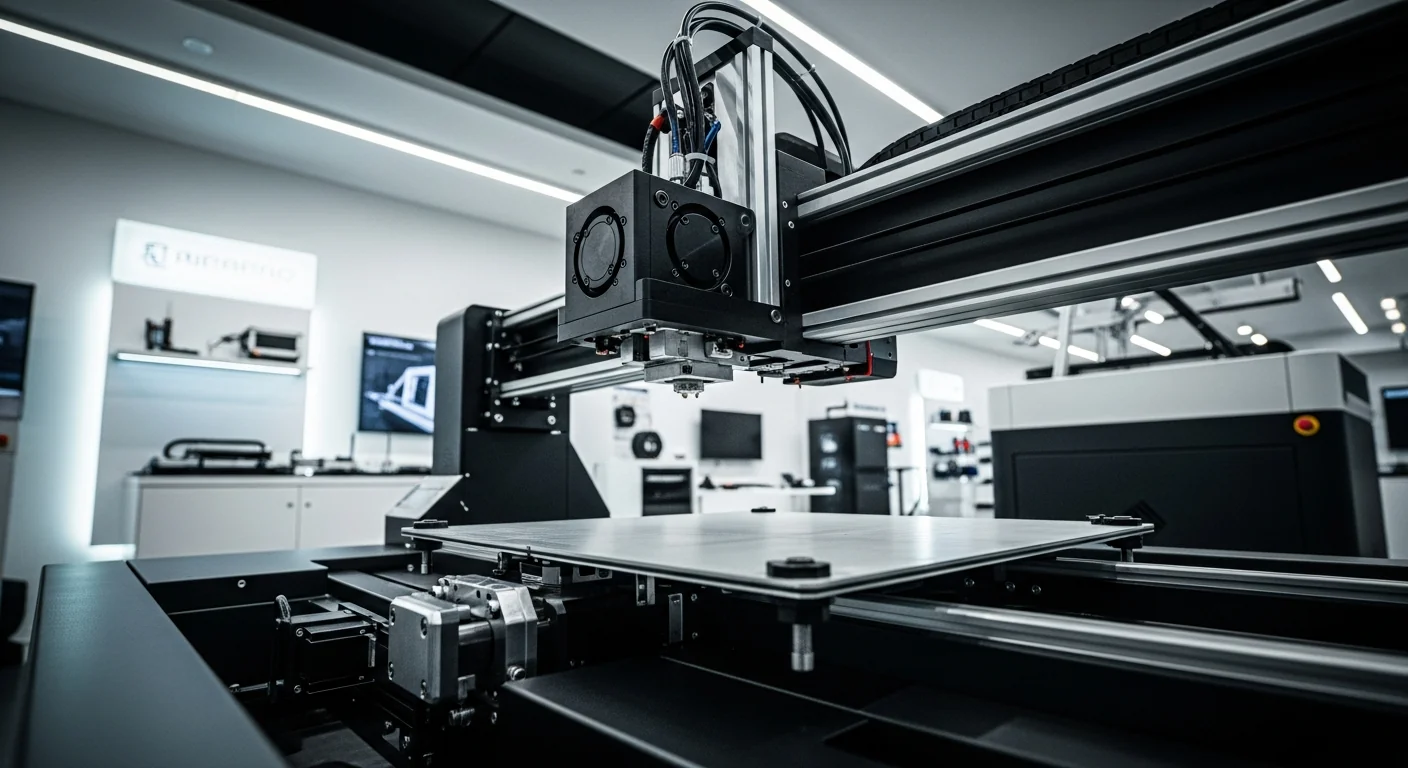
Let me be direct: if you're researching 3D printers for business use, the purchase price is only 40-60% of your real first-year cost. A $5,000 Raise3D Pro3 becomes an $8,000-$12,000 investment when you factor materials, insurance, compliance, and financing costs. Most guides ignore these numbers because tech reviewers don't run businesses—they review gadgets.
A-tier borrowers with 720+ credit scores and established businesses typically qualify for 6-10% APR with zero down payment. B-tier applicants (650-719 FICO) see 10-14% rates with 10-20% down requirements. Startup businesses or thin credit files can still access capital at 12-18% APR, but expect 20-30% down payments and personal guarantees.
Here's the math that matters: A $15,000 professional 3D printer financed at 8% over 60 months costs $304 monthly. Compare that to service bureau rates averaging $50 per part—if you're printing 10+ parts monthly, ownership breaks even by month 8. At 50 parts monthly, you're saving $2,200 monthly by month 12.
According to SBA.gov, the Microloan program provides up to $50,000 for small business equipment purchases—perfect for professional 3D printer acquisitions. The 7(a) program goes up to $5,000,000 for larger manufacturing operations, while the 504 program covers up to $5,500,000 for real estate plus heavy equipment combinations. These government-backed programs often beat private lender rates by 1-3 percentage points.
According to IRS Publication 946, the Section 179 deduction limit for 2026 is $2,560,000, allowing businesses to deduct the full purchase price of qualifying equipment in the year it's placed in service. This isn't a gradual depreciation schedule—it's an immediate, full deduction that generates substantial cash flow.
Based on EquipFlow's analysis of IRS tax data, a $30,380 3D printer generates these first-year tax savings: $7,595 at the 25% bracket, $9,722 at the 32% bracket, and $10,633 at the 35% bracket. That 35% effective cost reduction changes every ROI calculation and makes financing even more attractive than paying cash. To learn more, explore 3d printer financing options for your setup.
The IRS also allows 100% bonus depreciation for 2026 (declining from 40% in 2025 under the Tax Cuts and Jobs Act phase-down schedule). This stacks with Section 179 for qualifying amounts, creating additional first-year tax benefits that most business owners completely miss.
Section 179 requires only that equipment be placed in service before December 31. A printer purchased and operational on December 15 qualifies for the full-year deduction. Smart operators combine this timing with Black Friday promotions—Anycubic currently offers bundle savings up to $510 off and upgrade programs up to 50% off selected models.
What we typically see with 3D printer acquisitions is operators focusing on sticker price while ignoring the complete financial picture. A comprehensive TCO analysis includes acquisition cost, materials, maintenance, compliance, electricity, and opportunity cost of capital. You can use our 3d printer cost calculator tool for accurate estimates of your full ownership costs.
Materials alone vary dramatically: FDM filament costs $20-50 per kilogram, SLA resin runs $30-80 per liter, and industrial powders can hit $50-300 per kilogram. A busy prototyping operation might consume $500-1,500 monthly in materials depending on throughput. If you're still evaluating your options, compare the best 3d printer options available before committing to a purchase.
A single major violation can exceed the cost of your 3D printer. Professional ventilation systems for resin printing operations cost $500-$10,000 depending on scale. Commercial liability insurance runs $1,000-$3,000 annually for small printing operations, plus additional product liability coverage if you're selling manufactured parts.
Resin disposal compliance adds another layer. Uncured photopolymer resin qualifies as hazardous waste in most jurisdictions, requiring proper disposal through licensed handlers. IPA wash waste must be evaporated or processed through hazardous waste channels—not poured down drains.
Printers like the Creality Ender 3 V3 SE at $199 or Bambu Lab A1 Mini at $219 typically use point-of-sale financing through Affirm or Klarna. These often offer 0% APR promotions for 6-12 months, but don't qualify for business tax deductions and can't serve as collateral for traditional equipment loans.
This range includes systems like the Prusa Core One+ at $1,299 assembled, Bambu Lab H2D at $1,749-$2,179, and Original Prusa XL Single Head at $2,299-$2,720. Traditional equipment financing becomes viable, SBA Microloans provide government-backed rates, and Section 179 deductions create substantial tax benefits.
Systems like the Flashforge Creator 4A at $9,999 or custom industrial installations exceeding $30,000 require structured financing approaches. SBA 7(a) loans up to $5,000,000 provide below-market rates, while equipment financing terms can extend to 72 months for qualified buyers.
The key insight: financing structure should match your business model. Prototyping operations benefit from shorter terms and aggressive Section 179 utilization. Production environments justify longer terms and more complex tax strategies involving bonus depreciation stacking.
Smart 3D printer buyers don't guess which lender will approve their deal—they let lenders compete for it. When 3-4 specialized equipment lenders compete for the same financing deal, rates typically drop 0.5-2 percentage points. That's real money: on a $15,000 printer, 1.5% savings equals $225 annually, or $1,125 over five years.
Our AI advisor analyzes your specific equipment needs, credit profile, and business structure. Are you buying a $5,000 Raise3D Pro3 for prototyping? A $30,000 industrial system for production? Ava matches these details with lenders who specialize in your equipment category and loan size.
Lenders in our network compete for your business based on your profile. A-tier borrowers (720+ FICO) typically see 6-10% APR offers, while B-tier (650-719) ranges from 10-14%. Even startup businesses can qualify at 12-18% with higher down payments.
See exactly how each offer affects your cash flow, tax situation, and total cost. A 60-month term at 8% APR on a $15,000 printer means $304 monthly payments—but factor in Section 179 deductions and that printer might generate $5,250 in first-year tax savings.
You control the decision. No pressure, no obligation, no credit impact from our matching process. Most deals close within 24-48 hours once you select a lender. To get started, explore 3d printer financing options for your setup.
Smart 3D printer buyers don't guess which lender will approve their deal—they let lenders compete for it. When 3-4 specialized equipment lenders compete for the same financing deal, rates typically drop 0.5-2 percentage points. That's real money: on a $15,000 printer, 1.5% savings equals $225 annually, or $1,125 over five years.
Our AI advisor analyzes your specific equipment needs, credit profile, and business structure. Are you buying a $5,000 Raise3D Pro3 for prototyping? A $30,000 industrial system for production? Ava matches these details with lenders who specialize in your equipment category and loan size.
Lenders in our network compete for your business based on your profile. A-tier borrowers (720+ FICO) typically see 6-10% APR offers, while B-tier (650-719) ranges from 10-14%. Even startup businesses can qualify at 12-18% with higher down payments.
See exactly how each offer affects your cash flow, tax situation, and total cost. A 60-month term at 8% APR on a $15,000 printer means $304 monthly payments—but factor in Section 179 deductions and that printer might generate $5,250 in first-year tax savings.
You control the decision. No pressure, no obligation, no credit impact from our matching process. Most deals close within 24-48 hours once you select a lender. To get started, explore 3d printer financing options for your setup.
Smart 3D printer buyers don't guess which lender will approve their deal—they let lenders compete for it. When 3-4 specialized equipment lenders compete for the same financing deal, rates typically drop 0.5-2 percentage points. That's real money: on a $15,000 printer, 1.5% savings equals $225 annually, or $1,125 over five years.
Our AI advisor analyzes your specific equipment needs, credit profile, and business structure. Are you buying a $5,000 Raise3D Pro3 for prototyping? A $30,000 industrial system for production? Ava matches these details with lenders who specialize in your equipment category and loan size.
Lenders in our network compete for your business based on your profile. A-tier borrowers (720+ FICO) typically see 6-10% APR offers, while B-tier (650-719) ranges from 10-14%. Even startup businesses can qualify at 12-18% with higher down payments.
See exactly how each offer affects your cash flow, tax situation, and total cost. A 60-month term at 8% APR on a $15,000 printer means $304 monthly payments—but factor in Section 179 deductions and that printer might generate $5,250 in first-year tax savings.
You control the decision. No pressure, no obligation, no credit impact from our matching process. Most deals close within 24-48 hours once you select a lender. To get started, explore 3d printer financing options for your setup.
Most business owners apply to one lender and accept whatever terms they get offered. That's like buying a truck from the first dealer you visit—you're leaving money on the table. When specialized equipment lenders compete for the same deal, rates typically drop 0.5-2 percentage points. On a $20,000 3D printer, that's $100-400 in annual savings.
Lenders in our network specialize in different equipment categories, loan sizes, and credit profiles. Some excel at startup financing, others focus on established businesses, and a few specialize in rapid manufacturing equipment. This competition benefits you directly—lenders know they're competing and sharpen their pencils accordingly.
Banks reject 67% of equipment loans on older industrial machines due to depreciation concerns, but specialty lenders understand that well-maintained 3D printing equipment retains value differently than traditional manufacturing tools. Ava matches your specific equipment and situation with lenders who understand the technology and market dynamics.
Every day without the right equipment costs money. If you're currently outsourcing prototyping at $50 per part and need 100 parts monthly, that's $5,000 in monthly costs that could be eliminated. Our matching process typically generates 3-4 competing offers within 24 hours, with most deals closing in 48 hours once you select a lender.
Our initial matching process doesn't require a credit pull. Lenders only run credit when you decide to move forward with their specific offer. This means you can see what you qualify for across multiple lenders without the credit inquiry impact of shopping individually.
Most business owners apply to one lender and accept whatever terms they get offered. That's like buying a truck from the first dealer you visit—you're leaving money on the table. When specialized equipment lenders compete for the same deal, rates typically drop 0.5-2 percentage points. On a $20,000 3D printer, that's $100-400 in annual savings.
Lenders in our network specialize in different equipment categories, loan sizes, and credit profiles. Some excel at startup financing, others focus on established businesses, and a few specialize in rapid manufacturing equipment. This competition benefits you directly—lenders know they're competing and sharpen their pencils accordingly.
Banks reject 67% of equipment loans on older industrial machines due to depreciation concerns, but specialty lenders understand that well-maintained 3D printing equipment retains value differently than traditional manufacturing tools. Ava matches your specific equipment and situation with lenders who understand the technology and market dynamics.
Every day without the right equipment costs money. If you're currently outsourcing prototyping at $50 per part and need 100 parts monthly, that's $5,000 in monthly costs that could be eliminated. Our matching process typically generates 3-4 competing offers within 24 hours, with most deals closing in 48 hours once you select a lender.
Our initial matching process doesn't require a credit pull. Lenders only run credit when you decide to move forward with their specific offer. This means you can see what you qualify for across multiple lenders without the credit inquiry impact of shopping individually.
Most business owners apply to one lender and accept whatever terms they get offered. That's like buying a truck from the first dealer you visit—you're leaving money on the table. When specialized equipment lenders compete for the same deal, rates typically drop 0.5-2 percentage points. On a $20,000 3D printer, that's $100-400 in annual savings.
Lenders in our network specialize in different equipment categories, loan sizes, and credit profiles. Some excel at startup financing, others focus on established businesses, and a few specialize in rapid manufacturing equipment. This competition benefits you directly—lenders know they're competing and sharpen their pencils accordingly.
Banks reject 67% of equipment loans on older industrial machines due to depreciation concerns, but specialty lenders understand that well-maintained 3D printing equipment retains value differently than traditional manufacturing tools. Ava matches your specific equipment and situation with lenders who understand the technology and market dynamics.
Every day without the right equipment costs money. If you're currently outsourcing prototyping at $50 per part and need 100 parts monthly, that's $5,000 in monthly costs that could be eliminated. Our matching process typically generates 3-4 competing offers within 24 hours, with most deals closing in 48 hours once you select a lender.
Our initial matching process doesn't require a credit pull. Lenders only run credit when you decide to move forward with their specific offer. This means you can see what you qualify for across multiple lenders without the credit inquiry impact of shopping individually.
Most business owners apply to one lender and accept whatever terms they get offered. That's like buying a truck from the first dealer you visit—you're leaving money on the table. When specialized equipment lenders compete for the same deal, rates typically drop 0.5-2 percentage points. On a $20,000 3D printer, that's $100-400 in annual savings.
Lenders in our network specialize in different equipment categories, loan sizes, and credit profiles. Some excel at startup financing, others focus on established businesses, and a few specialize in rapid manufacturing equipment. This competition benefits you directly—lenders know they're competing and sharpen their pencils accordingly.
Banks reject 67% of equipment loans on older industrial machines due to depreciation concerns, but specialty lenders understand that well-maintained 3D printing equipment retains value differently than traditional manufacturing tools. Ava matches your specific equipment and situation with lenders who understand the technology and market dynamics.
Every day without the right equipment costs money. If you're currently outsourcing prototyping at $50 per part and need 100 parts monthly, that's $5,000 in monthly costs that could be eliminated. Our matching process typically generates 3-4 competing offers within 24 hours, with most deals closing in 48 hours once you select a lender.
Our initial matching process doesn't require a credit pull. Lenders only run credit when you decide to move forward with their specific offer. This means you can see what you qualify for across multiple lenders without the credit inquiry impact of shopping individually.
.png)