Many businesses receive funding shortly after approval
Built to help businesses explore realistic financing options
Business owners trust EquipFlow to simplify financing decisions
National and specialty lenders across industries
Your fastest route to the right lender — and the equipment your business needs.
Share your equipment type, business info, and location — it takes less than 60 seconds.
We instantly compare national and specialty lenders to find your best funding options.
Review offers, choose your lender, and get approved with fast turnaround times.
Excavator for sale listings flood your screen with "Apply for Financing" buttons—but none tell you whether you'll qualify for 6.5% or 18% APR until after they've yanked your credit score down 15-30 points across multiple hard pulls. Here's what those dealers won't mention: the average contractor with A-tier credit (720+ FICO) gets approved at 6.5-9.5% APR, while startups face 12-18% rates with 20-30% down payments required.
But here's the math that changes everything: According to IRS Publication 946, businesses can deduct up to $2,560,000 under Section 179 in 2026, meaning you could save $20,602 to $28,843 in taxes on a single excavator purchase. That's money no rental agreement provides, and zero excavator dealers mention it. A contractor in the 32% tax bracket buying an $82,408 excavator effectively pays $56,037 after Section 179—a 32% government discount that expires if you wait.
What we typically see is contractors making $80,000+ equipment decisions completely blind to financing rates, down payment requirements, and tax benefits that can cut their effective cost by one-third. The math is brutal: financing at 8% APR while preserving cash that earns 15-20% ROI elsewhere makes paying cash look financially reckless. When 3-4 lenders compete for your deal, rates drop and terms improve—but only if you know how to make them compete.
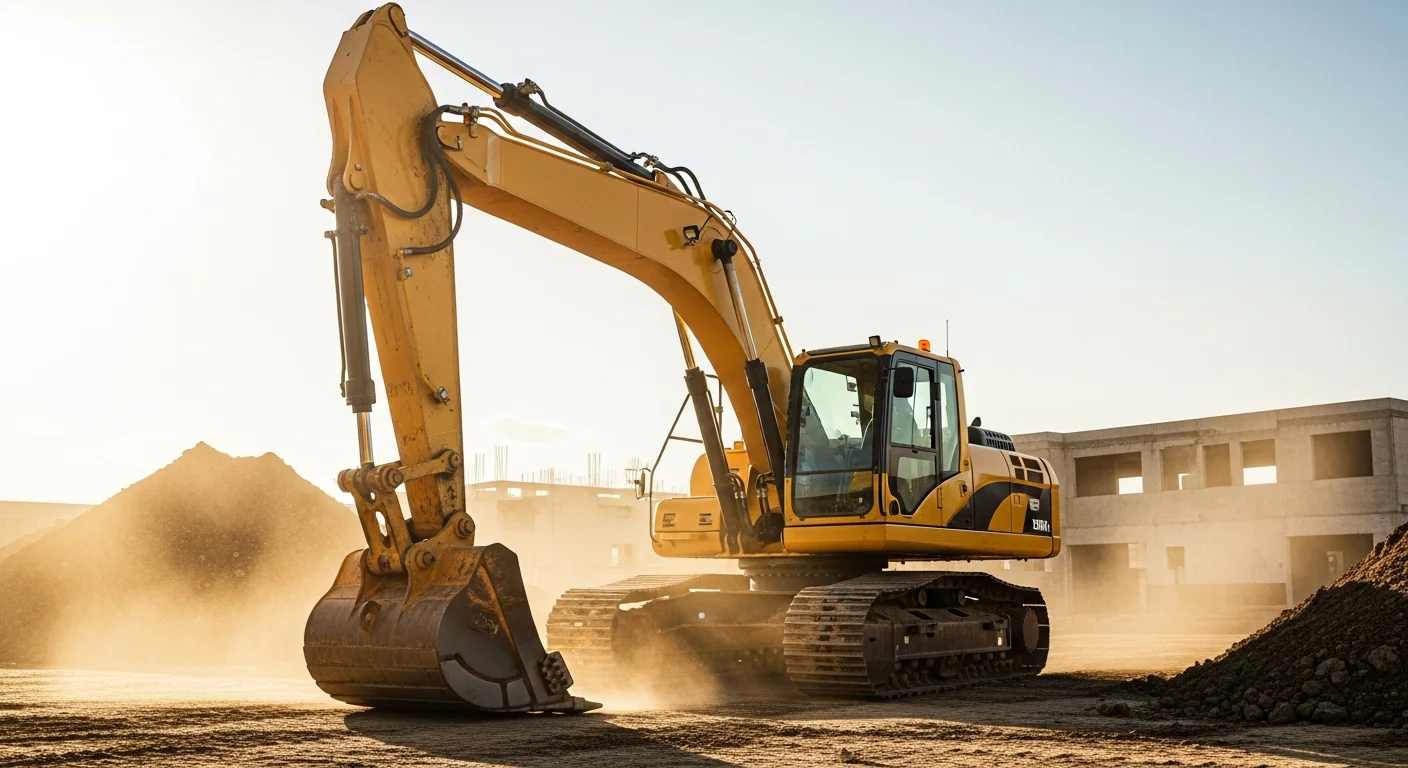
Excavator pricing runs from under $20,000 for compact Chinese imports to $130,000-$170,000 for new mid-size units from Caterpillar, Komatsu, and Kubota. But here's what dealers don't advertise: the average used excavator on the market is 7.01 to 7.26 years old—right at the edge of what most banks will finance.
Mini excavators under 14,000 pounds start around $45,000-$65,000 new. The sweet spot for most contractors is the 14,000-18,000 pound class where you'll find the Caterpillar 308, Komatsu PC88, and Kubota KX080—all priced between $130,000 and $170,000 new. Rubber track models typically add $3,000-$5,000 over steel tracks but reduce ground pressure and eliminate jobsite damage claims.
Large excavators (40,000+ pounds) push $300,000-$500,000 new, which puts most contractors into used territory or lease programs. The financing math changes dramatically at these price points—Section 179 becomes even more valuable because it can shelter six figures of taxable income.
Here's the trap: that "great deal" on a $45,000 used excavator might be financially impossible to capture. Banks typically won't finance equipment over 7-10 years old, and the average used excavator currently for sale is 7.01-7.26 years old. The machines that ARE financeable require 15-20% higher down payments and carry rates 2-4% above new equipment.
Used excavators 4-7 years old typically sell for 45-65% of new price, while 8+ year machines drop to 25-40% of original MSRP. But if you can't finance it, that "bargain" forces you into cash purchase or private lending at 15%+ rates.
Credit profile determines everything. A-tier borrowers with 720+ credit scores and strong business financials typically see 6.5-9.5% APR with just 10-15% down. B-tier credit (650-719 FICO) ranges from 9.5-14% APR with 15-20% down required. Startups and challenged credit face 12-18% rates with 20-30% down payments.
Here's the math on three common scenarios: A new $150,000 excavator financed at 7.5% APR for 60 months requires about $15,000 down and runs $2,706/month. A 5-year-old $75,000 machine at 11% APR for 48 months needs $15,000 down (20%) and costs $1,554/month. A new mini excavator at $45,000 financed at 8.5% over 48 months runs about $997/month with $4,500 down.
The difference between 6.5% and 18% APR on a $50,000 excavator is over $16,000 in total interest—which is why knowing your rate range before applying matters. Every dealer promises "competitive rates," but they're all pulling from the same lender networks at different markup levels.
The SBA 7(a) program offers up to $5,000,000 for established businesses, while SBA 504 loans go up to $5,500,000 for larger purchases with real estate components. For startups, SBA Microloans provide up to $50,000 at competitive rates—perfect for mini excavator financing. SBA loans often carry lower rates than conventional equipment financing but take 30-90 days versus 24-72 hours for standard equipment lenders.
The breakeven math is brutal for rental: A mid-size excavator costs about $3,328/month to rent versus $1,333-$2,706/month financed (depending on promotional rates and credit tier). Financing beats rental after approximately 40 months, with potential savings exceeding $119,000 over 5 years for full-time use.
Most contractors generate 15-20% annual returns on working capital. Paying $75,000 cash means losing $11,000-$15,000 per year in opportunity cost. At 8% financing, your real borrowing cost is only $6,000 annually—meaning you profit $5,000-$9,000 per year by financing instead of paying cash.
Add Section 179 to this equation and the math becomes overwhelming. That $82,408 excavator saves you $20,602-$28,843 in taxes depending on your bracket. For a contractor in the 32% bracket, the effective equipment cost drops to $56,037—a 32% government discount that paying cash doesn't change but financing makes accessible with minimal cash outlay.
According to IRS Publication 946, the Section 179 deduction limit for 2026 is $2,560,000, allowing businesses to deduct the full purchase price of qualifying equipment in the year it's placed in service. This applies to both new and used excavators, creating immediate tax relief that rental agreements can't provide.
A contractor in the 25% tax bracket saves $20,602 on an $82,408 excavator purchase. The 32% bracket saves $26,371, while the 35% bracket saves $28,843. This isn't just a deduction—it's cash back from the government that often exceeds your down payment.
Bonus depreciation adds another layer: businesses can claim an additional 20% first-year write-off on qualifying equipment in 2026. This rate decreases annually under the Tax Cuts and Jobs Act—it was 60% in 2024, 40% in 2025, 20% in 2026, and remains at 100% in 2027 under OBBB. Buying in 2026 captures the last year of meaningful bonus depreciation.
Here's how the math creates a liquidity multiplier: financing that $82,408 excavator with just $16,000 down (20%) generates $26,371 in tax savings at the 32% bracket. Your Year 1 cash flow recovery of $26,371 divided by your $16,000 cash outlay equals 1.26x—meaning every dollar of down payment returns $1.26 in immediate tax benefits. This is why smart contractors finance equipment and reinvest their preserved capital.
We don't lend money—we make lenders fight for your business. When you need excavator financing, Ava analyzes your situation and matches you with 3-4 competing lenders who specialize in your equipment type and credit profile. Here's how lender competition saves you money:
Ava needs to know the excavator specs (size class, new vs used, hours), your credit profile, and how much you're looking to finance. This isn't a credit application—it's a diagnostic that determines which lenders in our network will compete hardest for your deal. Ava knows that Bank A won't finance excavators over 7 years old, but Lender C specializes in exactly that equipment.
Here's where the magic happens: instead of you chasing down individual lenders and getting rejected or quoted inflated rates, Ava presents your deal to multiple pre-qualified lenders simultaneously. They know they're competing, which typically drives rates down 0.5-2 percentage points compared to applying solo.
You'll see exactly how each offer affects your monthly cash flow: $1,554/month at 11% versus $1,333/month at 8%. No hidden fees, no bait-and-switch rates, no "call for pricing." The math is transparent so you can make an informed decision.
You're in control. Pick the offer that works best for your cash flow and business needs. No pressure, no obligation, no commitment until you sign with your chosen lender.
We don't lend money—we make lenders fight for your business. When you need excavator financing, Ava analyzes your situation and matches you with 3-4 competing lenders who specialize in your equipment type and credit profile. Here's how lender competition saves you money:
Ava needs to know the excavator specs (size class, new vs used, hours), your credit profile, and how much you're looking to finance. This isn't a credit application—it's a diagnostic that determines which lenders in our network will compete hardest for your deal. Ava knows that Bank A won't finance excavators over 7 years old, but Lender C specializes in exactly that equipment.
Here's where the magic happens: instead of you chasing down individual lenders and getting rejected or quoted inflated rates, Ava presents your deal to multiple pre-qualified lenders simultaneously. They know they're competing, which typically drives rates down 0.5-2 percentage points compared to applying solo.
You'll see exactly how each offer affects your monthly cash flow: $1,554/month at 11% versus $1,333/month at 8%. No hidden fees, no bait-and-switch rates, no "call for pricing." The math is transparent so you can make an informed decision.
You're in control. Pick the offer that works best for your cash flow and business needs. No pressure, no obligation, no commitment until you sign with your chosen lender.
We don't lend money—we make lenders fight for your business. When you need excavator financing, Ava analyzes your situation and matches you with 3-4 competing lenders who specialize in your equipment type and credit profile. Here's how lender competition saves you money:
Ava needs to know the excavator specs (size class, new vs used, hours), your credit profile, and how much you're looking to finance. This isn't a credit application—it's a diagnostic that determines which lenders in our network will compete hardest for your deal. Ava knows that Bank A won't finance excavators over 7 years old, but Lender C specializes in exactly that equipment.
Here's where the magic happens: instead of you chasing down individual lenders and getting rejected or quoted inflated rates, Ava presents your deal to multiple pre-qualified lenders simultaneously. They know they're competing, which typically drives rates down 0.5-2 percentage points compared to applying solo.
You'll see exactly how each offer affects your monthly cash flow: $1,554/month at 11% versus $1,333/month at 8%. No hidden fees, no bait-and-switch rates, no "call for pricing." The math is transparent so you can make an informed decision.
You're in control. Pick the offer that works best for your cash flow and business needs. No pressure, no obligation, no commitment until you sign with your chosen lender.
We've eliminated the three biggest problems with excavator financing: rate shopping that destroys your credit score, hidden dealer markups, and applying blindly to lenders who'll reject your deal.
When lenders know they're competing for the same deal, rates typically drop 0.5-2 percentage points compared to solo applications. We've seen contractors save $8,000-$15,000 in total interest simply because four lenders bid against each other instead of one lender setting the price. The math is simple: competition benefits you, monopoly benefits them.
Banks reject 67% of equipment loans on machines over 7 years old, but Ava knows which lenders specialize in exactly that equipment. She understands that Lender A won't touch a high-hour excavator but Lender C built their business on it. Instead of getting rejected three times and tanking your credit score, you get matched with lenders who want your specific deal.
Every day without equipment costs you revenue. Traditional bank financing takes 2-4 weeks and requires mountains of paperwork. Our lender network specializes in equipment deals and typically provides approval within 24-48 hours. Time is money in construction—we respect both.
You're not committed to anything until you sign with your chosen lender. Compare all the offers, run the numbers, sleep on it. The only risk is discovering you could have been saving money all along by letting lenders compete for your business instead of accepting the first rate someone quotes.
We've eliminated the three biggest problems with excavator financing: rate shopping that destroys your credit score, hidden dealer markups, and applying blindly to lenders who'll reject your deal.
When lenders know they're competing for the same deal, rates typically drop 0.5-2 percentage points compared to solo applications. We've seen contractors save $8,000-$15,000 in total interest simply because four lenders bid against each other instead of one lender setting the price. The math is simple: competition benefits you, monopoly benefits them.
Banks reject 67% of equipment loans on machines over 7 years old, but Ava knows which lenders specialize in exactly that equipment. She understands that Lender A won't touch a high-hour excavator but Lender C built their business on it. Instead of getting rejected three times and tanking your credit score, you get matched with lenders who want your specific deal.
Every day without equipment costs you revenue. Traditional bank financing takes 2-4 weeks and requires mountains of paperwork. Our lender network specializes in equipment deals and typically provides approval within 24-48 hours. Time is money in construction—we respect both.
You're not committed to anything until you sign with your chosen lender. Compare all the offers, run the numbers, sleep on it. The only risk is discovering you could have been saving money all along by letting lenders compete for your business instead of accepting the first rate someone quotes.
We've eliminated the three biggest problems with excavator financing: rate shopping that destroys your credit score, hidden dealer markups, and applying blindly to lenders who'll reject your deal.
When lenders know they're competing for the same deal, rates typically drop 0.5-2 percentage points compared to solo applications. We've seen contractors save $8,000-$15,000 in total interest simply because four lenders bid against each other instead of one lender setting the price. The math is simple: competition benefits you, monopoly benefits them.
Banks reject 67% of equipment loans on machines over 7 years old, but Ava knows which lenders specialize in exactly that equipment. She understands that Lender A won't touch a high-hour excavator but Lender C built their business on it. Instead of getting rejected three times and tanking your credit score, you get matched with lenders who want your specific deal.
Every day without equipment costs you revenue. Traditional bank financing takes 2-4 weeks and requires mountains of paperwork. Our lender network specializes in equipment deals and typically provides approval within 24-48 hours. Time is money in construction—we respect both.
You're not committed to anything until you sign with your chosen lender. Compare all the offers, run the numbers, sleep on it. The only risk is discovering you could have been saving money all along by letting lenders compete for your business instead of accepting the first rate someone quotes.
We've eliminated the three biggest problems with excavator financing: rate shopping that destroys your credit score, hidden dealer markups, and applying blindly to lenders who'll reject your deal.
When lenders know they're competing for the same deal, rates typically drop 0.5-2 percentage points compared to solo applications. We've seen contractors save $8,000-$15,000 in total interest simply because four lenders bid against each other instead of one lender setting the price. The math is simple: competition benefits you, monopoly benefits them.
Banks reject 67% of equipment loans on machines over 7 years old, but Ava knows which lenders specialize in exactly that equipment. She understands that Lender A won't touch a high-hour excavator but Lender C built their business on it. Instead of getting rejected three times and tanking your credit score, you get matched with lenders who want your specific deal.
Every day without equipment costs you revenue. Traditional bank financing takes 2-4 weeks and requires mountains of paperwork. Our lender network specializes in equipment deals and typically provides approval within 24-48 hours. Time is money in construction—we respect both.
You're not committed to anything until you sign with your chosen lender. Compare all the offers, run the numbers, sleep on it. The only risk is discovering you could have been saving money all along by letting lenders compete for your business instead of accepting the first rate someone quotes.
.png)