Many businesses receive funding shortly after approval
Built to help businesses explore realistic financing options
Business owners trust EquipFlow to simplify financing decisions
National and specialty lenders across industries
Your fastest route to the right lender — and the equipment your business needs.
Share your equipment type, business info, and location — it takes less than 60 seconds.
We instantly compare national and specialty lenders to find your best funding options.
Review offers, choose your lender, and get approved with fast turnaround times.
Food truck rental rates jumped 23% in the last 18 months, which means operators paying $1,200-$1,500 monthly for a mobile kitchen are bleeding $14,400-$18,000 annually with zero equity to show for it. Meanwhile, smart entrepreneurs are discovering that financing a food truck—even at startup rates of 11-16%—builds ownership while preserving working capital for the $25,000-$75,000 in permits, equipment, and initial inventory that banks don't tell you about.
Here's what 90% of first-time food truck buyers miss: the total cost isn't just the truck. A quality used food truck costs $20,000-$100,000, but your real investment is $75,000-$250,000 when you factor in commercial cooking equipment, generators, health permits, and three months of operating capital. According to IRS Publication 946, the Section 179 deduction lets you write off the full purchase price in year one—meaning a $79,500 truck generates $19,875-$27,825 in immediate tax savings depending on your bracket. That's money back in your pocket within 12 months that most operators never calculate into their financing decision.
The mistake most aspiring food truck owners make is approaching this like buying a car instead of acquiring a revenue-generating asset. When you understand that established food trucks generate $250,000-$500,000 annually, the math shifts dramatically. Financing preserves your cash for equipment upgrades and marketing while the truck pays for itself—if you structure the deal correctly.
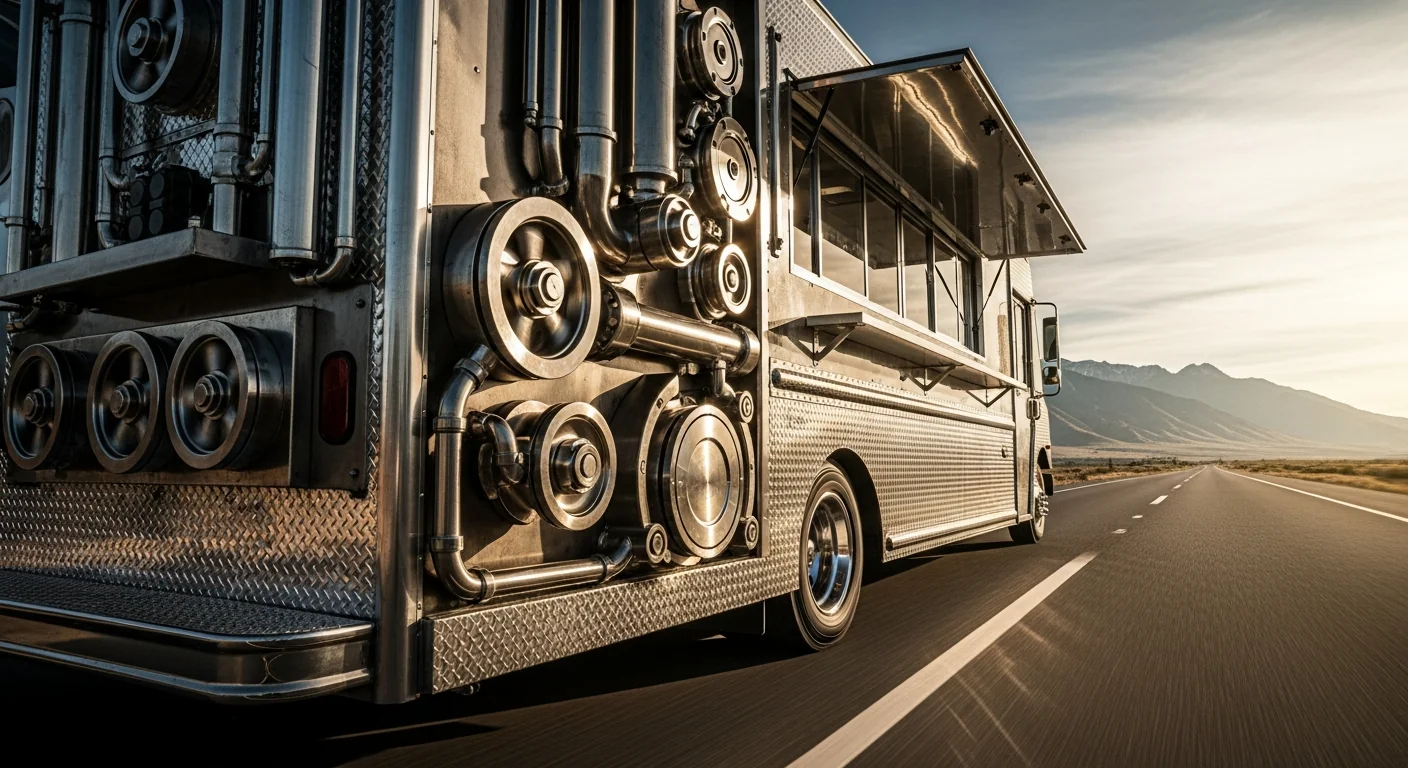
Every day on Reddit, aspiring food truck owners post the same impossible situation: they found a used truck for $58,000 but lenders want 25-30% down payments, plus they need another $47,000 for equipment, permits, and working capital. Here's the breakdown most first-time buyers discover too late.
Custom food truck builds range from $50,000 for basic setups to $175,000 for fully-equipped specialty kitchens. According to Concession Nation, which has delivered over 3,000 custom mobile kitchens since 2006, popular sizes include 14ft, 16ft, 18ft, 20ft, 22ft, and 24ft configurations. But the sticker price is just the beginning.
What drives costs higher: commercial-grade cooking equipment ($5,000-$25,000), generators ($500-$2,000), refrigeration systems ($1,000-$55,000), and health department compliance features that vary by jurisdiction. A basic 16ft truck becomes a $85,000 investment once you add the equipment needed to pass inspections and serve customers.
The used food truck market offers more accessible entry points, with 244 used trucks currently listed near major markets ranging from $46,000 to $160,000+. However, used trucks require careful inspection of engine hours, equipment age, and health code compliance history. A $35,000 "deal" that needs $15,000 in equipment upgrades isn't actually a deal.
Food truck trailers and mini food trailers provide the lowest barrier to entry, with financing available on units starting at $8,000 with just 10% down payment. Many successful operators start with a trailer to build revenue history, then finance a full truck at better rates once they have 2+ years of documented income.
Beyond the truck itself, expect to invest:
- Health permits: $50-$1,000 depending on jurisdiction
- Commercial cooking equipment specific to your cuisine
- Generators for off-grid operation: $500-$2,000
- Commercial refrigeration: $1,000-$55,000 for walk-in units
- Initial inventory and supplies: $3,000-$8,000
- Working capital for first 3 months: $15,000-$50,000
- Insurance and commissary kitchen agreements
This is why successful food truck owners don't ask "can I afford the truck?"—they ask "can I afford the entire business launch?"
Traditional banks require 2+ years of business revenue to approve food truck financing, but you need the truck to generate revenue. Here's how smart entrepreneurs break this cycle.
The SBA Microloan program offers up to $50,000 specifically for small businesses and startups, making it ideal for used truck purchases or equipment buildout. Unlike traditional business loans, microloans are designed for underserved entrepreneurs without extensive business history. Minimum FICO requirements start at 600 with some community lenders.
Equipment financing uses the food truck itself as collateral, making lenders more flexible on credit and business history requirements. Rate tiers break down as:
Down payments range from 10% for strong credit to 30% for startup scenarios. Some lenders like Blue Bridge offer deferred payments up to 3 months, giving you time to establish cash flow before payments begin.
Once you have 2+ years of revenue history, SBA 7(a) loans offer up to $5,000,000 with terms up to 25 years. Current rates start around 9.75%, making this an attractive option for second trucks or transitioning to brick-and-mortar locations.
On a $75,000 food truck over 60 months:
- Finance at 7% (A-tier): $1,485 monthly, $14,100 total interest
- Finance at 14% (startup): $1,747 monthly, $29,820 total interest
- Pay cash: $0 interest, but $75,000 tied up that could generate 15-20% ROI elsewhere
The math gets interesting when you factor in opportunity cost. If your working capital generates 18% annual returns through inventory turns and marketing, paying 7% to finance while investing your cash elsewhere nets you 11% annually.
Here's what most food truck buyers never calculate: tax recovery through Section 179.
According to IRS Publication 946, the 2026 Section 179 deduction limit is $2,560,000, allowing you to deduct the full cost of your food truck in the year you place it in service. Based on EquipFlow's analysis of IRS data, a $79,500 food truck generates:
These aren't theoretical future deductions—this is money back in your pocket within 12 months that can offset your down payment or fund working capital.
On top of Section 179, you can claim 100% bonus depreciation in 2026 (this rate decreases annually under the Tax Cuts and Jobs Act). Combined with the 5-year MACRS recovery period for remaining depreciation, you're maximizing first-year tax recovery.
Most lenders require 10-20% down on food truck financing, creating a $9,400-$17,000 upfront barrier on an $85,000 truck. But Section 179 tax savings of $21,250-$29,750 can effectively offset 60-85% of down payment costs within the first year. Position these tax deduction calculations as collateral value in financing applications—it shows lenders you understand the true economics of equipment ownership.
Used food truck marketplaces like UsedVending feature thousands of listings with verified seller information. When searching "food truck for sale near me," focus on:
- Documented maintenance history
- Health department compliance records
- Equipment age and warranty status
- Engine hours and mechanical conditionAvoid trucks with accident history, extensive rust, or equipment that doesn't meet current health codes in your operating area.
Established builders like Concession Nation (founded 2006) offer custom builds with 8-16 week timelines. Advantages include modern equipment, health code compliance built-in, and warranty coverage. However, custom builds require larger upfront investments and longer lead times.
Turnkey used trucks get you operating faster but require thorough inspections and potential equipment upgrades.
Food truck trailers starting at $8,000 with 10% down financing offer the lowest-risk path into the industry. Build revenue history and customer base with a trailer, then upgrade to a full truck with A-tier financing rates once you have 2+ years of documented income.
Electric food trucks offer 100-125 mile range with battery systems providing 5,000+ watts and 10-year warranties. Solar integration can save $13,775 annually vs. generator operation. Government incentives like Montgomery County MD's $5,000-$10,000 electrification grants improve ROI, but factor higher purchase prices into your financing calculations.
66% of diners prefer mobile ordering, making POS systems essential. Budget $2,000-$5,000 for digital ordering platforms in your total startup costs. Advanced systems drive 4.5% more transactions per employee hour, improving your ability to service debt payments.
Getting food truck financing shouldn't require calling 12 different lenders just to hear "we don't finance food trucks." Here's how Ava matches you with lenders who actually understand mobile food businesses:
Ava analyzes your specific scenario—whether you're buying a $25,000 used trailer or a $175,000 custom build. She factors in your credit score, down payment capacity, and business experience to identify which lenders will actually approve your deal. This isn't generic pre-qualification; it's strategic matching based on each lender's appetite for food truck financing.
While traditional banks reject most food truck applications, Ava connects you with 3-4 lenders who compete for your business. When lenders compete, rates typically drop 0.5-2 percentage points compared to going direct. She targets lenders who understand that food trucks are revenue generators, not just vehicles.
See exactly how each offer affects your monthly cash flow. A 2% rate difference on a $75,000 truck means $23,000 more in total interest over 60 months—money that could fund your second truck or equipment upgrades. Ava shows you the real math behind each deal.
You choose the offer that works best for your cash flow and growth plans. No pressure, no obligation. Most deals close within 5-7 business days once you make your selection.
Getting food truck financing shouldn't require calling 12 different lenders just to hear "we don't finance food trucks." Here's how Ava matches you with lenders who actually understand mobile food businesses:
Ava analyzes your specific scenario—whether you're buying a $25,000 used trailer or a $175,000 custom build. She factors in your credit score, down payment capacity, and business experience to identify which lenders will actually approve your deal. This isn't generic pre-qualification; it's strategic matching based on each lender's appetite for food truck financing.
While traditional banks reject most food truck applications, Ava connects you with 3-4 lenders who compete for your business. When lenders compete, rates typically drop 0.5-2 percentage points compared to going direct. She targets lenders who understand that food trucks are revenue generators, not just vehicles.
See exactly how each offer affects your monthly cash flow. A 2% rate difference on a $75,000 truck means $23,000 more in total interest over 60 months—money that could fund your second truck or equipment upgrades. Ava shows you the real math behind each deal.
You choose the offer that works best for your cash flow and growth plans. No pressure, no obligation. Most deals close within 5-7 business days once you make your selection.
Getting food truck financing shouldn't require calling 12 different lenders just to hear "we don't finance food trucks." Here's how Ava matches you with lenders who actually understand mobile food businesses:
Ava analyzes your specific scenario—whether you're buying a $25,000 used trailer or a $175,000 custom build. She factors in your credit score, down payment capacity, and business experience to identify which lenders will actually approve your deal. This isn't generic pre-qualification; it's strategic matching based on each lender's appetite for food truck financing.
While traditional banks reject most food truck applications, Ava connects you with 3-4 lenders who compete for your business. When lenders compete, rates typically drop 0.5-2 percentage points compared to going direct. She targets lenders who understand that food trucks are revenue generators, not just vehicles.
See exactly how each offer affects your monthly cash flow. A 2% rate difference on a $75,000 truck means $23,000 more in total interest over 60 months—money that could fund your second truck or equipment upgrades. Ava shows you the real math behind each deal.
You choose the offer that works best for your cash flow and growth plans. No pressure, no obligation. Most deals close within 5-7 business days once you make your selection.
Food truck financing requires lenders who understand mobile food businesses aren't just vehicle purchases—they're revenue-generating assets with specific operational requirements.
When 3-4 lenders compete for your food truck financing, rates typically drop 0.5-2 percentage points compared to accepting the first offer. On a $75,000 truck, that's $3,000-$12,000 in interest savings over the loan term. Ava targets lenders who actively compete for food truck deals rather than those who reluctantly consider them.
While traditional banks reject most food truck applications due to mobile asset concerns, Ava connects you with lenders who understand the $250,000-$500,000 annual revenue potential. She knows which lenders will finance used equipment over 10 years old, who offers deferred payments for seasonal businesses, and which ones factor Section 179 benefits into approval decisions.
Every day without your food truck is lost revenue potential. Ava provides initial lender matches within 24-48 hours, with most approved applicants receiving funding within 5-7 business days. Compare this to calling lenders individually, where you might spend weeks just finding one willing to consider food truck financing.
Review multiple offers side-by-side with no commitment required. See how different rates, terms, and down payment requirements affect your monthly cash flow and total cost of ownership. Most food truck entrepreneurs get 3+ competing offers, giving you negotiating leverage and confidence in your final decision.
Food truck financing requires lenders who understand mobile food businesses aren't just vehicle purchases—they're revenue-generating assets with specific operational requirements.
When 3-4 lenders compete for your food truck financing, rates typically drop 0.5-2 percentage points compared to accepting the first offer. On a $75,000 truck, that's $3,000-$12,000 in interest savings over the loan term. Ava targets lenders who actively compete for food truck deals rather than those who reluctantly consider them.
While traditional banks reject most food truck applications due to mobile asset concerns, Ava connects you with lenders who understand the $250,000-$500,000 annual revenue potential. She knows which lenders will finance used equipment over 10 years old, who offers deferred payments for seasonal businesses, and which ones factor Section 179 benefits into approval decisions.
Every day without your food truck is lost revenue potential. Ava provides initial lender matches within 24-48 hours, with most approved applicants receiving funding within 5-7 business days. Compare this to calling lenders individually, where you might spend weeks just finding one willing to consider food truck financing.
Review multiple offers side-by-side with no commitment required. See how different rates, terms, and down payment requirements affect your monthly cash flow and total cost of ownership. Most food truck entrepreneurs get 3+ competing offers, giving you negotiating leverage and confidence in your final decision.
Food truck financing requires lenders who understand mobile food businesses aren't just vehicle purchases—they're revenue-generating assets with specific operational requirements.
When 3-4 lenders compete for your food truck financing, rates typically drop 0.5-2 percentage points compared to accepting the first offer. On a $75,000 truck, that's $3,000-$12,000 in interest savings over the loan term. Ava targets lenders who actively compete for food truck deals rather than those who reluctantly consider them.
While traditional banks reject most food truck applications due to mobile asset concerns, Ava connects you with lenders who understand the $250,000-$500,000 annual revenue potential. She knows which lenders will finance used equipment over 10 years old, who offers deferred payments for seasonal businesses, and which ones factor Section 179 benefits into approval decisions.
Every day without your food truck is lost revenue potential. Ava provides initial lender matches within 24-48 hours, with most approved applicants receiving funding within 5-7 business days. Compare this to calling lenders individually, where you might spend weeks just finding one willing to consider food truck financing.
Review multiple offers side-by-side with no commitment required. See how different rates, terms, and down payment requirements affect your monthly cash flow and total cost of ownership. Most food truck entrepreneurs get 3+ competing offers, giving you negotiating leverage and confidence in your final decision.
Food truck financing requires lenders who understand mobile food businesses aren't just vehicle purchases—they're revenue-generating assets with specific operational requirements.
When 3-4 lenders compete for your food truck financing, rates typically drop 0.5-2 percentage points compared to accepting the first offer. On a $75,000 truck, that's $3,000-$12,000 in interest savings over the loan term. Ava targets lenders who actively compete for food truck deals rather than those who reluctantly consider them.
While traditional banks reject most food truck applications due to mobile asset concerns, Ava connects you with lenders who understand the $250,000-$500,000 annual revenue potential. She knows which lenders will finance used equipment over 10 years old, who offers deferred payments for seasonal businesses, and which ones factor Section 179 benefits into approval decisions.
Every day without your food truck is lost revenue potential. Ava provides initial lender matches within 24-48 hours, with most approved applicants receiving funding within 5-7 business days. Compare this to calling lenders individually, where you might spend weeks just finding one willing to consider food truck financing.
Review multiple offers side-by-side with no commitment required. See how different rates, terms, and down payment requirements affect your monthly cash flow and total cost of ownership. Most food truck entrepreneurs get 3+ competing offers, giving you negotiating leverage and confidence in your final decision.
.png)