Many businesses receive funding shortly after approval
Built to help businesses explore realistic financing options
Business owners trust EquipFlow to simplify financing decisions
National and specialty lenders across industries
Your fastest route to the right lender — and the equipment your business needs.
Share your equipment type, business info, and location — it takes less than 60 seconds.
We instantly compare national and specialty lenders to find your best funding options.
Review offers, choose your lender, and get approved with fast turnaround times.
This freightliner cascadia guide addresses the brutal reality facing truck buyers in 2026: forum users report getting quoted 35% APR with 680 credit scores, while others with similar profiles secure 8% financing from different lenders. The difference isn't luck—it's knowing which doors to walk through and which to avoid entirely. Here's what most operators miss: the 2027 EPA emissions standards will add $8,000-25,000 to every new Class 8 truck price, triggering a pre-buy surge that's already building momentum. Cascadia buyers who finance strategically in Q1-Q3 2026 lock in current pricing before the regulatory premium hits, while Section 179 delivers up to $23,858 in immediate tax savings on a $165,000 truck. The math is clear: financing isn't just about monthly payments—it's about timing the market, optimizing tax benefits, and avoiding the predatory lenders who prey on truckers who don't understand the system. Smart operators are securing multiple competing offers through verified lender networks, driving rates down 0.5-2 percentage points while building the financing relationships that fuel long-term business growth.
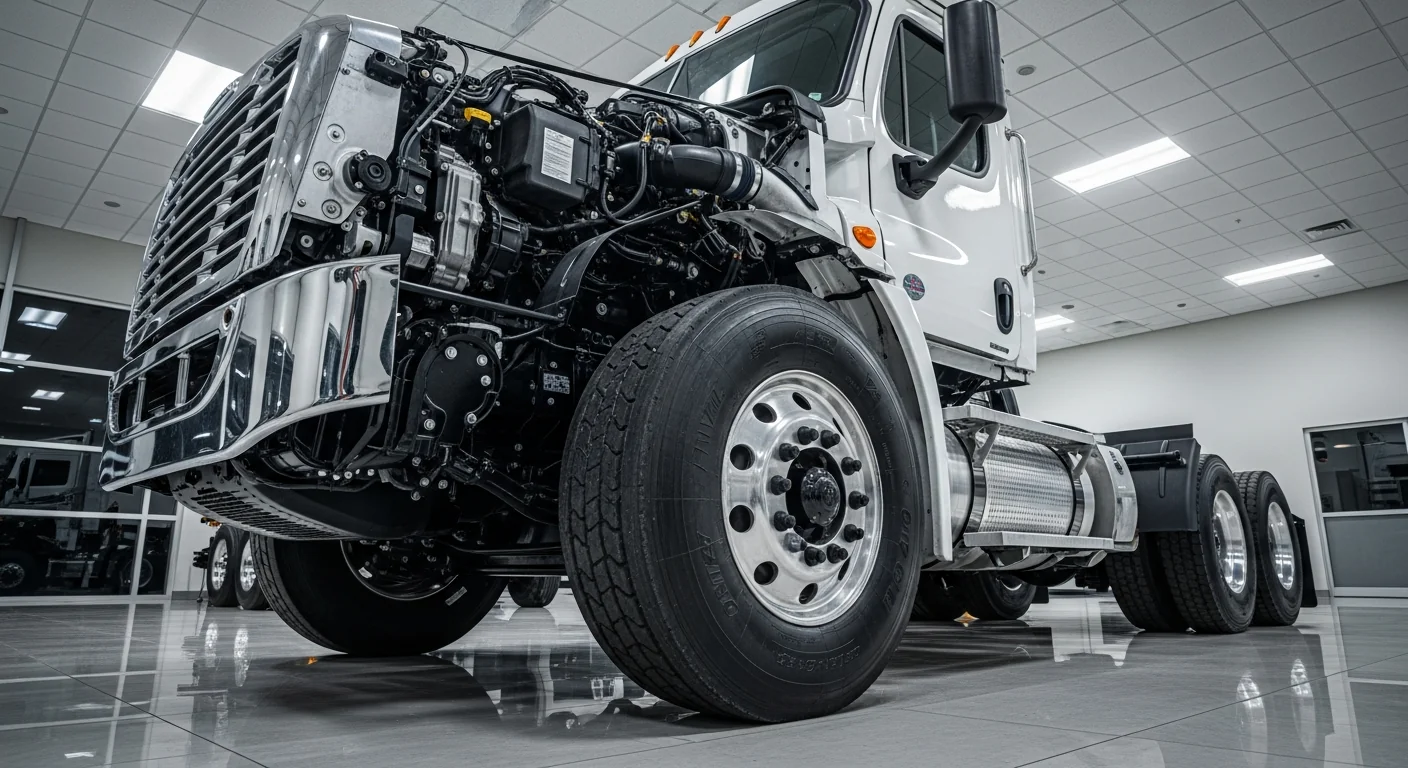
The Freightliner Cascadia dominates North American highways for good reason—it's the most fuel-efficient Class 8 truck available, with proven reliability that translates directly to stronger resale values. But financing one requires understanding the three-tier rate structure that most dealers won't explain.
A-Tier Borrowers (700+ FICO, 2+ years in business): Expect 6-10% APR from legitimate lenders. This tier requires clean MVR, verifiable revenue, and preferably some equipment finance history. The federal excise tax of 12% on new heavy trucks often catches first-time buyers off-guard—budget an extra $18,000-23,000 on that $165,000 sticker price.
B-Tier Borrowers (620-699 FICO, established but imperfect): Rates run 10-14% through proper channels. Late payments, previous repos, or thin business history push you here. Credit unions often offer the best terms for this tier—they evaluate the whole picture, not just the score.
Startup/New Entrant (sub-620 or new authority): Legitimate lenders charge 12-18% with 20-25% down requirements. If you're seeing quotes above 20%, you're either talking to predators or need to improve your profile before applying.
According to IRS Publication 946, the Section 179 deduction limit for 2026 is $2,560,000, allowing you to deduct the full Cascadia purchase price in Year 1. On a $165,000 truck, this generates $23,858 in tax savings at the 35% bracket—effectively creating a 21% instant liquidity multiplier where every dollar invested returns 21 cents in immediate cash flow.
Bonus depreciation adds another 20% first-year deduction under current IRS rules, though for most single-truck purchases, Section 179 covers the entire amount.
The 2027 EPA emissions standards require 82-90% NOx reductions for all new Class 8 trucks, forcing technology upgrades that will add $8,000-25,000 per vehicle. This isn't speculation—it's regulatory certainty.
Every major EPA deadline triggers the same cycle: savvy operators buy before the regulation hits, while others wait and pay the premium. The 2007, 2010, and 2017 deadlines all followed this pattern. Current dealer inventory sits 19% above year-ago levels (approximately 47,000 units), meaning negotiating leverage strongly favors buyers right now.
The Detroit DD16 engine gets a one-year extension until January 2028, making 2025-2026 Cascadias with this powerplant particularly valuable. These trucks depreciate 20-30% in Year 1 but hold stronger residual values than competing Class 8 models—only 38-42% depreciation by Year 3 versus the 45% industry average.
Financing makes mathematical sense for operators planning 3+ year ownership. Monthly payments on a $165,000 Cascadia at 8% over 60 months equal $3,350, while comparable rental rates hit $4,700+ monthly. Ownership breaks even at 35 months, and you're building equity the entire time.
Paying cash feels safe but carries invisible opportunity cost. Most successful trucking operations generate 15-20% annual ROI on working capital. Tying up $165,000 in a depreciating asset means losing $24,750-33,000 annually in potential returns—far more than the interest on 8% financing.
The SBA 7(a) program offers up to $5,000,000 for equipment purchases with rates typically 2-3 points below commercial lenders. SBA 504 loans go up to $5,500,000 with fixed rates for the life of the loan. Even SBA Microloans up to $50,000 can cover down payments for qualified buyers. These programs specifically exist to help small businesses access capital—including trucking operators.
Forum complaints reveal consistent patterns among predatory trucking lenders. Any shop that demands upfront fees before approval, won't provide written rate quotes before pulling credit, or pressures same-day signings should be avoided entirely.
Most dealers routinely mark up lender buy rates by 1-4 points. If a lender approves you at 8%, the dealer might present paperwork at 11-12% and pocket the difference. Always secure at least one independent quote before accepting dealer financing.
Get rates from Daimler Truck Financial (OEM captive), a credit union with commercial programs, and an SBA-approved lender. Compare total cost of financing, not just monthly payments. All applications within a 14-day window count as a single credit inquiry for scoring purposes.
Cascadia insurance costs run $12,000-18,000 annually for owner-operators, varying significantly by authority age, MVR record, and coverage limits. Gap insurance becomes critical when financing—if your truck is totaled, standard comprehensive only covers actual cash value, potentially leaving you $15,000-30,000 short on your loan balance.
Mainly maintenance schedules favor financed Cascadias over competitors. The DD15 engine requires B-service every 40,000 miles versus 25,000-mile intervals on older powerplants, reducing downtime and extending component life. Extended warranties through Daimler cover major powertrain components for up to 750,000 miles, transferring to subsequent buyers and protecting resale values.
The trucking finance industry is designed to keep you in the dark about who actually offers competitive rates. Most operators waste weeks applying to random lenders, watching their credit score drop with each hard pull, only to discover they've been talking to brokers who mark up buy rates by 2-4 points.
Our AI advisor analyzes your specific profile—credit tier, down payment capacity, business history, and the exact Cascadia model you're targeting. Ava knows which lenders approve 2019 models with 600k miles and which ones automatically reject anything over 7 years old. This isn't generic matching—it's equipment-specific intelligence.
When lenders compete for the same deal, rates typically drop 0.5-2 percentage points. Ava connects you with SBA-approved lenders, credit unions with commercial programs, and legitimate equipment finance companies—not the predatory shops that charge 25-40% APR and demand 50% down.
See exactly how each offer affects your cash flow, including Section 179 tax benefits. Every quote includes total cost of financing, prepayment terms, and fee breakdowns—no surprises at closing.
You control the decision. No pressure, no obligation. Most operators get offers within 24-48 hours and can close in 5-10 business days once they choose a lender.
The trucking finance industry is designed to keep you in the dark about who actually offers competitive rates. Most operators waste weeks applying to random lenders, watching their credit score drop with each hard pull, only to discover they've been talking to brokers who mark up buy rates by 2-4 points.
Our AI advisor analyzes your specific profile—credit tier, down payment capacity, business history, and the exact Cascadia model you're targeting. Ava knows which lenders approve 2019 models with 600k miles and which ones automatically reject anything over 7 years old. This isn't generic matching—it's equipment-specific intelligence.
When lenders compete for the same deal, rates typically drop 0.5-2 percentage points. Ava connects you with SBA-approved lenders, credit unions with commercial programs, and legitimate equipment finance companies—not the predatory shops that charge 25-40% APR and demand 50% down.
See exactly how each offer affects your cash flow, including Section 179 tax benefits. Every quote includes total cost of financing, prepayment terms, and fee breakdowns—no surprises at closing.
You control the decision. No pressure, no obligation. Most operators get offers within 24-48 hours and can close in 5-10 business days once they choose a lender.
The trucking finance industry is designed to keep you in the dark about who actually offers competitive rates. Most operators waste weeks applying to random lenders, watching their credit score drop with each hard pull, only to discover they've been talking to brokers who mark up buy rates by 2-4 points.
Our AI advisor analyzes your specific profile—credit tier, down payment capacity, business history, and the exact Cascadia model you're targeting. Ava knows which lenders approve 2019 models with 600k miles and which ones automatically reject anything over 7 years old. This isn't generic matching—it's equipment-specific intelligence.
When lenders compete for the same deal, rates typically drop 0.5-2 percentage points. Ava connects you with SBA-approved lenders, credit unions with commercial programs, and legitimate equipment finance companies—not the predatory shops that charge 25-40% APR and demand 50% down.
See exactly how each offer affects your cash flow, including Section 179 tax benefits. Every quote includes total cost of financing, prepayment terms, and fee breakdowns—no surprises at closing.
You control the decision. No pressure, no obligation. Most operators get offers within 24-48 hours and can close in 5-10 business days once they choose a lender.
When 3-4 legitimate lenders compete for your deal, rates typically drop 0.5-2 percentage points compared to walking into a single bank. We connect you with SBA-approved lenders, equipment finance specialists, and credit unions—not the predatory shops that charge 25-40% APR.
Our AI advisor knows which lenders approve high-mileage Cascadias and which automatically reject anything over 7 years old. She matches your specific situation with lenders who actually want your business, eliminating wasted applications and unnecessary credit pulls.
Every day without your truck means lost revenue opportunities. Most operators get multiple competing offers within 24-48 hours, allowing you to move fast when you find the right deal. No weeks-long approval processes or endless documentation requests.
Every quote includes total cost of financing, all fees, prepayment terms, and Section 179 tax impact calculations. You see exactly how each offer affects your cash flow before making any commitments.
When 3-4 legitimate lenders compete for your deal, rates typically drop 0.5-2 percentage points compared to walking into a single bank. We connect you with SBA-approved lenders, equipment finance specialists, and credit unions—not the predatory shops that charge 25-40% APR.
Our AI advisor knows which lenders approve high-mileage Cascadias and which automatically reject anything over 7 years old. She matches your specific situation with lenders who actually want your business, eliminating wasted applications and unnecessary credit pulls.
Every day without your truck means lost revenue opportunities. Most operators get multiple competing offers within 24-48 hours, allowing you to move fast when you find the right deal. No weeks-long approval processes or endless documentation requests.
Every quote includes total cost of financing, all fees, prepayment terms, and Section 179 tax impact calculations. You see exactly how each offer affects your cash flow before making any commitments.
When 3-4 legitimate lenders compete for your deal, rates typically drop 0.5-2 percentage points compared to walking into a single bank. We connect you with SBA-approved lenders, equipment finance specialists, and credit unions—not the predatory shops that charge 25-40% APR.
Our AI advisor knows which lenders approve high-mileage Cascadias and which automatically reject anything over 7 years old. She matches your specific situation with lenders who actually want your business, eliminating wasted applications and unnecessary credit pulls.
Every day without your truck means lost revenue opportunities. Most operators get multiple competing offers within 24-48 hours, allowing you to move fast when you find the right deal. No weeks-long approval processes or endless documentation requests.
Every quote includes total cost of financing, all fees, prepayment terms, and Section 179 tax impact calculations. You see exactly how each offer affects your cash flow before making any commitments.
When 3-4 legitimate lenders compete for your deal, rates typically drop 0.5-2 percentage points compared to walking into a single bank. We connect you with SBA-approved lenders, equipment finance specialists, and credit unions—not the predatory shops that charge 25-40% APR.
Our AI advisor knows which lenders approve high-mileage Cascadias and which automatically reject anything over 7 years old. She matches your specific situation with lenders who actually want your business, eliminating wasted applications and unnecessary credit pulls.
Every day without your truck means lost revenue opportunities. Most operators get multiple competing offers within 24-48 hours, allowing you to move fast when you find the right deal. No weeks-long approval processes or endless documentation requests.
Every quote includes total cost of financing, all fees, prepayment terms, and Section 179 tax impact calculations. You see exactly how each offer affects your cash flow before making any commitments.
.png)