Generator

Lender competition typically saves 0.5-2% on rates—see what you qualify for in 24 hours with zero obligation.
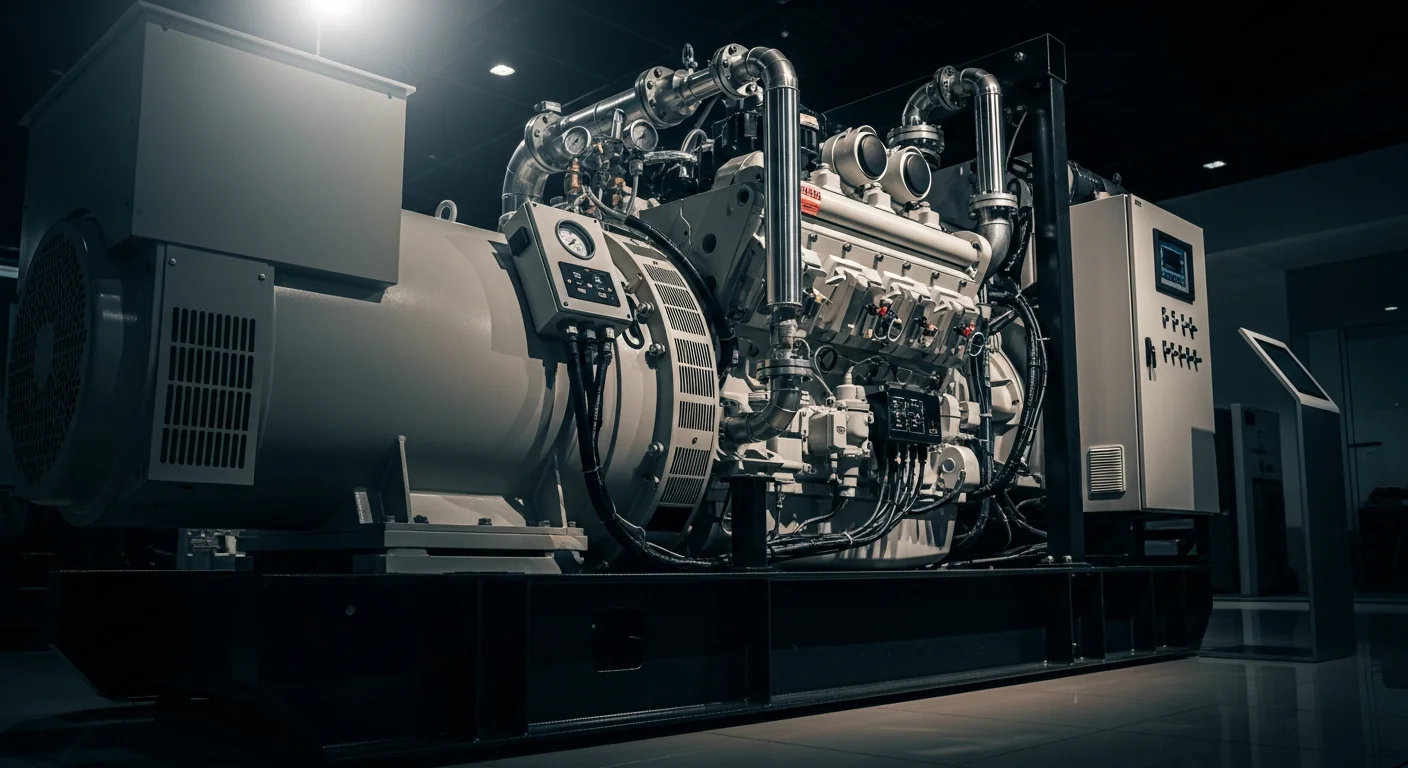
Professional Generator in active commercial use at job site

Trusted by Businesses Nationwide

24hrs

Fast Timelines

Many businesses receive funding shortly after approval

87%

Strong Approval Outcomes

Built to help businesses explore realistic financing options

96%

High Customer Satisfaction

Business owners trust EquipFlow to simplify financing decisions

50+

Extensive Lender Network

National and specialty lenders across industries

Our process

Get funded as easy as 1, 2, 3

Your fastest route to the right lender — and the equipment your business needs.

1

Tell Us About Your Equipment

Share your equipment type, business info, and location — it takes less than 60 seconds.

2

Get Matched With Top Lenders

We instantly compare national and specialty lenders to find your best funding options.

3

Get Funded Fast

Review offers, choose your lender, and get approved with fast turnaround times.

About This Financing Option

Generator financing just got a lot more expensive if you're going through the wrong channels. A contractor recently posted in a forum: 'I got quoted 22% APR on a $4,000 generator through the dealer's financing. Is this normal?' The answer is absolutely not—and if you're paying more than 10% with decent credit, you're leaving thousands on the table.

Here's what most people miss: promotional 0% financing on generators sounds great until the deferred interest clause kicks in and you owe 26.99% retroactively on the full purchase price if you don't pay it off completely during the promotional period. We've seen this complaint hundreds of times about big-box retailer financing programs.

What we typically see in our experience is that generator financing should cost A-Tier borrowers (700+ credit score) between 6-10% APR, B-Tier borrowers (600-699 credit) between 10-14% APR, and even startups with thin credit files can qualify for 12-18% APR through the right lenders. The mistake 90% of buyers make is accepting the first financing offer they see instead of explore generator financing options for your needs and letting lenders compete for their business.

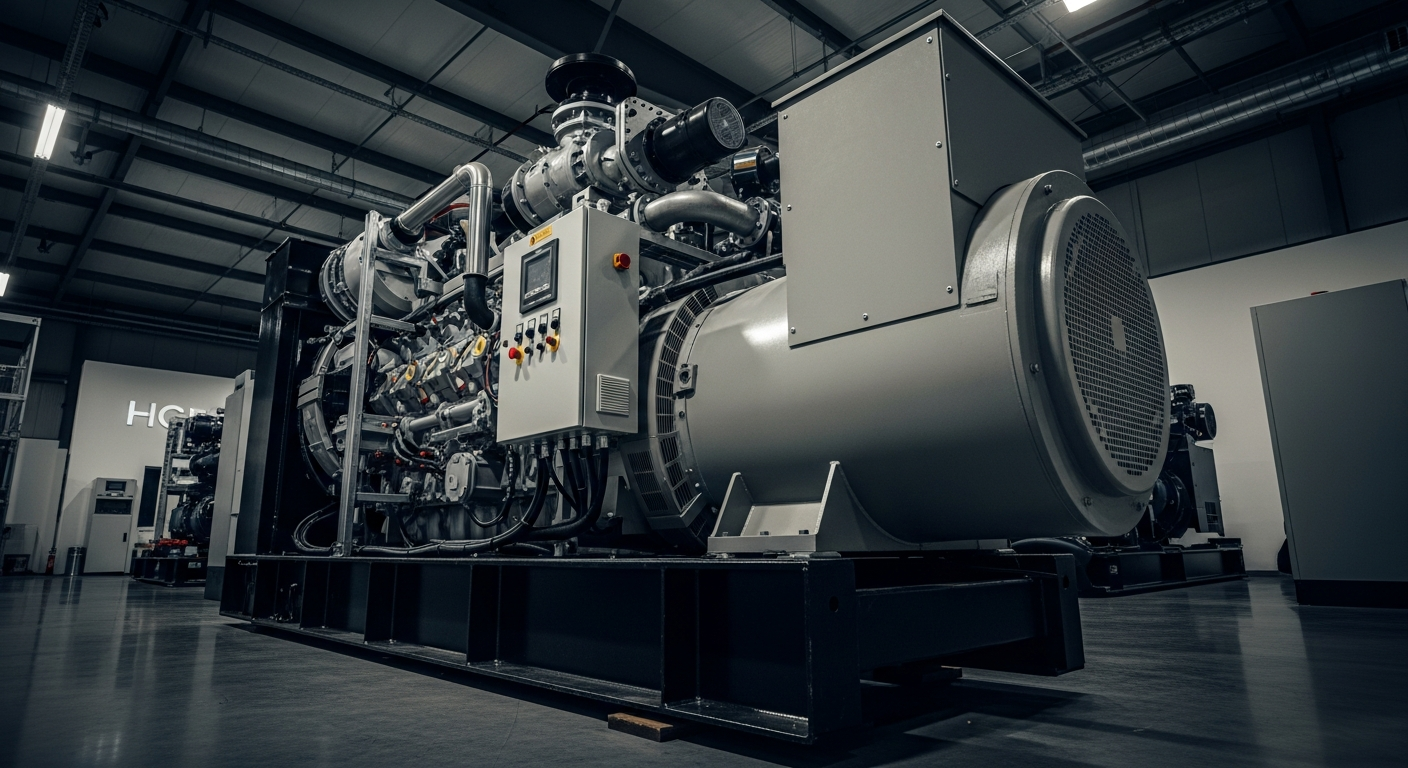
Professional Generator in active commercial use at job site

What Generator Financing Actually Costs (Rates, Terms & Monthly Payments)

Let me be direct with you—the complete absence of actual financing rates on generator websites isn't an accident. Most dealers and manufacturers make more money when you don't shop around for financing. Here's the math that matters:

Generator Financing Rates by Credit Tier

A-Tier borrowers with 720+ FICO scores typically see 6-10% APR on generator financing, assuming standard equipment loan terms. B-Tier borrowers (650-719 FICO) usually qualify for 9.5-14% APR, while startup businesses or borrowers with thin credit files can expect 12-18% APR through specialized lenders.

Compare this to credit card financing at 18-26% APR or those deferred interest programs that hit you with 26.99% retroactively if you miss the payoff deadline by even one day. The difference on a $6,979 Generac Guardian 22kW generator is substantial—at 8% APR over 60 months, you'll pay about $1,416 per year in interest. On a credit card at 22% APR, that same generator costs you $3,890 per year in interest.

Monthly Payment Reality Check — Real Generator Models

Here's what your monthly payments actually look like across popular generator models. A Honda EU2200i portable inverter generator at $1,299 financed at 8% APR for 36 months runs approximately $41 per month. Step up to a Honda EU7000is at $2,999, and you're looking at around $94 monthly for 36 months at the same rate.

For whole-house standby units, a Generac Guardian 10kW starting at $3,649 translates to roughly $68 monthly over 60 months at 8% APR, while the popular 22kW model ranging from $6,119 to $6,979 runs $115-131 monthly under the same terms. These calculations assume 10-15% down payment for qualified borrowers.

Commercial and industrial generators represent a completely different financing category. A used 500kW diesel generator in the $55,000-95,000 range typically requires 15-20% down and runs $1,067-1,844 monthly over 60 months at 8% APR, assuming you can qualify for conventional equipment financing.

Down Payment Requirements & Zero-Down Options

A-Tier borrowers often qualify for zero-down financing on generators under $10,000, especially new units from major manufacturers like Honda, Generac, or Cummins. B-Tier borrowers typically need 10-15% down, while startup businesses or borrowers rebuilding credit usually face 15-25% down payment requirements.

The reason down payments vary so dramatically is that generators serve as their own collateral, but lenders worry about depreciation and resale value. A new Generac with a 5-year warranty holds value much better than a 8-year-old industrial diesel unit with 15,000 hours on it.

Generator Financing vs. Leasing vs. Cash vs. Renting — Which Saves You More?

Here's what most contractors and business owners miss when they automatically assume cash is better because "no debt, no interest." According to IRS Publication 946, that same generator qualifies for up to $1,250,000 in Section 179 deductions in 2026. For a business in the 21% corporate tax bracket, a $6,979 Generac Guardian 22kW generator generates $1,466 in immediate tax savings, reducing the effective cost to $5,513.

Financing vs. Cash — The Opportunity Cost Most Buyers Miss

Smart operators don't ask "can I afford to finance?" They ask "can I afford NOT to?" If your business typically generates 15-20% annual ROI on working capital, paying $6,979 cash means losing $1,047-1,396 per year in opportunity cost. Finance that same generator at 8% APR, and your annual financing cost is only $835 in year one.

The math is simple: 8% financing cost versus 15-20% opportunity cost of cash equals a 7-12% annual profit just from financing instead of paying cash. Over five years, this difference compounds significantly.

Lease-to-Own vs. Fair Market Value Lease — Generator-Specific Breakdown

Equipment leasing works differently for generators than other business equipment. Most generator leases are structured as $1 buyout agreements, meaning you own the unit at the end for essentially nothing. Fair market value leases are rare because generators don't hold residual value well—a 7-year-old standby generator might be worth 20-30% of original cost.

Lease payments on that $6,979 Generac typically run $140-160 monthly over 60 months, compared to $131 monthly for financing. The lease payment is slightly higher, but 100% tax-deductible as a business expense. Financing creates a depreciable asset, giving you Section 179 benefits upfront but limiting ongoing deductions.

Renting vs. Financing: Break-Even Analysis

Portable generator rentals typically cost $150-300 per week depending on size and location. At $200 weekly average, you're spending $10,400 per year with zero equity to show for it. A comparable Honda EU7000is costs $2,999 to purchase and about $3,600 total financed over 36 months at 8% APR.

The break-even point is 18 weeks of rental costs versus financing—so if you only need temporary power for a few weeks, it may make more sense to rent a generator for your next project rather than commit to a purchase. If you need generator power for more than 4-5 months per year, the math overwhelmingly favors ownership through financing.

SBA Loan Programs for Generator Purchases

Business buyers have additional options through SBA programs. The SBA 7(a) program allows loans up to $5,000,000 for equipment purchases, while SBA 504 loans go up to $5,500,000 for real estate and equipment combinations. SBA Microloans up to $50,000 work well for smaller commercial generators.

SBA-backed financing often carries lower interest rates than conventional equipment loans, but requires more documentation and longer approval times. For a $25,000 commercial generator purchase, the paperwork and 2-4 week approval timeline might be worth the 1-2% rate savings.

Tax Benefits That Reduce Your Generator's Effective Cost by 21%+

According to IRS Publication 946, businesses can deduct up to $1,250,000 in qualifying equipment purchases through Section 179 in 2026. This isn't a depreciation schedule—it's a full deduction in the year you place the generator in service.

Section 179 Deduction for Generators (2026 Limits)

For a business in the 21% corporate tax bracket, every dollar of Section 179 deduction saves 21 cents in taxes immediately. That $6,979 Generac Guardian 22kW generator generates $1,466 in Year 1 tax savings, creating a 21% liquidity multiplier on your equipment investment.

This immediate tax benefit effectively reduces your net equipment cost to $5,513, making the generator acquisition significantly more cash-flow positive. Even sole proprietors and partnerships can claim Section 179 against business income, not just C-corporations.

Bonus Depreciation at 20% — What's Left After Section 179

Bonus depreciation for 2026 is 20% on qualifying new and used equipment under the Tax Cuts and Jobs Act phase-down schedule. If you purchase multiple generators or other equipment pushing you over the Section 179 limit, bonus depreciation provides additional first-year tax benefits.

The 20% rate decreases each year through 2027, creating a planning urgency for businesses considering major equipment purchases. What we typically see is contractors timing their generator purchases to maximize these diminishing tax benefits.

New vs. Used Generator Tax Treatment

Both new and used generators qualify for Section 179 and bonus depreciation under current rules. Used generators typically cost 30-60% of new equipment prices depending on age, hours, and condition, potentially delivering higher ROI when combined with full tax benefits.

A used industrial generator at $55,000 (versus $95,000 new) still qualifies for the full Section 179 deduction, generating $11,550 in immediate tax savings at the 21% corporate rate. The effective cost drops to $43,450—often less than financing a comparable new unit.

How to Get Approved — Even With Bad Credit or No Business History

Here's what most people miss about generator financing approval: equipment serves as its own collateral, reducing lender risk significantly compared to unsecured business loans. This means credit requirements are often more flexible than you'd expect.

Credit Score Tiers & What They Mean for Generator Financing

Lenders typically segment generator financing into three credit tiers. Borrowers with 720+ FICO scores qualify for the best terms with minimal documentation. The 650-719 range usually requires additional income verification but still qualifies for reasonable rates. Below 650 FICO, approval depends more on cash flow and down payment capability than credit score alone.

What we typically see is that business borrowers often qualify at better rates than personal financing, even with similar credit scores, because lenders understand the revenue-generating potential of commercial generators.

Startup & New Business Generator Financing (Under 2 Years)

Startup businesses face higher rates but can still access generator financing through specialized lenders. Revenue-based approvals focus on bank statement deposits rather than tax returns for businesses under 2 years old.

SBA Microloans up to $50,000 provide an alternative pathway for new businesses, offering below-market rates in exchange for additional documentation and personal guarantees. The equipment-as-collateral advantage makes generators more financeable than many other startup equipment purchases.

Documentation Checklist by Loan Size

For generator financing under $75,000, most lenders operate on application-only basis: business license, bank statements, driver's license, and EIN documentation. The $75,000-250,000 range typically requires two years of tax returns plus profit and loss statements.

Over $250,000 (commercial and industrial generators), expect full financial package including balance sheet, equipment quotes, business plan, and potentially environmental compliance documentation. SBA-backed financing at any level requires comprehensive documentation but offers lower rates.

Avoiding Financing Traps — Hidden Fees, Deferred Interest & Predatory Terms

The biggest financing trap we see is deferred interest promotions masquerading as "0% financing." Here's the difference that costs thousands: true 0% APR means no interest charges period. Deferred interest means if you don't pay the full balance before the promotional period ends, you owe interest retroactively on the original purchase amount.

On a $5,000 generator with 18-month deferred interest at 26.99% APR, missing the payoff deadline by one day triggers a $1,350 retroactive interest charge. We've seen this complaint repeatedly about big-box retailer financing programs.

Fees to Watch For in Generator Financing Contracts

Origination fees typically range 1-3% of the loan amount, adding $300-900 to a $30,000 generator purchase. Documentation fees of $300-500 are common but negotiable. Prepayment penalties are rare on equipment loans but check your contract—early payoff should never cost extra.

Dealer markup on financing rates is invisible but expensive. If a lender approves you at 8% but the dealer quotes 10%, that 2% markup goes straight to the dealer's pocket. This is why lender competition matters—when multiple lenders bid for your deal, these markups disappear.

How to Read Your Generator Financing Agreement

Key contract clauses to understand: personal guarantee scope (are you liable beyond the equipment value?), blanket lien language (can the lender claim other business assets?), and confession of judgment clauses (can they skip court to collect?).

Most equipment financing is non-recourse, meaning the generator serves as sole collateral. If you see unlimited personal guarantee language, that's a red flag—negotiate it down to the equipment value plus a reasonable collection cost margin.

Generator Financing by Type — Portable, Standby & Industrial

Financing a Portable Generator ($500–$3,000)

Portable generators like the Honda EU2200i at $1,299 often fall below traditional equipment loan minimums. Personal loans or credit lines frequently offer better terms for these smaller purchases, especially if you have strong credit.

Generators under $500 rarely justify financing fees unless bundled with other equipment purchases. What we typically see is contractors financing multiple portable units together to reach lender minimums and spread documentation costs across larger loan amounts.

Financing a Whole-House Standby Generator ($3,500–$7,000+)

Standby generators represent the sweet spot for equipment financing. A Generac Guardian 10kW starting at $3,649 or the popular 22kW model at $6,119-6,979 falls perfectly within most lenders' preferred loan sizes.

Installation costs of $3,000-8,000 can be included in the financed amount, making sense since electrical work and gas connections are necessary for the generator to function. Including installation in your equipment loan often provides better terms than separate contractor financing.

Financing Commercial & Industrial Generators ($25,000–$500,000+)

Commercial generators typically cost $400-600 per kW for new units, while used industrial generators follow the $300-450 per kW pricing rule. Understanding how a diesel generator powers heavy equipment is critical when evaluating units at this scale, since a used 500kW diesel generator ranges from $55,000-95,000 depending on age, hours, and manufacturer.

SBA 7(a) and SBA 504 programs become primary financing vehicles at these price points, offering below-market rates but requiring comprehensive documentation packages. Commercial generator financing typically requires 15-20% down payment and full financial statements for approval.

Financing Used & Refurbished Generators

Used generators cost 30-60% of new equipment prices, creating attractive ROI opportunities when combined with full Section 179 tax benefits. Lenders typically require units under 10 years old with documented maintenance records and hour meter readings.

Warranty status significantly impacts financing terms. A used generator with remaining manufacturer warranty finances similarly to new equipment, while out-of-warranty units face higher rates and shorter terms. Extended warranty options can bridge this gap but add cost.

Compliance Costs to Budget Into Your Generator Financing

OSHA generator violations can cost significantly more than the equipment itself. Willful violations range from $11,524 to $165,514 per violation, while serious violations carry penalties of $1,190 to $16,550. A single safety incident can cost 33 times your generator purchase price.

OSHA Requirements for Workplace Generator Use

Proper grounding, carbon monoxide detection systems, adequate setback distances from buildings, and weatherproof enclosures are mandatory, not optional. Implement these compliance measures immediately—they cost far less than violation penalties.

What we typically see is contractors budgeting generator purchase costs but getting surprised by compliance requirements. Include grounding equipment, CO detection, and proper housing in your financed amount to spread these necessary costs over the loan term.

Permits, Insurance & Installation Costs to Include in Your Loan

Standby generators require electrical permits in most jurisdictions, typically costing $200-500. Homeowner insurance companies must be notified about permanent generator installations, sometimes affecting coverage rates.

Commercial installations face additional requirements: liability insurance updates, environmental compliance for fuel storage, and potentially noise ordinance considerations. Factor these costs into your financed amount rather than paying cash out-of-pocket after equipment delivery—and if you're ready to move forward, explore generator financing options for your needs to find the right terms for your budget.

<div role="img" aria-label="Generator financing rates by credit tier" style="font-family:Inter, -apple-system, BlinkMacSystemFont, sans-serif;background:#F9FAFB;border:1px solid #E5E7EB;border-radius:12px;padding:24px;margin:24px auto;max-width:680px;overflow:hidden;box-sizing:border-box;"><p style="font-size:18px;font-weight:700;color:#111827;margin:0 0 4px 0;word-break:break-word;">Generator Financing Rates by Credit Tier</p><p style="font-size:13px;color:#6B7280;margin:0 0 16px 0;">Based on $48,900 Generator price &middot; 48-month term (market estimates)</p><table style="width:100%;border-collapse:collapse;border:none;border-spacing:0;"><tr><td style="padding:6px 4px 6px 0;font-size:11px;font-weight:600;color:#111827;vertical-align:middle;border:none;">Excellent (720+)</td><td style="padding:6px 0;width:35%;vertical-align:middle;border:none;"><div style="background:#F3F4F6;border-radius:4px;height:24px;overflow:hidden;"><div style="margin-left:28.3%;width:12.3%;height:100%;background:#10B981;border-radius:4px;opacity:0.85;"></div></div></td><td style="padding:6px 0 6px 4px;font-size:11px;font-weight:700;color:#10B981;vertical-align:middle;border:none;">5.5%&ndash;7.9%</td><td style="padding:6px 0 6px 4px;font-size:11px;color:#6B7280;vertical-align:middle;border:none;">~$1,164/mo</td></tr><tr><td style="padding:6px 4px 6px 0;font-size:11px;font-weight:600;color:#111827;vertical-align:middle;border:none;">Good (680-719)</td><td style="padding:6px 0;width:35%;vertical-align:middle;border:none;"><div style="background:#F3F4F6;border-radius:4px;height:24px;overflow:hidden;"><div style="margin-left:38.6%;width:12.3%;height:100%;background:#0066FF;border-radius:4px;opacity:0.85;"></div></div></td><td style="padding:6px 0 6px 4px;font-size:11px;font-weight:700;color:#0066FF;vertical-align:middle;border:none;">7.5%&ndash;9.9%</td><td style="padding:6px 0 6px 4px;font-size:11px;color:#6B7280;vertical-align:middle;border:none;">~$1,210/mo</td></tr><tr><td style="padding:6px 4px 6px 0;font-size:11px;font-weight:600;color:#111827;vertical-align:middle;border:none;">Average (640-679)</td><td style="padding:6px 0;width:35%;vertical-align:middle;border:none;"><div style="background:#F3F4F6;border-radius:4px;height:24px;overflow:hidden;"><div style="margin-left:48.9%;width:17.5%;height:100%;background:#F59E0B;border-radius:4px;opacity:0.85;"></div></div></td><td style="padding:6px 0 6px 4px;font-size:11px;font-weight:700;color:#F59E0B;vertical-align:middle;border:none;">9.5%&ndash;12.9%</td><td style="padding:6px 0 6px 4px;font-size:11px;color:#6B7280;vertical-align:middle;border:none;">~$1,269/mo</td></tr><tr><td style="padding:6px 4px 6px 0;font-size:11px;font-weight:600;color:#111827;vertical-align:middle;border:none;">Fair (600-639)</td><td style="padding:6px 0;width:35%;vertical-align:middle;border:none;"><div style="background:#F3F4F6;border-radius:4px;height:24px;overflow:hidden;"><div style="margin-left:61.7%;width:25.2%;height:100%;background:#EF4444;border-radius:4px;opacity:0.85;"></div></div></td><td style="padding:6px 0 6px 4px;font-size:11px;font-weight:700;color:#EF4444;vertical-align:middle;border:none;">12.0%&ndash;16.9%</td><td style="padding:6px 0 6px 4px;font-size:11px;color:#6B7280;vertical-align:middle;border:none;">~$1,347/mo</td></tr></table><a href="#" style="display:block;background:#0066FF;color:#FFFFFF;border-radius:8px;padding:12px 16px;margin-top:16px;font-size:14px;font-weight:600;text-align:center;text-decoration:none;cursor:pointer;">Explore financing options &rarr;</a></div>

How EquipFlow Works

Instead of settling for whatever rate one lender offers, EquipFlow creates a competitive bidding environment where multiple lenders fight for your generator financing deal.

Step 1: Tell Us About Your Generator & Financial Situation

Ava analyzes your specific equipment needs, credit profile, and business situation to identify which lenders in our network specialize in your type of generator financing. Whether you're buying a Honda EU2200i for $1,299 or a commercial 500kW diesel unit for $75,000, different lenders have different appetites and rate structures. If you're ready to move forward, you can find the right generator for sale today to help guide your financing decision.

Step 2: Get Matched With 3-4 Competing Lenders

This is where the magic happens. When lenders know they're competing against each other for the same deal, rates typically drop 0.5-2 percentage points. We've seen contractors save $2,000-5,000 in total interest costs just from this competition effect alone.

Step 3: Compare Multiple Financing Offers Side-by-Side

You'll see exactly how each offer affects your monthly cash flow, total interest paid, and tax implications. No guessing, no surprises—just clear math on what each lender is actually offering.

Step 4: Choose Your Lender & Close the Deal

You pick the offer that makes the most sense for your situation. No pressure from us, no obligation to accept any offer. The lenders handle all the paperwork and funding directly with you. For those who prefer flexibility without ownership, you can also rent a generator for your next project as an alternative to financing a purchase.

How EquipFlow Works

Instead of settling for whatever rate one lender offers, EquipFlow creates a competitive bidding environment where multiple lenders fight for your generator financing deal.

Step 1: Tell Us About Your Generator & Financial Situation

Ava analyzes your specific equipment needs, credit profile, and business situation to identify which lenders in our network specialize in your type of generator financing. Whether you're buying a Honda EU2200i for $1,299 or a commercial 500kW diesel unit for $75,000, different lenders have different appetites and rate structures. If you're ready to move forward, you can find the right generator for sale today to help guide your financing decision.

Step 2: Get Matched With 3-4 Competing Lenders

This is where the magic happens. When lenders know they're competing against each other for the same deal, rates typically drop 0.5-2 percentage points. We've seen contractors save $2,000-5,000 in total interest costs just from this competition effect alone.

Step 3: Compare Multiple Financing Offers Side-by-Side

You'll see exactly how each offer affects your monthly cash flow, total interest paid, and tax implications. No guessing, no surprises—just clear math on what each lender is actually offering.

Step 4: Choose Your Lender & Close the Deal

You pick the offer that makes the most sense for your situation. No pressure from us, no obligation to accept any offer. The lenders handle all the paperwork and funding directly with you. For those who prefer flexibility without ownership, you can also rent a generator for your next project as an alternative to financing a purchase.

How EquipFlow Works

Instead of settling for whatever rate one lender offers, EquipFlow creates a competitive bidding environment where multiple lenders fight for your generator financing deal.

Step 1: Tell Us About Your Generator & Financial Situation

Ava analyzes your specific equipment needs, credit profile, and business situation to identify which lenders in our network specialize in your type of generator financing. Whether you're buying a Honda EU2200i for $1,299 or a commercial 500kW diesel unit for $75,000, different lenders have different appetites and rate structures. If you're ready to move forward, you can find the right generator for sale today to help guide your financing decision.

Step 2: Get Matched With 3-4 Competing Lenders

This is where the magic happens. When lenders know they're competing against each other for the same deal, rates typically drop 0.5-2 percentage points. We've seen contractors save $2,000-5,000 in total interest costs just from this competition effect alone.

Step 3: Compare Multiple Financing Offers Side-by-Side

You'll see exactly how each offer affects your monthly cash flow, total interest paid, and tax implications. No guessing, no surprises—just clear math on what each lender is actually offering.

Step 4: Choose Your Lender & Close the Deal

You pick the offer that makes the most sense for your situation. No pressure from us, no obligation to accept any offer. The lenders handle all the paperwork and funding directly with you. For those who prefer flexibility without ownership, you can also rent a generator for your next project as an alternative to financing a purchase.

Why Finance Through EquipFlow

Most generator buyers settle for whatever financing the dealer offers. That's leaving money on the table—often thousands of dollars over the loan term.

Lender Competition Saves You Money

When 3-4 lenders compete for the same generator financing deal, rates typically drop 0.5-2 percentage points. On a $50,000 commercial generator, that competition effect saves you $2,400-4,800 in total interest over a 60-month term. On a $50,000 commercial generator, borrowers who understand how a diesel generator powers heavy equipment and compare multiple financing offers consistently get better terms than single-lender applicants.

Ava Knows Your Equipment's Lending Landscape

Different lenders specialize in different generator types and borrower profiles. Banks reject 67% of used equipment loans over 7 years old, but specialized lenders understand generator depreciation curves and maintenance value. Ava identifies which lenders in our network are most likely to approve your specific situation and offer competitive terms when you find a reliable diesel generator for sale today.

24-48 Hour Timeline

Every day without backup power is risk you can't afford. Most contractors get 3+ competing offers within 24-48 hours through EquipFlow's network. Compare that to calling lenders individually, where each application takes days and you're never sure you're getting their best rate.

No Obligation = No Risk

You're not committed to accept any offer. Review all options, pick the one that makes sense, or walk away entirely. The lenders handle all paperwork and funding directly—we just create the competitive environment that gets you better terms when you explore financing options for your generator purchase.

Why Finance Through EquipFlow

Most generator buyers settle for whatever financing the dealer offers. That's leaving money on the table—often thousands of dollars over the loan term.

Lender Competition Saves You Money

When 3-4 lenders compete for the same generator financing deal, rates typically drop 0.5-2 percentage points. On a $50,000 commercial generator, that competition effect saves you $2,400-4,800 in total interest over a 60-month term. On a $50,000 commercial generator, borrowers who understand how a diesel generator powers heavy equipment and compare multiple financing offers consistently get better terms than single-lender applicants.

Ava Knows Your Equipment's Lending Landscape

Different lenders specialize in different generator types and borrower profiles. Banks reject 67% of used equipment loans over 7 years old, but specialized lenders understand generator depreciation curves and maintenance value. Ava identifies which lenders in our network are most likely to approve your specific situation and offer competitive terms when you find a reliable diesel generator for sale today.

24-48 Hour Timeline

Every day without backup power is risk you can't afford. Most contractors get 3+ competing offers within 24-48 hours through EquipFlow's network. Compare that to calling lenders individually, where each application takes days and you're never sure you're getting their best rate.

No Obligation = No Risk

You're not committed to accept any offer. Review all options, pick the one that makes sense, or walk away entirely. The lenders handle all paperwork and funding directly—we just create the competitive environment that gets you better terms when you explore financing options for your generator purchase.

Why Finance Through EquipFlow

Most generator buyers settle for whatever financing the dealer offers. That's leaving money on the table—often thousands of dollars over the loan term.

Lender Competition Saves You Money

When 3-4 lenders compete for the same generator financing deal, rates typically drop 0.5-2 percentage points. On a $50,000 commercial generator, that competition effect saves you $2,400-4,800 in total interest over a 60-month term. On a $50,000 commercial generator, borrowers who understand how a diesel generator powers heavy equipment and compare multiple financing offers consistently get better terms than single-lender applicants.

Ava Knows Your Equipment's Lending Landscape

Different lenders specialize in different generator types and borrower profiles. Banks reject 67% of used equipment loans over 7 years old, but specialized lenders understand generator depreciation curves and maintenance value. Ava identifies which lenders in our network are most likely to approve your specific situation and offer competitive terms when you find a reliable diesel generator for sale today.

24-48 Hour Timeline

Every day without backup power is risk you can't afford. Most contractors get 3+ competing offers within 24-48 hours through EquipFlow's network. Compare that to calling lenders individually, where each application takes days and you're never sure you're getting their best rate.

No Obligation = No Risk

You're not committed to accept any offer. Review all options, pick the one that makes sense, or walk away entirely. The lenders handle all paperwork and funding directly—we just create the competitive environment that gets you better terms when you explore financing options for your generator purchase.

Why Finance Through EquipFlow

Most generator buyers settle for whatever financing the dealer offers. That's leaving money on the table—often thousands of dollars over the loan term.

Lender Competition Saves You Money

When 3-4 lenders compete for the same generator financing deal, rates typically drop 0.5-2 percentage points. On a $50,000 commercial generator, that competition effect saves you $2,400-4,800 in total interest over a 60-month term. On a $50,000 commercial generator, borrowers who understand how a diesel generator powers heavy equipment and compare multiple financing offers consistently get better terms than single-lender applicants.

Ava Knows Your Equipment's Lending Landscape

Different lenders specialize in different generator types and borrower profiles. Banks reject 67% of used equipment loans over 7 years old, but specialized lenders understand generator depreciation curves and maintenance value. Ava identifies which lenders in our network are most likely to approve your specific situation and offer competitive terms when you find a reliable diesel generator for sale today.

24-48 Hour Timeline

Every day without backup power is risk you can't afford. Most contractors get 3+ competing offers within 24-48 hours through EquipFlow's network. Compare that to calling lenders individually, where each application takes days and you're never sure you're getting their best rate.

No Obligation = No Risk

You're not committed to accept any offer. Review all options, pick the one that makes sense, or walk away entirely. The lenders handle all paperwork and funding directly—we just create the competitive environment that gets you better terms when you explore financing options for your generator purchase.

Generator
Generator

Equipment Financing Calculator

Compare financing vs. cash vs. renting — see which option wins

Equipment Price
Down Payment ($)
Down (%)
Credit Profile
Tax Bracket (%)
Term (Months)
Estimated Monthly Payment
$3,284
📊 Compare Your Options (48 months)
Pay Cash
-$97,250
After Sec. 179 deduction
Capital tied up on day one
★ Best Value
Finance It
-$90,886
After tax savings + ROI
You own it + saved $59,114
Rate by credit Sec. 179 est. 5% capital ROI
Keep Renting
-$140,400
@ $4,500/mo (Est. 3%/mo) net after deduction
You build $0 equity
Your monthly rental cost
$
Financing preserves your working capital and builds equipment equity.
*Estimated terms for illustration. Section 179 limit: $1,220,000 (2025). Rent estimate: 3% of equipment price/month. All options shown net of applicable tax deductions. Consult a tax professional.

Get Matched With Generator Lenders in 24 Hours

Frequently Asked Questions

What generator financing rates should I expect based on my credit score?
A-Tier borrowers with 720+ FICO scores typically see 6-10% APR on generator financing. B-Tier borrowers (650-719 FICO) usually qualify for 9.5-14% APR, while startup businesses or borrowers with thin credit files can expect 12-18% APR through specialized lenders. These rates are significantly better than credit card financing at 18-26% APR or big-box retailer deferred interest programs that can hit 26.99% if you miss the payoff deadline.
Can I finance a used or refurbished generator?
Yes, with conditions. Used generators typically cost 30-60% of new equipment prices and can be financed through specialized lenders. Most require units under 10 years old with documented maintenance records and hour meter readings. Warranty status significantly impacts terms—units with remaining manufacturer warranty finance similarly to new equipment. Both new and used generators qualify for Section 179 tax deductions up to $1,250,000 according to IRS Publication 946.
What documentation do I need to apply for generator financing?
Documentation requirements depend on loan size. For generators under $75,000, most lenders operate application-only: business license, bank statements, driver's license, and EIN. The $75,000-250,000 range typically requires two years of tax returns plus profit and loss statements. Over $250,000 for commercial generators, expect full financial packages including balance sheet, equipment quotes, and business plans for SBA-backed financing.
Should I finance, lease, or pay cash for my generator?
The math often favors financing over cash for business buyers. According to IRS Publication 946, Section 179 allows up to $1,250,000 in equipment deductions. A $6,979 generator in the 21% tax bracket generates $1,466 immediate tax savings, reducing effective cost to $5,513. If your business generates 15-20% ROI on working capital, financing at 8% APR while keeping cash working creates 7-12% annual profit versus paying cash.
What are my monthly payments on different generator models?
Monthly payments vary by model and terms. A Honda EU2200i at $1,299 financed at 8% APR for 36 months runs approximately $41 monthly. A Generac Guardian 22kW ranging from $6,119-6,979 costs $115-131 monthly over 60 months at 8% APR with 10-15% down. Used commercial generators in the $55,000-95,000 range typically run $1,067-1,844 monthly over 60 months, assuming qualified borrower status and standard down payment requirements.

Related

Equipment Options

Generator

Related Equipment Options

Don't Overpay—Let Generator Lenders Compete for Your Business

Need help?
Ava
EquipFlow Assistant