Many businesses receive funding shortly after approval
Built to help businesses explore realistic financing options
Business owners trust EquipFlow to simplify financing decisions
National and specialty lenders across industries
Your fastest route to the right lender — and the equipment your business needs.
Share your equipment type, business info, and location — it takes less than 60 seconds.
We instantly compare national and specialty lenders to find your best funding options.
Review offers, choose your lender, and get approved with fast turnaround times.
Generator financing has become the smart money move for contractors who understand opportunity cost. Here's what most people miss: paying $20,000 cash for a standby generator doesn't just cost you $20,000—it costs you the 15-20% annual return that capital could generate elsewhere. That's $3,000-4,000 per year in invisible opportunity cost, every year you own the unit.
Meanwhile, generator rental rates jumped 23% in the last 18 months, hitting $400-576/month for mid-range units. Do the math: at those rates, ownership breaks even against rental in just 12-18 months. Yet most contractors still think of financing as "paying interest"—when the real question is whether 8% financing options for a diesel generator beats 20% opportunity cost.
What we typically see is contractors who finance their generators report 40% faster fleet growth than those who tie up cash in single purchases. The math is simple: preserve your working capital, let the equipment pay for itself, and use Section 179 tax benefits to reduce your effective cost by 25-35%. When 3-4 lenders compete for the same deal, rates drop significantly—and that's where most buyers leave money on the table by going with their first quote.
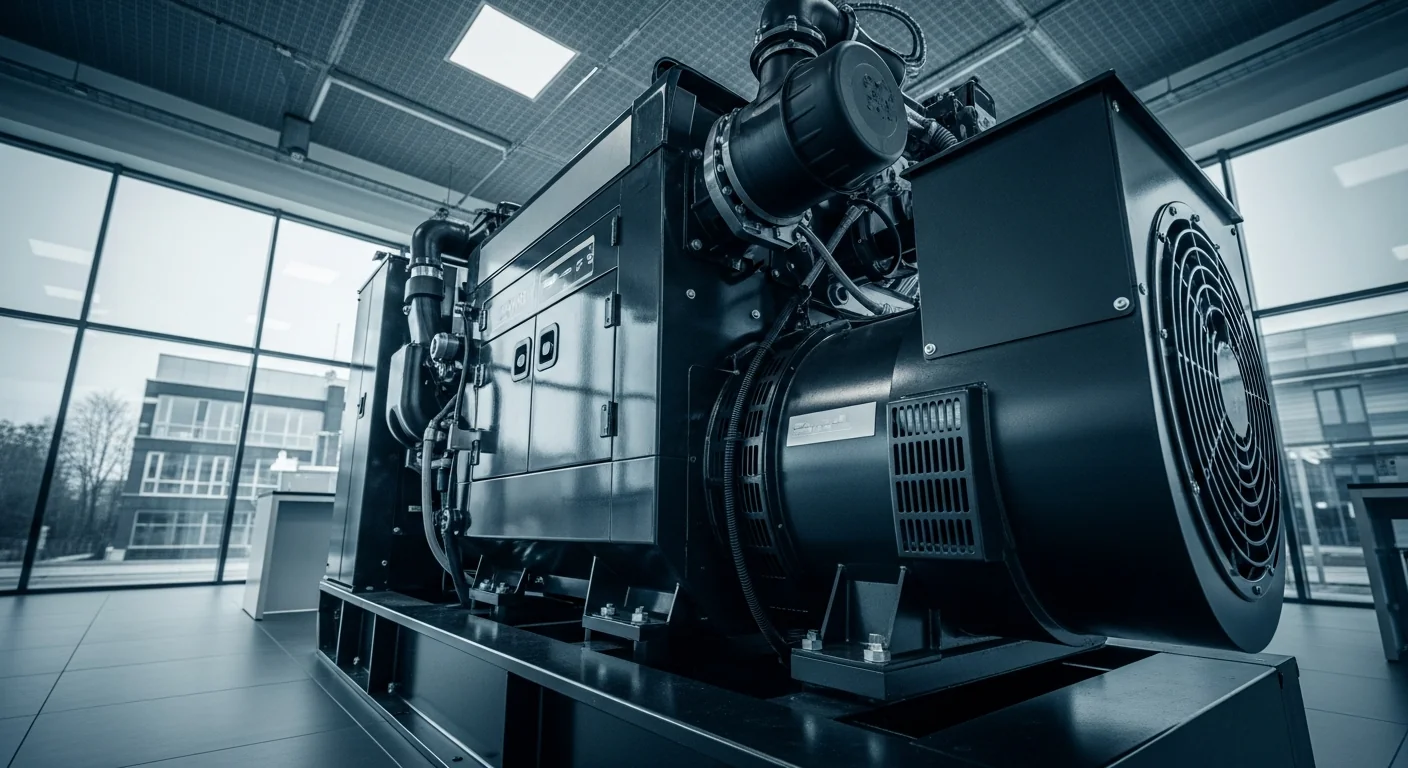
Forget the "as low as" marketing—here's what generator financing actually costs in 2026. A-tier borrowers with 700+ FICO scores typically see 6-10% APR, while B-tier credit (650-699) ranges from 10-14%. Startup or challenged credit can still qualify but expect 12-18% rates and 20%+ down payments.
A-tier borrowers (720+ FICO) qualify for the best terms: 6-10% APR with $0 down available. These borrowers often see approval within 2-4 hours and can finance up to 100% of equipment cost plus installation.
B-tier credit (650-719) typically sees 10-14% APR with 10-20% down required. Still competitive rates, especially when you factor in Section 179 tax benefits that can offset 25-35% of your total cost.
Startup and challenged credit (below 650) may qualify at 12-18% APR but typically need 20%+ down. According to forum analysis, poor credit equipment financing consistently requires higher down payments, but approval is still possible for borrowers with stable income.
A $10,000 generator financed at 10% over 60 months costs $212 per month. The same unit at 15% costs $238 monthly—a $26 difference that equals $1,560 over the loan term. A $20,000 generator at 8% over 60 months runs $406 monthly, while 12% financing costs $445 monthly.
These numbers matter because most contractors underestimate total cost. That "low" 8% rate costs $4,340 in total interest on a $20,000 loan. Factor this into your cash flow projections—not just the monthly payment.
Origination fees typically run 1-6% of loan amount. Documentation fees range from $100-500. Some lenders charge activation fees—Generac's financing through Synchrony includes a $29 activation fee. Late payment penalties can hit 5% of the missed payment amount. Always ask for total cost disclosure before signing.
Most contractors make financing decisions on emotion, not math. Here's the calculation that actually matters: opportunity cost vs. financing cost vs. rental bleeding.
Paying $20,000 cash feels "debt-free," but you're paying an invisible 15-20% opportunity cost if that capital could generate returns elsewhere. At 8% financing over 60 months, your monthly payment is $406 with $4,340 total interest. If your $20,000 generates 18% annual returns in working capital, you profit $3,600 yearly by financing instead of paying cash.
The math is stark: 8% financing cost vs. 18% opportunity cost means financing creates a 10% annual advantage. Over 5 years, that's $10,000+ in additional profit from the same $20,000.
Generator rental rates hit $400-576 monthly for mid-range units according to recent market data. A $20,000 generator financed at 8% costs $406 monthly. Ownership breaks even at 12-18 months—meaning any project lasting beyond one season makes purchase financially superior to rental.
But here's what rental advocates miss: you're building zero equity. After 24 months of $500 rental payments, you've spent $12,000 with nothing to show for it. The same $12,000 covers 30 months of financing payments, and you own a $20,000 asset.
Business buyers get a massive advantage through Section 179 tax deductions. According to IRS Publication 946, the 2026 deduction limit is $2,560,000, allowing businesses to deduct the full purchase price in the year of acquisition—even if 100% financed.
A business owner purchasing a $13,910 commercial generator can recover $3,478-4,868 in tax savings depending on bracket. At the 32% bracket, that's $4,451 in immediate tax relief—enough to cover the down payment and first several months of financing.
Bonus depreciation adds another 20% first-year write-off for 2026. This rate phases down annually under the Tax Cuts and Jobs Act, making 2026 the final year for meaningful bonus depreciation benefits.
Most contractors get blindsided by installation costs that aren't included in equipment-only loans. Here's what you need to budget:
Home standby generators (10-24kW) typically cost $3,000-15,000 for the unit alone. But total installed cost runs 40-60% higher due to required components and labor.
Automatic transfer switches add $500-1,500. Concrete pads cost $300-800. Electrical panel work ranges from $1,000-3,000. Gas line extensions can hit $500-2,000. Municipal permits and inspections typically run $200-1,000.
Equipment loans typically cover the generator only—you pay installation costs separately. Home improvement loans often bundle equipment plus installation but may carry higher rates. HELOC financing usually offers the lowest rates but requires home equity.
Ask your lender explicitly what's included before signing. Getting approved for $15,000 equipment-only financing doesn't help if you need $22,000 for a complete installation.
Most lenders finance used generators under 5-7 years old with documented maintenance history. Hour-meter limits typically cap at 1,500 hours for standby units. Major brands (Generac, Kohler, Cummins) finance more easily than off-brand units due to resale value certainty.
Used equipment typically adds 1-3% to new equipment rates and may require shorter terms. Minimum loan amounts of $2,000-5,000 are common, pricing out smaller portable units. If you're still exploring options, you can find a quality generator for sale before committing to a financing plan.
Government programs offer attractive alternatives for qualifying businesses. The SBA Microloan program provides up to $50,000 with longer approval timelines but typically lower rates. These loans work well for smaller commercial generators and installation costs.
SBA 7(a) loans allow up to $5,000,000 for larger commercial and industrial generator projects. Personal guarantees are required, but rates are typically pegged to Prime plus margin. The 2-6 week approval timeline works for planned installations but not emergency replacements.SBA 504 loans target major fixed-asset purchases up to $5,500,000. These work best for industrial generator installations permanently affixed to commercial property, offering below-market fixed rates.
Many commercial lenders require proof of code-compliant installation before releasing funds. Factor compliance costs into your total project budget—non-compliant installations can void financing agreements and create liability exposure.
Proper grounding systems, accessible disconnect switches, adequate ventilation, and compliant signage are mandatory. Most contractors use licensed electricians to ensure compliance, but this adds to total project cost.
Smart contractors don't guess which lender will approve their deal—they let lenders compete for it. Here's how Ava matches you with the right financing partners in 24 hours:
Ava analyzes your specific needs: generator size, new vs. used, credit profile, and whether you need installation bundled. This isn't generic pre-qualification—we're diagnosing which lenders specialize in your exact scenario. Banks reject 67% of used equipment loans over 7 years old, but Ava knows which lenders don't have those restrictions.
Here's what most people don't know: when lenders compete for the same deal, rates typically drop 0.5-2 percentage points. Ava matches you with lenders who actively want your business—not just anyone who might approve it. Each lender sees they're competing, which works in your favor.
See exactly how each offer affects your monthly cash flow. A $20,000 generator at 8% over 60 months costs $406/month, while the same loan at 12% costs $445/month. That $39 difference equals $2,340 over the loan term—real money that stays in your pocket when you compare offers.
You're in control. No pressure, no obligation to accept any offer. Most contractors close within 48 hours of choosing their preferred lender, with funding available immediately upon approval.
Smart contractors don't guess which lender will approve their deal—they let lenders compete for it. Here's how Ava matches you with the right financing partners in 24 hours:
Ava analyzes your specific needs: generator size, new vs. used, credit profile, and whether you need installation bundled. This isn't generic pre-qualification—we're diagnosing which lenders specialize in your exact scenario. Banks reject 67% of used equipment loans over 7 years old, but Ava knows which lenders don't have those restrictions.
Here's what most people don't know: when lenders compete for the same deal, rates typically drop 0.5-2 percentage points. Ava matches you with lenders who actively want your business—not just anyone who might approve it. Each lender sees they're competing, which works in your favor.
See exactly how each offer affects your monthly cash flow. A $20,000 generator at 8% over 60 months costs $406/month, while the same loan at 12% costs $445/month. That $39 difference equals $2,340 over the loan term—real money that stays in your pocket when you compare offers.
You're in control. No pressure, no obligation to accept any offer. Most contractors close within 48 hours of choosing their preferred lender, with funding available immediately upon approval.
Smart contractors don't guess which lender will approve their deal—they let lenders compete for it. Here's how Ava matches you with the right financing partners in 24 hours:
Ava analyzes your specific needs: generator size, new vs. used, credit profile, and whether you need installation bundled. This isn't generic pre-qualification—we're diagnosing which lenders specialize in your exact scenario. Banks reject 67% of used equipment loans over 7 years old, but Ava knows which lenders don't have those restrictions.
Here's what most people don't know: when lenders compete for the same deal, rates typically drop 0.5-2 percentage points. Ava matches you with lenders who actively want your business—not just anyone who might approve it. Each lender sees they're competing, which works in your favor.
See exactly how each offer affects your monthly cash flow. A $20,000 generator at 8% over 60 months costs $406/month, while the same loan at 12% costs $445/month. That $39 difference equals $2,340 over the loan term—real money that stays in your pocket when you compare offers.
You're in control. No pressure, no obligation to accept any offer. Most contractors close within 48 hours of choosing their preferred lender, with funding available immediately upon approval.
Most contractors shop for generators first, then worry about financing options. That's backwards—and it costs them money. Here's why smart operators start with financing options:
When multiple lenders compete for the same deal, rates typically drop 0.5-2 percentage points. That's real money: on a $20,000 loan, 1% rate reduction saves you $1,100 over 60 months. EquipFlow creates that competition automatically by matching you with 3-4 lenders who specialize in your credit profile and equipment type.
Most contractors accept their first financing quote, leaving thousands on the table. Why negotiate with one lender when you can have four bidding for your business?
Not all lenders treat generators equally. Some banks reject loans on used units over 5 years old. Others won't finance portable generators under $5,000. Ava knows which lenders specialize in standby generators, which approve used equipment, and which bundle installation costs.
This intelligence matters: getting rejected by the wrong lender creates a hard credit pull for nothing. Ava matches you with lenders who actually want your deal, improving approval odds while protecting your credit score.
Power outages don't wait for your budget cycle. When you need backup power immediately, generator dealers know they can charge premium prices and offer inferior financing terms. EquipFlow's 24-48 hour matching gives you leverage even in urgent situations.
Most equipment financing lenders provide decisions within 2-4 hours for applications under $150,000. Funding typically occurs within 24-48 hours of approval, faster than most dealer financing programs.
You're not committed to any offer. Compare multiple financing options, see real monthly payments, and choose the deal that fits your cash flow. If none of the offers work, you haven't wasted time or damaged your credit—Ava uses soft pulls for initial matching that have zero impact on your score.
Most contractors shop for generators first, then worry about financing options. That's backwards—and it costs them money. Here's why smart operators start with financing options:
When multiple lenders compete for the same deal, rates typically drop 0.5-2 percentage points. That's real money: on a $20,000 loan, 1% rate reduction saves you $1,100 over 60 months. EquipFlow creates that competition automatically by matching you with 3-4 lenders who specialize in your credit profile and equipment type.
Most contractors accept their first financing quote, leaving thousands on the table. Why negotiate with one lender when you can have four bidding for your business?
Not all lenders treat generators equally. Some banks reject loans on used units over 5 years old. Others won't finance portable generators under $5,000. Ava knows which lenders specialize in standby generators, which approve used equipment, and which bundle installation costs.
This intelligence matters: getting rejected by the wrong lender creates a hard credit pull for nothing. Ava matches you with lenders who actually want your deal, improving approval odds while protecting your credit score.
Power outages don't wait for your budget cycle. When you need backup power immediately, generator dealers know they can charge premium prices and offer inferior financing terms. EquipFlow's 24-48 hour matching gives you leverage even in urgent situations.
Most equipment financing lenders provide decisions within 2-4 hours for applications under $150,000. Funding typically occurs within 24-48 hours of approval, faster than most dealer financing programs.
You're not committed to any offer. Compare multiple financing options, see real monthly payments, and choose the deal that fits your cash flow. If none of the offers work, you haven't wasted time or damaged your credit—Ava uses soft pulls for initial matching that have zero impact on your score.
Most contractors shop for generators first, then worry about financing options. That's backwards—and it costs them money. Here's why smart operators start with financing options:
When multiple lenders compete for the same deal, rates typically drop 0.5-2 percentage points. That's real money: on a $20,000 loan, 1% rate reduction saves you $1,100 over 60 months. EquipFlow creates that competition automatically by matching you with 3-4 lenders who specialize in your credit profile and equipment type.
Most contractors accept their first financing quote, leaving thousands on the table. Why negotiate with one lender when you can have four bidding for your business?
Not all lenders treat generators equally. Some banks reject loans on used units over 5 years old. Others won't finance portable generators under $5,000. Ava knows which lenders specialize in standby generators, which approve used equipment, and which bundle installation costs.
This intelligence matters: getting rejected by the wrong lender creates a hard credit pull for nothing. Ava matches you with lenders who actually want your deal, improving approval odds while protecting your credit score.
Power outages don't wait for your budget cycle. When you need backup power immediately, generator dealers know they can charge premium prices and offer inferior financing terms. EquipFlow's 24-48 hour matching gives you leverage even in urgent situations.
Most equipment financing lenders provide decisions within 2-4 hours for applications under $150,000. Funding typically occurs within 24-48 hours of approval, faster than most dealer financing programs.
You're not committed to any offer. Compare multiple financing options, see real monthly payments, and choose the deal that fits your cash flow. If none of the offers work, you haven't wasted time or damaged your credit—Ava uses soft pulls for initial matching that have zero impact on your score.
Most contractors shop for generators first, then worry about financing options. That's backwards—and it costs them money. Here's why smart operators start with financing options:
When multiple lenders compete for the same deal, rates typically drop 0.5-2 percentage points. That's real money: on a $20,000 loan, 1% rate reduction saves you $1,100 over 60 months. EquipFlow creates that competition automatically by matching you with 3-4 lenders who specialize in your credit profile and equipment type.
Most contractors accept their first financing quote, leaving thousands on the table. Why negotiate with one lender when you can have four bidding for your business?
Not all lenders treat generators equally. Some banks reject loans on used units over 5 years old. Others won't finance portable generators under $5,000. Ava knows which lenders specialize in standby generators, which approve used equipment, and which bundle installation costs.
This intelligence matters: getting rejected by the wrong lender creates a hard credit pull for nothing. Ava matches you with lenders who actually want your deal, improving approval odds while protecting your credit score.
Power outages don't wait for your budget cycle. When you need backup power immediately, generator dealers know they can charge premium prices and offer inferior financing terms. EquipFlow's 24-48 hour matching gives you leverage even in urgent situations.
Most equipment financing lenders provide decisions within 2-4 hours for applications under $150,000. Funding typically occurs within 24-48 hours of approval, faster than most dealer financing programs.
You're not committed to any offer. Compare multiple financing options, see real monthly payments, and choose the deal that fits your cash flow. If none of the offers work, you haven't wasted time or damaged your credit—Ava uses soft pulls for initial matching that have zero impact on your score.
.png)