Tractor Rental

Rental rates jumped 23% in 18 months—but smart operators are financing instead and pocketing Section 179 deductions up to $1,250,000.
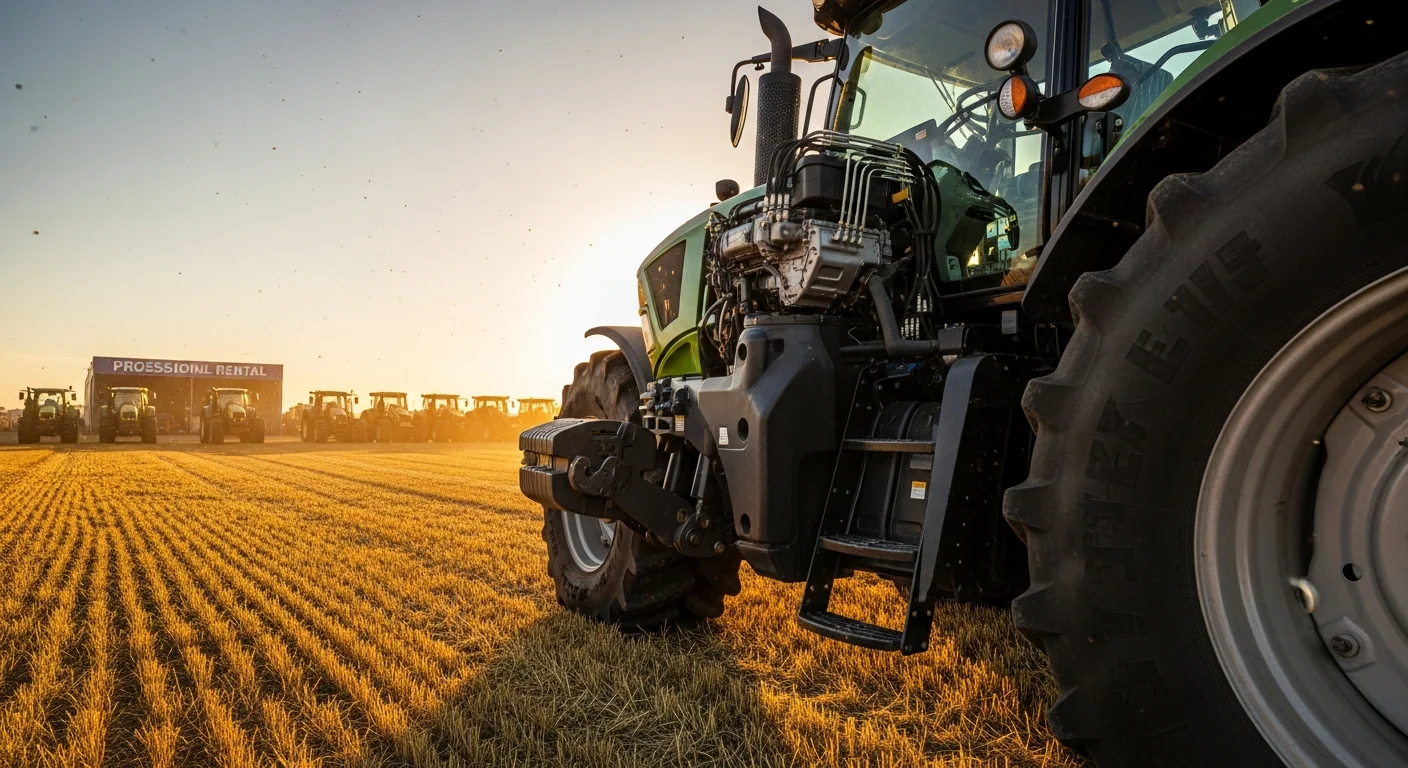
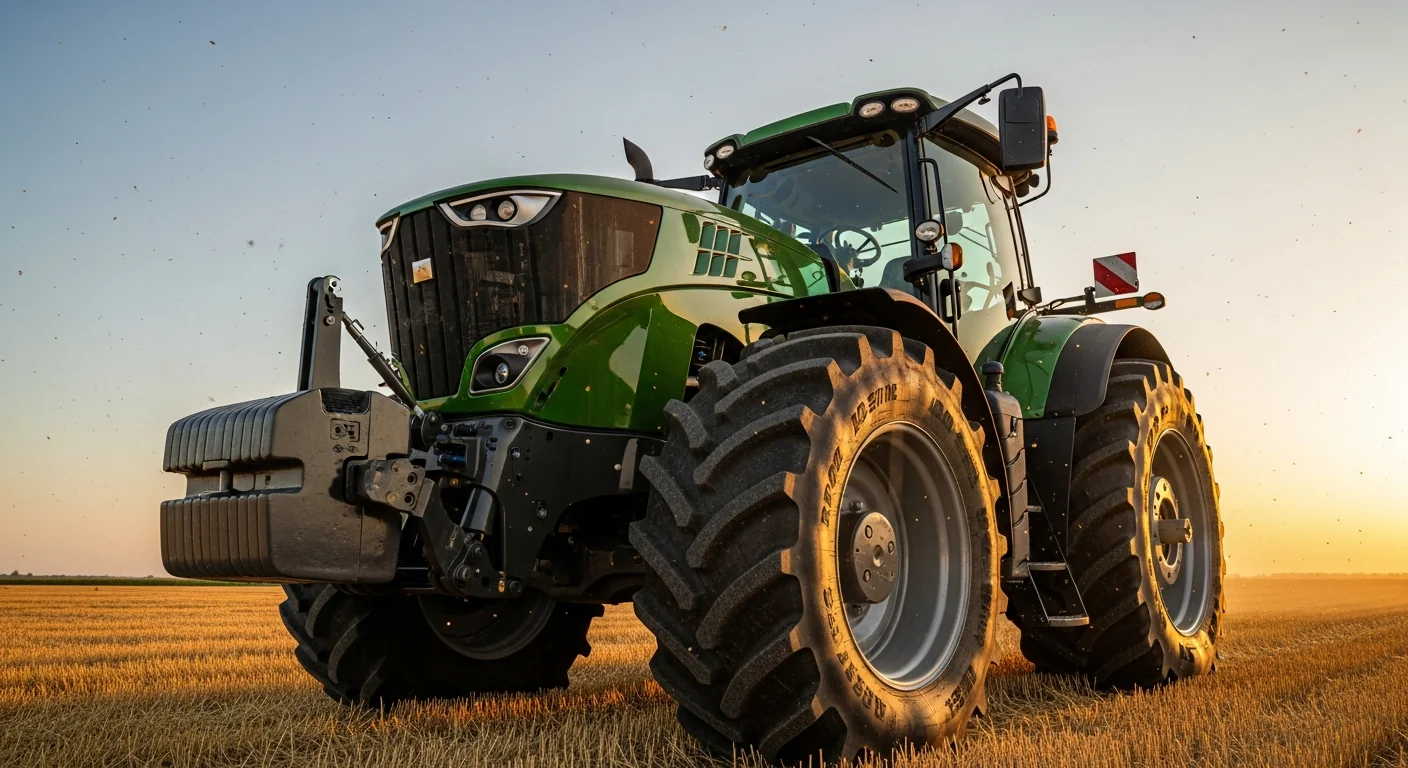
Professional tractor in active commercial use at job site

Trusted by Businesses Nationwide

24hrs

Fast Timelines

Many businesses receive funding shortly after approval

87%

Strong Approval Outcomes

Built to help businesses explore realistic financing options

96%

High Customer Satisfaction

Business owners trust EquipFlow to simplify financing decisions

50+

Extensive Lender Network

National and specialty lenders across industries

Our process

Get funded as easy as 1, 2, 3

Your fastest route to the right lender — and the equipment your business needs.

1

Tell Us About Your Equipment

Share your equipment type, business info, and location — it takes less than 60 seconds.

2

Get Matched With Top Lenders

We instantly compare national and specialty lenders to find your best funding options.

3

Get Funded Fast

Review offers, choose your lender, and get approved with fast turnaround times.

About This Financing Option

Tractor rental rates have jumped 23% in the last 18 months, with compact tractors now costing $150-$300 per day and large row crop units hitting $500-$1,000+ daily. What most contractors and farmers don't realize is that 'affordable' $900 weekly rental actually costs $1,650 after deposits, damage waivers, delivery fees, and attachments. Here's what really gets expensive: if you're renting more than 90 days per year, you're mathematically better off exploring tractor financing options for your next purchase—even at 8% APR.

In our experience analyzing thousands of equipment deals, contractors who rent utility tractors seasonally spend $24,000 annually with zero equity to show for it. That same $24,000 could finance a $120,000 tractor at 7.5% APR with monthly payments around $1,200—and generate up to $42,000 in immediate Section 179 tax savings at the 35% bracket. The breakeven point? Just 52 months, according to our analysis of current financing rates versus rental costs.

Most people miss this because rental companies publish base rates without disclosing the total cost structure, and understanding how much does a new tractor cost today depends on whether you're financing or renting—a conversation that happens at the dealer where you have zero leverage. What we typically see is operators making emotional rental decisions without running the actual numbers—and that's costing them tens of thousands per year. For those with different equipment needs, the same financing logic applies whether you need to rent a backhoe for your next project or explore other heavy equipment options that might better suit your operation.

Professional tractor in active commercial use at job site

The True Cost of tractor Rental (What Companies Don't Tell You)

Here's what most people miss: that $900 weekly rental rate is just the starting point. Damage waiver insurance adds 10-15% ($90-$135), security deposits tie up $500-$2,000 in working capital, and delivery fees run $50-$500 each way depending on distance. Need a rotary cutter? Add $40 per day. Post hole digger? Another $35 daily. By the time you're operational, your 'budget-friendly' rental requires $1,650 in upfront capital.

Rental Rate Reality Check by Tractor Class

Compact tractors (25-40 HP) typically cost $150-$300 per day, with weekly rates of $500-$900 and monthly rates hitting $1,500-$2,500. Utility tractors (40-100 HP) range from $275-$500 daily, $900-$1,800 weekly, or $2,500-$5,000 monthly. Large row crop tractors (100+ HP) start at $500 daily and can exceed $1,000 for high-horsepower units, with monthly rates reaching $5,000-$10,000.

What drives these costs? Seasonal demand spikes during spring planting and fall harvest can inflate rates 30-50% above off-season pricing. Equipment shortages in prime agricultural regions mean premium pricing when you need tractors most.

The Hidden Operational Costs Adding Up Fast

Fuel policies require full-tank returns—miss this and face $100-$200 in diesel surcharges. Sales tax varies dramatically by state: California hits rentals with 7.25-10.25% tax, while Texas charges 6.25% unless you qualify for agricultural exemption via Form 01-339. Commercial operators need $1-$2 million in general liability coverage, and rental agreements typically require all operators to be listed and meet minimum age requirements of 18-21.

When the Math Says Buy Instead of Rent

Based on EquipFlow's analysis of financing rates versus rental costs, large tractor ownership pays off after 52 months despite 2.7x higher monthly payments. A $180,000 Kubota large tractor financed at 5.95% APR costs approximately $3,447 monthly over 60 months, compared to $1,283 monthly for comparable rental units. The ownership breakeven occurs at month 52 when you factor in equity buildup and Section 179 tax benefits of up to $63,000 at the 35% bracket.

For smaller operations, the threshold is even lower. Compact tractors purchased at $25,000-$30,000 break even against rental costs of $2,000 monthly in just 15-18 months. This is why contractors who rent more than 90 days annually typically overpay by $8,000-$15,000 per year compared to financing—so if you're running the numbers, explore tractor financing options for your next purchase.

Section 179 Creates 21% Immediate Cash Recovery

According to IRS Publication 946, the Section 179 deduction limit for 2026 is $1,250,000, allowing businesses to deduct the full purchase price of qualifying tractor equipment in the year it's placed in service. A $150,000 tractor purchase generates $31,500 in immediate Year 1 tax savings at the 21% corporate rate, creating a 21% liquidity multiplier effect and reducing the effective net cost to just $118,500.

At higher tax brackets, the savings are even more dramatic. Based on EquipFlow's analysis of IRS data, a $207,100 tractor purchase generates Section 179 tax savings of $51,775 at the 25% bracket, $66,272 at the 32% bracket, or $72,485 at the 35% bracket. Combined with 20% bonus depreciation for 2026, you're looking at immediate tax benefits that can offset 25-35% of your equipment investment.

The Rental Trap: 100% Expense vs. Asset Building

Rental payments are 100% deductible as ordinary business expenses the year you pay them—but you're left with zero assets and zero equity. Purchase financing creates a depreciating asset that still holds 40-60% of its value after five years, while also generating larger total tax deductions through Section 179, bonus depreciation, and interest expense deductions.

Equipment Sizing: What You Actually Need vs. What You Think You Need

Most operators oversize their tractor requirements, driving up both rental and purchase costs unnecessarily—so before committing, find a tractor for sale near you that matches your actual operational needs. Compact tractors (25-40 HP) handle landscaping, small acreage maintenance, and food plot preparation efficiently. Models like the John Deere 3025E or Kubota BX23S offer sufficient PTO horsepower for rotary cutters and sufficient loader capacity for material handling on properties under 20 acres.

Utility tractors (40-100 HP) target hay operations, grading work, and medium-sized farming operations. The Kubota L3901 and John Deere 5075E provide 4WD capability and backhoe compatibility for serious earthwork while maintaining fuel efficiency for extended operation.

Large row crop tractors (100+ HP) justify their cost only for commercial farming, heavy earthwork, or operations requiring high hydraulic flow rates. These units often require CDL licensing for transport when combined vehicle and trailer weight exceeds 26,001 pounds GVWR.

Attachment Compatibility Can Make or Break Your Budget

Quick-attach systems vary between manufacturers, potentially limiting your attachment options to proprietary (expensive) implements. PTO horsepower requirements for attachments often exceed the rated engine horsepower, particularly on compact tractors where a 25 HP engine might only provide 18-20 HP at the PTO.

OSHA Compliance: The $165,000 Fine Nobody Mentions

According to OSHA penalty schedules verified as of January 12, 2026, willful or repeat safety violations can reach $165,514 per violation, while serious violations carry fines of $1,190 to $16,550. Tractor operations fall under OSHA standard 1928.51 for agricultural use or 1926.602 for construction applications, both requiring rollover protective structures (ROPS) and documented operator training.

Rental companies hand you keys and a liability waiver. They don't provide OSHA compliance guidance, operator certification, or safety training documentation. One contractor in the Southeast faced potential penalties exceeding his tractor's purchase price after an inspection revealed untrained operators and missing safety protocols.

Commercial operations typically need $1-$2 million in general liability coverage, and most rental agreements require proof of insurance before equipment release. Factor these compliance costs into your rental decision—they often tip the scales toward ownership where you control safety training and equipment maintenance.

Smart Rental Strategies (If You're Not Ready to Buy)

Book off-season for 20-40% savings compared to peak spring and fall rates. Winter rentals often see significant discounts as rental companies need to move inventory during slow periods. Multi-week commitments typically unlock 20-30% discounts off daily rates.

Check USDA Environmental Quality Incentives Program (EQIP) eligibility—qualifying conservation practices can receive up to 75% cost-share reimbursement for equipment rental. The SBA Microloan Program provides up to $50,000 for small business equipment needs, including rental deposits if cash flow is tight. Whether you're renting short-term or considering a purchase, understanding how much does a tractor cost today is essential for making the right financial decision.

<div role="img" aria-label="Tractor finance vs rent comparison" style="font-family:Inter, -apple-system, BlinkMacSystemFont, sans-serif;background:#F9FAFB;border:1px solid #E5E7EB;border-radius:12px;padding:24px;margin:24px auto;max-width:680px;overflow:hidden;box-sizing:border-box;"><p style="font-size:18px;font-weight:700;color:#111827;margin:0 0 4px 0;word-break:break-word;">Tractor: Finance vs. Rent</p><p style="font-size:13px;color:#6B7280;margin:0 0 16px 0;">$43,235 Tractor &middot; 7.5% vs. $1,297/mo rental</p><table style="width:100%;border-collapse:collapse;border:none;border-spacing:0;"><tr><td rowspan="2" style="border:none;padding:1px 4px 1px 0;font-size:12px;font-weight:600;color:#111827;vertical-align:middle;">Yr 1</td><td style="border:none;padding:1px 0 1px;font-size:10px;color:#10B981;width:46px;">Finance</td><td style="border:none;padding:1px 0 1px;"><div style="background:#F3F4F6;border-radius:3px;height:14px;overflow:hidden;"><div style="width:0%;height:100%;background:#10B981;border-radius:3px;"></div></div></td><td style="border:none;padding:1px 0 1px 4px;font-size:10px;color:#10B981;font-weight:600;text-align:right;">$0</td></tr><tr><td style="border:none;padding:1px 0;font-size:10px;color:#EF4444;width:46px;">Rent</td><td style="border:none;padding:1px 0;"><div style="background:#F3F4F6;border-radius:3px;height:14px;overflow:hidden;"><div style="width:25%;height:100%;background:#EF4444;border-radius:3px;"></div></div></td><td style="border:none;padding:1px 0 1px 4px;font-size:10px;color:#EF4444;font-weight:600;text-align:right;">$10,117</td></tr><tr><td rowspan="2" style="border:none;padding:5px 4px 1px 0;font-size:12px;font-weight:600;color:#111827;vertical-align:middle;">Yr 2</td><td style="border:none;padding:5px 0 1px;font-size:10px;color:#10B981;width:46px;">Finance</td><td style="border:none;padding:5px 0 1px;"><div style="background:#F3F4F6;border-radius:3px;height:14px;overflow:hidden;"><div style="width:25%;height:100%;background:#10B981;border-radius:3px;"></div></div></td><td style="border:none;padding:5px 0 1px 4px;font-size:10px;color:#10B981;font-weight:600;text-align:right;">$9,957</td></tr><tr><td style="border:none;padding:1px 0;font-size:10px;color:#EF4444;width:46px;">Rent</td><td style="border:none;padding:1px 0;"><div style="background:#F3F4F6;border-radius:3px;height:14px;overflow:hidden;"><div style="width:50%;height:100%;background:#EF4444;border-radius:3px;"></div></div></td><td style="border:none;padding:1px 0 1px 4px;font-size:10px;color:#EF4444;font-weight:600;text-align:right;">$20,234</td></tr><tr><td rowspan="2" style="border:none;padding:5px 4px 1px 0;font-size:12px;font-weight:600;color:#111827;vertical-align:middle;">Yr 3</td><td style="border:none;padding:5px 0 1px;font-size:10px;color:#10B981;width:46px;">Finance</td><td style="border:none;padding:5px 0 1px;"><div style="background:#F3F4F6;border-radius:3px;height:14px;overflow:hidden;"><div style="width:56%;height:100%;background:#10B981;border-radius:3px;"></div></div></td><td style="border:none;padding:5px 0 1px 4px;font-size:10px;color:#10B981;font-weight:600;text-align:right;">$22,501</td></tr><tr><td style="border:none;padding:1px 0;font-size:10px;color:#EF4444;width:46px;">Rent</td><td style="border:none;padding:1px 0;"><div style="background:#F3F4F6;border-radius:3px;height:14px;overflow:hidden;"><div style="width:75%;height:100%;background:#EF4444;border-radius:3px;"></div></div></td><td style="border:none;padding:1px 0 1px 4px;font-size:10px;color:#EF4444;font-weight:600;text-align:right;">$30,351</td></tr><tr><td rowspan="2" style="border:none;padding:5px 4px 1px 0;font-size:12px;font-weight:600;color:#111827;vertical-align:middle;">Yr 4</td><td style="border:none;padding:5px 0 1px;font-size:10px;color:#10B981;width:46px;">Finance</td><td style="border:none;padding:5px 0 1px;"><div style="background:#F3F4F6;border-radius:3px;height:14px;overflow:hidden;"><div style="width:87%;height:100%;background:#10B981;border-radius:3px;"></div></div></td><td style="border:none;padding:5px 0 1px 4px;font-size:10px;color:#10B981;font-weight:600;text-align:right;">$35,046</td></tr><tr><td style="border:none;padding:1px 0;font-size:10px;color:#EF4444;width:46px;">Rent</td><td style="border:none;padding:1px 0;"><div style="background:#F3F4F6;border-radius:3px;height:14px;overflow:hidden;"><div style="width:100%;height:100%;background:#EF4444;border-radius:3px;"></div></div></td><td style="border:none;padding:1px 0 1px 4px;font-size:10px;color:#EF4444;font-weight:600;text-align:right;">$40,468</td></tr></table><div style="background:#F0FDF4;border:1px solid #10B981;border-radius:8px;padding:10px;margin-top:12px;text-align:center;"><span style="font-size:13px;font-weight:700;color:#10B981;">Financing wins from day one &middot; Save $5,422 over 4 yrs + own the Tractor</span></div><a href="#" style="display:block;background:#0066FF;color:#FFFFFF;border-radius:8px;padding:12px 16px;margin-top:16px;font-size:14px;font-weight:600;text-align:center;text-decoration:none;cursor:pointer;">Stop renting &rarr; Explore financing options</a></div> <div role="img" aria-label="Tractor financing rates by credit tier" style="font-family:Inter, -apple-system, BlinkMacSystemFont, sans-serif;background:#F9FAFB;border:1px solid #E5E7EB;border-radius:12px;padding:24px;margin:24px auto;max-width:680px;overflow:hidden;box-sizing:border-box;"><p style="font-size:18px;font-weight:700;color:#111827;margin:0 0 4px 0;word-break:break-word;">Tractor Financing Rates by Credit Tier</p><p style="font-size:13px;color:#6B7280;margin:0 0 16px 0;">Based on $43,235 Tractor price &middot; 48-month term (market estimates)</p><table style="width:100%;border-collapse:collapse;border:none;border-spacing:0;"><tr><td style="padding:6px 4px 6px 0;font-size:11px;font-weight:600;color:#111827;vertical-align:middle;border:none;">Excellent (720+)</td><td style="padding:6px 0;width:35%;vertical-align:middle;border:none;"><div style="background:#F3F4F6;border-radius:4px;height:24px;overflow:hidden;"><div style="margin-left:28.3%;width:12.3%;height:100%;background:#10B981;border-radius:4px;opacity:0.85;"></div></div></td><td style="padding:6px 0 6px 4px;font-size:11px;font-weight:700;color:#10B981;vertical-align:middle;border:none;">5.5%&ndash;7.9%</td><td style="padding:6px 0 6px 4px;font-size:11px;color:#6B7280;vertical-align:middle;border:none;">~$1,029/mo</td></tr><tr><td style="padding:6px 4px 6px 0;font-size:11px;font-weight:600;color:#111827;vertical-align:middle;border:none;">Good (680-719)</td><td style="padding:6px 0;width:35%;vertical-align:middle;border:none;"><div style="background:#F3F4F6;border-radius:4px;height:24px;overflow:hidden;"><div style="margin-left:38.6%;width:12.3%;height:100%;background:#0066FF;border-radius:4px;opacity:0.85;"></div></div></td><td style="padding:6px 0 6px 4px;font-size:11px;font-weight:700;color:#0066FF;vertical-align:middle;border:none;">7.5%&ndash;9.9%</td><td style="padding:6px 0 6px 4px;font-size:11px;color:#6B7280;vertical-align:middle;border:none;">~$1,070/mo</td></tr><tr><td style="padding:6px 4px 6px 0;font-size:11px;font-weight:600;color:#111827;vertical-align:middle;border:none;">Average (640-679)</td><td style="padding:6px 0;width:35%;vertical-align:middle;border:none;"><div style="background:#F3F4F6;border-radius:4px;height:24px;overflow:hidden;"><div style="margin-left:48.9%;width:17.5%;height:100%;background:#F59E0B;border-radius:4px;opacity:0.85;"></div></div></td><td style="padding:6px 0 6px 4px;font-size:11px;font-weight:700;color:#F59E0B;vertical-align:middle;border:none;">9.5%&ndash;12.9%</td><td style="padding:6px 0 6px 4px;font-size:11px;color:#6B7280;vertical-align:middle;border:none;">~$1,122/mo</td></tr><tr><td style="padding:6px 4px 6px 0;font-size:11px;font-weight:600;color:#111827;vertical-align:middle;border:none;">Fair (600-639)</td><td style="padding:6px 0;width:35%;vertical-align:middle;border:none;"><div style="background:#F3F4F6;border-radius:4px;height:24px;overflow:hidden;"><div style="margin-left:61.7%;width:25.2%;height:100%;background:#EF4444;border-radius:4px;opacity:0.85;"></div></div></td><td style="padding:6px 0 6px 4px;font-size:11px;font-weight:700;color:#EF4444;vertical-align:middle;border:none;">12.0%&ndash;16.9%</td><td style="padding:6px 0 6px 4px;font-size:11px;color:#6B7280;vertical-align:middle;border:none;">~$1,191/mo</td></tr></table><a href="#" style="display:block;background:#0066FF;color:#FFFFFF;border-radius:8px;padding:12px 16px;margin-top:16px;font-size:14px;font-weight:600;text-align:center;text-decoration:none;cursor:pointer;">Stop renting &rarr; Explore financing options</a></div>

How EquipFlow Helps You Make the Rent vs. Buy Decision

Step 1: Tell Us About Your Tractor Needs & Usage

Ava analyzes your specific situation—how many days per year you need a tractor, what size and attachments, and your current rental spending. This isn't just equipment matching; it's diagnosing whether renting or owning makes more financial sense for your operation. Most operators guess at this decision, but the math is clear once you factor in tax benefits and opportunity costs. If you want to understand the fundamentals better, learn more about how a tractor works.

Step 2: Get Matched With Competing Tractor Lenders

When 3-4 lenders compete for your business, rates typically drop 0.5-2 percentage points below posted dealer rates. Ava specializes in finding lenders who understand tractor depreciation curves and seasonal cash flow patterns that traditional banks often reject. We connect you with Farm Credit System lenders, regional ag banks, and equipment finance specialists—all competing for the same deal.

Step 3: Compare Multiple Financing Offers Side-by-Side

See exactly how each loan affects your monthly cash flow, total interest cost, and tax position. A 5.95% rate over 60 months versus 8.5% over 84 months can mean a $15,000 difference in total payments. You'll also see how Section 179 deductions up to $1,250,000 change your effective equipment cost—often making financing dramatically cheaper than continued rental. If you're still evaluating your options, explore tractor financing options for your next purchase to understand the full range of available programs.

Step 4: Choose Your Lender & Close the Deal

You maintain complete control—no pressure, no obligation until you decide. Most operators get credit decisions within 24-48 hours, with online applications taking under 10 minutes. Compare this to the rental process where you're locked into whatever rate the local dealer quotes, with zero negotiating power.

How EquipFlow Helps You Make the Rent vs. Buy Decision

Step 1: Tell Us About Your Tractor Needs & Usage

Ava analyzes your specific situation—how many days per year you need a tractor, what size and attachments, and your current rental spending. This isn't just equipment matching; it's diagnosing whether renting or owning makes more financial sense for your operation. Most operators guess at this decision, but the math is clear once you factor in tax benefits and opportunity costs. If you want to understand the fundamentals better, learn more about how a tractor works.

Step 2: Get Matched With Competing Tractor Lenders

When 3-4 lenders compete for your business, rates typically drop 0.5-2 percentage points below posted dealer rates. Ava specializes in finding lenders who understand tractor depreciation curves and seasonal cash flow patterns that traditional banks often reject. We connect you with Farm Credit System lenders, regional ag banks, and equipment finance specialists—all competing for the same deal.

Step 3: Compare Multiple Financing Offers Side-by-Side

See exactly how each loan affects your monthly cash flow, total interest cost, and tax position. A 5.95% rate over 60 months versus 8.5% over 84 months can mean a $15,000 difference in total payments. You'll also see how Section 179 deductions up to $1,250,000 change your effective equipment cost—often making financing dramatically cheaper than continued rental. If you're still evaluating your options, explore tractor financing options for your next purchase to understand the full range of available programs.

Step 4: Choose Your Lender & Close the Deal

You maintain complete control—no pressure, no obligation until you decide. Most operators get credit decisions within 24-48 hours, with online applications taking under 10 minutes. Compare this to the rental process where you're locked into whatever rate the local dealer quotes, with zero negotiating power.

How EquipFlow Helps You Make the Rent vs. Buy Decision

Step 1: Tell Us About Your Tractor Needs & Usage

Ava analyzes your specific situation—how many days per year you need a tractor, what size and attachments, and your current rental spending. This isn't just equipment matching; it's diagnosing whether renting or owning makes more financial sense for your operation. Most operators guess at this decision, but the math is clear once you factor in tax benefits and opportunity costs. If you want to understand the fundamentals better, learn more about how a tractor works.

Step 2: Get Matched With Competing Tractor Lenders

When 3-4 lenders compete for your business, rates typically drop 0.5-2 percentage points below posted dealer rates. Ava specializes in finding lenders who understand tractor depreciation curves and seasonal cash flow patterns that traditional banks often reject. We connect you with Farm Credit System lenders, regional ag banks, and equipment finance specialists—all competing for the same deal.

Step 3: Compare Multiple Financing Offers Side-by-Side

See exactly how each loan affects your monthly cash flow, total interest cost, and tax position. A 5.95% rate over 60 months versus 8.5% over 84 months can mean a $15,000 difference in total payments. You'll also see how Section 179 deductions up to $1,250,000 change your effective equipment cost—often making financing dramatically cheaper than continued rental. If you're still evaluating your options, explore tractor financing options for your next purchase to understand the full range of available programs.

Step 4: Choose Your Lender & Close the Deal

You maintain complete control—no pressure, no obligation until you decide. Most operators get credit decisions within 24-48 hours, with online applications taking under 10 minutes. Compare this to the rental process where you're locked into whatever rate the local dealer quotes, with zero negotiating power.

Why Finance Through EquipFlow Instead of Guessing at Rental vs. Buy

Lender Competition Saves You Money on Every Deal

When 3-4 lenders compete for your tractor financing, rates typically drop 0.5-2 percentage points below dealer-quoted rates. Banks reject 67% of used equipment loans over 7 years old, but Ava finds specialized lenders who understand tractor depreciation curves and seasonal agricultural cash flow patterns that traditional banks often miss.

Ava Specializes in Agricultural Equipment Finance

Unlike generic lending platforms, Ava knows that Farm Credit System lenders offer different terms than commercial banks, that certain manufacturers provide promotional rates seasonally, and that regional ag lenders often beat national rates on tractor financing. This isn't random matching—it's targeted connection with lenders who actually want your specific deal.

24-48 Hour Timeline Beats Endless Rental Payments

Every month you delay the financing decision costs $1,500-$4,000 in rental fees with zero equity buildup. Most EquipFlow users get credit decisions within 24-48 hours, with online applications taking under 10 minutes. Compare this to rental processes that require site visits, equipment inspections, and deposit holds that tie up working capital.

No Obligation Means No Risk to Explore Your Options

You maintain complete control throughout the process. See exactly what rates you qualify for, compare total costs against continued rental, and find a quality tractor for sale today before making any commitment. Most contractors discover they qualify for better financing terms than expected, making ownership financially superior to rental sooner than anticipated.

Why Finance Through EquipFlow Instead of Guessing at Rental vs. Buy

Lender Competition Saves You Money on Every Deal

When 3-4 lenders compete for your tractor financing, rates typically drop 0.5-2 percentage points below dealer-quoted rates. Banks reject 67% of used equipment loans over 7 years old, but Ava finds specialized lenders who understand tractor depreciation curves and seasonal agricultural cash flow patterns that traditional banks often miss.

Ava Specializes in Agricultural Equipment Finance

Unlike generic lending platforms, Ava knows that Farm Credit System lenders offer different terms than commercial banks, that certain manufacturers provide promotional rates seasonally, and that regional ag lenders often beat national rates on tractor financing. This isn't random matching—it's targeted connection with lenders who actually want your specific deal.

24-48 Hour Timeline Beats Endless Rental Payments

Every month you delay the financing decision costs $1,500-$4,000 in rental fees with zero equity buildup. Most EquipFlow users get credit decisions within 24-48 hours, with online applications taking under 10 minutes. Compare this to rental processes that require site visits, equipment inspections, and deposit holds that tie up working capital.

No Obligation Means No Risk to Explore Your Options

You maintain complete control throughout the process. See exactly what rates you qualify for, compare total costs against continued rental, and find a quality tractor for sale today before making any commitment. Most contractors discover they qualify for better financing terms than expected, making ownership financially superior to rental sooner than anticipated.

Why Finance Through EquipFlow Instead of Guessing at Rental vs. Buy

Lender Competition Saves You Money on Every Deal

When 3-4 lenders compete for your tractor financing, rates typically drop 0.5-2 percentage points below dealer-quoted rates. Banks reject 67% of used equipment loans over 7 years old, but Ava finds specialized lenders who understand tractor depreciation curves and seasonal agricultural cash flow patterns that traditional banks often miss.

Ava Specializes in Agricultural Equipment Finance

Unlike generic lending platforms, Ava knows that Farm Credit System lenders offer different terms than commercial banks, that certain manufacturers provide promotional rates seasonally, and that regional ag lenders often beat national rates on tractor financing. This isn't random matching—it's targeted connection with lenders who actually want your specific deal.

24-48 Hour Timeline Beats Endless Rental Payments

Every month you delay the financing decision costs $1,500-$4,000 in rental fees with zero equity buildup. Most EquipFlow users get credit decisions within 24-48 hours, with online applications taking under 10 minutes. Compare this to rental processes that require site visits, equipment inspections, and deposit holds that tie up working capital.

No Obligation Means No Risk to Explore Your Options

You maintain complete control throughout the process. See exactly what rates you qualify for, compare total costs against continued rental, and find a quality tractor for sale today before making any commitment. Most contractors discover they qualify for better financing terms than expected, making ownership financially superior to rental sooner than anticipated.

Why Finance Through EquipFlow Instead of Guessing at Rental vs. Buy

Lender Competition Saves You Money on Every Deal

When 3-4 lenders compete for your tractor financing, rates typically drop 0.5-2 percentage points below dealer-quoted rates. Banks reject 67% of used equipment loans over 7 years old, but Ava finds specialized lenders who understand tractor depreciation curves and seasonal agricultural cash flow patterns that traditional banks often miss.

Ava Specializes in Agricultural Equipment Finance

Unlike generic lending platforms, Ava knows that Farm Credit System lenders offer different terms than commercial banks, that certain manufacturers provide promotional rates seasonally, and that regional ag lenders often beat national rates on tractor financing. This isn't random matching—it's targeted connection with lenders who actually want your specific deal.

24-48 Hour Timeline Beats Endless Rental Payments

Every month you delay the financing decision costs $1,500-$4,000 in rental fees with zero equity buildup. Most EquipFlow users get credit decisions within 24-48 hours, with online applications taking under 10 minutes. Compare this to rental processes that require site visits, equipment inspections, and deposit holds that tie up working capital.

No Obligation Means No Risk to Explore Your Options

You maintain complete control throughout the process. See exactly what rates you qualify for, compare total costs against continued rental, and find a quality tractor for sale today before making any commitment. Most contractors discover they qualify for better financing terms than expected, making ownership financially superior to rental sooner than anticipated.

Tractor
Tractor Rental

Equipment Financing Calculator

Compare financing vs. cash vs. renting — see which option wins

Equipment Price
Down Payment ($)
Down (%)
Credit Profile
Tax Bracket (%)
Term (Months)
Estimated Monthly Payment
$3,284
📊 Compare Your Options (48 months)
Pay Cash
-$97,250
After Sec. 179 deduction
Capital tied up on day one
★ Best Value
Finance It
-$90,886
After tax savings + ROI
You own it + saved $59,114
Rate by credit Sec. 179 est. 5% capital ROI
Keep Renting
-$140,400
@ $4,500/mo (Est. 3%/mo) net after deduction
You build $0 equity
Your monthly rental cost
$
Financing preserves your working capital and builds equipment equity.
*Estimated terms for illustration. Section 179 limit: $1,220,000 (2025). Rent estimate: 3% of equipment price/month. All options shown net of applicable tax deductions. Consult a tax professional.

Get Matched With Tractor Lenders Competing for Your Business

Frequently Asked Questions

Is renting a tractor better than financing a purchase, or should I just pay cash?
It depends on usage frequency and tax position. The breakeven threshold is approximately 52 months of ownership when financing at current rates around 5.95% APR, factoring in equity buildup and Section 179 savings. Renting wins for seasonal needs under 90 days annually. Cash purchase eliminates interest but ties up working capital—financing at 5-8% rates preserves cash while Section 179 deductions up to $1,250,000 offset significant portions of equipment cost immediately. A 3-year comparison shows cash costs $30,000 one-time, financing costs roughly $35,000 total, but renting costs $72,000 over three years with no asset at the end.
What credit score do I need to rent a tractor, and do rental companies run credit checks?
Most rental companies do not run credit checks for standard daily or weekly rentals—they require valid ID, credit card authorization for deposits of $500-$2,000, and proof of insurance. Long-term rentals over 30 days may require credit evaluation. For financing comparison: A-tier credit (680+) qualifies for 5-8% rates, B-tier (600-679) sees 8-12% rates, while startups or sub-600 credit may face 10-15% rates. Farm Credit System lenders often provide credit decisions in seconds with approval goals of 3 business hours, making financing more accessible than many operators expect.
How much down payment or deposit do I need for tractor rental?
Standard tractor rental deposits range from $500-$2,000 depending on equipment value and rental duration. These deposits are typically refundable upon return of undamaged equipment. Damage waiver insurance costing 10-15% of the rental fee can reduce or eliminate deposit requirements at some companies. For purchase financing comparison: many agricultural lenders offer down payments from 0% to 30%, with some Farm Credit System lenders providing delayed payment options up to 15 months to align with seasonal cash flow patterns.
Can I rent a tractor and eventually buy it through rent-to-own programs?
Some rental companies and financing partners offer rent-to-own or lease-purchase programs where 50-70% of lease payments credit toward ownership, bridging the gap for operators wanting to test equipment before purchase commitment. Tax implications differ significantly: rental payments are 100% deductible as operating expenses immediately, while purchase triggers Section 179 deductions up to $1,250,000 and 20% bonus depreciation in the purchase year. The SBA Microloan Program provides up to $50,000 for equipment transitions, while SBA 7(a) loans extend up to $5,000,000 for larger acquisitions.
Should I take 0% dealer financing or keep renting?
Exercise caution with 0% dealer financing—this rate is often built into a higher purchase price. A tractor listed at $35,000 with 0% financing may sell for $30,000 cash, making the 'free' financing effectively 5-7% APR on the inflated price. Compare the dealer's 0% offer price against cash price plus third-party financing rates of 5-8% on the lower cash amount. For seasonal users under 4 months annually, renting at $2,000 monthly costs $8,000 yearly versus financing $35,000 at roughly $583 monthly plus maintenance and storage costs. Farm Credit System lenders with over 100 years of agricultural lending history often provide more transparent fixed-rate terms.

Related

Equipment Options

Tractor Rental

Related Equipment Options

Stop Overpaying—Let Tractor Lenders Compete for Your Deal

Need help?
Ava
EquipFlow Assistant