Many businesses receive funding shortly after approval
Built to help businesses explore realistic financing options
Business owners trust EquipFlow to simplify financing decisions
National and specialty lenders across industries
Your fastest route to the right lender — and the equipment your business needs.
Share your equipment type, business info, and location — it takes less than 60 seconds.
We instantly compare national and specialty lenders to find your best funding options.
Review offers, choose your lender, and get approved with fast turnaround times.
Wheel loader rental rates jumped 18% in the last year, but that's not the real problem. The real problem is that most contractors discover the true cost only after they've committed—when the $400/day rate becomes $638/day with delivery charges, damage waivers, fuel surcharges, and Texas's 8.25% sales tax tacked on. That's a 60% markup hiding in plain sight.
Here's what rental companies don't advertise: a mid-size wheel loader that rents for $7,345+ per month can be financed for $5,833/month at current 0% manufacturer rates. For projects lasting more than 120 days per year, you're essentially paying a premium to build zero equity. Every monthly rental payment disappears forever, while financing builds ownership in an appreciating asset.
The math gets even more compelling when you factor in Section 179 deductions—up to $2,560,000 for 2026—and 100% bonus depreciation. A $73,180 wheel loader purchase generates $25,613 in immediate tax savings at the 35% bracket, effectively reducing your Year 1 cash cost to $47,567. Try getting that kind of return from a rental receipt.
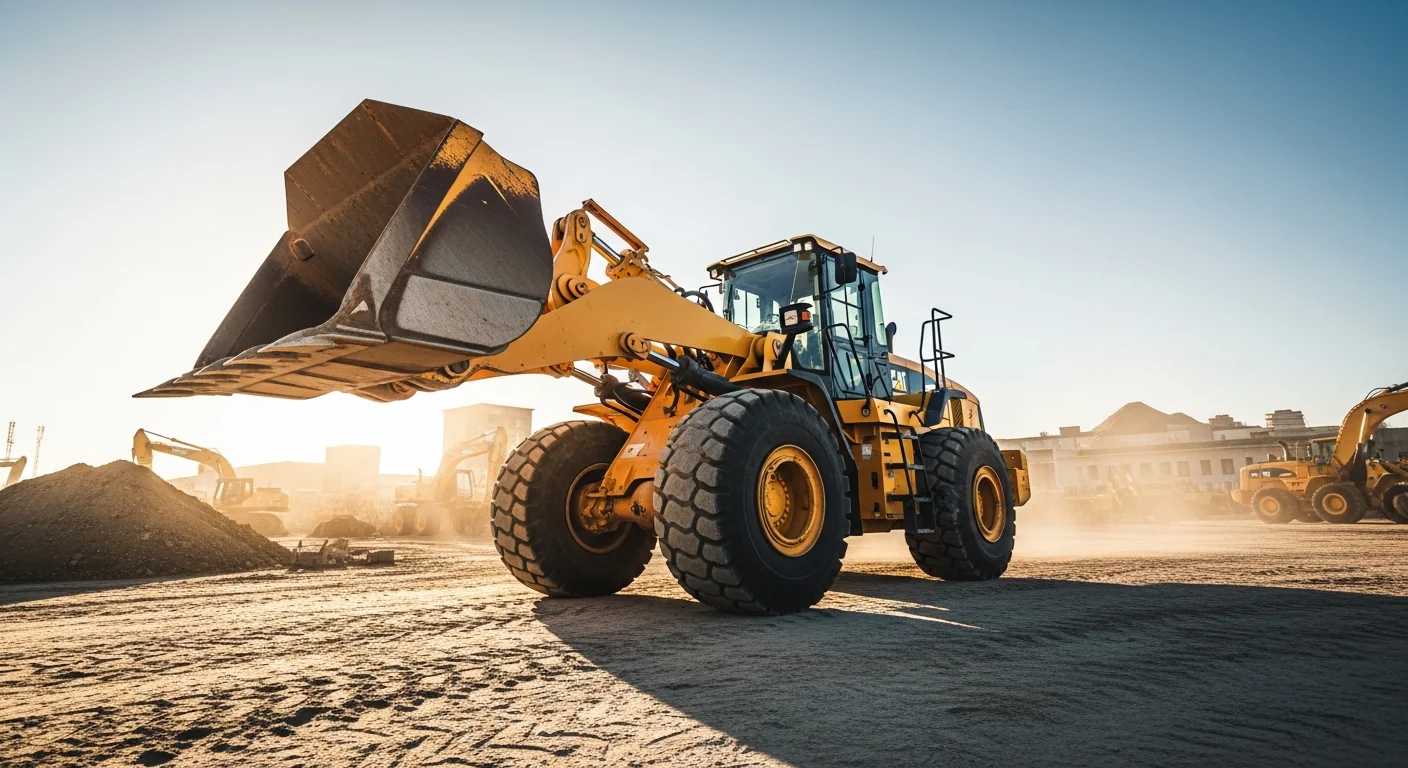
The rental industry publishes base rates, but the real cost includes fees that can add 30-60% to your daily rate. Here's the breakdown most contractors discover too late:
Compact Wheel Loaders (Under 2 CY Bucket): Daily rates typically range from $250-$450, weekly rates from $1,200-$2,100 (saving 20-25% over daily), and monthly rates from $3,800-$6,500 (saving 35-40% over daily). These 40-80 HP machines work best for landscaping and small site prep.
Mid-Size Wheel Loaders (2.5-3.5 CY Bucket): Daily rates run $500-$800, weekly rates $2,400-$3,800, and monthly rates $7,000-$11,000. These 100-200 HP workhorses handle general construction and truck loading applications.
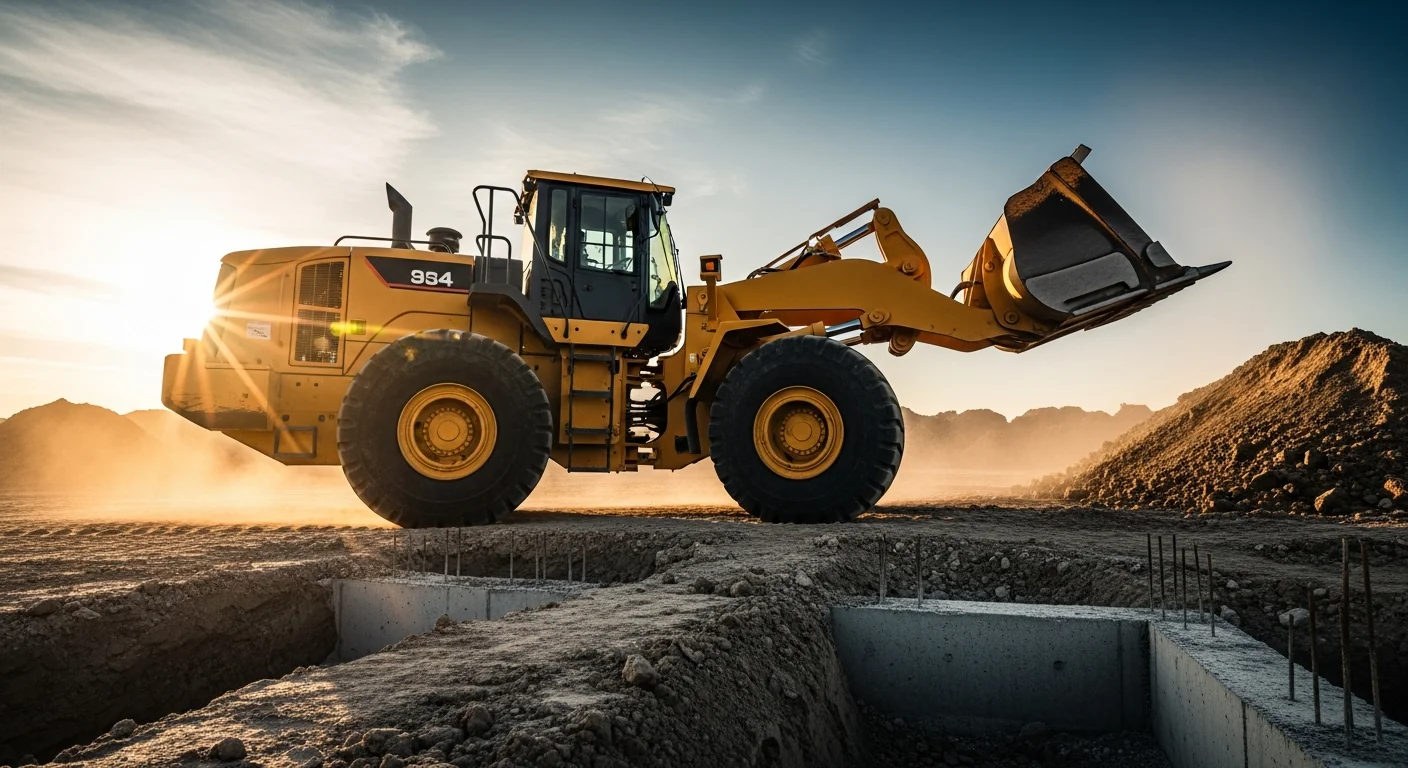
Large Wheel Loaders (4+ CY Bucket): Daily rates range from $800-$1,100+, weekly rates $3,800-$5,200, and monthly rates $11,000-$15,000+. These 250-400+ HP machines tackle quarry work and heavy earthmoving.
Let's run the math on a "$400/day" mid-size loader rental:
- Base daily rate: $400
- Delivery/pickup charge: $350 (one-time)
- Damage waiver: $85/day
- Fuel surcharge: $45/day
- Texas sales tax (8.25%): $33/day
- Actual first-day cost: $913
- Subsequent days: $563 each
For a 5-day rental, you're looking at $3,165 total versus the advertised $2,000—a 58% markup that destroys project budgets.
Typical security deposits range from $1,000 for compact loaders to $3,000-$5,000 for large machines, or roughly 15-25% of the total rental value. Many contractors don't realize this upfront cash requirement can strain working capital, especially when renting multiple machines simultaneously.
Stop building zero equity. When you're paying $7,000-$15,000+ monthly for large loader rentals, the math says you should own it. Those monthly payments could be financing your own asset at rates as low as 0% APR with current manufacturer promotions. EquipFlow's network connects you with lenders who compete for your business—often delivering rates 0.5-2 percentage points below single-source quotes.
Operating weight: 10,000-18,000 lbs | Horsepower: 40-80 HP | Best for: Landscaping, small excavation, material handling in tight spaces. Daily rental typically $250-$450. Consider a compact wheel loader for tight jobsites.
Operating weight: 25,000-38,000 lbs | Horsepower: 100-200 HP | Best for: General construction, loading trucks, stockpile management. Daily rental typically $500-$800.
Operating weight: 45,000-75,000+ lbs | Horsepower: 250-400+ HP | Best for: Quarries, mining operations, large-scale earthmoving. Daily rental typically $800-$1,100+.
Forks, grapples, and snow removal attachments typically add $50-$150/day to base rates. Specialized attachments like concrete mixers or forestry packages can add $200+/day.
Here's the ownership advantage: When you finance your wheel loader, attachments become one-time purchases instead of daily add-ons that bleed cash. A $3,000 grapple attachment that costs $100/day to rent pays for itself in 30 days of use. EquipFlow's lender network includes specialty equipment financers who understand attachment financing and can structure deals to include your complete package.
Let's compare a mid-size wheel loader over 36 months:
Rental Option: $7,345/month average rate × 36 months = $264,420 total cost. Zero equity, zero tax benefits beyond ordinary business expense deduction.
Finance at 0% APR: $210,000 purchase price ÷ 36 months = $5,833/month. Total payments: $210,000. You own a $140,000+ asset (typical 3-year residual). Net cost: ~$70,000.
Cash Purchase: $210,000 upfront. Section 179 generates $44,100 tax savings at 21% corporate rate (effectively reducing Year 1 cost to $165,900). Plus 100% bonus depreciation worth additional $8,820 in tax benefits.
Financing beats renting from month one with current 0% rates. Even at 8% APR, monthly financing costs of $6,247 still beat most rental rates. The critical threshold is approximately 120-180 usage days per year—above this level, ownership economics dominate.
Rental payments qualify as ordinary business expenses under IRC Section 162, providing immediate deductions but no capital benefits. Equipment purchases qualify for Section 179 deductions up to $2,560,000 according to IRS Publication 946, plus 100% bonus depreciation for 2026.
For a business in the 35% tax bracket, purchasing a $73,180 wheel loader generates $25,613 in immediate Section 179 tax savings. That's a 35% return on the depreciation schedule alone—rental receipts can't compete with that math.
Bonus depreciation drops to 20% in 2026 and continues declining through 2026 under the Tax Cuts and Jobs Act schedule. Businesses considering wheel loader acquisition should evaluate whether purchasing now captures more tax benefit than waiting—especially with current 0% financing promotions from manufacturers like Caterpillar and Volvo.
Ready to transition from renting to owning? EquipFlow connects you with lenders who understand wheel loader depreciation schedules and can structure financing to maximize your tax benefits. You can also explore wheel loader financing options or browse wheel loaders for sale to find the right match. Our network includes both traditional banks and equipment specialists—competition that typically reduces your rate by 0.5-2 percentage points compared to single-source financing.
Standard rental agreements place routine maintenance (oil changes, filter replacement, greasing) on the rental company for long-term contracts, but daily safety inspections and damage reporting fall on the renter. Mechanical breakdowns from normal wear qualify as rental company responsibility—damage from operator error or misuse becomes renter liability.
The liability sits squarely with the employer renting the equipment—not the rental company. Most rental agreements explicitly transfer this responsibility to the renter, creating a compliance blind spot that can trigger expensive citations.
Damage waivers typically cost $50-$150/day but exclude operator negligence, theft, and damage from unauthorized use. Read the exclusions carefully—"normal wear" definitions vary widely between rental companies, and disputes over repair costs can drag on for months.
Weekly rates typically save 20-25% over daily rates, while monthly terms can save 35-45%. For projects lasting 10+ days, weekly rentals almost always beat daily extensions. For 3+ week projects, monthly terms become mathematically essential.
Always request total cost including delivery, insurance, fuel policy, and applicable taxes. A "cheaper" base rate often becomes more expensive once fees are added. Texas contractors should budget an additional 8.25% for sales tax on all rental payments.
Some rental companies offer lease-purchase agreements that may qualify for Section 179 treatment if structured as capital leases rather than operating leases. These arrangements let you apply rental payments toward eventual ownership while potentially capturing tax benefits.
Contractors ready to transition from renting to owning can access SBA 7(a) loans up to $5,000,000, SBA 504 loans up to $5,500,000 for real estate-backed purchases, or SBA Microloans up to $50,000 for smaller equipment acquisitions. These programs often offer better terms than conventional equipment loans.
When rental rates are bleeding your cash flow and you're ready to build equity instead of paying someone else's equipment note, here's how EquipFlow's lender-matching process works:
Ava analyzes your specific requirements—loader size, usage patterns, credit profile, and timeline. This isn't a generic application. We need to understand whether you're looking at compact loaders for landscaping or large-frame machines for quarry work, because lender appetite varies dramatically by equipment type and use case.
Here's where lender competition saves you money. When 3-4 lenders compete for the same deal, rates typically drop 0.5-2 percentage points compared to walking into a single bank. Ava matches you with lenders who understand wheel loader depreciation curves and residual values—not generic equipment lenders who price everything the same.
See exactly how each offer affects your monthly cash flow, total interest cost, and tax benefits. Compare a 0% manufacturer promotion against a 7.5% bank term loan against an SBA 504 structure. The math matters: $5,833/month at 0% versus $6,247/month at 8% APR is $4,968 in annual savings.
You control the decision. No pressure, no obligation. Once you've compared offers, you work directly with your chosen lender to finalize terms and close. EquipFlow doesn't touch your credit or handle underwriting—we just ensure lenders compete for your business.
When rental rates are bleeding your cash flow and you're ready to build equity instead of paying someone else's equipment note, here's how EquipFlow's lender-matching process works:
Ava analyzes your specific requirements—loader size, usage patterns, credit profile, and timeline. This isn't a generic application. We need to understand whether you're looking at compact loaders for landscaping or large-frame machines for quarry work, because lender appetite varies dramatically by equipment type and use case.
Here's where lender competition saves you money. When 3-4 lenders compete for the same deal, rates typically drop 0.5-2 percentage points compared to walking into a single bank. Ava matches you with lenders who understand wheel loader depreciation curves and residual values—not generic equipment lenders who price everything the same.
See exactly how each offer affects your monthly cash flow, total interest cost, and tax benefits. Compare a 0% manufacturer promotion against a 7.5% bank term loan against an SBA 504 structure. The math matters: $5,833/month at 0% versus $6,247/month at 8% APR is $4,968 in annual savings.
You control the decision. No pressure, no obligation. Once you've compared offers, you work directly with your chosen lender to finalize terms and close. EquipFlow doesn't touch your credit or handle underwriting—we just ensure lenders compete for your business.
When rental rates are bleeding your cash flow and you're ready to build equity instead of paying someone else's equipment note, here's how EquipFlow's lender-matching process works:
Ava analyzes your specific requirements—loader size, usage patterns, credit profile, and timeline. This isn't a generic application. We need to understand whether you're looking at compact loaders for landscaping or large-frame machines for quarry work, because lender appetite varies dramatically by equipment type and use case.
Here's where lender competition saves you money. When 3-4 lenders compete for the same deal, rates typically drop 0.5-2 percentage points compared to walking into a single bank. Ava matches you with lenders who understand wheel loader depreciation curves and residual values—not generic equipment lenders who price everything the same.
See exactly how each offer affects your monthly cash flow, total interest cost, and tax benefits. Compare a 0% manufacturer promotion against a 7.5% bank term loan against an SBA 504 structure. The math matters: $5,833/month at 0% versus $6,247/month at 8% APR is $4,968 in annual savings.
You control the decision. No pressure, no obligation. Once you've compared offers, you work directly with your chosen lender to finalize terms and close. EquipFlow doesn't touch your credit or handle underwriting—we just ensure lenders compete for your business.
When 3-4 equipment lenders compete for the same deal, rates typically drop 0.5-2 percentage points compared to single-source financing. EquipFlow's network includes both traditional banks and specialized equipment lenders, ensuring you see the full spectrum of available terms. Competition works—let lenders bid for your business instead of accepting the first offer.
Different lenders have different appetites for wheel loader transactions. Banks might hesitate on older machines while specialty lenders focus on residual values and usage patterns. Ava's matching algorithm considers your specific equipment type, age, usage profile, and credit situation to connect you with lenders most likely to approve favorable terms.
Every day without equipment costs money. Whether you're losing rental fees or missing project deadlines, speed matters. Most contractors get initial offers from 3+ lenders within 24-48 hours through EquipFlow's network, compared to weeks of individual bank shopping.
Comparing financing options doesn't commit you to anything. See what rates you qualify for, compare terms against rental costs, and make the decision that works best for your cash flow. No pressure, no hard credit pulls until you're ready to move forward with a specific lender.
When 3-4 equipment lenders compete for the same deal, rates typically drop 0.5-2 percentage points compared to single-source financing. EquipFlow's network includes both traditional banks and specialized equipment lenders, ensuring you see the full spectrum of available terms. Competition works—let lenders bid for your business instead of accepting the first offer.
Different lenders have different appetites for wheel loader transactions. Banks might hesitate on older machines while specialty lenders focus on residual values and usage patterns. Ava's matching algorithm considers your specific equipment type, age, usage profile, and credit situation to connect you with lenders most likely to approve favorable terms.
Every day without equipment costs money. Whether you're losing rental fees or missing project deadlines, speed matters. Most contractors get initial offers from 3+ lenders within 24-48 hours through EquipFlow's network, compared to weeks of individual bank shopping.
Comparing financing options doesn't commit you to anything. See what rates you qualify for, compare terms against rental costs, and make the decision that works best for your cash flow. No pressure, no hard credit pulls until you're ready to move forward with a specific lender.
When 3-4 equipment lenders compete for the same deal, rates typically drop 0.5-2 percentage points compared to single-source financing. EquipFlow's network includes both traditional banks and specialized equipment lenders, ensuring you see the full spectrum of available terms. Competition works—let lenders bid for your business instead of accepting the first offer.
Different lenders have different appetites for wheel loader transactions. Banks might hesitate on older machines while specialty lenders focus on residual values and usage patterns. Ava's matching algorithm considers your specific equipment type, age, usage profile, and credit situation to connect you with lenders most likely to approve favorable terms.
Every day without equipment costs money. Whether you're losing rental fees or missing project deadlines, speed matters. Most contractors get initial offers from 3+ lenders within 24-48 hours through EquipFlow's network, compared to weeks of individual bank shopping.
Comparing financing options doesn't commit you to anything. See what rates you qualify for, compare terms against rental costs, and make the decision that works best for your cash flow. No pressure, no hard credit pulls until you're ready to move forward with a specific lender.
When 3-4 equipment lenders compete for the same deal, rates typically drop 0.5-2 percentage points compared to single-source financing. EquipFlow's network includes both traditional banks and specialized equipment lenders, ensuring you see the full spectrum of available terms. Competition works—let lenders bid for your business instead of accepting the first offer.
Different lenders have different appetites for wheel loader transactions. Banks might hesitate on older machines while specialty lenders focus on residual values and usage patterns. Ava's matching algorithm considers your specific equipment type, age, usage profile, and credit situation to connect you with lenders most likely to approve favorable terms.
Every day without equipment costs money. Whether you're losing rental fees or missing project deadlines, speed matters. Most contractors get initial offers from 3+ lenders within 24-48 hours through EquipFlow's network, compared to weeks of individual bank shopping.
Comparing financing options doesn't commit you to anything. See what rates you qualify for, compare terms against rental costs, and make the decision that works best for your cash flow. No pressure, no hard credit pulls until you're ready to move forward with a specific lender.
.png)