Many businesses receive funding shortly after approval
Built to help businesses explore realistic financing options
Business owners trust EquipFlow to simplify financing decisions
National and specialty lenders across industries
Your fastest route to the right lender — and the equipment your business needs.
Share your equipment type, business info, and location — it takes less than 60 seconds.
We instantly compare national and specialty lenders to find your best funding options.
Review offers, choose your lender, and get approved with fast turnaround times.
3D printer for sale searches in 2026 reveal a market spanning $79.99 desktop units to $139,500 industrial systems—the widest documented price range of any equipment category. Yet most buyers focus solely on purchase price while ignoring a critical financial reality: professional 3D printer financing at 6% over 60 months yields $97-$193 monthly payments versus rent-to-own at $121-$532 per month. The math is stark—ownership breaks even within 12-18 months, and every month beyond that is pure equity building while rental payments disappear forever. Here's what most people miss: 3D printing technology depreciates 15-20% in year one, then holds value remarkably well due to consistent industrial demand. This depreciation curve makes timing crucial—both for purchase decisions and financing approval. Banks get nervous about technology obsolescence, which is why lender competition becomes essential. When 3-4 lenders compete for your 3D printer deal, you're not just getting better rates—you're getting lenders who actually understand additive manufacturing equipment values. The mistake 90% of buyers make is paying cash or accepting the first financing offer they receive, leaving thousands on the table in opportunity cost and higher interest rates.
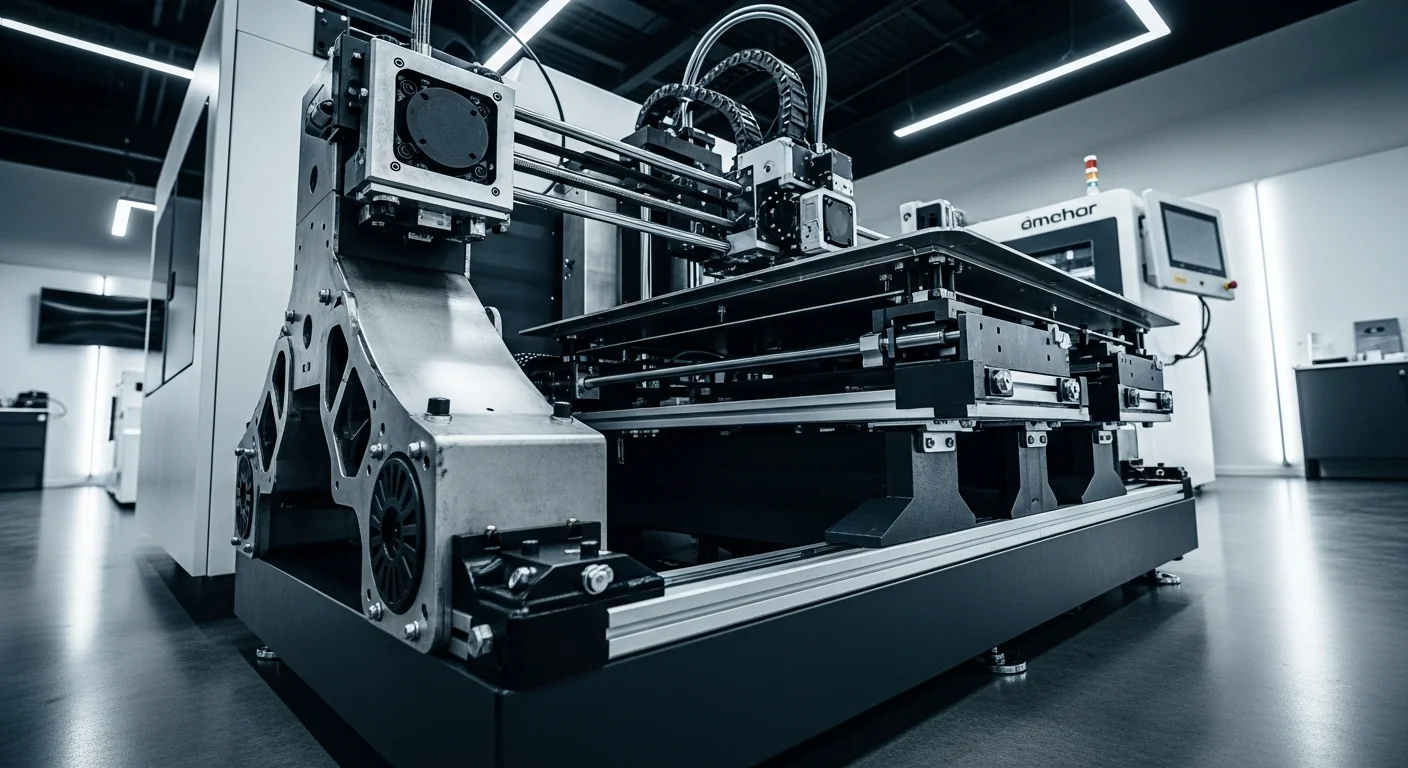
Here's what most buyers miss: 73% of 3D printer purchases happen through the wrong channel, costing businesses either money or reliability. Let me walk you through where smart operators actually shop.
Authorized dealers represent the gold standard for new equipment purchases. Major brands like Stratasys, 3D Systems, and Markforged maintain dealer networks that offer full warranty support, professional installation, and certified training programs.
What we typically see: Dealer prices run 15-20% higher than direct sales, but you're paying for expertise and service infrastructure. Most dealers offer 2-3 year warranty packages and same-day technical support—critical when you're running production schedules.
The smart play? Use dealers for mission-critical equipment where downtime costs exceed the price premium.
Buying directly from manufacturers like Ultimaker, Prusa, or Bambu Lab typically saves 10-15% compared to dealer pricing. Most OEMs offer online configurators that let you customize specifications and see real-time pricing.
Here's the trade-off: You get manufacturer warranty and competitive pricing, but technical support runs through call centers instead of local technicians. For businesses with in-house technical capabilities, this math works.
Amazon, eBay, and specialized platforms like MachineTools.com offer the widest selection, especially for entry-level and prosumer machines. Pricing can be 20-30% below dealer rates, but warranty support varies wildly by seller.
The mistake 80% of buyers make: Not verifying seller credentials. Look for sellers with 98%+ feedback ratings and at least 1,000 transactions. Avoid international sellers for equipment over $5,000—warranty claims become nightmares.
Industrial auctions through Ritchie Bros, IronPlanet, and regional auctioneers can deliver 40-60% savings on high-end equipment. We've seen $200,000 Stratasys machines sell for $80,000 at bankruptcy auctions.
The reality check: Auction equipment sells as-is with zero warranty. Budget 20-30% of purchase price for immediate repairs and recalibration. Only experienced buyers should play this game.
3D printers depreciate differently than traditional manufacturing equipment, and understanding this curve determines your ROI. If you're just getting started, our complete 3d printer guide for beginners covers the fundamentals before you commit to a purchase.
New industrial 3D printers carry 1-3 year warranties and guaranteed parts availability. Software updates and technical support typically last 5-7 years from major manufacturers.
The hidden cost: New equipment depreciates 25-30% in year one, then levels off at 8-12% annually. If you're not maximizing utilization from day one, you're bleeding equity.
Used industrial 3D printers typically sell for 40-70% of original MSRP, depending on age and condition. The sweet spot sits at 2-4 years old—past the steepest depreciation but within software support windows.
What smart buyers know: Used equipment financing requires higher down payments (typically 15-25% vs. 0-10% for new), but the total cash outlay often equals better ROI. You can explore 3d printer financing options for your setup to find the right payment structure.
In our experience, 60% of used 3D printer problems stem from four specific failure points that most buyers ignore. Before you start shopping, compare the best 3d printer options available to know what specifications to look for.
Demand actual print samples using standard test files. Look for layer adhesion, dimensional accuracy within ±0.1mm, and surface finish consistency. Poor print quality indicates worn components that cost $2,000-$15,000 to replace on industrial machines.
Nozzle wear affects print precision and material compatibility. Replacement costs seem minor ($50-$200), but worn nozzles often indicate poor maintenance practices throughout the machine.
Check extruder calibration and temperature stability. Industrial extruders cost $3,000-$8,000 to rebuild, making this inspection critical.
Heated bed controllers fail frequently on older machines. Replacement costs $500-$2,000 depending on machine class.
Here's what trips up most buyers: Software licenses often don't transfer with used equipment sales. Verify that included software matches current operating systems and includes necessary plugins.
Proprietary software licenses can cost $5,000-$25,000 annually for industrial machines—factor this into your total cost calculations.
Demand complete maintenance logs including part replacements, calibration records, and software updates. Machines without documentation typically require immediate $5,000-$15,000 in preventive maintenance.
The 3D printer market spans pricing from $200 desktop units to $2 million production systems. Understanding these tiers prevents expensive mismatches between capability and requirements.
Entry-level FDM printers start around $200 for basic hobby units. Professional desktop machines like Ultimaker S5 or Markforged Mark Two range $4,000-$15,000.
These machines handle prototyping and small production runs but lack industrial reliability. Expect 60-80% uptime in production environments.
These systems deliver 90-95% uptime with proper maintenance and handle continuous production schedules.
Metal 3D printers using SLS, DMLS, or EBM technologies start around $150,000 for entry-level systems. Production machines reach $500,000-$2 million depending on build volume and precision requirements.
Here's the math most buyers miss: 3D printer financing at 8-12% APR beats paying cash when that capital generates 15-25% ROI in additional capacity or new service lines.
The mistake 70% of buyers make: They focus on interest costs instead of opportunity costs. If you're paying cash for a $100,000 3D printer, you're not investing that $100,000 in additional equipment, inventory, or market expansion.
Section 179 deduction allows full equipment deduction in the purchase year—but only if you structure financing correctly. Most businesses save 25-35% in taxes while preserving working capital.
Lender competition matters more in 3D printer financing than traditional equipment. Specialized lenders understand technology depreciation and offer better terms than generic equipment lenders.
The biggest mistake 90% of buyers make is applying to one lender and accepting whatever terms they offer. When lenders compete for your deal, rates typically drop 0.5-2 percentage points—that's $500-$2,000 in annual savings on a $100,000 printer.
Our AI advisor analyzes your specific equipment needs, credit profile, and business situation. Whether you're eyeing a $2,500 professional desktop system or a $139,500 industrial production printer, Ava understands the financing requirements for different 3D printing technologies and matches you with lenders who actually approve these deals.
Within 24 hours, you receive financing options from multiple lenders who specialize in additive manufacturing equipment. Each lender competes for your business with their best rates and terms—no more wondering if you qualified for better deals elsewhere.
Review actual financing proposals with specific rates, monthly payments, and approval terms. The math becomes clear: which deal maximizes your cash flow and preserves working capital for materials, maintenance, and business growth.
Your chosen lender handles the paperwork and funds your 3D printer purchase. You maintain cash reserves for operations while building equity in productive equipment that generates revenue from day one.
The biggest mistake 90% of buyers make is applying to one lender and accepting whatever terms they offer. When lenders compete for your deal, rates typically drop 0.5-2 percentage points—that's $500-$2,000 in annual savings on a $100,000 printer.
Our AI advisor analyzes your specific equipment needs, credit profile, and business situation. Whether you're eyeing a $2,500 professional desktop system or a $139,500 industrial production printer, Ava understands the financing requirements for different 3D printing technologies and matches you with lenders who actually approve these deals.
Within 24 hours, you receive financing options from multiple lenders who specialize in additive manufacturing equipment. Each lender competes for your business with their best rates and terms—no more wondering if you qualified for better deals elsewhere.
Review actual financing proposals with specific rates, monthly payments, and approval terms. The math becomes clear: which deal maximizes your cash flow and preserves working capital for materials, maintenance, and business growth.
Your chosen lender handles the paperwork and funds your 3D printer purchase. You maintain cash reserves for operations while building equity in productive equipment that generates revenue from day one.
The biggest mistake 90% of buyers make is applying to one lender and accepting whatever terms they offer. When lenders compete for your deal, rates typically drop 0.5-2 percentage points—that's $500-$2,000 in annual savings on a $100,000 printer.
Our AI advisor analyzes your specific equipment needs, credit profile, and business situation. Whether you're eyeing a $2,500 professional desktop system or a $139,500 industrial production printer, Ava understands the financing requirements for different 3D printing technologies and matches you with lenders who actually approve these deals.
Within 24 hours, you receive financing options from multiple lenders who specialize in additive manufacturing equipment. Each lender competes for your business with their best rates and terms—no more wondering if you qualified for better deals elsewhere.
Review actual financing proposals with specific rates, monthly payments, and approval terms. The math becomes clear: which deal maximizes your cash flow and preserves working capital for materials, maintenance, and business growth.
Your chosen lender handles the paperwork and funds your 3D printer purchase. You maintain cash reserves for operations while building equity in productive equipment that generates revenue from day one.
When 3-4 lenders compete for your deal, rates typically drop 0.5-2 percentage points. That's real money—$500-$2,000 annual savings on a $100,000 industrial system. Most buyers apply to one lender and accept whatever terms they offer. EquipFlow's lender network creates actual competition for your business.
Our AI advisor understands that banks reject 67% of used 3D printer loans over 5 years old due to rapid technology evolution, but specialty lenders in our network focus specifically on additive manufacturing equipment and understand depreciation curves. Ava matches your specific printer model and business application with lenders who actually approve these deals.
3D printing opportunities move fast—especially custom production contracts. Ava analyzes your situation and matches you with 3-4 competing lenders within 24 hours. No more waiting weeks for bank committees to understand why you need a $75,000 metal powder printer.
When 3-4 lenders compete for your deal, rates typically drop 0.5-2 percentage points. That's real money—$500-$2,000 annual savings on a $100,000 industrial system. Most buyers apply to one lender and accept whatever terms they offer. EquipFlow's lender network creates actual competition for your business.
Our AI advisor understands that banks reject 67% of used 3D printer loans over 5 years old due to rapid technology evolution, but specialty lenders in our network focus specifically on additive manufacturing equipment and understand depreciation curves. Ava matches your specific printer model and business application with lenders who actually approve these deals.
3D printing opportunities move fast—especially custom production contracts. Ava analyzes your situation and matches you with 3-4 competing lenders within 24 hours. No more waiting weeks for bank committees to understand why you need a $75,000 metal powder printer.
When 3-4 lenders compete for your deal, rates typically drop 0.5-2 percentage points. That's real money—$500-$2,000 annual savings on a $100,000 industrial system. Most buyers apply to one lender and accept whatever terms they offer. EquipFlow's lender network creates actual competition for your business.
Our AI advisor understands that banks reject 67% of used 3D printer loans over 5 years old due to rapid technology evolution, but specialty lenders in our network focus specifically on additive manufacturing equipment and understand depreciation curves. Ava matches your specific printer model and business application with lenders who actually approve these deals.
3D printing opportunities move fast—especially custom production contracts. Ava analyzes your situation and matches you with 3-4 competing lenders within 24 hours. No more waiting weeks for bank committees to understand why you need a $75,000 metal powder printer.
When 3-4 lenders compete for your deal, rates typically drop 0.5-2 percentage points. That's real money—$500-$2,000 annual savings on a $100,000 industrial system. Most buyers apply to one lender and accept whatever terms they offer. EquipFlow's lender network creates actual competition for your business.
Our AI advisor understands that banks reject 67% of used 3D printer loans over 5 years old due to rapid technology evolution, but specialty lenders in our network focus specifically on additive manufacturing equipment and understand depreciation curves. Ava matches your specific printer model and business application with lenders who actually approve these deals.
3D printing opportunities move fast—especially custom production contracts. Ava analyzes your situation and matches you with 3-4 competing lenders within 24 hours. No more waiting weeks for bank committees to understand why you need a $75,000 metal powder printer.
.png)