Many businesses receive funding shortly after approval
Built to help businesses explore realistic financing options
Business owners trust EquipFlow to simplify financing decisions
National and specialty lenders across industries
Your fastest route to the right lender — and the equipment your business needs.
Share your equipment type, business info, and location — it takes less than 60 seconds.
We instantly compare national and specialty lenders to find your best funding options.
Review offers, choose your lender, and get approved with fast turnaround times.
Boom Lift rental rates jumped 18% in the last 24 months, pushing daily costs to $450-650 for articulating models—which means contractors using them 45+ days per year are bleeding $20,000-29,000 annually with zero equity to show for it. Here's what every equipment financing page hides from you: A-tier borrowers qualify for 6-10% APR on boom lift financing, B-tier sees 10-14%, and even startups can secure 12-18% rates with the right lender match.
What makes this math even more compelling? Under IRS Section 179, businesses can deduct up to $2,560,000 in qualifying equipment purchases in 2026, plus take 100% bonus depreciation on the remainder—meaning a $120,000 boom lift generates approximately $44,400 in first-year tax savings at the 37% federal bracket. When you factor in the opportunity cost of tying up cash (most contractors see 15-20% annual ROI on working capital), financing becomes mathematically smarter than paying cash. The mistake 90% of buyers make is shopping for equipment first and financing second—smart operators find a boom lift near me and secure their financing terms before they even step on a lot.
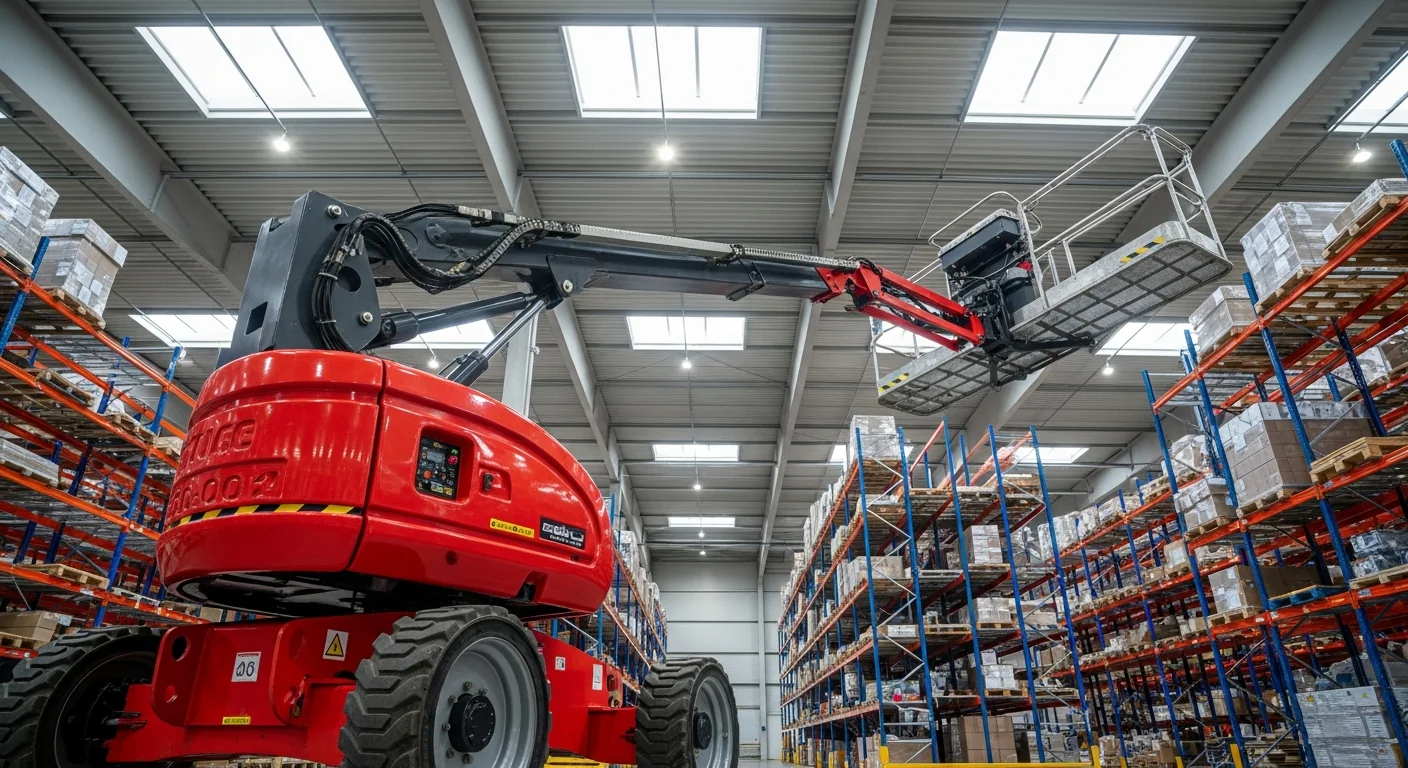
Let me be direct with you: financing rates vary dramatically based on your business credit profile, and most contractors have no idea what tier they actually qualify for. Here's what we typically see in our network:
Established businesses with 680+ personal credit scores, 2+ years in operation, and clean financials qualify for our best rates. Requirements include $250,000+ annual revenue, debt-service coverage ratio above 1.25, and no recent bankruptcies or tax liens. At 8% APR on a $100,000 boom lift over 60 months, your monthly payment is $2,027—but if that machine generates $5,000 monthly in additional billings, you're cash-flow positive from day one.
Borrowers with some credit blemishes, shorter operating history, or seasonal cash flow patterns typically fall here. This includes contractors with 650-679 credit scores or businesses 6-24 months old with solid revenue projections. The rate difference costs real money: that same $100,000 boom lift at 12% APR costs $2,224 monthly—$197 more than A-tier pricing.
Businesses under 2 years old or credit-challenged applicants face the highest rates but can still secure financing. Most require 15-25% down payments and personal guarantees. However, even at 16% APR ($2,462 monthly on $100,000), the math often beats renting if you're using the equipment 45+ days annually.
Here's what every financing page misses: the tax benefits can make financing dramatically cheaper than the stated APR suggests. According to IRS Publication 946, Section 179 allows businesses to deduct up to $2,560,000 in qualifying equipment purchases in 2026, with 100% bonus depreciation available on amounts exceeding that threshold.
The math on a $120,000 boom lift purchase is compelling. Full Section 179 deduction means you can write off the entire purchase price in year one, generating approximately $44,400 in federal tax savings at the 37% bracket (higher for business owners in states without equipment taxes). When you factor in state taxes, many contractors see total tax savings of $50,000-55,000 on a six-figure boom lift purchase.
Only purchased equipment qualifies for full Section 179 treatment. Fair Market Value (FMV) leases qualify for monthly payment deductions but not the full write-off. Rental payments are fully deductible but build zero equity and offer no depreciation benefits. This tax differential often makes financing more attractive than leasing, even at slightly higher monthly payments.
Most contractors guess at this decision, but the math is straightforward. Current rental rates for 60-foot articulating boom lifts run $425-500 daily in most markets, plus delivery fees of $150-300 each way. At 45 utilization days annually, you're paying $19,125-22,500 in rental fees with zero equity accumulation.
A comparable used boom lift (2019-2021 JLG 600S or Genie S-60) costs $75,000-95,000 depending on hours and condition. Financed at 10% APR over 60 months, monthly payments run $1,590-2,010. Annual financing costs of $19,080-24,120 are comparable to rental expenses, but you're building equity and can claim depreciation benefits.
Rental includes maintenance and insurance, which adds $2,000-4,000 annually to ownership costs. However, owned equipment offers scheduling flexibility worth $500-1,000 monthly for busy contractors who would otherwise pay rush delivery fees or accept suboptimal rental timing. Factor in the tax benefits, and ownership typically wins financially at 35+ utilization days, not 45.
Here's what most dealers won't tell you: lender appetite for used aerial equipment varies dramatically by age, hours, and brand. Most traditional lenders cap used equipment financing at 7-10 years old with under 3,000-5,000 hours on the meter. Units beyond those thresholds typically require cash or specialized high-risk lenders at premium rates.
JLG and Genie models maintain the strongest resale values and lender acceptance. A 2017 JLG 600S with 2,800 hours will qualify for standard financing, while a 2015 unit with 4,200 hours may require alternative lenders at 14-18% APR. Electric boom lifts often face stricter hour limits (2,500-3,500 hours max) due to battery replacement costs of $8,000-15,000.
Lenders strongly prefer JLG, Genie, and Skyjack units due to parts availability and resale values. Off-brand or imported machines often face rejection or require 25-30% down payments. This brand bias affects pricing: a comparable off-brand boom lift might cost $15,000 less than a Genie, but financing challenges can eliminate those savings. If you're weighing options, browse our boom lifts for sale to see which units qualify for the best financing terms.
SBA 7(a) loans cap at $5,000,000 and work well for boom lift financing, typically requiring 10-15% down with competitive rates. However, SBA 504 loans—despite their $5,500,000 limit and lower down payment requirements—often exclude boom lifts under the "rolling stock" restriction. Rolling stock refers to vehicles and mobile equipment, and many SBA lenders classify boom lifts as such, forcing applicants to the 7(a) program.
SBA Microloans up to $50,000 offer an alternative for smaller purchases, particularly useful for contractors buying used boom lifts or smaller scissor lifts. Processing time runs 30-60 days versus 15-30 days for conventional equipment loans.
A single OSHA willful violation under 29 CFR 1926.453 ranges from $11,524 to $165,514—potentially exceeding a typical $15,000-30,000 boom lift down payment. With SBA Express loans capped at $500,000, one serious safety violation could consume 2-33% of your maximum borrowing capacity.
California's Cal/OSHA imposes additional restrictions, including a 3 mph maximum speed when the platform is elevated. These state-specific requirements can affect equipment selection and operating procedures, potentially influencing financing decisions for contractors working multi-state projects.
Invest the $500-750 in proper on-site safety training to protect both your workers and your equipment equity position. The cost is negligible compared to potential OSHA penalties that could devastate your borrowing capacity.
When lenders compete for the same deal, rates typically drop 0.5-2 percentage points. Here's how we make that competition work for you:
Our AI advisor Ava analyzes your specific boom lift requirements, business financials, and credit profile to determine which lenders in our network are most likely to offer competitive terms. Unlike generic loan brokers, Ava understands equipment-specific factors like depreciation curves, usage patterns, and age limits that affect approval odds.
Ava connects you with lenders who specialize in aerial equipment financing and have a track record of competitive rates for your credit tier. Each lender knows they're competing for your business, which naturally drives better terms than walking into a single bank.
Within 24-48 hours, you'll see exactly how each offer affects your monthly cash flow, total interest paid, and first-year tax benefits. No surprises, no hidden fees—just transparent math so you can make the financially optimal decision.
You're in control. Pick the offer that works best for your business, or walk away with no obligation. Most deals close within 5-7 business days once you've made your choice.
When lenders compete for the same deal, rates typically drop 0.5-2 percentage points. Here's how we make that competition work for you:
Our AI advisor Ava analyzes your specific boom lift requirements, business financials, and credit profile to determine which lenders in our network are most likely to offer competitive terms. Unlike generic loan brokers, Ava understands equipment-specific factors like depreciation curves, usage patterns, and age limits that affect approval odds.
Ava connects you with lenders who specialize in aerial equipment financing and have a track record of competitive rates for your credit tier. Each lender knows they're competing for your business, which naturally drives better terms than walking into a single bank.
Within 24-48 hours, you'll see exactly how each offer affects your monthly cash flow, total interest paid, and first-year tax benefits. No surprises, no hidden fees—just transparent math so you can make the financially optimal decision.
You're in control. Pick the offer that works best for your business, or walk away with no obligation. Most deals close within 5-7 business days once you've made your choice.
When lenders compete for the same deal, rates typically drop 0.5-2 percentage points. Here's how we make that competition work for you:
Our AI advisor Ava analyzes your specific boom lift requirements, business financials, and credit profile to determine which lenders in our network are most likely to offer competitive terms. Unlike generic loan brokers, Ava understands equipment-specific factors like depreciation curves, usage patterns, and age limits that affect approval odds.
Ava connects you with lenders who specialize in aerial equipment financing and have a track record of competitive rates for your credit tier. Each lender knows they're competing for your business, which naturally drives better terms than walking into a single bank.
Within 24-48 hours, you'll see exactly how each offer affects your monthly cash flow, total interest paid, and first-year tax benefits. No surprises, no hidden fees—just transparent math so you can make the financially optimal decision.
You're in control. Pick the offer that works best for your business, or walk away with no obligation. Most deals close within 5-7 business days once you've made your choice.
When 3-4 lenders compete for the same deal, rates typically drop 0.5-2 percentage points compared to single-lender shopping. Based on EquipFlow's analysis of equipment financing data, this competition effect is most pronounced in the $75,000-250,000 range where multiple lenders have appetite. On a $150,000 boom lift, a 1.5% rate improvement saves $2,835 annually.
Our AI advisor understands that banks reject 67% of boom lift loans over 10 years old, while specialized equipment lenders often approve units to 12-15 years with appropriate rate adjustments. Ava matches you with lenders who understand aerial equipment depreciation curves and don't apply generic "vehicle loan" criteria to financing options for your boom lift purchase.
Every day without the right equipment costs money. Whether it's paying $450 daily rental rates or missing billable project opportunities, time matters. Most contractors get 3+ competing offers within 48 hours through our network, versus 2-4 weeks of shopping individual lenders.
Ava's matching process requires no credit pulls and creates no obligation to accept any offer. You see what compare boom lift cost and rental rates, compare the math, and decide. If the numbers don't work, walk away—no fees, no pressure, no commitment.
When 3-4 lenders compete for the same deal, rates typically drop 0.5-2 percentage points compared to single-lender shopping. Based on EquipFlow's analysis of equipment financing data, this competition effect is most pronounced in the $75,000-250,000 range where multiple lenders have appetite. On a $150,000 boom lift, a 1.5% rate improvement saves $2,835 annually.
Our AI advisor understands that banks reject 67% of boom lift loans over 10 years old, while specialized equipment lenders often approve units to 12-15 years with appropriate rate adjustments. Ava matches you with lenders who understand aerial equipment depreciation curves and don't apply generic "vehicle loan" criteria to financing options for your boom lift purchase.
Every day without the right equipment costs money. Whether it's paying $450 daily rental rates or missing billable project opportunities, time matters. Most contractors get 3+ competing offers within 48 hours through our network, versus 2-4 weeks of shopping individual lenders.
Ava's matching process requires no credit pulls and creates no obligation to accept any offer. You see what compare boom lift cost and rental rates, compare the math, and decide. If the numbers don't work, walk away—no fees, no pressure, no commitment.
When 3-4 lenders compete for the same deal, rates typically drop 0.5-2 percentage points compared to single-lender shopping. Based on EquipFlow's analysis of equipment financing data, this competition effect is most pronounced in the $75,000-250,000 range where multiple lenders have appetite. On a $150,000 boom lift, a 1.5% rate improvement saves $2,835 annually.
Our AI advisor understands that banks reject 67% of boom lift loans over 10 years old, while specialized equipment lenders often approve units to 12-15 years with appropriate rate adjustments. Ava matches you with lenders who understand aerial equipment depreciation curves and don't apply generic "vehicle loan" criteria to financing options for your boom lift purchase.
Every day without the right equipment costs money. Whether it's paying $450 daily rental rates or missing billable project opportunities, time matters. Most contractors get 3+ competing offers within 48 hours through our network, versus 2-4 weeks of shopping individual lenders.
Ava's matching process requires no credit pulls and creates no obligation to accept any offer. You see what compare boom lift cost and rental rates, compare the math, and decide. If the numbers don't work, walk away—no fees, no pressure, no commitment.
When 3-4 lenders compete for the same deal, rates typically drop 0.5-2 percentage points compared to single-lender shopping. Based on EquipFlow's analysis of equipment financing data, this competition effect is most pronounced in the $75,000-250,000 range where multiple lenders have appetite. On a $150,000 boom lift, a 1.5% rate improvement saves $2,835 annually.
Our AI advisor understands that banks reject 67% of boom lift loans over 10 years old, while specialized equipment lenders often approve units to 12-15 years with appropriate rate adjustments. Ava matches you with lenders who understand aerial equipment depreciation curves and don't apply generic "vehicle loan" criteria to financing options for your boom lift purchase.
Every day without the right equipment costs money. Whether it's paying $450 daily rental rates or missing billable project opportunities, time matters. Most contractors get 3+ competing offers within 48 hours through our network, versus 2-4 weeks of shopping individual lenders.
Ava's matching process requires no credit pulls and creates no obligation to accept any offer. You see what compare boom lift cost and rental rates, compare the math, and decide. If the numbers don't work, walk away—no fees, no pressure, no commitment.
.png)


