Many businesses receive funding shortly after approval
Built to help businesses explore realistic financing options
Business owners trust EquipFlow to simplify financing decisions
National and specialty lenders across industries
Your fastest route to the right lender — and the equipment your business needs.
Share your equipment type, business info, and location — it takes less than 60 seconds.
We instantly compare national and specialty lenders to find your best funding options.
Review offers, choose your lender, and get approved with fast turnaround times.
Diesel generator financing rates range from 28% APR through merchant cash advances disguised as equipment loans—but business owners report being quoted these predatory rates because they don't know where to look. The difference between a well-structured equipment loan at 6%-10% APR and an MCA at 28%+ can cost you $8,000-$15,000 in unnecessary interest on a single generator purchase.
Here's what most people miss: diesel generators qualify for the full Section 179 deduction up to $2,560,000 in 2026, meaning a $30,000 Kohler, Caterpillar, or Cummins unit can yield $6,300-$10,500 in immediate tax savings depending on your bracket. When you combine equipment financing rates starting at 6% APR with tax benefits that recover 21%-35% of the purchase price, financing becomes mathematically smarter than paying cash—even if you have the capital.
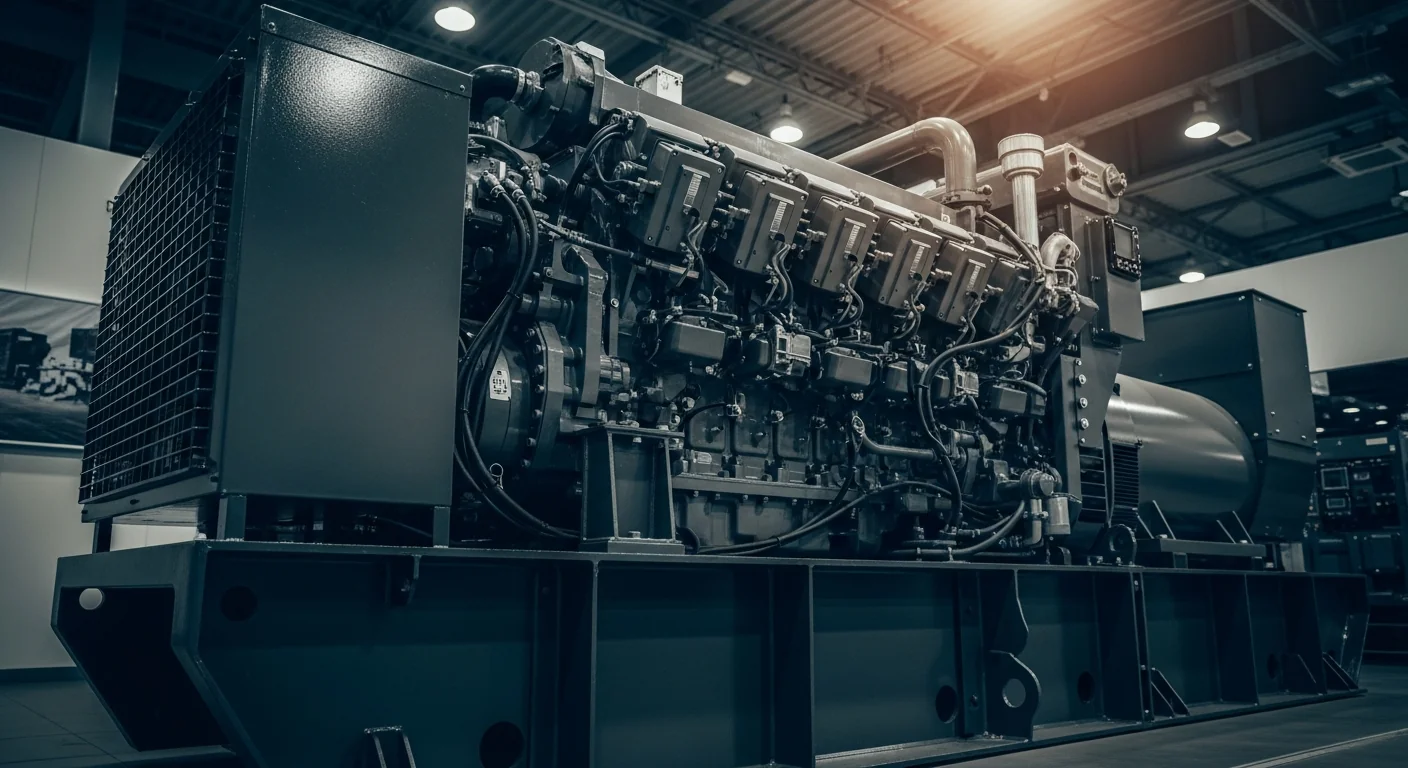
Whether you're financing a Kohler backup generator for emergency power, a Caterpillar diesel generator set for construction, or a Cummins unit for continuous industrial use, equipment financing preserves cash flow while the generator itself serves as collateral. Most commercial diesel generators qualify for terms from 24 to 84 months with approvals possible within 24-48 hours from lenders who compete for your business.
Business owners report being quoted 15%-28% APR on diesel generator financing—sometimes even higher through merchant cash advances disguised as equipment loans. These predatory rates exist because most buyers don't understand the equipment financing market or know where to find competitive lenders.
Equipment financing rates vary dramatically based on your credit profile and business strength. A-Tier borrowers with 700+ credit scores typically see 6%-10% APR, while B-Tier borrowers (600-699 credit) range from 10%-14% APR. Startups or businesses with thin credit history may see 12%-18% APR—still significantly better than merchant cash advances at 25%-80%+ effective rates.
These are equipment financing rates backed by the generator itself as collateral. The equipment serves as security, which is why rates are typically 2-4 percentage points lower than unsecured business loans. A-Tier borrowers often qualify for $0 down payment, while B-Tier may need 10%-15% down, and startup profiles typically require 15%-20% down payment.
A $15,000 Kohler residential backup generator financed at 7.5% APR over 48 months yields monthly payments around $363, with total interest of approximately $2,424. Scale that up to a $30,000 commercial unit at 8.5% over 60 months, and you're looking at roughly $615 monthly with $6,900 in total interest. For larger industrial applications—say a $75,000 Caterpillar generator set at 9.99% over 72 months—expect monthly payments around $1,435 with total interest of approximately $28,320.
The math matters here: that $75,000 industrial generator generating $4,000+ monthly in billings means you're cash-flow positive from day one, even with the financing payment. Compare that to rental costs of $2,700+ monthly for similar capacity, and financing becomes the obvious choice for applications exceeding 18-21 months.
The SBA offers three programs that work for diesel generator financing. SBA 7(a) loans go up to $5,000,000 and work well for large-scale backup power installations. SBA 504 loans reach $5,500,000 and are ideal for permanent installations with a real estate component. For smaller purchases, SBA Microloans up to $50,000 offer more flexible credit requirements, making them perfect for startups buying sub-$50K generators.
At $2,700 monthly for a rental, a contractor who 'didn't want the commitment' of buying spent $64,800 over two years—more than the purchase price of the generator. Without break-even data, businesses hemorrhage money on rentals without realizing ownership pays for itself in as few as 18 months.
Let's examine a $50,000 mid-range industrial generator over 60 months. Financing at 9.99% APR yields monthly payments of $1,050. Add a $5,000 down payment, $6,000 in estimated maintenance, and $3,000 in insurance over five years. Your total cost reaches $63,000, minus the generator's residual value of approximately $20,000, for a net cost of $43,000.
Contrast that with leasing the same unit at $900 monthly ($54,000 over 60 months) with lower insurance costs but zero residual value. Your net cost is essentially the full lease payment. Renting the same capacity at $2,700 monthly totals $162,000 over five years with zero equity to show for it.
Factor in Section 179 tax savings—$10,500 at the 35% bracket on our $30,000 example—and financed ownership becomes even more attractive. That brings your adjusted net cost down to approximately $32,500 versus $162,000 for rental.
Rental makes mathematical sense for projects under 18 months, one-time events, or when you're testing capacity requirements before purchase. United Rentals operates 100+ locations nationally with diesel generators available, so availability isn't typically the issue—the math is.
With Equipment Share offering 125 kVA units and 100 kW generators for rental, and United Rentals providing options from 13 kW to 31 kW, rental infrastructure exists. But beyond the 18-21 month break-even point, you're paying someone else's equipment loan plus their profit margin.
The break-even formula is straightforward: Purchase Price ÷ (Monthly Rental Cost – Monthly Financing Payment) = Break-Even Months. Using our $50,000 example: $50,000 ÷ ($2,700 – $1,050) = 30 months without tax benefits, dropping to approximately 22 months when you factor in Section 179 savings at the 35% bracket.
Section 179 creates a 21% instant liquidity multiplier on diesel generators. For diesel generators in the $20,000-$50,000 range, Section 179 deduction at 21% corporate rate delivers $4,200-$10,500 immediate cash recovery—effectively reducing net equipment cost by 21%. This liquidity multiplier transforms a $30,000 generator purchase into a $23,700 net investment through immediate tax savings.
According to IRS Publication 946, the Section 179 deduction limit for 2026 is $2,560,000. This means a business purchasing a $30,000 diesel generator can deduct the full $30,000 from taxable income in year one. The generator must be purchased and placed in service within the calendar year, and it applies to both new and used equipment—a critical distinction most pages miss.
Bonus depreciation for 2026 is 20% first-year deduction on new and used equipment, down from previous years under the Tax Cuts and Jobs Act phase-down schedule. The 20% rate for 2026 is significantly lower than the 100% available in 2022, making Section 179 the more valuable deduction for most diesel generator purchases under $50,000.
Kohler offers residential backup generators from 8-150 kW and industrial units from 10-4,000 kW. Kohler generator prices typically range from $3,000-$15,000 for residential backup units to $15,000-$150,000+ for commercial and industrial applications. Kohler's strong brand recognition and dealer network make them preferred by many lenders, often resulting in better loan-to-value ratios and approval rates.
Kohler backup generators qualify for the same Section 179 deduction and financing options as any commercial diesel generator. Their reputation for reliability translates to stronger resale values, which lenders factor into approval decisions and rate quotes.
Caterpillar diesel generator sets range from 6 kW to 5,720 kW (7.5 to 7,150 kVA). Cat's extensive dealer network and documented service history make them highly financeable. Lenders view Caterpillar equipment favorably due to strong resale values and broad market acceptance.
Used Cat units with documented maintenance histories finance more readily than off-brand alternatives. If you're considering a used Caterpillar generator set, verify the hour meter reading and maintenance records before applying for financing, as these directly impact approval odds and interest rates.
Cummins offers diesel generators ranging from 15 kW to 3,750 kW, popular in industrial, healthcare, and data center applications. Cummins units tend to hold value well on the secondary market, making them attractive to equipment lenders.
Typical lender restrictions require units under 10 years old with fewer than 5,000 operating hours. Brands with the strongest resale and financing eligibility, in order of lender preference: Caterpillar, Cummins, Kohler, and Generac. Some lenders require remaining manufacturer warranty or extended service agreements to mitigate risk on used equipment.
Under OSHA standards, workplace generator installations must comply with electrical safety, ventilation, and carbon monoxide exposure limits. OSHA serious violations carry penalties ranging from $1,190 to $16,550 per incident. Willful or repeat violations can reach $165,514 per violation. A single OSHA citation can cost more than the generator itself—factor these compliance requirements into your total cost of ownership.
Installation permits typically range from $500-$5,000 depending on municipality and generator size. EPA and state fuel storage regulations for above-ground diesel tanks mandate secondary containment, spill prevention plans, and periodic inspections. Commercial diesel generator ownership often requires $1 million+ general liability coverage, adding to your insurance premiums.
Budget these costs into your total cost of ownership analysis. They're real expenses that rental companies typically handle, but ownership transfers that responsibility—and cost—to you.
When multiple lenders compete for the same deal, rates typically drop 0.5-2 percentage points. Here's how we make that competition work for you:
Ava analyzes your diesel generator requirements, credit profile, and business financials to understand which lenders are most likely to approve your deal at competitive rates. Whether you're buying a $15,000 Kohler residential backup unit or a $75,000 Caterpillar industrial generator set, we match your specific situation with lenders who specialize in that equipment category.
Ava connects you with 3-4 lenders from our network who compete for your business. These aren't random lenders—they're equipment finance specialists who understand diesel generator depreciation curves, resale values, and industry requirements. When lenders compete, you get better rates.
See exactly how each offer affects your cash flow with side-by-side comparisons of rates, terms, and monthly payments. Compare the math: financing at 8% APR versus paying cash and losing 15%-20% opportunity cost on that capital. Most contractors discover financing is the smarter move.
You choose the best offer with no pressure and no obligation. EquipFlow doesn't lend money—we just connect you with lenders who compete for your business. You maintain complete control over the decision.
When multiple lenders compete for the same deal, rates typically drop 0.5-2 percentage points. Here's how we make that competition work for you:
Ava analyzes your diesel generator requirements, credit profile, and business financials to understand which lenders are most likely to approve your deal at competitive rates. Whether you're buying a $15,000 Kohler residential backup unit or a $75,000 Caterpillar industrial generator set, we match your specific situation with lenders who specialize in that equipment category.
Ava connects you with 3-4 lenders from our network who compete for your business. These aren't random lenders—they're equipment finance specialists who understand diesel generator depreciation curves, resale values, and industry requirements. When lenders compete, you get better rates.
See exactly how each offer affects your cash flow with side-by-side comparisons of rates, terms, and monthly payments. Compare the math: financing at 8% APR versus paying cash and losing 15%-20% opportunity cost on that capital. Most contractors discover financing is the smarter move.
You choose the best offer with no pressure and no obligation. EquipFlow doesn't lend money—we just connect you with lenders who compete for your business. You maintain complete control over the decision.
When multiple lenders compete for the same deal, rates typically drop 0.5-2 percentage points. Here's how we make that competition work for you:
Ava analyzes your diesel generator requirements, credit profile, and business financials to understand which lenders are most likely to approve your deal at competitive rates. Whether you're buying a $15,000 Kohler residential backup unit or a $75,000 Caterpillar industrial generator set, we match your specific situation with lenders who specialize in that equipment category.
Ava connects you with 3-4 lenders from our network who compete for your business. These aren't random lenders—they're equipment finance specialists who understand diesel generator depreciation curves, resale values, and industry requirements. When lenders compete, you get better rates.
See exactly how each offer affects your cash flow with side-by-side comparisons of rates, terms, and monthly payments. Compare the math: financing at 8% APR versus paying cash and losing 15%-20% opportunity cost on that capital. Most contractors discover financing is the smarter move.
You choose the best offer with no pressure and no obligation. EquipFlow doesn't lend money—we just connect you with lenders who compete for your business. You maintain complete control over the decision.
When 3-4 lenders compete for the same deal, rates typically drop 0.5-2 percentage points compared to going direct to a single lender. Ava specializes in finding lenders who understand diesel generator depreciation curves, resale values, and industry applications—not just generic equipment lenders who might quote higher rates due to unfamiliarity with the asset class.
Banks reject 67% of used equipment loans on units over 7 years old, but Ava finds lenders who specialize in well-maintained diesel generators from Caterpillar, Cummins, and Kohler. She understands which lenders prefer which brands, operating hour limits, and warranty requirements—matching your specific equipment to the right lender from the start.
Every day without backup power is risk, and every day of rental costs builds zero equity. Ava can match you with competing lenders within 24 hours, with approval decisions typically within 48 hours. For urgent needs—hurricane season preparation or critical backup power requirements—speed matters.
Compare multiple offers with zero commitment. EquipFlow doesn't lend money—we just connect you with lenders who compete for your business. You maintain complete control over the decision, with no pressure and no obligation to accept any offer.
When 3-4 lenders compete for the same deal, rates typically drop 0.5-2 percentage points compared to going direct to a single lender. Ava specializes in finding lenders who understand diesel generator depreciation curves, resale values, and industry applications—not just generic equipment lenders who might quote higher rates due to unfamiliarity with the asset class.
Banks reject 67% of used equipment loans on units over 7 years old, but Ava finds lenders who specialize in well-maintained diesel generators from Caterpillar, Cummins, and Kohler. She understands which lenders prefer which brands, operating hour limits, and warranty requirements—matching your specific equipment to the right lender from the start.
Every day without backup power is risk, and every day of rental costs builds zero equity. Ava can match you with competing lenders within 24 hours, with approval decisions typically within 48 hours. For urgent needs—hurricane season preparation or critical backup power requirements—speed matters.
Compare multiple offers with zero commitment. EquipFlow doesn't lend money—we just connect you with lenders who compete for your business. You maintain complete control over the decision, with no pressure and no obligation to accept any offer.
When 3-4 lenders compete for the same deal, rates typically drop 0.5-2 percentage points compared to going direct to a single lender. Ava specializes in finding lenders who understand diesel generator depreciation curves, resale values, and industry applications—not just generic equipment lenders who might quote higher rates due to unfamiliarity with the asset class.
Banks reject 67% of used equipment loans on units over 7 years old, but Ava finds lenders who specialize in well-maintained diesel generators from Caterpillar, Cummins, and Kohler. She understands which lenders prefer which brands, operating hour limits, and warranty requirements—matching your specific equipment to the right lender from the start.
Every day without backup power is risk, and every day of rental costs builds zero equity. Ava can match you with competing lenders within 24 hours, with approval decisions typically within 48 hours. For urgent needs—hurricane season preparation or critical backup power requirements—speed matters.
Compare multiple offers with zero commitment. EquipFlow doesn't lend money—we just connect you with lenders who compete for your business. You maintain complete control over the decision, with no pressure and no obligation to accept any offer.
When 3-4 lenders compete for the same deal, rates typically drop 0.5-2 percentage points compared to going direct to a single lender. Ava specializes in finding lenders who understand diesel generator depreciation curves, resale values, and industry applications—not just generic equipment lenders who might quote higher rates due to unfamiliarity with the asset class.
Banks reject 67% of used equipment loans on units over 7 years old, but Ava finds lenders who specialize in well-maintained diesel generators from Caterpillar, Cummins, and Kohler. She understands which lenders prefer which brands, operating hour limits, and warranty requirements—matching your specific equipment to the right lender from the start.
Every day without backup power is risk, and every day of rental costs builds zero equity. Ava can match you with competing lenders within 24 hours, with approval decisions typically within 48 hours. For urgent needs—hurricane season preparation or critical backup power requirements—speed matters.
Compare multiple offers with zero commitment. EquipFlow doesn't lend money—we just connect you with lenders who compete for your business. You maintain complete control over the decision, with no pressure and no obligation to accept any offer.
.png)