Many businesses receive funding shortly after approval
Built to help businesses explore realistic financing options
Business owners trust EquipFlow to simplify financing decisions
National and specialty lenders across industries
Your fastest route to the right lender — and the equipment your business needs.
Share your equipment type, business info, and location — it takes less than 60 seconds.
We instantly compare national and specialty lenders to find your best funding options.
Review offers, choose your lender, and get approved with fast turnaround times.
Food truck for sale listings show you the sticker price—but they don't show you the math that actually matters. Used food trucks lose 18% of their value in year one, but financing one strategically can actually cost you less than paying cash. Here's what every marketplace page won't tell you: rental rates for food trucks jumped 23% in the last 18 months, meaning operators paying $4,000/month for truck rentals are bleeding $48,000 annually with zero equity to show for it.
Meanwhile, contractors who understand the financing game are buying trucks in the $50,000-$85,000 range with monthly payments of $900-$1,500 and using Section 179 tax deductions to recover $13,665-$27,825 in Year 1 tax savings. The math is simple: if you're renting frequently or draining your working capital on a cash purchase, you're leaving serious money on the table. According to IRS Publication 946, the 2026 Section 179 deduction limit is $2,560,000, allowing you to deduct the full purchase price of qualifying food truck equipment in the year you buy it.
This is exactly why lender competition matters. When 3-4 specialized food truck lenders compete for your deal, rates typically drop 0.5-2 percentage points. The difference between an 8% loan and a 10% loan on a $65,000 food truck? That's $156 per month—$11,232 over the life of a 60-month loan. Don't guess which lender will approve your deal at the best rate. Let them compete for it.
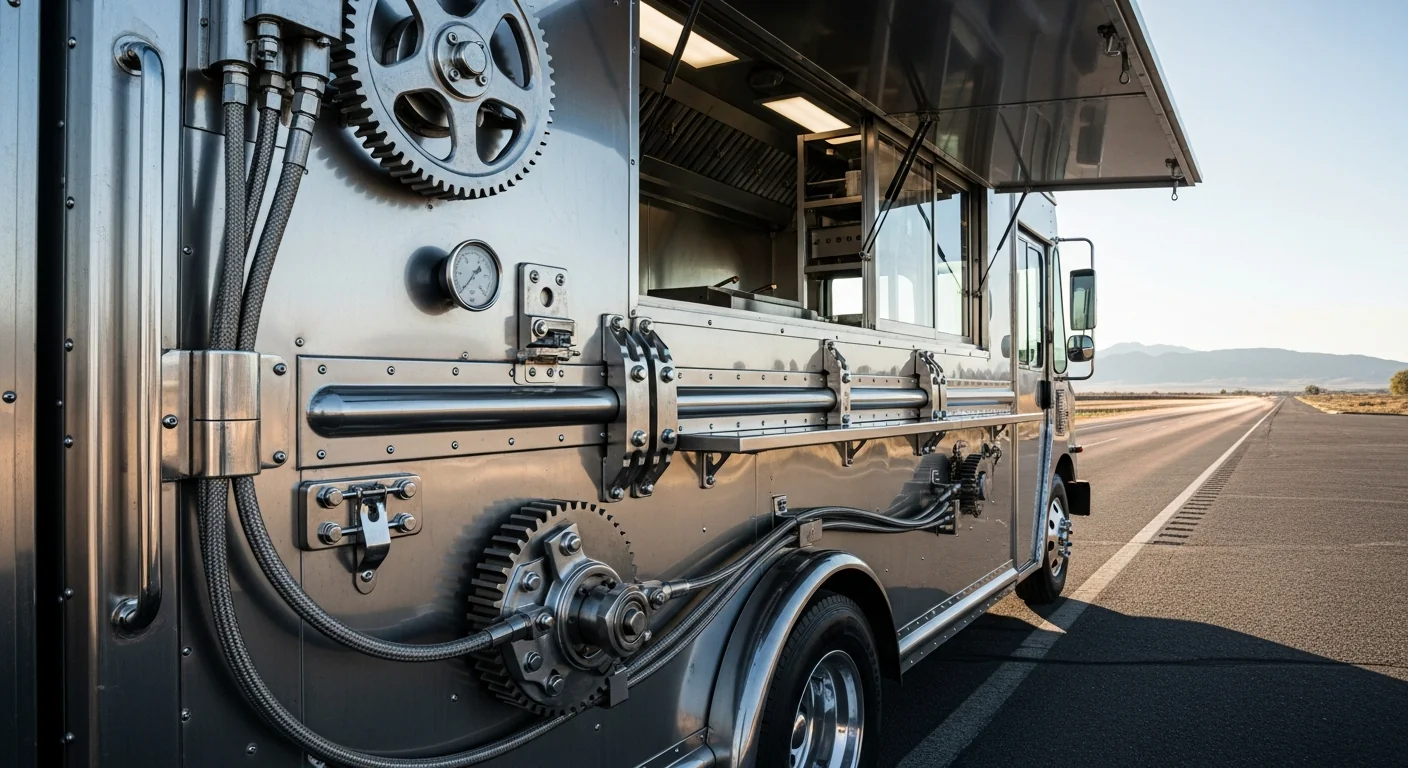
Food truck for sale prices create massive confusion because sellers focus on sticker prices while ignoring the total cost of ownership. Used food trucks range from $25,000 for high-mileage, older units to $90,000 for late-model turnkey operations. But here's what matters more: how age, mileage, and equipment completeness affect your financing options—and your monthly cash flow.
The used food truck market breaks into three distinct tiers, and each has different financing implications. Budget used trucks ($25,000-$40,000) are typically 10-20 years old with high mileage. Here's the problem: most lenders won't finance trucks over 12-15 years old or with 150,000+ miles, effectively forcing cash-only purchases. That "great deal" on a 2008 food truck at $28,000 might require $28,000 in cash—no financing available.
Mid-range used trucks ($40,000-$75,000) represent the sweet spot for financing. These 3-10 year old trucks qualify for standard terms, and you'll see A-tier borrowers (720+ FICO) getting 5.5%-8.5% APR with 10% down. B-tier borrowers (640-719) typically see 8.5%-13% APR with 15-20% down.
Turnkey used trucks ($60,000-$90,000) are 1-5 years old with full equipment packages and health department certification. These get the best financing rates because they're proven, operational businesses. Lenders view a certified, revenue-generating food truck as lower risk than a custom build or fixer-upper.
E-Line basic food trailers range from $32,000 to $44,000 for new builds, representing the entry level for aspiring operators. Twenty-foot motorized food trucks start around $85,000 and can exceed $175,000 for premium custom builds with high-end equipment packages.
New trucks offer two financing advantages: maximum loan-to-value ratios (often 90-95% financing available) and access to manufacturer incentives. Some builders offer 0% APR promotional financing for qualified buyers, though these programs typically require excellent credit and shorter terms.
Beyond age and mileage restrictions, several factors can kill your financing approval. Salvage or rebuilt titles are virtually unfinanceable—and often uninsurable. Custom DIY builds without health department certification face higher rates or outright rejections. Incomplete builds missing generators, hood systems, or water tanks trigger lender concerns about operational viability.
Always verify clean title, current registration, and equipment certification before applying for financing. A pre-purchase inspection covering both mechanical condition and health department compliance can prevent expensive surprises.
Here's why the math says you should own it: instead of draining your operating capital on a cash purchase or paying marked-up dealer financing, get multiple lenders competing for your deal. The truck price stays the same, but your financing cost can drop 1-3 percentage points when lenders bid against each other for your business.
Every food truck listing says "financing available" but provides zero rate information. That's useless for budgeting. Here's what lenders in our network actually charge based on your credit profile.
A-tier borrowers with 720+ FICO scores typically see 5.5%-8.5% APR with 10% down payments and high approval likelihood. B-tier borrowers (640-719 FICO) get 8.5%-13% APR with 15-20% down and moderate approval rates. Startup or subprime borrowers (580-639 FICO) face 11%-16% APR with 20-30% down payments and conditional approval requirements.
A $50,000 used food truck with 10% down ($5,000) leaves $45,000 to finance. At 8.5% APR for 60 months, you're looking at $923 per month. Total paid: $55,377. Interest cost: $10,377.
Scale up to an $85,000 new food truck with 15% down ($12,750) financing $72,250. At 6.5% APR for 72 months, monthly payments hit $1,224. Total paid: $88,128. Interest cost: $15,878.
Traditional banks often reject food truck loans as "too risky," but SBA programs exist specifically for mobile food businesses. The SBA Microloan Program provides loans up to $50,000—ideal for used truck purchases and food trailers. SBA 7(a) loans go up to $5,000,000 for established businesses scaling their fleet. SBA 504 loans handle up to $5,500,000, typically for permanent kitchen installations or commissary-linked operations.
Stop building zero equity with rental payments when these rates are available. The difference between paying $4,000/month in rentals versus owning at $1,200/month is $2,800 in monthly cash flow improvement—plus you're building an asset instead of enriching a rental company.
This is the biggest financial advantage that zero food truck sellers mention. According to IRS Publication 946, the 2026 Section 179 deduction limit is $2,560,000, allowing businesses to deduct the full purchase price of qualifying food truck equipment in the year of acquisition. This isn't a multi-year depreciation schedule—you deduct the entire amount in Year 1.
For a $54,660 used food truck, Section 179 creates $13,665 in tax savings at the 25% bracket, $17,491 at the 32% bracket, and $19,131 at the 35% bracket. Scale up to a $79,500 new food truck: $19,875 savings at 25%, $25,440 at 32%, and $27,825 at 35%.
Think about this practically: an $80,000 food truck doesn't really cost $80,000. After Section 179 deductions, your effective cost drops to $52,175-$60,125 depending on your tax bracket. Additionally, 100% bonus depreciation is available on any amount exceeding your Section 179 election.
Buy and place the truck in service before December 31 to claim the deduction in the current tax year. Entity structure matters—S-Corps, LLCs, and sole proprietors all handle Section 179 differently, so consult your CPA for optimization strategies.
Ready to take the next step? Explore our complete food truck guide today to compare models and types side by side. If you want to explore your food truck financing options today, our network of competing lenders can help you secure the best rate. Or if you're not ready to buy, explore your food truck rental options today to test the business before committing.The math says you should own it: combine Section 179 tax savings with competitive financing rates, and you're essentially getting paid to upgrade from rental to ownership. When lenders compete for your deal through EquipFlow's network, you maximize both your tax deduction and minimize your borrowing cost—the ultimate financial efficiency.
Most food truck marketplaces present buying as the only option. That's financially naive. Smart operators evaluate all acquisition methods based on their business stage and cash position.
Buying a $65,000 food truck with financing typically costs $1,100-$1,500 monthly over 60-72 months. You own the truck at the end, and Section 179 provides immediate tax deductions. Capital leases ($1 buyout) run $1,200-$1,600 monthly but offer ownership without large down payments while maintaining Section 179 eligibility.
Operating leases cost $900-$1,300 monthly with the option to return or buy at fair market value. Lease payments are fully deductible, providing operational flexibility for businesses wanting to upgrade equipment regularly.
Short-term rentals cost $3,000-$6,000 monthly—expensive but perfect for concept validation. Rent for 3 months at $4,000/month ($12,000 total) to prove business viability before committing to a $65,000 purchase.
Pay cash only if you have twice the truck price in liquid assets, preserving operating reserves. Finance if the truck would consume over 50% of your capital or if you can invest the cash at returns exceeding your loan APR. Remember, food trucks require $10,000-$25,000 in working capital beyond the purchase price for permits, inventory, insurance, and commissary deposits.
Food truck buyers budget for truck payments and forget everything else. Commercial auto liability insurance costs $3,500-$7,500 annually depending on your state and coverage level. Most venues require $1,000,000 minimum general liability coverage. If financing, lenders mandate comprehensive and collision coverage with them named as loss payee.
Health department permits run $200-$1,000+ annually. Business licenses cost $50-$500. Fire safety inspections are mandatory in most municipalities. Commissary kitchen membership—required in many jurisdictions—costs $500-$2,000 monthly.
Your true monthly overhead includes truck payments ($900-$1,500), insurance ($290-$625), commissary fees ($500-$2,000), permits ($50-$150 amortized), fuel ($400-$800), and food inventory ($3,000-$8,000). Total monthly overhead: $5,140-$13,075 before labor, marketing, or maintenance reserves.
Most food truck buyers waste weeks calling banks that don't understand mobile food businesses, only to get rejected or quoted predatory rates. Ava changes that by matching your specific situation with lenders who actually finance food trucks.
Ava analyzes your credit profile, down payment capacity, and the specific food truck you're targeting. This isn't generic equipment financing—food trucks have unique depreciation curves, title requirements, and operational considerations that affect lending decisions. Ava knows which lenders reject trucks over 15 years old, which ones require health department certification, and which offer the best rates for turnkey versus custom builds.
Within 24 hours, Ava connects you with 3-4 lenders from our network who specialize in food truck financing. These aren't your local bank's generic equipment loan officers—these are lenders who understand mobile food businesses, seasonal cash flow, and commissary requirements. When lenders compete for the same deal, rates drop 0.5-2 percentage points compared to going direct.
See exactly how each offer affects your cash flow. A $60,000 food truck at 8% APR for 60 months means $1,216/month. The same truck at 11% APR costs $1,311/month—that's $95 more per month, or $5,700 over the loan term. You'll see every rate, term, and payment option clearly laid out.
You're in control. Pick the offer that makes the most sense for your business stage and cash flow needs. No pressure, no obligation—just transparent options so you can make an informed decision.
Most food truck buyers waste weeks calling banks that don't understand mobile food businesses, only to get rejected or quoted predatory rates. Ava changes that by matching your specific situation with lenders who actually finance food trucks.
Ava analyzes your credit profile, down payment capacity, and the specific food truck you're targeting. This isn't generic equipment financing—food trucks have unique depreciation curves, title requirements, and operational considerations that affect lending decisions. Ava knows which lenders reject trucks over 15 years old, which ones require health department certification, and which offer the best rates for turnkey versus custom builds.
Within 24 hours, Ava connects you with 3-4 lenders from our network who specialize in food truck financing. These aren't your local bank's generic equipment loan officers—these are lenders who understand mobile food businesses, seasonal cash flow, and commissary requirements. When lenders compete for the same deal, rates drop 0.5-2 percentage points compared to going direct.
See exactly how each offer affects your cash flow. A $60,000 food truck at 8% APR for 60 months means $1,216/month. The same truck at 11% APR costs $1,311/month—that's $95 more per month, or $5,700 over the loan term. You'll see every rate, term, and payment option clearly laid out.
You're in control. Pick the offer that makes the most sense for your business stage and cash flow needs. No pressure, no obligation—just transparent options so you can make an informed decision.
Most food truck buyers waste weeks calling banks that don't understand mobile food businesses, only to get rejected or quoted predatory rates. Ava changes that by matching your specific situation with lenders who actually finance food trucks.
Ava analyzes your credit profile, down payment capacity, and the specific food truck you're targeting. This isn't generic equipment financing—food trucks have unique depreciation curves, title requirements, and operational considerations that affect lending decisions. Ava knows which lenders reject trucks over 15 years old, which ones require health department certification, and which offer the best rates for turnkey versus custom builds.
Within 24 hours, Ava connects you with 3-4 lenders from our network who specialize in food truck financing. These aren't your local bank's generic equipment loan officers—these are lenders who understand mobile food businesses, seasonal cash flow, and commissary requirements. When lenders compete for the same deal, rates drop 0.5-2 percentage points compared to going direct.
See exactly how each offer affects your cash flow. A $60,000 food truck at 8% APR for 60 months means $1,216/month. The same truck at 11% APR costs $1,311/month—that's $95 more per month, or $5,700 over the loan term. You'll see every rate, term, and payment option clearly laid out.
You're in control. Pick the offer that makes the most sense for your business stage and cash flow needs. No pressure, no obligation—just transparent options so you can make an informed decision.
Most food truck buyers call their local bank, get rejected, then settle for the first "yes" they find—often at predatory rates. Ava eliminates this inefficient process by connecting you with multiple lenders simultaneously.
When 3-4 lenders compete for the same deal, rates fall. It's basic economics. A single lender has no incentive to offer their best rate. Multiple lenders competing for your business? They sharpen their pencils. On a $65,000 food truck, a 1.5% rate reduction saves $63 monthly—$4,536 over 72 months.
Generic equipment lenders don't understand food trucks. They reject deals based on vehicle age without considering health department certification. They don't know which manufacturers produce financeable builds versus problematic custom jobs. Ava specializes in the mobile food business, connecting you with lenders who actually understand your equipment and industry.
Every day without a food truck costs money. If you're renting at $4,000/month while shopping for a truck to buy, delays cost $133 daily. Ava's network provides initial feedback within 24 hours and full approvals within 48 hours for qualified applicants.
See what you qualify for without commitment. Compare multiple offers side-by-side. Choose the one that makes sense for your business—or walk away entirely. No fees, no obligations, no pressure.
Most food truck buyers call their local bank, get rejected, then settle for the first "yes" they find—often at predatory rates. Ava eliminates this inefficient process by connecting you with multiple lenders simultaneously.
When 3-4 lenders compete for the same deal, rates fall. It's basic economics. A single lender has no incentive to offer their best rate. Multiple lenders competing for your business? They sharpen their pencils. On a $65,000 food truck, a 1.5% rate reduction saves $63 monthly—$4,536 over 72 months.
Generic equipment lenders don't understand food trucks. They reject deals based on vehicle age without considering health department certification. They don't know which manufacturers produce financeable builds versus problematic custom jobs. Ava specializes in the mobile food business, connecting you with lenders who actually understand your equipment and industry.
Every day without a food truck costs money. If you're renting at $4,000/month while shopping for a truck to buy, delays cost $133 daily. Ava's network provides initial feedback within 24 hours and full approvals within 48 hours for qualified applicants.
See what you qualify for without commitment. Compare multiple offers side-by-side. Choose the one that makes sense for your business—or walk away entirely. No fees, no obligations, no pressure.
Most food truck buyers call their local bank, get rejected, then settle for the first "yes" they find—often at predatory rates. Ava eliminates this inefficient process by connecting you with multiple lenders simultaneously.
When 3-4 lenders compete for the same deal, rates fall. It's basic economics. A single lender has no incentive to offer their best rate. Multiple lenders competing for your business? They sharpen their pencils. On a $65,000 food truck, a 1.5% rate reduction saves $63 monthly—$4,536 over 72 months.
Generic equipment lenders don't understand food trucks. They reject deals based on vehicle age without considering health department certification. They don't know which manufacturers produce financeable builds versus problematic custom jobs. Ava specializes in the mobile food business, connecting you with lenders who actually understand your equipment and industry.
Every day without a food truck costs money. If you're renting at $4,000/month while shopping for a truck to buy, delays cost $133 daily. Ava's network provides initial feedback within 24 hours and full approvals within 48 hours for qualified applicants.
See what you qualify for without commitment. Compare multiple offers side-by-side. Choose the one that makes sense for your business—or walk away entirely. No fees, no obligations, no pressure.
Most food truck buyers call their local bank, get rejected, then settle for the first "yes" they find—often at predatory rates. Ava eliminates this inefficient process by connecting you with multiple lenders simultaneously.
When 3-4 lenders compete for the same deal, rates fall. It's basic economics. A single lender has no incentive to offer their best rate. Multiple lenders competing for your business? They sharpen their pencils. On a $65,000 food truck, a 1.5% rate reduction saves $63 monthly—$4,536 over 72 months.
Generic equipment lenders don't understand food trucks. They reject deals based on vehicle age without considering health department certification. They don't know which manufacturers produce financeable builds versus problematic custom jobs. Ava specializes in the mobile food business, connecting you with lenders who actually understand your equipment and industry.
Every day without a food truck costs money. If you're renting at $4,000/month while shopping for a truck to buy, delays cost $133 daily. Ava's network provides initial feedback within 24 hours and full approvals within 48 hours for qualified applicants.
See what you qualify for without commitment. Compare multiple offers side-by-side. Choose the one that makes sense for your business—or walk away entirely. No fees, no obligations, no pressure.
.png)