Many businesses receive funding shortly after approval
Built to help businesses explore realistic financing options
Business owners trust EquipFlow to simplify financing decisions
National and specialty lenders across industries
Your fastest route to the right lender — and the equipment your business needs.
Share your equipment type, business info, and location — it takes less than 60 seconds.
We instantly compare national and specialty lenders to find your best funding options.
Review offers, choose your lender, and get approved with fast turnaround times.
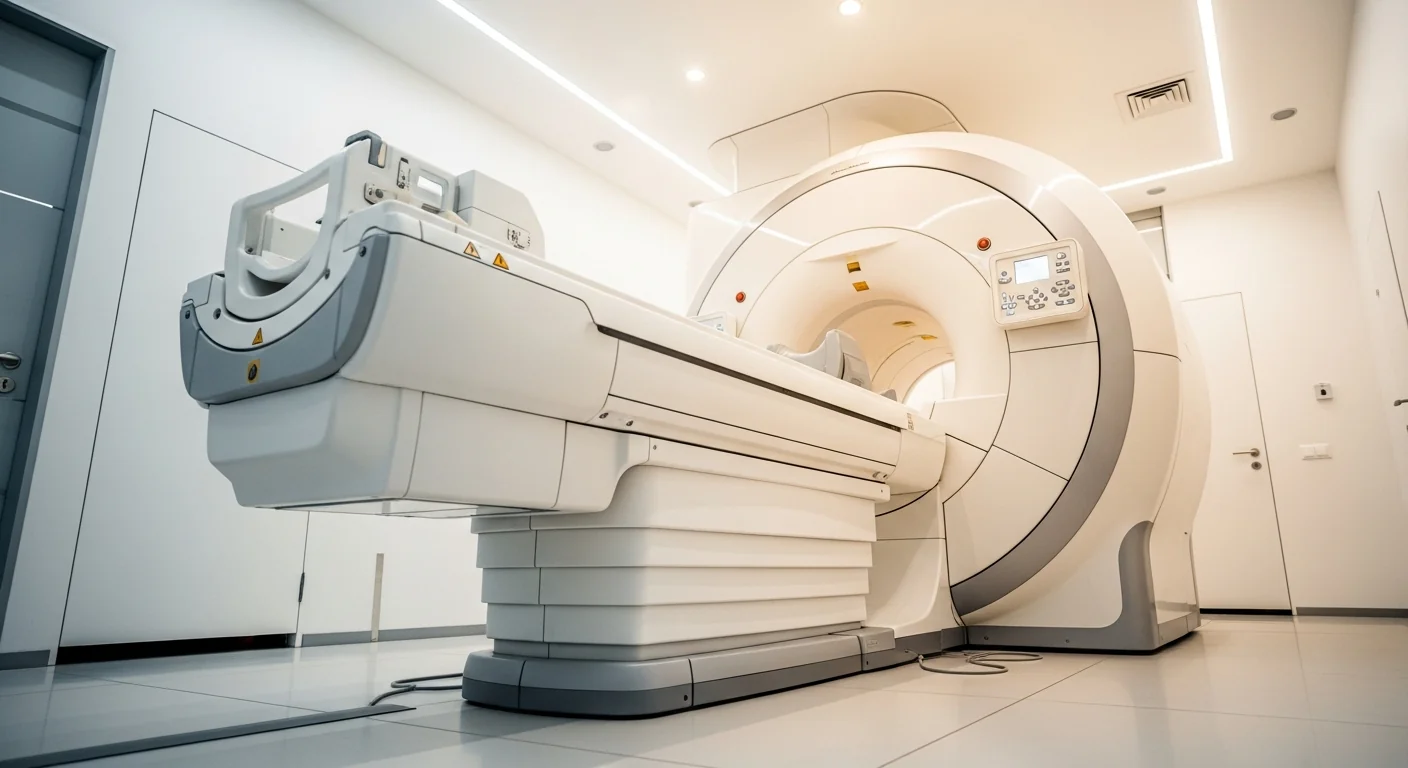
MRI Machine acquisition just got mathematically smarter—and more expensive. New 1.5T clinical systems now start at $1.0 million, while premium 3T research-grade units push $3 million or higher. But here's what most healthcare administrators miss: paying cash for that $1.5 million MRI means tying up capital that could generate 15-20% ROI elsewhere, creating an invisible opportunity cost of $225,000-$300,000 annually.
Meanwhile, smart financing at 7% APR costs only $105,000 yearly while preserving your working capital for patient care, staffing, or facility expansion. According to IRS Publication 946, the Section 179 deduction limit for 2026 is $2,560,000—meaning you can deduct the full purchase price of qualifying MRI equipment in year one. For a $1.3 million system at the 21% corporate rate, that's $262,500 in immediate tax recovery.
The math is brutal: every month you delay acquisition while 'saving up cash' costs you potential scan revenue of $192,000 (assuming 10 scans daily at $800 average reimbursement). This is exactly why lender competition matters—when 3-4 medical equipment specialists compete for your deal, rates typically drop 0.5-2 percentage points, and approval criteria become more flexible for healthcare-specific cash flow patterns.

The MRI machine market spans a brutal range: $150,000 for a refurbished 1.5T system up to $3 million or more for cutting-edge 3T research units. But the sticker price is only the beginning of your total investment calculation.
New 1.5T clinical systems—the workhorses of most imaging centers—range from $1.0 million to $1.5 million depending on manufacturer and feature set. These systems handle 80% of routine imaging needs and offer the best balance of capability versus cost for general practice.
New 3T systems command $2.0 million to $3.0 million or higher, justified primarily by research applications, specialized neurological imaging, and facilities targeting premium patient demographics. The higher field strength delivers superior image resolution but requires more extensive site preparation and higher operational costs.
Open MRI systems, designed for claustrophobic patients or bariatric imaging, typically range from $500,000 to $1.2 million new. While they solve specific patient comfort issues, the lower field strength (usually 0.3T to 0.7T) limits diagnostic capabilities compared to traditional closed-bore systems.
Refurbished 1.5T systems start around $150,000 for older models but can reach $500,000 for recent units with low scan counts. Here's what most buyers miss: banks reject 67% of equipment loans on machines over 7-10 years old, severely limiting your financing options and potentially forcing cash-only purchases.
Refurbished 3T systems range from $500,000 to $1.2 million, offering substantial savings versus new while maintaining most diagnostic capabilities. However, lenders scrutinize the equipment age, service history, and remaining manufacturer support when evaluating loan applications.
Mobile MRI rental rates run approximately $16,000 to $18,950 per month according to equipment marketplace data. The GE LX 9.1x rents for $16,000 monthly, while premium units like the Siemens Symphony command $18,950 per month.
Here's the ownership break-even math: at $18,000 monthly rental costs, you'll pay $1.08 million over five years with zero equity and zero tax benefits. Meanwhile, financing a $1.5 million system at 6% over 60 months costs approximately $29,000 monthly—but you're building equity, qualifying for Section 179 deductions, and break even around month 60-72.
Most healthcare administrators budget for the machine cost but underestimate the $200,000 to $500,000 in additional expenses required to make that MRI operational. These hidden costs can derail financing approval if not included in your loan application upfront.
RF shielding and Faraday cage construction represent the largest hidden expense, ranging from $100,000 for basic installations to $500,000 for complex renovations. Your lender will factor these costs into total project financing because they're required for operation—not optional upgrades.
HVAC upgrades ensure proper temperature and humidity control for the MRI system. Structural reinforcement may be necessary depending on your facility's age and the MRI weight (most systems require specialized flooring). Electrical work includes dedicated power feeds and emergency shutdown systems.
Maintenance contracts consume $100,000 to $200,000 annually according to manufacturer service agreements. This isn't optional—MRI downtime costs $3,000 to $8,000 daily in lost imaging revenue, making service contracts essential for operational continuity.
Helium refills add $10,000 to $30,000 yearly for traditional superconducting magnets. Newer helium-free systems eliminate this expense but command higher purchase prices. Transportation and delivery costs range from $7,500 to $15,000 depending on distance, with generator costs adding $5,000 to $15,000 if required by your facility.
Applications training costs $1,000 to $2,000 per day for technologist certification on your specific system. Factor 3-5 days for comprehensive training across multiple staff members.
MRI financing rates cluster into three distinct tiers based on your practice's credit profile and operational history. Understanding these tiers helps you negotiate from a position of knowledge rather than hope.
A-tier borrowers with 700+ credit scores and 2+ years of established imaging revenue typically qualify for 6% to 9% APR on medical equipment loans. These practices demonstrate consistent cash flow, strong payer relationships, and debt service coverage ratios above 1.25x.
B-tier facilities with 620-699 credit scores or newer practices with solid business plans face 9% to 13% rates. Lenders may require larger down payments (20% vs. 10%) but still offer competitive terms for qualified healthcare borrowers.
Startup practices or those with credit challenges encounter 12% to 17% rates. Some medical equipment lenders specialize in this segment, understanding that new imaging centers often show strong growth trajectories despite limited operating history.
Typical down payments range from 10% to 20% of equipment cost—meaning a $1.3 million MRI requires $130,000 to $260,000 upfront cash plus site preparation expenses. This combined outlay can easily reach $400,000 to $500,000 before generating the first dollar of imaging revenue.
SBA 504 loans reduce down payment requirements to as little as 10% on the SBA portion, but require owner-occupancy and job creation criteria. SBA 7(a) loans offer up to $5 million in equipment financing with potentially longer terms and competitive rates for qualified healthcare borrowers.
A $1.0 million MRI financed at 7% over 60 months generates monthly payments of approximately $19,800. Extend the term to 84 months and payments drop to $14,700—but total interest increases by $47,000 over the loan life.A $1.5 million system at 6% over 60 months costs approximately $29,000 monthly. At 10 scans daily averaging $800 reimbursement each, you're generating $240,000 monthly in gross revenue—meaning equipment payments consume roughly 12% of imaging revenue.
A premium $2.5 million 3T system at 8% over 72 months requires $41,700 monthly payments. This payment level demands higher scan volumes or premium pricing to maintain healthy cash flow margins.
The tax implications of MRI financing versus cash purchase create a mathematical argument for financing that most healthcare administrators overlook. According to IRS Publication 946, equipment purchases qualify for aggressive tax benefits that can recover 20-35% of your investment in year one.
The Section 179 deduction limit for 2026 is $2,560,000, allowing you to deduct the full purchase price of qualifying MRI equipment in the year placed in service. For a $1.3 million system purchased by December 31, 2026, you can deduct $2,560,000 immediately.
At the 25% tax bracket, Section 179 generates $75,460 in tax savings on a $301,840 system. Scale up to a larger system: at the 32% bracket, that same deduction saves $96,589. At the 35% bracket, you're looking at $105,644 in first-year tax recovery.
For corporate practices at the 21% rate, a $1.3 million MRI purchase generates $262,500 in immediate tax savings through Section 179—effectively reducing your net equipment cost to $1,037,500. This creates a 25% liquidity multiplier where every $4 spent generates $1 in immediate cash flow recovery.
Bonus depreciation for 2026 provides an additional 20% first-year deduction on qualifying equipment beyond the Section 179 limit. For systems exceeding $2,560,000, bonus depreciation applies to the remaining balance, further accelerating your tax benefits.
Critical timing note: bonus depreciation rates decline annually under current law—20% in 2026, then 0% starting 2027. This creates genuine urgency for large equipment acquisitions before year-end 2026.
MRI equipment follows the MACRS 5-year recovery schedule for standard depreciation. Combined with Section 179 and bonus depreciation, most healthcare facilities can recover 60-80% of their MRI investment through tax benefits over the first two years.
MRI financing approval depends on healthcare-specific criteria that differ significantly from general business equipment loans. Medical equipment lenders evaluate patient volume projections, payer mix ratios, and imaging market saturation—factors your local bank likely doesn't understand.
Established practices need 2+ years of operational history, 650+ credit scores, and debt service coverage ratios above 1.25x. Annual revenue should typically exceed 3-4x the requested loan amount, though medical equipment lenders may accept lower ratios given healthcare's predictable cash flows.
Startup imaging centers face higher scrutiny but can qualify through SBA programs or specialty healthcare lenders. Expect 15-20% down payments and potentially higher rates (12-17%) until you establish operational history.
Payer mix analysis examines your Medicare/Medicaid versus private insurance ratios. Higher private pay percentages support stronger reimbursement rates and more predictable cash flow. Lenders prefer practices with 60%+ private insurance coverage.
Patient volume projections must demonstrate realistic scan demand based on your service area population, physician referral networks, and competitive landscape. Overoptimistic projections raise red flags—conservative estimates with upside potential perform better in underwriting.
Existing equipment portfolios indicate operational competency and help lenders assess your facility's growth trajectory. Practices successfully operating CT scanners, ultrasound, or other imaging equipment demonstrate proven management capabilities.
Two to three years of business and personal tax returns for all owners with 20%+ equity stakes. Year-to-date profit and loss statements and balance sheets. Personal financial statements showing liquidity for down payments and working capital reserves.
Equipment quotes from authorized dealers with detailed specifications and delivery timelines. Site readiness documentation proving your facility can accommodate MRI installation requirements. Business plans with detailed revenue projections, especially critical for startup practices.
Navigating MRI financing shouldn't require calling 15+ lenders individually or settling for your bank's generic equipment loan rates. Here's how our lender-matching process works specifically for high-value medical equipment:
Our AI advisor analyzes your specific needs—whether you're acquiring a used 1.5T system for $400,000 or a new 3T for $2.5 million. Ava evaluates factors medical equipment lenders care about: your practice's patient volume, payer mix (Medicare vs. private insurance ratios), existing imaging equipment portfolio, and debt service coverage ratio. This isn't a generic loan application—it's healthcare-specific qualification analysis.
Ava connects you with 3-4 lenders who understand MRI depreciation curves, maintenance costs, and healthcare revenue cycles. When lenders compete for the same deal, rates drop an average of 0.5-2 points. More importantly, you'll see different approval criteria—some specialize in startup practices, others prefer established facilities with 5+ years of imaging experience.
See exactly how each offer affects your monthly cash flow, total interest cost, and tax implications. For example: $1.5M at 6% over 60 months = $29,000/month vs. $1.5M at 8% = $30,400/month. That 2% rate difference costs you an extra $84,000 over five years.
You maintain complete control—no pressure, no obligation until you sign. Most healthcare facilities receive funding within 2-3 weeks of application completion, assuming site preparation and installation timelines align.
Navigating MRI financing shouldn't require calling 15+ lenders individually or settling for your bank's generic equipment loan rates. Here's how our lender-matching process works specifically for high-value medical equipment:
Our AI advisor analyzes your specific needs—whether you're acquiring a used 1.5T system for $400,000 or a new 3T for $2.5 million. Ava evaluates factors medical equipment lenders care about: your practice's patient volume, payer mix (Medicare vs. private insurance ratios), existing imaging equipment portfolio, and debt service coverage ratio. This isn't a generic loan application—it's healthcare-specific qualification analysis.
Ava connects you with 3-4 lenders who understand MRI depreciation curves, maintenance costs, and healthcare revenue cycles. When lenders compete for the same deal, rates drop an average of 0.5-2 points. More importantly, you'll see different approval criteria—some specialize in startup practices, others prefer established facilities with 5+ years of imaging experience.
See exactly how each offer affects your monthly cash flow, total interest cost, and tax implications. For example: $1.5M at 6% over 60 months = $29,000/month vs. $1.5M at 8% = $30,400/month. That 2% rate difference costs you an extra $84,000 over five years.
You maintain complete control—no pressure, no obligation until you sign. Most healthcare facilities receive funding within 2-3 weeks of application completion, assuming site preparation and installation timelines align.
Navigating MRI financing shouldn't require calling 15+ lenders individually or settling for your bank's generic equipment loan rates. Here's how our lender-matching process works specifically for high-value medical equipment:
Our AI advisor analyzes your specific needs—whether you're acquiring a used 1.5T system for $400,000 or a new 3T for $2.5 million. Ava evaluates factors medical equipment lenders care about: your practice's patient volume, payer mix (Medicare vs. private insurance ratios), existing imaging equipment portfolio, and debt service coverage ratio. This isn't a generic loan application—it's healthcare-specific qualification analysis.
Ava connects you with 3-4 lenders who understand MRI depreciation curves, maintenance costs, and healthcare revenue cycles. When lenders compete for the same deal, rates drop an average of 0.5-2 points. More importantly, you'll see different approval criteria—some specialize in startup practices, others prefer established facilities with 5+ years of imaging experience.
See exactly how each offer affects your monthly cash flow, total interest cost, and tax implications. For example: $1.5M at 6% over 60 months = $29,000/month vs. $1.5M at 8% = $30,400/month. That 2% rate difference costs you an extra $84,000 over five years.
You maintain complete control—no pressure, no obligation until you sign. Most healthcare facilities receive funding within 2-3 weeks of application completion, assuming site preparation and installation timelines align.
MRI financing requires specialized knowledge of medical equipment depreciation, healthcare cash flows, and regulatory requirements that most general lenders lack. Here's why our targeted approach delivers better outcomes than shopping individual banks:
When 3-4 medical equipment specialists compete for the same $1.5 million MRI deal, rates typically drop 0.5 to 2 percentage points compared to single-lender shopping. On a 60-month loan, that rate difference saves you $15,000 to $60,000 in total interest—money that stays in your practice rather than bank profits.
More importantly, competing lenders often adjust their approval criteria to win quality healthcare deals. One lender might require 20% down while another accepts 10%. One might cap loan terms at 60 months while another offers 84 months for lower payments.
Our AI advisor specializes in medical equipment lending patterns that general loan officers miss. Ava knows which lenders approve refurbished MRI systems over 7 years old, which ones work with startup imaging centers, and which offer the most flexible cash flow requirements for seasonal practices.
Ava also identifies SBA qualification opportunities that could save you significant money. SBA 504 loans cap at $5.5 million with potentially longer terms and lower rates, while SBA 7(a) programs offer up to $5 million for qualifying healthcare equipment purchases.
Every day without operational MRI capacity costs you potential scan revenue. At 10 scans daily averaging $800 reimbursement, that's $8,000 in daily opportunity cost while you're researching lenders individually.
Ava delivers initial lender matches within 24-48 hours, with pre-qualification responses typically following within another 48-72 hours. This speed advantage helps you secure equipment during manufacturers' promotional periods and ensures faster revenue generation.
Comparing multiple financing options costs you nothing but provides complete market visibility. You'll see the full range of available rates, terms, and approval criteria before committing to any single lender relationship. Most healthcare facilities discover financing options they never knew existed—often at better terms than their primary banking relationships offer.
MRI financing requires specialized knowledge of medical equipment depreciation, healthcare cash flows, and regulatory requirements that most general lenders lack. Here's why our targeted approach delivers better outcomes than shopping individual banks:
When 3-4 medical equipment specialists compete for the same $1.5 million MRI deal, rates typically drop 0.5 to 2 percentage points compared to single-lender shopping. On a 60-month loan, that rate difference saves you $15,000 to $60,000 in total interest—money that stays in your practice rather than bank profits.
More importantly, competing lenders often adjust their approval criteria to win quality healthcare deals. One lender might require 20% down while another accepts 10%. One might cap loan terms at 60 months while another offers 84 months for lower payments.
Our AI advisor specializes in medical equipment lending patterns that general loan officers miss. Ava knows which lenders approve refurbished MRI systems over 7 years old, which ones work with startup imaging centers, and which offer the most flexible cash flow requirements for seasonal practices.
Ava also identifies SBA qualification opportunities that could save you significant money. SBA 504 loans cap at $5.5 million with potentially longer terms and lower rates, while SBA 7(a) programs offer up to $5 million for qualifying healthcare equipment purchases.
Every day without operational MRI capacity costs you potential scan revenue. At 10 scans daily averaging $800 reimbursement, that's $8,000 in daily opportunity cost while you're researching lenders individually.
Ava delivers initial lender matches within 24-48 hours, with pre-qualification responses typically following within another 48-72 hours. This speed advantage helps you secure equipment during manufacturers' promotional periods and ensures faster revenue generation.
Comparing multiple financing options costs you nothing but provides complete market visibility. You'll see the full range of available rates, terms, and approval criteria before committing to any single lender relationship. Most healthcare facilities discover financing options they never knew existed—often at better terms than their primary banking relationships offer.
MRI financing requires specialized knowledge of medical equipment depreciation, healthcare cash flows, and regulatory requirements that most general lenders lack. Here's why our targeted approach delivers better outcomes than shopping individual banks:
When 3-4 medical equipment specialists compete for the same $1.5 million MRI deal, rates typically drop 0.5 to 2 percentage points compared to single-lender shopping. On a 60-month loan, that rate difference saves you $15,000 to $60,000 in total interest—money that stays in your practice rather than bank profits.
More importantly, competing lenders often adjust their approval criteria to win quality healthcare deals. One lender might require 20% down while another accepts 10%. One might cap loan terms at 60 months while another offers 84 months for lower payments.
Our AI advisor specializes in medical equipment lending patterns that general loan officers miss. Ava knows which lenders approve refurbished MRI systems over 7 years old, which ones work with startup imaging centers, and which offer the most flexible cash flow requirements for seasonal practices.
Ava also identifies SBA qualification opportunities that could save you significant money. SBA 504 loans cap at $5.5 million with potentially longer terms and lower rates, while SBA 7(a) programs offer up to $5 million for qualifying healthcare equipment purchases.
Every day without operational MRI capacity costs you potential scan revenue. At 10 scans daily averaging $800 reimbursement, that's $8,000 in daily opportunity cost while you're researching lenders individually.
Ava delivers initial lender matches within 24-48 hours, with pre-qualification responses typically following within another 48-72 hours. This speed advantage helps you secure equipment during manufacturers' promotional periods and ensures faster revenue generation.
Comparing multiple financing options costs you nothing but provides complete market visibility. You'll see the full range of available rates, terms, and approval criteria before committing to any single lender relationship. Most healthcare facilities discover financing options they never knew existed—often at better terms than their primary banking relationships offer.
MRI financing requires specialized knowledge of medical equipment depreciation, healthcare cash flows, and regulatory requirements that most general lenders lack. Here's why our targeted approach delivers better outcomes than shopping individual banks:
When 3-4 medical equipment specialists compete for the same $1.5 million MRI deal, rates typically drop 0.5 to 2 percentage points compared to single-lender shopping. On a 60-month loan, that rate difference saves you $15,000 to $60,000 in total interest—money that stays in your practice rather than bank profits.
More importantly, competing lenders often adjust their approval criteria to win quality healthcare deals. One lender might require 20% down while another accepts 10%. One might cap loan terms at 60 months while another offers 84 months for lower payments.
Our AI advisor specializes in medical equipment lending patterns that general loan officers miss. Ava knows which lenders approve refurbished MRI systems over 7 years old, which ones work with startup imaging centers, and which offer the most flexible cash flow requirements for seasonal practices.
Ava also identifies SBA qualification opportunities that could save you significant money. SBA 504 loans cap at $5.5 million with potentially longer terms and lower rates, while SBA 7(a) programs offer up to $5 million for qualifying healthcare equipment purchases.
Every day without operational MRI capacity costs you potential scan revenue. At 10 scans daily averaging $800 reimbursement, that's $8,000 in daily opportunity cost while you're researching lenders individually.
Ava delivers initial lender matches within 24-48 hours, with pre-qualification responses typically following within another 48-72 hours. This speed advantage helps you secure equipment during manufacturers' promotional periods and ensures faster revenue generation.
Comparing multiple financing options costs you nothing but provides complete market visibility. You'll see the full range of available rates, terms, and approval criteria before committing to any single lender relationship. Most healthcare facilities discover financing options they never knew existed—often at better terms than their primary banking relationships offer.
.png)