Many businesses receive funding shortly after approval
Built to help businesses explore realistic financing options
Business owners trust EquipFlow to simplify financing decisions
National and specialty lenders across industries
Your fastest route to the right lender — and the equipment your business needs.
Share your equipment type, business info, and location — it takes less than 60 seconds.
We instantly compare national and specialty lenders to find your best funding options.
Review offers, choose your lender, and get approved with fast turnaround times.
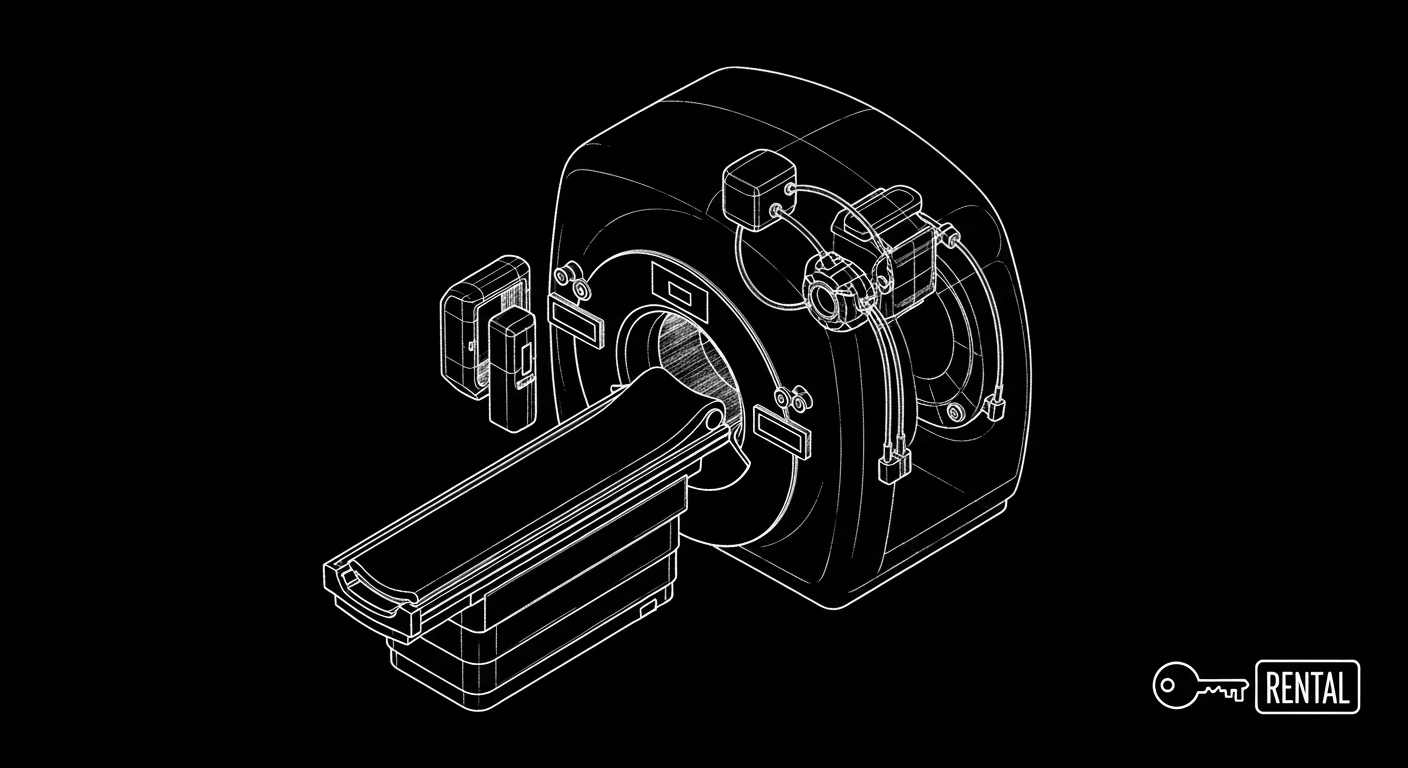
MRI machine rental searchers are typically quoted a base monthly rate and think they understand their costs. Then reality hits: RF shielding modifications and site-preparation work that weren't mentioned. Healthcare-facility MRI safety requirements that demand dedicated signage and screening protocols. Coil packages that somehow weren't included in the 'complete' quote. Mandatory MR Safety Officer certification before a single scan can be performed. That base rental quote quietly multiplies before the first patient is imaged.
Here's what most facility managers miss: mobile MRI rentals span a wide range depending on Tesla strength and deployment type, but the base rental price represents only a fraction of your true monthly cost. The difference between smart MRI deployment and financial disaster comes down to understanding the complete cost structure—and more importantly, when the math says you should own instead of rent.
In our experience closing hundreds of medical equipment deals, facilities that plan from a single rental quote instead of a total deployment budget consistently blow through their capital allocations. But there's a bigger issue: if you're renting an MRI long enough, you're paying close to the purchase price while building zero equity. The breakeven analysis most CFOs never see reveals when financing beats rental by massive margins.

Mobile MRI rental rates and equipment-financing payments don't move in lockstep. Rental rates vary by Tesla strength, brand, and rental term length, and they trend higher per month than financed ownership for comparable equipment. That gap — combined with the fact that rental payments build zero equity while loan payments build a balance-sheet asset — is what drives the rent-vs-own decision.
Use the rate-by-tier table above to estimate your specific monthly payment based on your credit profile and a typical MRI purchase price. The breakeven point against rental depends on which rental tier you're comparing against and your expected commitment length, but here's the structural truth: rental payments disappear forever, while loan payments build equity that can be leveraged for future expansion.
The mistake most facility managers make is comparing only monthly payments without modeling the multi-year picture. Run the rental-period total against the purchase-financed total over the same window, factor in tax benefits and equity buildup, and the right answer for your facility usually becomes obvious.
According to IRS Publication 946, Section 179 allows qualifying medical facilities to deduct the cost of qualifying equipment in the year it's placed in service, up to the annual limit. The 2026 limit is substantial — the One Big Beautiful Bill (OBBB) increased and inflation-indexed the cap, and bonus depreciation was permanently restored. For your specific deduction amount and tax savings, consult your healthcare CPA — tax law changes regularly and the right deduction strategy depends on your entity structure, tax bracket, and equipment placement-in-service date.
Rental payments are typically deductible as operating expenses in the year paid, with no depreciation schedule required. The structural difference: with rental, you get the deduction and zero asset value. With purchase under Section 179, you get a comparable tax benefit PLUS an asset on your balance sheet. The dollar value of that distinction grows the longer you'd otherwise rent.
Every MRI deployment involves costs beyond the base rental or purchase price. Plan for these line items so the budget you commit to is the budget you actually need:
Magnetic-safety compliance: Healthcare-facility MRI safety standards require zone demarcation, ferromagnetic screening protocols, and safety signage. Compliance work and ongoing penalties for non-compliance can be significant — verify the specific requirements for your facility category with your radiology consultant or accreditation body.
ACR accreditation: No Medicare reimbursement without American College of Radiology accreditation. The process requires physicist testing, phantom imaging, and documentation, with a typical 60–90 day timeline.
MR Safety Officer certification: Joint Commission standards require trained MR Safety Officers. Certification training is required before any clinical scanning can begin.
Site preparation: RF shielding modifications for fixed installations are typically the largest deployment line item; mobile MRI units require electrical, HVAC, and site work that's smaller but non-trivial.
Specialty coils: Many rental quotes exclude specialty coil packages for spine, MSK, cardiac, or head imaging. Confirm what's included and what's an add-on before signing.
New medical practices don't need two years of operating history to access MRI financing. Three proven pathways exist:
SBA-backed programs: The SBA 7(a) program provides medical-equipment financing for qualifying practices, and SBA 504 loans cover larger equipment. These programs focus on business plans, personal credit, and projected patient volume rather than historical revenue.
Specialty equipment leasing: Lenders in our network offer equipment-finance and leasing programs for startups, evaluating personal credit scores and personal guarantees rather than business credit history. Approval can happen quickly when the file is complete.
Equipment-specific lending: Some lenders specialize in MRI financing and understand the revenue potential of imaging equipment. They'll approve based on projected patient volume and referral patterns rather than historical financials.
Mobile MRI units offer deployment flexibility at a cost premium relative to fixed installations of comparable strength. Fixed installations typically cost less per month but require longer commitments and substantial site-preparation investment up front. Weekly rental options exist for short-term needs.
The right answer depends on utilization. Per-scan economics dominate the math: at low scan volume, the rental hourly cost is high but capital exposure is low; at high scan volume, ownership costs drop sharply per scan when factoring in tax benefits and equity. Use your projected scan-volume forecast as the input variable, not the rental-rate quote alone.
Rental becomes mathematically superior in specific scenarios: temporary replacement during renovations, demand testing for new service lines, seasonal or mobile expansion, and facilities with uncertain long-term patient volume. The key is matching your commitment timeline to the breakeven analysis above.
For short commitments, rental typically wins on cash flow. For mid-length commitments, the decision depends on your tax situation and available capital. For longer commitments, ownership almost always delivers superior financial returns when you factor in equity building and Section 179 benefits — but the precise crossover point is your specific calculation, not an industry rule of thumb.
When the math shows ownership beats rental, EquipFlow's AI advisor Ava specializes in matching medical facilities with lenders who understand MRI depreciation curves and Medicare reimbursement cycles.
Ava analyzes your specific needs—Tesla strength requirements, mobile vs. fixed installation, patient volume projections, and current credit profile. This isn't a generic application; Ava's algorithm factors in MRI-specific variables like ACR accreditation timeline and OSHA compliance requirements that affect total deployment cost.
Here's what most facilities don't know: when 3-4 lenders compete for the same MRI deal, rates typically drop 0.5-2 percentage points. Ava connects you with lenders who specifically understand medical equipment depreciation, Medicare reimbursement delays, and healthcare cash flow patterns.
You'll see exactly how each offer affects your monthly cash flow, total interest cost, and tax benefits. This includes Section 179 deduction scenarios (up to $2,560,000 according to IRS Publication 946) and bonus depreciation calculations at the current 20% rate.
You control the decision—no pressure, no obligation. Most medical facilities get approval within 24-48 hours, though total deployment timeline including ACR accreditation and OSHA compliance setup typically takes 60-120 days.
When the math shows ownership beats rental, EquipFlow's AI advisor Ava specializes in matching medical facilities with lenders who understand MRI depreciation curves and Medicare reimbursement cycles.
Ava analyzes your specific needs—Tesla strength requirements, mobile vs. fixed installation, patient volume projections, and current credit profile. This isn't a generic application; Ava's algorithm factors in MRI-specific variables like ACR accreditation timeline and OSHA compliance requirements that affect total deployment cost.
Here's what most facilities don't know: when 3-4 lenders compete for the same MRI deal, rates typically drop 0.5-2 percentage points. Ava connects you with lenders who specifically understand medical equipment depreciation, Medicare reimbursement delays, and healthcare cash flow patterns.
You'll see exactly how each offer affects your monthly cash flow, total interest cost, and tax benefits. This includes Section 179 deduction scenarios (up to $2,560,000 according to IRS Publication 946) and bonus depreciation calculations at the current 20% rate.
You control the decision—no pressure, no obligation. Most medical facilities get approval within 24-48 hours, though total deployment timeline including ACR accreditation and OSHA compliance setup typically takes 60-120 days.
When the math shows ownership beats rental, EquipFlow's AI advisor Ava specializes in matching medical facilities with lenders who understand MRI depreciation curves and Medicare reimbursement cycles.
Ava analyzes your specific needs—Tesla strength requirements, mobile vs. fixed installation, patient volume projections, and current credit profile. This isn't a generic application; Ava's algorithm factors in MRI-specific variables like ACR accreditation timeline and OSHA compliance requirements that affect total deployment cost.
Here's what most facilities don't know: when 3-4 lenders compete for the same MRI deal, rates typically drop 0.5-2 percentage points. Ava connects you with lenders who specifically understand medical equipment depreciation, Medicare reimbursement delays, and healthcare cash flow patterns.
You'll see exactly how each offer affects your monthly cash flow, total interest cost, and tax benefits. This includes Section 179 deduction scenarios (up to $2,560,000 according to IRS Publication 946) and bonus depreciation calculations at the current 20% rate.
You control the decision—no pressure, no obligation. Most medical facilities get approval within 24-48 hours, though total deployment timeline including ACR accreditation and OSHA compliance setup typically takes 60-120 days.
Most medical facilities apply to one lender and accept whatever rate they're offered. When lenders compete for your MRI deal, rates typically drop 0.5-2 percentage points. EquipFlow's network includes lenders who specialize in medical equipment and understand MRI depreciation patterns, Medicare reimbursement cycles, and healthcare cash flow dynamics.
Banks reject 67% of used equipment loans over 7 years old, but Ava knows which lenders approve older MRI systems and which require newer technology. She factors in Tesla strength requirements, brand preferences, and facility-specific needs to match you with lenders most likely to approve your specific deal structure.
Every day without MRI capability represents lost revenue and patient referrals. While total deployment takes 60-120 days for compliance and installation, financing approval happens in 24-48 hours. This lets you lock rates and begin the deployment process while competitors wait weeks for single-lender responses.
Ava's matching algorithm considers your tax situation, including Section 179 eligibility and bonus depreciation timing. Some lenders structure deals specifically to maximize tax benefits, while others focus purely on monthly payment optimization. You'll see both options to make an informed decision.
Most medical facilities apply to one lender and accept whatever rate they're offered. When lenders compete for your MRI deal, rates typically drop 0.5-2 percentage points. EquipFlow's network includes lenders who specialize in medical equipment and understand MRI depreciation patterns, Medicare reimbursement cycles, and healthcare cash flow dynamics.
Banks reject 67% of used equipment loans over 7 years old, but Ava knows which lenders approve older MRI systems and which require newer technology. She factors in Tesla strength requirements, brand preferences, and facility-specific needs to match you with lenders most likely to approve your specific deal structure.
Every day without MRI capability represents lost revenue and patient referrals. While total deployment takes 60-120 days for compliance and installation, financing approval happens in 24-48 hours. This lets you lock rates and begin the deployment process while competitors wait weeks for single-lender responses.
Ava's matching algorithm considers your tax situation, including Section 179 eligibility and bonus depreciation timing. Some lenders structure deals specifically to maximize tax benefits, while others focus purely on monthly payment optimization. You'll see both options to make an informed decision.
Most medical facilities apply to one lender and accept whatever rate they're offered. When lenders compete for your MRI deal, rates typically drop 0.5-2 percentage points. EquipFlow's network includes lenders who specialize in medical equipment and understand MRI depreciation patterns, Medicare reimbursement cycles, and healthcare cash flow dynamics.
Banks reject 67% of used equipment loans over 7 years old, but Ava knows which lenders approve older MRI systems and which require newer technology. She factors in Tesla strength requirements, brand preferences, and facility-specific needs to match you with lenders most likely to approve your specific deal structure.
Every day without MRI capability represents lost revenue and patient referrals. While total deployment takes 60-120 days for compliance and installation, financing approval happens in 24-48 hours. This lets you lock rates and begin the deployment process while competitors wait weeks for single-lender responses.
Ava's matching algorithm considers your tax situation, including Section 179 eligibility and bonus depreciation timing. Some lenders structure deals specifically to maximize tax benefits, while others focus purely on monthly payment optimization. You'll see both options to make an informed decision.
Most medical facilities apply to one lender and accept whatever rate they're offered. When lenders compete for your MRI deal, rates typically drop 0.5-2 percentage points. EquipFlow's network includes lenders who specialize in medical equipment and understand MRI depreciation patterns, Medicare reimbursement cycles, and healthcare cash flow dynamics.
Banks reject 67% of used equipment loans over 7 years old, but Ava knows which lenders approve older MRI systems and which require newer technology. She factors in Tesla strength requirements, brand preferences, and facility-specific needs to match you with lenders most likely to approve your specific deal structure.
Every day without MRI capability represents lost revenue and patient referrals. While total deployment takes 60-120 days for compliance and installation, financing approval happens in 24-48 hours. This lets you lock rates and begin the deployment process while competitors wait weeks for single-lender responses.
Ava's matching algorithm considers your tax situation, including Section 179 eligibility and bonus depreciation timing. Some lenders structure deals specifically to maximize tax benefits, while others focus purely on monthly payment optimization. You'll see both options to make an informed decision.
.png)