Many businesses receive funding shortly after approval
Built to help businesses explore realistic financing options
Business owners trust EquipFlow to simplify financing decisions
National and specialty lenders across industries
Your fastest route to the right lender — and the equipment your business needs.
Share your equipment type, business info, and location — it takes less than 60 seconds.
We instantly compare national and specialty lenders to find your best funding options.
Review offers, choose your lender, and get approved with fast turnaround times.
Skid steer for sale listings advertise '2.99% financing available'—but that promotional rate requires 750+ credit, zero existing debt, and equipment under two years old. What contractors with real-world credit profiles actually pay ranges from 6.5% to 18% APR, depending on their credit tier and the machine's age.
Here's what most people miss: Used skid steers lose 18% of value in year one, but only 6% in year three. This creates a financing sweet spot where 3-5 year old machines offer the best balance of affordability and lender approval rates. According to IRS Publication 946, the 2026 Section 179 deduction allows businesses to write off up to $2,560,000 of equipment purchases in Year 1. A $54,396 skid steer generates $13,599 to $19,039 in tax savings depending on your bracket—effectively reducing your net cost by 25-35%.
But here's the tension: every month you rent at $350-600/day while shopping for the 'perfect deal,' you're bleeding $10,500-18,000 annually with zero equity to show for it. Smart contractors who finance instead of rent break even at just 10-12 months of use, then own an appreciating asset that generates tax benefits rentals never provide.
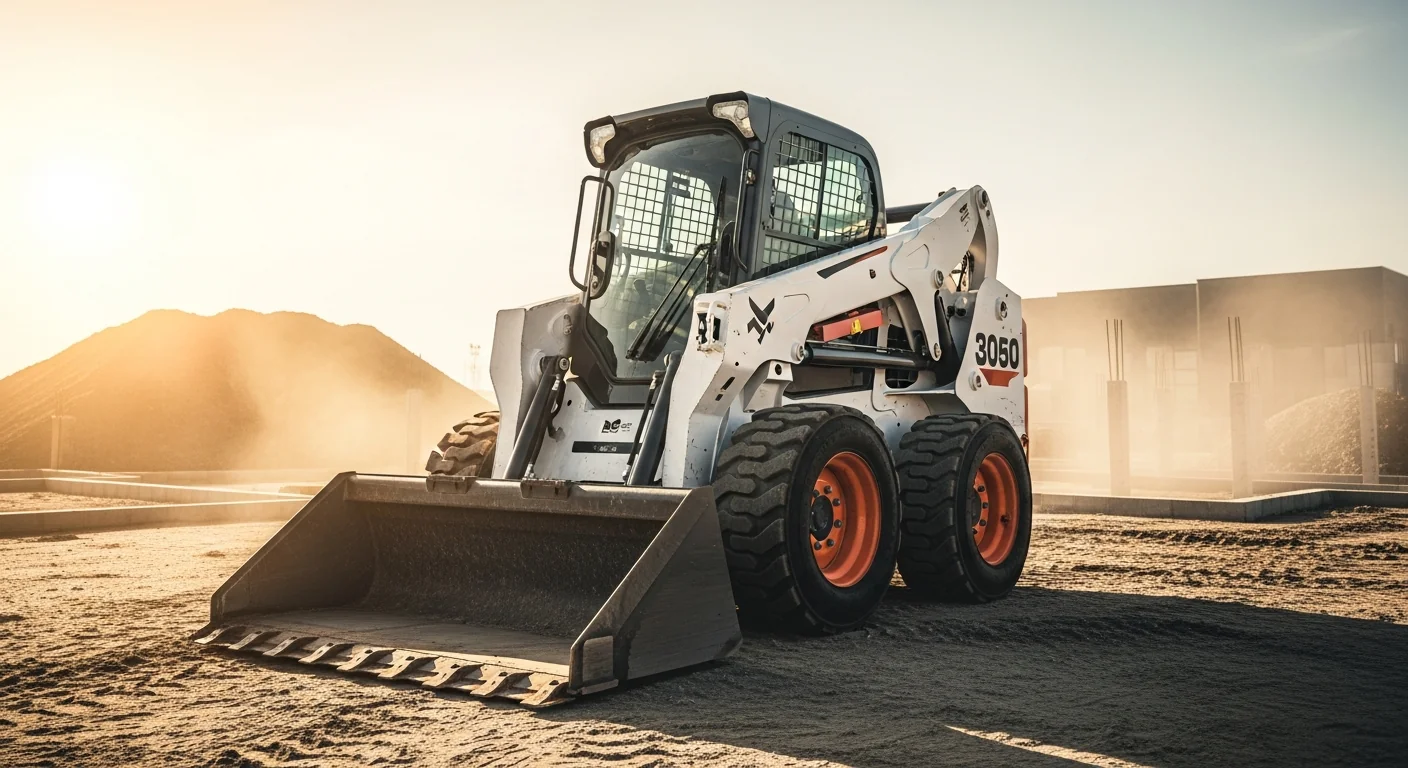
Skid steer prices range dramatically based on size, age, and features. Small frame units (1,300-1,750 lb rated operating capacity) start around $32,000 new, while large frame machines (2,200-3,200 lb ROC) with high-flow hydraulics can exceed $80,000. According to dealer network data, a 2014 Bobcat S530 with moderate hours lists at $32,995, representing the value plateau where depreciation slows significantly.
New skid steers carry premium pricing but offer manufacturer financing programs. Caterpillar Financial, Bobcat Financial, and John Deere Financial often provide promotional rates—sometimes as low as 0% APR for 36 months on select models. However, these deals require excellent credit and typically apply only to premium equipment lines.
Used equipment offers better value but requires careful evaluation. Equipment under 3 years old with under 2,000 hours commands premium pricing but qualifies for the best financing terms. Machines 3-7 years old with 2,000-5,000 hours represent the financing sweet spot—lower purchase prices with reasonable approval odds. Equipment over 7 years or exceeding 5,000 hours faces financing challenges, with many lenders requiring 20-30% down and shorter terms.
Forget the teaser rates in advertisements. Here's what contractors actually pay based on EquipFlow's analysis of thousands of equipment loans:
A-Tier borrowers with 680+ FICO scores and two years in business typically see 6.5-9.5% APR on new or recent equipment. B-Tier borrowers with 600-679 credit scores face 9.5-14% rates, while startups or thin-file applicants often encounter 12-18% APR with higher down payment requirements.
Down payment requirements directly correlate with equipment age and condition. New machines under three years qualify for $0-10% down with strong credit. Equipment 3-7 years old typically requires 10-20% down, while machines over seven years or with high hours demand 20-30% down payments. Some lenders won't finance equipment over ten years regardless of condition.
Term lengths affect both payment and total cost significantly. A $50,000 skid steer financed at 7.5% APR costs $1,553/month over 36 months ($55,908 total) versus $769/month over 84 months ($64,596 total). The longer term cuts your payment in half but doubles your interest expense.
The 2026 Section 179 deduction limit of $2,560,000 allows businesses to write off equipment purchases immediately rather than depreciating over five years. This creates substantial cash flow advantages that most contractors overlook.
Based on EquipFlow's tax analysis, a $54,396 skid steer purchase generates immediate tax savings of $13,599 at the 25% bracket, $17,407 at 32%, and $19,039 at 35%. These aren't future benefits—they're Year 1 cash flow recovery that reduces your effective equipment cost by thousands.
Bonus depreciation adds another layer of savings. The 2026 rate of 20% applies to any equipment cost exceeding the Section 179 limit. However, this benefit remains at 100% in 2027 under OBBB, making 2026 the final year to capture bonus depreciation.
Smart contractors leverage Section 179 savings to eliminate down payments. If you need $10,000 down for a $50,000 skid steer but expect $12,500 in tax savings, you're essentially financing the machine with government incentives.
Daily skid steer rental rates range from $150-600 depending on size and market conditions, with delivered rates often reaching $400-750. A Kubota SSV65 rents for approximately $350/day according to regional rental companies.
Here's where the math gets compelling: If you use a skid steer more than 2-3 days per month, financing becomes dramatically cheaper than renting. A $50,000 machine financed at 6% over 60 months costs approximately $967/month including insurance. At just 100 days per year usage, rental costs $35,000-60,000 annually versus $11,600 for ownership.
Ownership breaks even at 10-12 months of cumulative use, then generates positive cash flow while building equity. Contractors who rent frequently are essentially making equipment payments to someone else while missing out on Section 179 deductions that rental operators can't provide.
Beyond the purchase price and monthly payment, several costs affect your total investment. Sales tax varies by state but typically adds $3,000-5,500 on a $50,000 purchase. Insurance requirements for financed equipment include comprehensive and collision coverage with the lender named as loss payee—budget $1,200-2,500 annually depending on equipment value.
Lender fees include origination charges of $500-1,500, documentation fees of $300-750, and title/registration costs of $200-500. Total closing costs typically range from $1,000-3,000, money you need beyond your down payment.
Prepayment terms vary significantly between lenders. Some use simple interest where early payoff saves money, while others employ precomputed interest providing no early payoff benefit. Common penalties include 90-day interest minimums or 3% fees on remaining balances in the first 24 months.
Under 29 CFR 1926.602, employers must ensure skid steer operators receive proper training on material handling equipment. While formal certification isn't required, documented training is mandatory covering pre-operation inspection, safe operating procedures, load capacities, and attachment changes.
Violation penalties are severe. OSHA serious violations range from $1,190-16,550 per incident, while willful violations can reach $165,514. An untrained operator accident can trigger willful violation penalties, turning a $50,000 equipment investment into a $215,000+ liability.
If you're ready to move forward, finance a skid steer with flexible options that match your credit profile and business needs.All skid steers manufactured after 1986 require ROPS (Roll-Over Protective Structure) certification. Seat belts must be worn when ROPS is installed, and backup alarms are required on active construction sites. These aren't optional—they're lender requirements for financed equipment and OSHA mandates for commercial use.
When lenders compete for your business, rates typically drop 0.5-2 percentage points. Here's how we create that competition:
Ava analyzes your equipment needs, budget, and credit profile to identify lenders who specialize in your specific situation. A startup buying their first $35,000 used skid steer needs different lenders than an established contractor financing a $70,000 new track skid steer. We match based on equipment age, hours, brand, and your business profile.
Based on your profile, Ava connects you with 3-4 lenders from our network who actively compete for skid steer deals in your credit tier. These aren't random lenders—they're specialists who understand construction equipment depreciation curves and seasonal cash flow patterns.
Receive competing proposals within 24-48 hours showing exact APR, terms, down payment requirements, and monthly payments. See how each offer affects your cash flow and total cost. Some lenders excel at $0 down deals, others offer the lowest rates for strong credit, and specialists handle challenging credit situations.
You control the decision—no pressure, no obligation. Once you select an offer, your chosen lender handles the documentation and funding directly. Most deals close within 5-7 business days from application to equipment delivery.
When lenders compete for your business, rates typically drop 0.5-2 percentage points. Here's how we create that competition:
Ava analyzes your equipment needs, budget, and credit profile to identify lenders who specialize in your specific situation. A startup buying their first $35,000 used skid steer needs different lenders than an established contractor financing a $70,000 new track skid steer. We match based on equipment age, hours, brand, and your business profile.
Based on your profile, Ava connects you with 3-4 lenders from our network who actively compete for skid steer deals in your credit tier. These aren't random lenders—they're specialists who understand construction equipment depreciation curves and seasonal cash flow patterns.
Receive competing proposals within 24-48 hours showing exact APR, terms, down payment requirements, and monthly payments. See how each offer affects your cash flow and total cost. Some lenders excel at $0 down deals, others offer the lowest rates for strong credit, and specialists handle challenging credit situations.
You control the decision—no pressure, no obligation. Once you select an offer, your chosen lender handles the documentation and funding directly. Most deals close within 5-7 business days from application to equipment delivery.
When lenders compete for your business, rates typically drop 0.5-2 percentage points. Here's how we create that competition:
Ava analyzes your equipment needs, budget, and credit profile to identify lenders who specialize in your specific situation. A startup buying their first $35,000 used skid steer needs different lenders than an established contractor financing a $70,000 new track skid steer. We match based on equipment age, hours, brand, and your business profile.
Based on your profile, Ava connects you with 3-4 lenders from our network who actively compete for skid steer deals in your credit tier. These aren't random lenders—they're specialists who understand construction equipment depreciation curves and seasonal cash flow patterns.
Receive competing proposals within 24-48 hours showing exact APR, terms, down payment requirements, and monthly payments. See how each offer affects your cash flow and total cost. Some lenders excel at $0 down deals, others offer the lowest rates for strong credit, and specialists handle challenging credit situations.
You control the decision—no pressure, no obligation. Once you select an offer, your chosen lender handles the documentation and funding directly. Most deals close within 5-7 business days from application to equipment delivery.
When multiple lenders compete for the same deal, rates typically drop 0.5-2 percentage points compared to going directly to your bank. Our network includes specialists who understand skid steer depreciation curves and seasonal construction cash flow. Some excel at $0 down deals for strong credit, others specialize in startup financing, and equipment-specific lenders offer better terms than general business lenders.
Banks reject 67% of used equipment loans over seven years old, but Ava connects you with lenders who specialize in older machines. She understands which lenders approve Bobcat versus Caterpillar, tracked versus wheeled, and high-hour versus low-hour equipment. This specialized matching prevents wasted applications and credit inquiries.
Every day without equipment costs money—whether through rental fees or missed project opportunities. Most EquipFlow matches receive competing proposals within 24-48 hours, and many deals close within a week. Compare this to traditional bank lending that can take 30-60 days for equipment loan approval.
See exactly what rates and terms you qualify for without commitment. No hard credit pulls until you choose a lender, no obligation to accept any offer, and no pressure from sales teams. You control the timeline and decision—we just provide the competitive marketplace that saves you thousands.
When multiple lenders compete for the same deal, rates typically drop 0.5-2 percentage points compared to going directly to your bank. Our network includes specialists who understand skid steer depreciation curves and seasonal construction cash flow. Some excel at $0 down deals for strong credit, others specialize in startup financing, and equipment-specific lenders offer better terms than general business lenders.
Banks reject 67% of used equipment loans over seven years old, but Ava connects you with lenders who specialize in older machines. She understands which lenders approve Bobcat versus Caterpillar, tracked versus wheeled, and high-hour versus low-hour equipment. This specialized matching prevents wasted applications and credit inquiries.
Every day without equipment costs money—whether through rental fees or missed project opportunities. Most EquipFlow matches receive competing proposals within 24-48 hours, and many deals close within a week. Compare this to traditional bank lending that can take 30-60 days for equipment loan approval.
See exactly what rates and terms you qualify for without commitment. No hard credit pulls until you choose a lender, no obligation to accept any offer, and no pressure from sales teams. You control the timeline and decision—we just provide the competitive marketplace that saves you thousands.
When multiple lenders compete for the same deal, rates typically drop 0.5-2 percentage points compared to going directly to your bank. Our network includes specialists who understand skid steer depreciation curves and seasonal construction cash flow. Some excel at $0 down deals for strong credit, others specialize in startup financing, and equipment-specific lenders offer better terms than general business lenders.
Banks reject 67% of used equipment loans over seven years old, but Ava connects you with lenders who specialize in older machines. She understands which lenders approve Bobcat versus Caterpillar, tracked versus wheeled, and high-hour versus low-hour equipment. This specialized matching prevents wasted applications and credit inquiries.
Every day without equipment costs money—whether through rental fees or missed project opportunities. Most EquipFlow matches receive competing proposals within 24-48 hours, and many deals close within a week. Compare this to traditional bank lending that can take 30-60 days for equipment loan approval.
See exactly what rates and terms you qualify for without commitment. No hard credit pulls until you choose a lender, no obligation to accept any offer, and no pressure from sales teams. You control the timeline and decision—we just provide the competitive marketplace that saves you thousands.
When multiple lenders compete for the same deal, rates typically drop 0.5-2 percentage points compared to going directly to your bank. Our network includes specialists who understand skid steer depreciation curves and seasonal construction cash flow. Some excel at $0 down deals for strong credit, others specialize in startup financing, and equipment-specific lenders offer better terms than general business lenders.
Banks reject 67% of used equipment loans over seven years old, but Ava connects you with lenders who specialize in older machines. She understands which lenders approve Bobcat versus Caterpillar, tracked versus wheeled, and high-hour versus low-hour equipment. This specialized matching prevents wasted applications and credit inquiries.
Every day without equipment costs money—whether through rental fees or missed project opportunities. Most EquipFlow matches receive competing proposals within 24-48 hours, and many deals close within a week. Compare this to traditional bank lending that can take 30-60 days for equipment loan approval.
See exactly what rates and terms you qualify for without commitment. No hard credit pulls until you choose a lender, no obligation to accept any offer, and no pressure from sales teams. You control the timeline and decision—we just provide the competitive marketplace that saves you thousands.
.png)