Many businesses receive funding shortly after approval
Built to help businesses explore realistic financing options
Business owners trust EquipFlow to simplify financing decisions
National and specialty lenders across industries
Your fastest route to the right lender — and the equipment your business needs.
Share your equipment type, business info, and location — it takes less than 60 seconds.
We instantly compare national and specialty lenders to find your best funding options.
Review offers, choose your lender, and get approved with fast turnaround times.
Track skid steer for sale listings show machine prices, but they're hiding the $15,000+ difference between smart buyers and everyone else. You found that perfect used Caterpillar 259D3 listed at $50,000. You apply for financing, get approved at 8.9% APR for 60 months, and celebrate locking in $1,037 monthly payments. But nobody mentioned three critical facts: your total repayment is $62,220 (not $50,000), that same machine cost $43,000 in winter pricing, and Section 179 could put $16,000 back in your pocket this tax year. Between seasonal pricing swings, hidden interest costs, and tax deductions that no listing site mentions, the math separating informed buyers from everyone else is staggering.
Here's what most people miss: track skid steers for sale range from $25,000-$45,000 for quality used units (2018-2023, under 3,000 hours) to $55,000-$110,000+ for new models from Bobcat, Caterpillar, John Deere, and Kubota. Most buyers finance with 10-20% down, rates from 6-18% APR depending on credit profile, and terms from 24 to 84 months. According to IRS Publication 946, you can deduct up to $2,560,000 of the purchase price under Section 179 in 2026, potentially saving $10,000-$18,000+ in taxes on a single machine. The contractors who understand this math don't just get better equipment—they build wealth faster by letting their cash work at 15-20% returns while financing assets at single-digit rates.
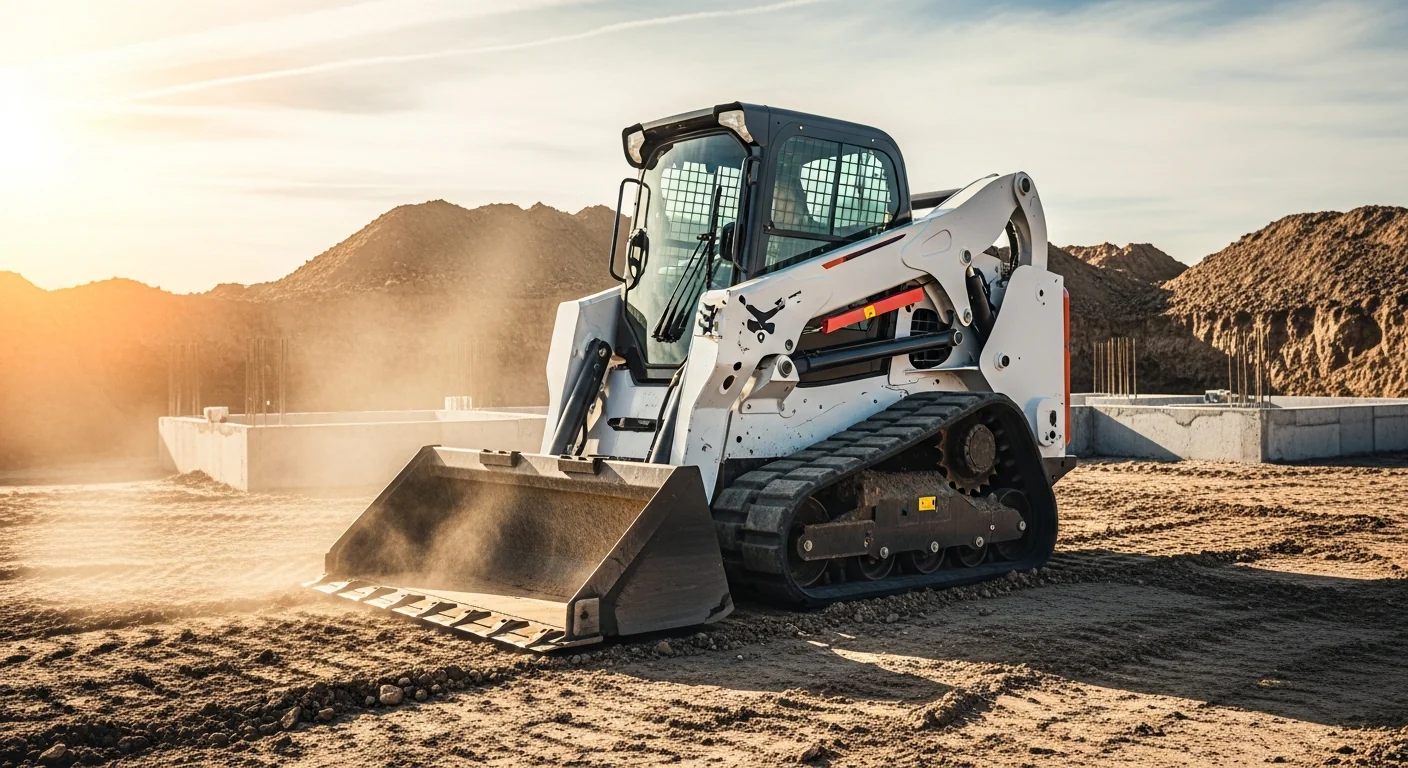
Let me be direct with you: not a single track skid steer listing site in America shows the complete picture. They'll show you machine prices, but they won't tell you that financing turns a $65,000 Caterpillar 259D3 into an $84,384 total cost at 9% APR over 72 months. The math says you should own it anyway—stop building zero equity with rental payments. Here's the real math smart contractors use to budget their purchases.
Bobcat dominates the compact track loader market, but you'll pay for that reputation. The T770 starts around $78,000 while the larger T870 pushes $95,000+. Caterpillar's 259D3 and 289D3 range from $65,000 to $105,000, with their legendary hydraulic flow rates commanding premium pricing. John Deere's 331G and 333G sit in the $68,000-$98,000 range, popular with contractors who prioritize operator comfort and visibility.
Kubota offers compelling value in the SVL75-2 ($55,000-$70,000) and SVL97-2 ($75,000-$85,000), especially for contractors not needing maximum hydraulic power. ASV's rubber track specialists, the RT-75 and RT-120, command $60,000-$110,000+ but deliver superior ground pressure distribution for sensitive surfaces.
These aren't just purchase prices—they're your pathway to ownership. When you rent this same equipment, you're paying someone else's loan payment plus their profit margin. Smart contractors stop bleeding equity and start building it through strategic financing. EquipFlow connects you with lenders who understand this equipment's value and offer terms that make ownership profitable from day one.
Here's what Equipment Trader won't tell you: most lenders cap used equipment financing at 10 years old and 4,000 hours. That 2014 Bobcat T750 with 4,200 hours might be mechanically sound and priced right, but it's likely cash-only for 80% of lenders. This age-and-hours matrix separates financeable machines from deals that die in underwriting.
2022-2025 models with 500-1,500 hours command $40,000-$75,000 and qualify for the best rates available. 2019-2021 units with 1,500-3,000 hours typically run $28,000-$55,000 with standard financing terms. Once you hit 2016-2018 vintage with 3,000-4,500 hours, pricing drops to $18,000-$38,000 but financing becomes limited with higher rates and bigger down payments required.
Don't let financing limitations kill your deal. EquipFlow's lender network includes specialists who finance older equipment when banks won't touch it. We know which lenders approve 12-year-old machines and who requires 25% down versus 10%. This intelligence saves deals that would otherwise die in traditional underwriting.
Zero competitors mention Section 179, and that ignorance costs buyers thousands. According to the IRS, you can deduct up to $2,560,000 of qualifying equipment purchases in 2026 under Section 179—including both new and used track skid steers. On a $75,000 machine, that's $18,000 in tax savings at the 24% bracket, or $15,750 at 21% corporate rates.
Here's the math that changes everything: bonus depreciation adds another 20% first-year deduction in 2026, but remains at 100% in 2027 under OBBB. This makes 2026 the last meaningful year to stack both benefits. Smart contractors are accelerating equipment purchases to capture these savings before they disappear.
Your financing decision just became urgent. With proper structuring, these tax benefits can cover 4-6 months of equipment payments in year one alone. EquipFlow's lenders understand Section 179 timing and can close deals before the December 31 deadline. Don't lose $18,000 in tax savings because your financing took too long.
Most contractors asking about track skid steers for sale are really asking: "Can I afford the monthly payment?" The answer depends entirely on your credit tier and the lender's equipment age tolerance.
A-Tier borrowers with 720+ credit scores typically see 6-10% APR with 10% down payments and terms up to 84 months. B-Tier credit (650-719) faces 10-14% APR with 15-20% down and 60-month maximum terms. Startups or challenged credit below 650 encounter 12-18% APR with 20-25% down requirements and 48-month limits.
What we typically see: contractors with excellent credit focusing too much on purchase price and ignoring total cost. A $65,000 track skid steer at 6% for 60 months costs $1,257 monthly with $10,420 total interest. Bump that rate to 12% for challenged credit, and monthly payments jump to $1,444 with $21,640 in interest—an $11,220 difference that destroys ROI calculations.
Paying cash feels safe, but you're paying an invisible 15-20% opportunity cost if your business generates those returns on working capital. At 8% financing, your real cost is only the interest rate, not the opportunity cost of tied-up cash. This is why successful contractors finance equipment even when they could pay cash—they understand that preserving liquidity usually trumps avoiding interest payments.
For a $86,800 Caterpillar 255, Section 179 provides $18,228 in immediate tax savings at 21% corporate rates. Combined with manufacturer 0% APR 60-month financing, that tax refund covers nearly 5 months of equipment payments while preserving working capital for other opportunities. This creates what we call a 4.76x liquidity multiplier—every dollar of tax savings covers $4.76 in future payment obligations.
SBA 7(a) loans extend up to $5,000,000 with government backing that reduces lender risk and your interest rate. Processing takes 30-90 days versus 24-72 hours for dealer financing, but rates often run 2-4 points lower than conventional equipment loans. SBA 504 loans reach $5,500,000 for major equipment packages, while SBA Microloans up to $50,000 target newer businesses that can't qualify elsewhere.
Mid-size track skid steers rent for $1,780-$2,140 per month versus $1,550-$1,940 monthly payments when financed at 6% over 60 months. Ownership breaks even at 24-30 months of use—but factor in Section 179 tax savings of $20,000-$25,000, and the breakeven point accelerates to just 14-17 months.Here's the math contractors miss: every month you rent, you're paying for someone else's asset depreciation, maintenance reserves, and profit margin. When you own, depreciation becomes a tax deduction, maintenance builds your knowledge of the machine, and profits stay in your business. If you're using track skid steers more than 18 months over five years, buying almost always wins financially.
Stop building zero equity in rental companies and start building wealth through asset ownership. The financing exists to make this transition profitable from day one—you just need the right lender who understands construction cash flow. EquipFlow specializes in matching contractors with equipment financing that strengthens their balance sheet instead of draining their working capital.
Smart contractors don't guess which lender will approve their track skid steer financing deal—they let lenders compete for it. When 3-4 lenders compete for the same financing, rates typically drop 0.5-2 percentage points. Here's how we make that happen:
Our AI advisor Ava analyzes your specific needs: the track skid steer model you're considering, your business credit profile, down payment capacity, and timeline. This isn't a generic application—Ava understands that a 2015 Bobcat T770 with 4,200 hours has different lending requirements than a new John Deere 333G. Most banks reject equipment over 10 years old or past 4,000 hours, but Ava knows which lenders specialize in older units.
Ava matches you with 3-4 lenders from our network who compete for your specific deal. These aren't random lenders—they're equipment financing specialists who understand track skid steer depreciation curves, seasonal cash flow, and construction industry risks. When lenders know they're competing, they sharpen their pencils on rates and terms.
See exactly how each offer affects your monthly cash flow and total cost. A $55,000 track skid steer at 7% for 48 months costs $1,316/month with $8,168 total interest. The same machine at 9% for 60 months costs $1,139/month but $13,340 total interest—a $5,172 difference that changes your ROI calculation.
You control the decision. No pressure, no obligation, no hidden fees. Most deals close within 24-48 hours once you select your preferred lender. EquipFlow never touches your money—we simply connect you with the lender who offers the best terms for your situation.
Smart contractors don't guess which lender will approve their track skid steer financing deal—they let lenders compete for it. When 3-4 lenders compete for the same financing, rates typically drop 0.5-2 percentage points. Here's how we make that happen:
Our AI advisor Ava analyzes your specific needs: the track skid steer model you're considering, your business credit profile, down payment capacity, and timeline. This isn't a generic application—Ava understands that a 2015 Bobcat T770 with 4,200 hours has different lending requirements than a new John Deere 333G. Most banks reject equipment over 10 years old or past 4,000 hours, but Ava knows which lenders specialize in older units.
Ava matches you with 3-4 lenders from our network who compete for your specific deal. These aren't random lenders—they're equipment financing specialists who understand track skid steer depreciation curves, seasonal cash flow, and construction industry risks. When lenders know they're competing, they sharpen their pencils on rates and terms.
See exactly how each offer affects your monthly cash flow and total cost. A $55,000 track skid steer at 7% for 48 months costs $1,316/month with $8,168 total interest. The same machine at 9% for 60 months costs $1,139/month but $13,340 total interest—a $5,172 difference that changes your ROI calculation.
You control the decision. No pressure, no obligation, no hidden fees. Most deals close within 24-48 hours once you select your preferred lender. EquipFlow never touches your money—we simply connect you with the lender who offers the best terms for your situation.
Smart contractors don't guess which lender will approve their track skid steer financing deal—they let lenders compete for it. When 3-4 lenders compete for the same financing, rates typically drop 0.5-2 percentage points. Here's how we make that happen:
Our AI advisor Ava analyzes your specific needs: the track skid steer model you're considering, your business credit profile, down payment capacity, and timeline. This isn't a generic application—Ava understands that a 2015 Bobcat T770 with 4,200 hours has different lending requirements than a new John Deere 333G. Most banks reject equipment over 10 years old or past 4,000 hours, but Ava knows which lenders specialize in older units.
Ava matches you with 3-4 lenders from our network who compete for your specific deal. These aren't random lenders—they're equipment financing specialists who understand track skid steer depreciation curves, seasonal cash flow, and construction industry risks. When lenders know they're competing, they sharpen their pencils on rates and terms.
See exactly how each offer affects your monthly cash flow and total cost. A $55,000 track skid steer at 7% for 48 months costs $1,316/month with $8,168 total interest. The same machine at 9% for 60 months costs $1,139/month but $13,340 total interest—a $5,172 difference that changes your ROI calculation.
You control the decision. No pressure, no obligation, no hidden fees. Most deals close within 24-48 hours once you select your preferred lender. EquipFlow never touches your money—we simply connect you with the lender who offers the best terms for your situation.
Most contractors apply to one lender and accept whatever terms they get. That's like buying the first track skid steer you see without comparing alternatives. When lenders compete for your business, rates drop and terms improve. Here's how EquipFlow creates that competition:
In our experience, contractors who compare 3-4 competing offers save 0.5-2 percentage points compared to single-lender applications. On a $65,000 track skid steer, that's $1,800-$7,200 in interest savings over the loan term. We've seen deals where one lender quoted 14.9% APR while another approved the same contractor at 8.9%—a $13,000 difference on identical equipment.
Our AI advisor understands that banks reject 67% of used equipment loans over 7 years old, but specialty lenders approve them routinely. Ava matches your specific track skid steer—year, model, hours, condition—with lenders who finance that equipment profile. She knows which lenders prefer Caterpillar over Bobcat, who finances attachments as part of the deal, and which ones specialize in startup businesses.
Every day without equipment costs money in lost productivity or rental fees. Most EquipFlow matches generate 3-4 competing offers within 24-48 hours, letting you move fast when you find the right machine. Compare this to traditional bank applications that take 5-10 business days just for initial approval, often losing the equipment to faster buyers.
You control every decision. See your options, compare real offers, choose the best terms—or walk away if none meet your standards. EquipFlow never touches your money, never adds fees, and never pressures you to accept any offer. We get paid by lenders only when you close a deal you're happy with, aligning our interests with yours.
Most contractors apply to one lender and accept whatever terms they get. That's like buying the first track skid steer you see without comparing alternatives. When lenders compete for your business, rates drop and terms improve. Here's how EquipFlow creates that competition:
In our experience, contractors who compare 3-4 competing offers save 0.5-2 percentage points compared to single-lender applications. On a $65,000 track skid steer, that's $1,800-$7,200 in interest savings over the loan term. We've seen deals where one lender quoted 14.9% APR while another approved the same contractor at 8.9%—a $13,000 difference on identical equipment.
Our AI advisor understands that banks reject 67% of used equipment loans over 7 years old, but specialty lenders approve them routinely. Ava matches your specific track skid steer—year, model, hours, condition—with lenders who finance that equipment profile. She knows which lenders prefer Caterpillar over Bobcat, who finances attachments as part of the deal, and which ones specialize in startup businesses.
Every day without equipment costs money in lost productivity or rental fees. Most EquipFlow matches generate 3-4 competing offers within 24-48 hours, letting you move fast when you find the right machine. Compare this to traditional bank applications that take 5-10 business days just for initial approval, often losing the equipment to faster buyers.
You control every decision. See your options, compare real offers, choose the best terms—or walk away if none meet your standards. EquipFlow never touches your money, never adds fees, and never pressures you to accept any offer. We get paid by lenders only when you close a deal you're happy with, aligning our interests with yours.
Most contractors apply to one lender and accept whatever terms they get. That's like buying the first track skid steer you see without comparing alternatives. When lenders compete for your business, rates drop and terms improve. Here's how EquipFlow creates that competition:
In our experience, contractors who compare 3-4 competing offers save 0.5-2 percentage points compared to single-lender applications. On a $65,000 track skid steer, that's $1,800-$7,200 in interest savings over the loan term. We've seen deals where one lender quoted 14.9% APR while another approved the same contractor at 8.9%—a $13,000 difference on identical equipment.
Our AI advisor understands that banks reject 67% of used equipment loans over 7 years old, but specialty lenders approve them routinely. Ava matches your specific track skid steer—year, model, hours, condition—with lenders who finance that equipment profile. She knows which lenders prefer Caterpillar over Bobcat, who finances attachments as part of the deal, and which ones specialize in startup businesses.
Every day without equipment costs money in lost productivity or rental fees. Most EquipFlow matches generate 3-4 competing offers within 24-48 hours, letting you move fast when you find the right machine. Compare this to traditional bank applications that take 5-10 business days just for initial approval, often losing the equipment to faster buyers.
You control every decision. See your options, compare real offers, choose the best terms—or walk away if none meet your standards. EquipFlow never touches your money, never adds fees, and never pressures you to accept any offer. We get paid by lenders only when you close a deal you're happy with, aligning our interests with yours.
Most contractors apply to one lender and accept whatever terms they get. That's like buying the first track skid steer you see without comparing alternatives. When lenders compete for your business, rates drop and terms improve. Here's how EquipFlow creates that competition:
In our experience, contractors who compare 3-4 competing offers save 0.5-2 percentage points compared to single-lender applications. On a $65,000 track skid steer, that's $1,800-$7,200 in interest savings over the loan term. We've seen deals where one lender quoted 14.9% APR while another approved the same contractor at 8.9%—a $13,000 difference on identical equipment.
Our AI advisor understands that banks reject 67% of used equipment loans over 7 years old, but specialty lenders approve them routinely. Ava matches your specific track skid steer—year, model, hours, condition—with lenders who finance that equipment profile. She knows which lenders prefer Caterpillar over Bobcat, who finances attachments as part of the deal, and which ones specialize in startup businesses.
Every day without equipment costs money in lost productivity or rental fees. Most EquipFlow matches generate 3-4 competing offers within 24-48 hours, letting you move fast when you find the right machine. Compare this to traditional bank applications that take 5-10 business days just for initial approval, often losing the equipment to faster buyers.
You control every decision. See your options, compare real offers, choose the best terms—or walk away if none meet your standards. EquipFlow never touches your money, never adds fees, and never pressures you to accept any offer. We get paid by lenders only when you close a deal you're happy with, aligning our interests with yours.
.png)