Many businesses receive funding shortly after approval
Built to help businesses explore realistic financing options
Business owners trust EquipFlow to simplify financing decisions
National and specialty lenders across industries
Your fastest route to the right lender — and the equipment your business needs.
Share your equipment type, business info, and location — it takes less than 60 seconds.
We instantly compare national and specialty lenders to find your best funding options.
Review offers, choose your lender, and get approved with fast turnaround times.
Boom lift cost quotes are all over the map — and most of the pages ranking for that phrase won't tell you why. Per EquipFlow's pricing data, purchase prices run from the high-$20,000s for a compact towable unit to $80,000-plus for large articulating machines. But the sticker is only half the story. The number nobody publishes is what the machine costs YOU — because the same lift priced identically at the dealer can carry a very different all-in cost depending on your credit tier, your down payment, and whether you time the purchase for the tax year.
Here's what most people miss: per EquipFlow's credit-score analysis, a borrower at 720+ FICO pays roughly $639/month on a $26,850 boom lift over 48 months, while a fair-credit borrower on the identical machine pays about $740/month. That gap is real money — and it's exactly the kind of spread that shrinks when multiple lenders compete for the same deal instead of you taking the first quote that lands in your inbox.
This page gives you what the competitor pages don't: real price bands by lift type and height class, financing rates broken out by credit tier, the true total cost of financing beyond the monthly payment, the rent-vs-finance break-even, and the 2026 Section 179 math with actual dollar figures. Read it before you sign anything — then let Ava get you matched with competing lenders so the rate math works in your favor, not the lender's.
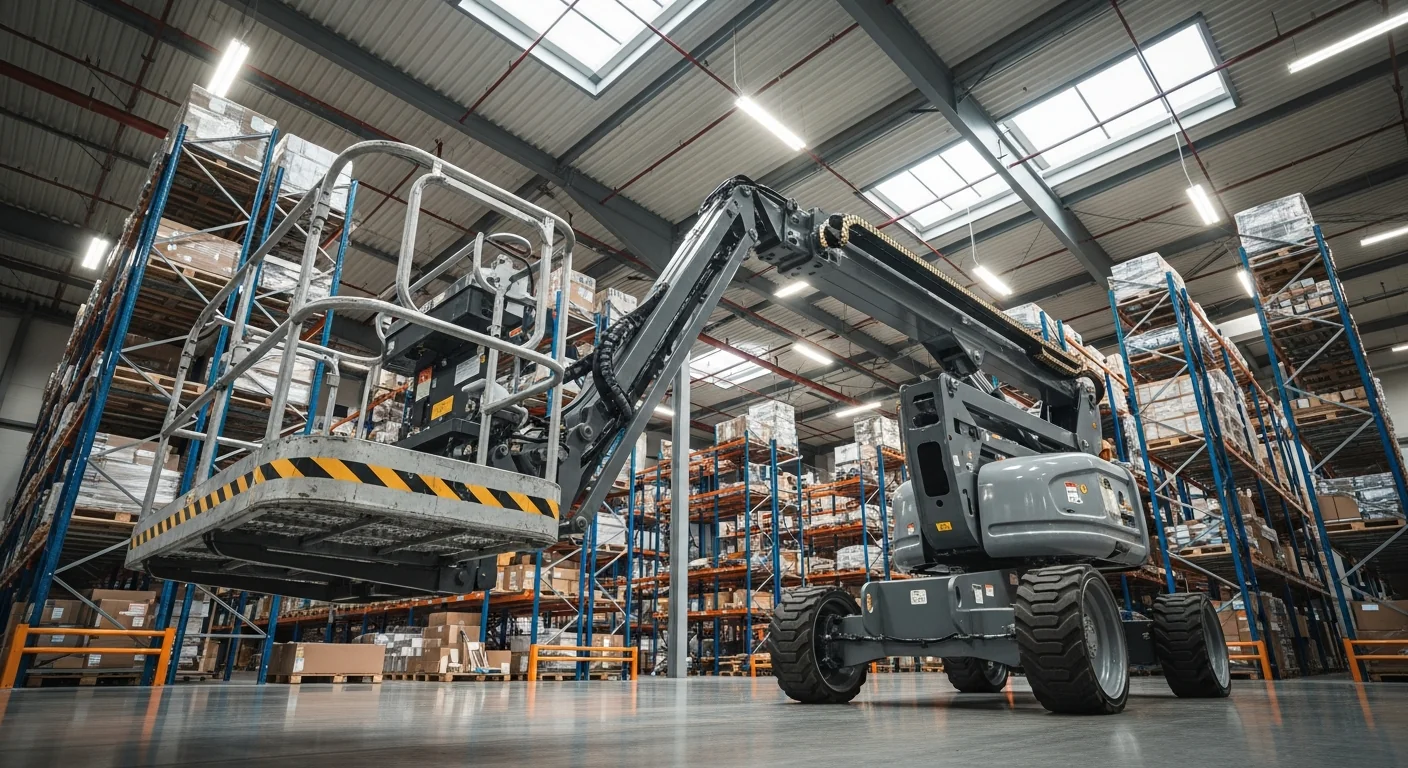
Opaque pricing is the number-one complaint we hear from buyers — dealers quote "call for price" and rental houses quote day rates that hide the ownership math. Per EquipFlow's market analysis, here's how the purchase market actually breaks out.
The entry point. Compact towable units sit in the high-$20,000s band per EquipFlow's pricing data — the $26,850 machine we use for the worked examples on this page lives here. You tow it behind a three-quarter-ton pickup, and it's the workhorse for painters, sign installers, and facility crews.
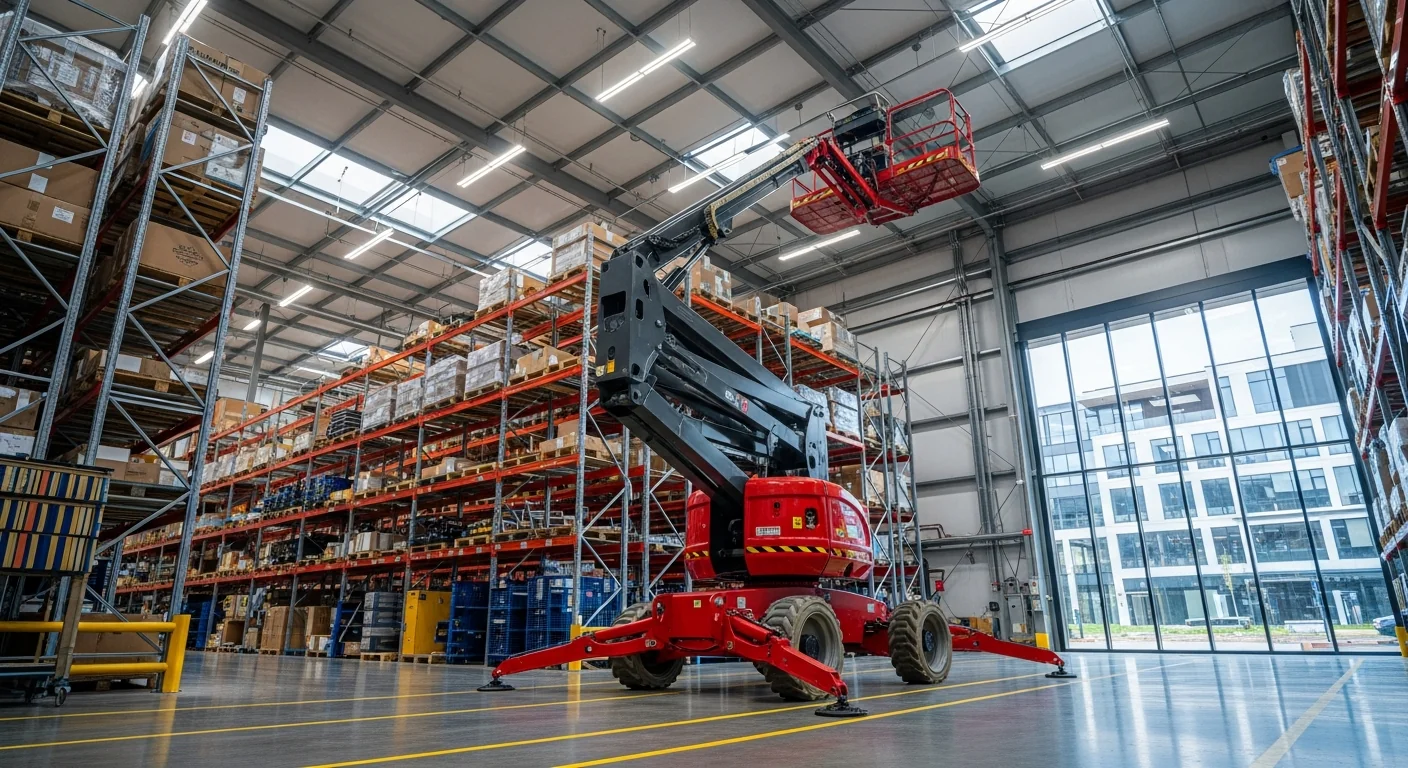
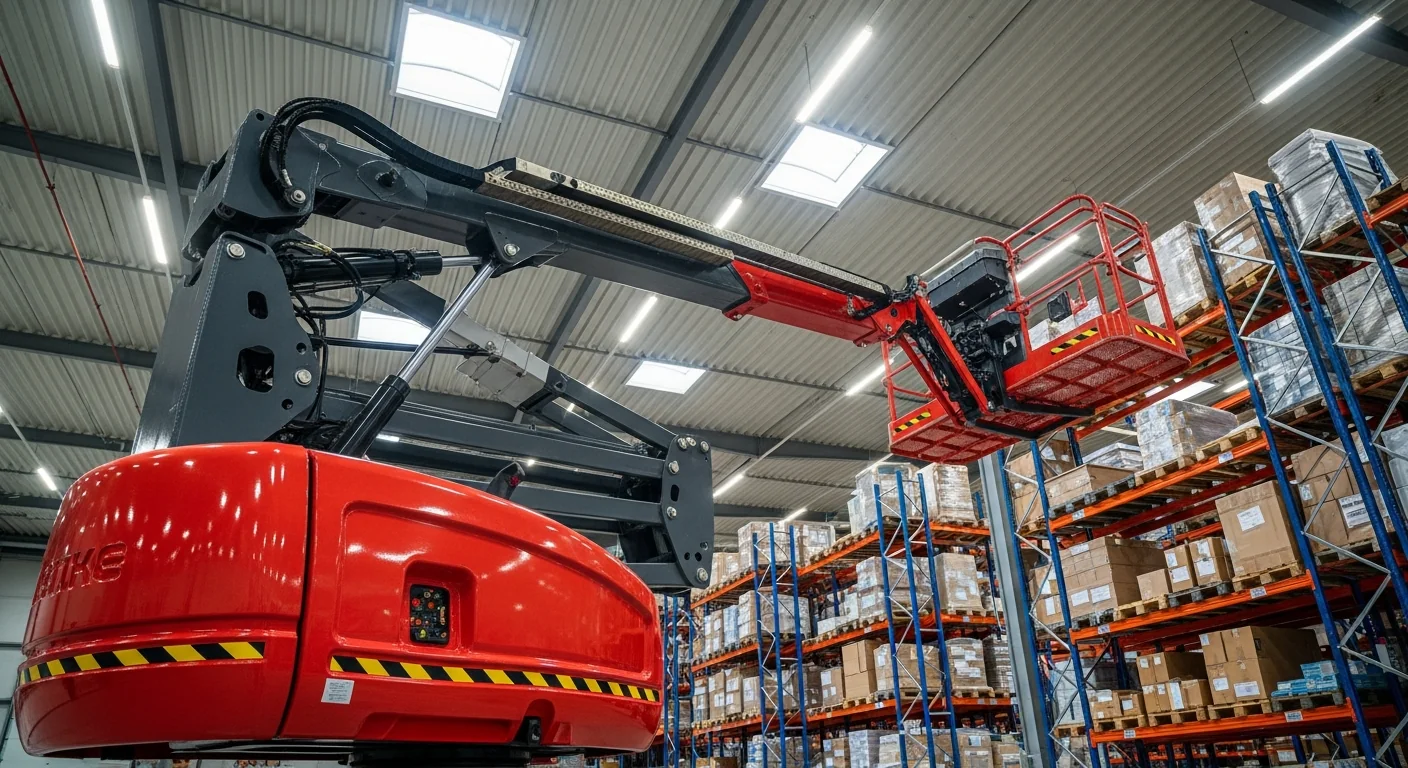
The knuckle-boom design buys you up-and-over reach around obstructions. These occupy the middle and upper end of the market, with large articulating models pushing past the $80,000 mark per EquipFlow's pricing data.
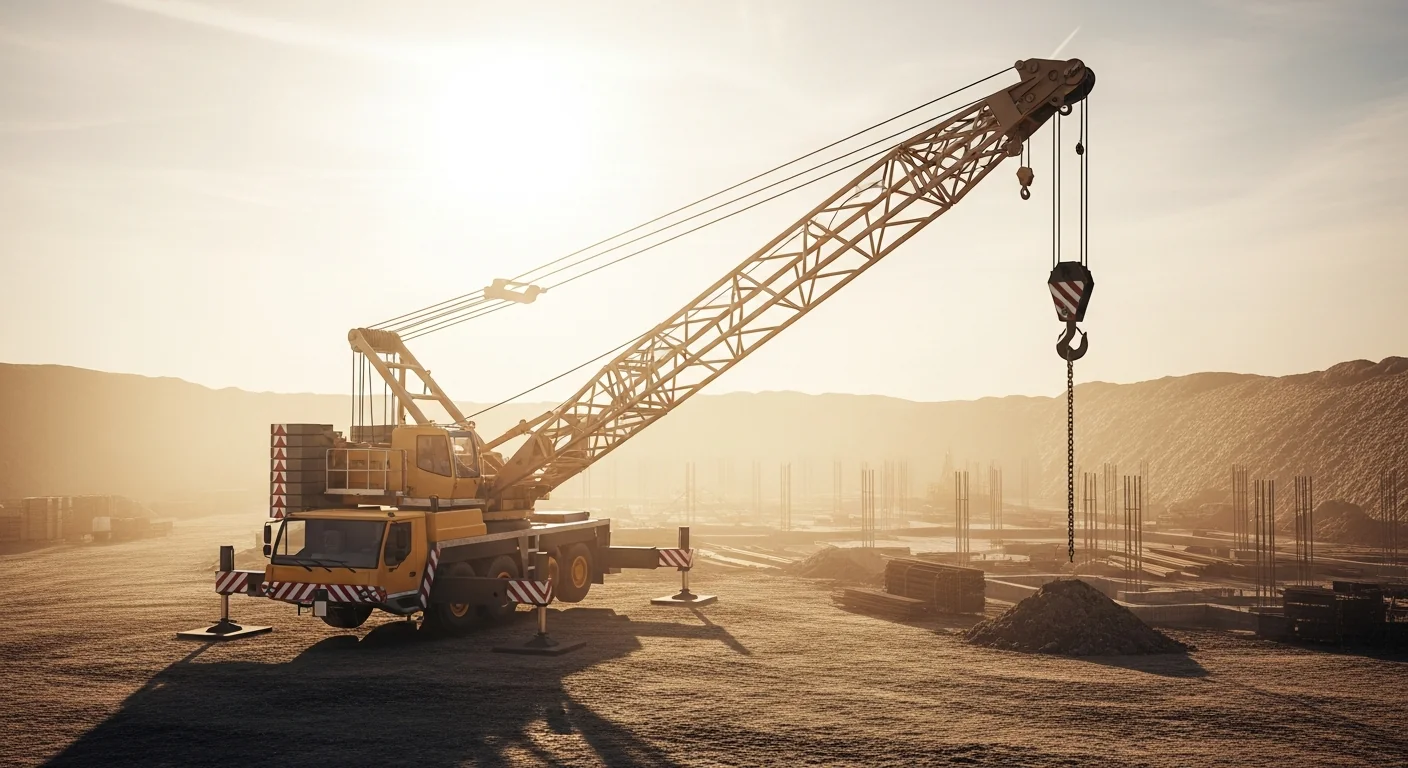
Straight-stick machines priced largely by boom length — maximum horizontal reach for steel erection and glazing work, priced toward the top of the market as working height climbs.
Diesel units must meet EPA Tier 4 emission requirements, and electric or hybrid drivetrains typically carry a purchase premium in exchange for indoor access and lower running costs. On the resale side, EquipFlow's depreciation analysis shows boom lifts take their steepest value hit in year one before the curve flattens — which is exactly why financing a lightly-used unit, or financing new and holding past the steep part of the curve, tends to beat churning rentals. Compare rates from competing lenders before you decide which class fits your budget.
Working height is the single biggest price lever on any boom lift — more than brand, more than drivetrain. Every ten feet of platform height demands a heavier chassis, more counterweight, bigger hydraulics, and higher-rated structural components, so cost scales up fast rather than linearly. You see the same pattern in the rental market: per EquipFlow's pricing data, a 40-foot boom lift rents for roughly $2,392 per month while a 70-foot 4x4 unit commands about $4,997 per month — the height jump roughly doubles the monthly bill. Purchase prices follow the same slope.
Here's the mistake we see constantly: buying more height than the work requires "just in case." Every foot of unused reach is dead capital — a bigger principal, a bigger payment, and a bigger insurance bill for capacity you never bill against. Match the machine to your actual working height plus a modest margin, and if the occasional tall job shows up, rent the big unit for that job only. And remember platform capacity trades against height: taller booms often carry tighter platform limits, which matters if you're lifting two workers plus material. Get the height spec right first — then get matched with lenders who price that exact machine class correctly.
The 100-foot electric atrium lift is the specialty end of this market — a compact-footprint, narrow-chassis machine built to roll through standard doorways, work on finished floors, and then articulate up through an atrium or stadium interior to full height. Because it combines extreme working height with an electric drivetrain and a narrow tracked or wheeled base, it's engineered like a crane and priced accordingly: expect a premium of several multiples over a standard telescopic unit of similar reach, per EquipFlow's market analysis of the aerial segment.
Most contractors rent these — and for a one-off atrium job, that's the right call. But if interior high-reach work is your niche (glazing, HVAC in convention centers, stadium maintenance), the rental invoices stack up fast and build zero equity. This is where financing structure matters more than rate: because atrium lifts hold specialist value, lenders comfortable with the asset class will structure longer terms against it, and sale-leaseback options exist for operators who already own one and want to pull working capital back out. Ava matches atrium-lift deals specifically with lenders in our network that understand niche aerial assets — don't let a generalist lender price it like a commodity scissor lift.
No competitor publishes this, so we will. All figures below assume the $26,850 compact towable unit financed over 48 months, per EquipFlow's credit-score analysis.
Rates of 5.5%–7.9%; at the 6.7% midpoint your payment is about $639/month, per EquipFlow's credit-score analysis.
Rates of 7.5%–9.9%; roughly $664/month at the 8.7% midpoint, per our credit analysis.
Rates of 9.5%–12.9%; roughly $697/month at the 11.2% midpoint, per EquipFlow's credit-score analysis.
Rates of 12.0%–16.9%; roughly $740/month at the 14.45% midpoint, per EquipFlow's credit-score analysis.
Per EquipFlow's lender network analysis, top-tier borrowers can access zero-down programs, while startups and businesses under two years should budget 10–20% down. Startups also have a government-backed path: the SBA offers Microloans up to $50,000 — enough to cover most towable units. The spread between tiers is exactly why you compare rates from competing lenders instead of accepting the first quote.
The monthly payment is what lenders advertise. The total cost is what you actually pay — and the gap is where buyers get burned. Per EquipFlow's equipment-financing data, that $26,850 boom lift at 11.2% over 48 months costs $697/month — $33,435 total paid, or $6,585 above the sticker. That's the honest number to compare against renting or paying cash.
And watch the fee stack: documentation fees, UCC filing charges, first-and-last-payment-due-at-signing structures, and mandatory insurance requirements all inflate your effective rate above the stated one. Contractors on every equipment forum tell the same story — a quote that looked cheap on the rate line and expensive on the closing statement. Demand the all-in total before you sign, and make lenders compete on that number, not the teaser rate.
According to the IRS, the 2026 Section 179 deduction limit is $2,560,000 — every boom lift on this page fits under it with room to spare — and per IRS guidance on bonus depreciation under the One Big Beautiful Bill, 100% first-year bonus depreciation is restored permanently for new and used qualifying equipment. Translation: buy it, place it in service this tax year, deduct the whole thing.
On the worked example: applying IRS Section 179 rules, EquipFlow's tax-arbitrage analysis shows a 35%-bracket buyer expensing the full $26,850 recovers $9,398 in Year 1 tax savings — an effective machine cost of $17,452.
The bigger-machine version: run through EquipFlow's tax-play analysis against IRS Section 179 rules, a $79,447 Haulotte 6543A towable boom lift placed in service in 2026 generates $16,684 in Year 1 tax savings at the 21% C-corp rate — net acquisition cost of roughly $62,763 — while pass-through owners in the 32–37% brackets see $25,423–$29,395 on the same unit. If you don't elect Section 179, standard treatment per IRS Publication 946 puts this equipment on a MACRS recovery schedule instead — talk to your CPA about which election fits your income picture. Either way: the deduction works whether you finance or pay cash, but financing lets you capture the full tax benefit while putting almost none of your capital into the machine. That's the play. Get matched with lenders before year-end so the placed-in-service date lands inside the tax year.
Per EquipFlow's rent-vs-buy analysis, market rent on a compact towable boom lift averages about $806/month, while the financed payment on the comparable $26,850 machine is $697/month per EquipFlow's financing data — a $109/month advantage that ALSO builds equity in an asset instead of a pile of rental receipts. If the lift works most months, the math says own.
If the machine is a short-term need, or your business carries expensive debt elsewhere, cash or renting can win. And cash buyers still capture the full Section 179 deduction — the IRS doesn't care how you paid. What cash buyers lose is leverage: every dollar in the machine is a dollar not funding payroll, materials, or the next bid.
Steady utilization plus a growing business is the financing sweet spot: lower monthly outlay than rent, full Year 1 tax capture, and your working capital stays deployed where it earns. Compare offers from competing lenders and run your own break-even before committing.
The most expensive mistake in equipment financing usually isn't the rate — it's discovering at month 18 that early payoff triggers a penalty that erases the savings. Here's the field guide. Equipment finance agreements (EFAs) are typically the cleanest structure for penalty-free early payoff; capital leases and $1-buyout leases frequently bury residual obligations or early-termination fees in the fine print. Read the payoff clause before you read the rate.
On personal guarantees: forum threads are full of ten-year-old businesses angry about being asked to sign a PG on a mid-five-figure lift. Reality check — PGs are standard for small-ticket equipment deals, but they become negotiable as your financials strengthen and as deal competition increases. A lender fighting two other term sheets is far more flexible on PG language than a lender with no competition.
Red flags of a predatory structure: rates quoted as "factors" instead of APR, evergreen clauses that auto-renew the lease, insurance force-placed at inflated cost, and refusal to state the total all-in payoff in writing. Any one of these is reason to walk — and reason to let lenders compete for your deal instead.
The machine isn't your only cost. Under OSHA standard 29 CFR 1926.453, aerial lift operators must be trained — formal certification isn't required, but the employer must be able to document operator competency, with retraining as needed. Vehicle-mounted elevating platforms fall under OSHA requirements at 29 CFR 1910.67 with parallel training obligations.
The stakes are real: per OSHA, serious violations carry penalties from $1,190 to $16,550 per violation, and willful or repeat violations run $11,524 to $165,514. Budget training into your acquisition cost — it's a rounding error next to one citation. Some buyers even roll training and delivery costs into the financed amount; ask lenders in our network what they'll include when you compare offers.
Let me be direct: EquipFlow doesn't lend money and doesn't underwrite. What we do is arguably more valuable — we make lenders compete for your boom lift deal instead of letting one lender name their price.
You give Ava, our AI financing advisor, the basics: the lift you're buying (towable, articulating, telescopic, or atrium), new or used, purchase price, time in business, and rough credit picture. This is diagnosis, not application — no hard credit pull, no commitment.
Ava matches your profile against lenders in our network who actually understand aerial equipment — including its residual value and depreciation curve. Startup-friendly lenders, mid-market specialists, and sale-leaseback options all get considered. Per EquipFlow's lender network analysis, most borrowers see initial lender responses within 24–48 hours.
You compare rates, terms, down payment requirements, fees, and prepayment language across multiple offers — the exact variables this page teaches you to scrutinize. When lenders know they're competing, the pricing sharpens. That's not a slogan; it's how markets work.
You pick the offer that fits your cash flow, the lender handles approval and funding, and you put the lift to work. No pressure, no obligation at any step. You stay in control of the deal from quote to close.
Let me be direct: EquipFlow doesn't lend money and doesn't underwrite. What we do is arguably more valuable — we make lenders compete for your boom lift deal instead of letting one lender name their price.
You give Ava, our AI financing advisor, the basics: the lift you're buying (towable, articulating, telescopic, or atrium), new or used, purchase price, time in business, and rough credit picture. This is diagnosis, not application — no hard credit pull, no commitment.
Ava matches your profile against lenders in our network who actually understand aerial equipment — including its residual value and depreciation curve. Startup-friendly lenders, mid-market specialists, and sale-leaseback options all get considered. Per EquipFlow's lender network analysis, most borrowers see initial lender responses within 24–48 hours.
You compare rates, terms, down payment requirements, fees, and prepayment language across multiple offers — the exact variables this page teaches you to scrutinize. When lenders know they're competing, the pricing sharpens. That's not a slogan; it's how markets work.
You pick the offer that fits your cash flow, the lender handles approval and funding, and you put the lift to work. No pressure, no obligation at any step. You stay in control of the deal from quote to close.
Let me be direct: EquipFlow doesn't lend money and doesn't underwrite. What we do is arguably more valuable — we make lenders compete for your boom lift deal instead of letting one lender name their price.
You give Ava, our AI financing advisor, the basics: the lift you're buying (towable, articulating, telescopic, or atrium), new or used, purchase price, time in business, and rough credit picture. This is diagnosis, not application — no hard credit pull, no commitment.
Ava matches your profile against lenders in our network who actually understand aerial equipment — including its residual value and depreciation curve. Startup-friendly lenders, mid-market specialists, and sale-leaseback options all get considered. Per EquipFlow's lender network analysis, most borrowers see initial lender responses within 24–48 hours.
You compare rates, terms, down payment requirements, fees, and prepayment language across multiple offers — the exact variables this page teaches you to scrutinize. When lenders know they're competing, the pricing sharpens. That's not a slogan; it's how markets work.
You pick the offer that fits your cash flow, the lender handles approval and funding, and you put the lift to work. No pressure, no obligation at any step. You stay in control of the deal from quote to close.
The spread between credit tiers on the same machine is real money — per EquipFlow's credit-score analysis, the identical $26,850 lift runs about $639/month for excellent credit and $740/month for fair credit over 48 months. Within your own tier, the fastest way to land near the bottom of the band is multiple lenders competing for the same deal. One quote is a price. Three quotes is a market.
Generalist lenders price boom lifts like commodity iron. Ava matches your deal — towable, telescopic, or a 100-foot atrium unit — with lenders who actually understand aerial residual values and structure terms accordingly. Per EquipFlow's lender network analysis: EquipFlow connects you with specialty equipment-finance lenders covering deal sizes from $15K to $250M across new and used equipment. Partners specialize in different borrower profiles — startups, established mid-market businesses, story credits, and asset-rich sale-leasebacks — matched to your specific equipment type, credit profile, and deal size.
Per EquipFlow's match data, most borrowers see initial lender responses within 24–48 hours — fast enough to lock equipment before a project start date instead of bleeding rental fees while paperwork crawls.
Getting matched costs nothing and commits you to nothing. You see the offers, you run the math from this page against each one, and you choose — or walk. Either way, you'll know exactly what your boom lift should cost you.
The spread between credit tiers on the same machine is real money — per EquipFlow's credit-score analysis, the identical $26,850 lift runs about $639/month for excellent credit and $740/month for fair credit over 48 months. Within your own tier, the fastest way to land near the bottom of the band is multiple lenders competing for the same deal. One quote is a price. Three quotes is a market.
Generalist lenders price boom lifts like commodity iron. Ava matches your deal — towable, telescopic, or a 100-foot atrium unit — with lenders who actually understand aerial residual values and structure terms accordingly. Per EquipFlow's lender network analysis: EquipFlow connects you with specialty equipment-finance lenders covering deal sizes from $15K to $250M across new and used equipment. Partners specialize in different borrower profiles — startups, established mid-market businesses, story credits, and asset-rich sale-leasebacks — matched to your specific equipment type, credit profile, and deal size.
Per EquipFlow's match data, most borrowers see initial lender responses within 24–48 hours — fast enough to lock equipment before a project start date instead of bleeding rental fees while paperwork crawls.
Getting matched costs nothing and commits you to nothing. You see the offers, you run the math from this page against each one, and you choose — or walk. Either way, you'll know exactly what your boom lift should cost you.
The spread between credit tiers on the same machine is real money — per EquipFlow's credit-score analysis, the identical $26,850 lift runs about $639/month for excellent credit and $740/month for fair credit over 48 months. Within your own tier, the fastest way to land near the bottom of the band is multiple lenders competing for the same deal. One quote is a price. Three quotes is a market.
Generalist lenders price boom lifts like commodity iron. Ava matches your deal — towable, telescopic, or a 100-foot atrium unit — with lenders who actually understand aerial residual values and structure terms accordingly. Per EquipFlow's lender network analysis: EquipFlow connects you with specialty equipment-finance lenders covering deal sizes from $15K to $250M across new and used equipment. Partners specialize in different borrower profiles — startups, established mid-market businesses, story credits, and asset-rich sale-leasebacks — matched to your specific equipment type, credit profile, and deal size.
Per EquipFlow's match data, most borrowers see initial lender responses within 24–48 hours — fast enough to lock equipment before a project start date instead of bleeding rental fees while paperwork crawls.
Getting matched costs nothing and commits you to nothing. You see the offers, you run the math from this page against each one, and you choose — or walk. Either way, you'll know exactly what your boom lift should cost you.
The spread between credit tiers on the same machine is real money — per EquipFlow's credit-score analysis, the identical $26,850 lift runs about $639/month for excellent credit and $740/month for fair credit over 48 months. Within your own tier, the fastest way to land near the bottom of the band is multiple lenders competing for the same deal. One quote is a price. Three quotes is a market.
Generalist lenders price boom lifts like commodity iron. Ava matches your deal — towable, telescopic, or a 100-foot atrium unit — with lenders who actually understand aerial residual values and structure terms accordingly. Per EquipFlow's lender network analysis: EquipFlow connects you with specialty equipment-finance lenders covering deal sizes from $15K to $250M across new and used equipment. Partners specialize in different borrower profiles — startups, established mid-market businesses, story credits, and asset-rich sale-leasebacks — matched to your specific equipment type, credit profile, and deal size.
Per EquipFlow's match data, most borrowers see initial lender responses within 24–48 hours — fast enough to lock equipment before a project start date instead of bleeding rental fees while paperwork crawls.
Getting matched costs nothing and commits you to nothing. You see the offers, you run the math from this page against each one, and you choose — or walk. Either way, you'll know exactly what your boom lift should cost you.
.png)