Many businesses receive funding shortly after approval
Built to help businesses explore realistic financing options
Business owners trust EquipFlow to simplify financing decisions
National and specialty lenders across industries
Your fastest route to the right lender — and the equipment your business needs.
Share your equipment type, business info, and location — it takes less than 60 seconds.
We instantly compare national and specialty lenders to find your best funding options.
Review offers, choose your lender, and get approved with fast turnaround times.
Diesel generator rental companies quote you $500/day for a 100kW towable unit, but by the time delivery fees ($400 round-trip), fuel consumption (6 gallons/hour × $4/gallon = $576/day at 75% load), environmental charges ($15/day), and mandatory damage waivers ($50/week) hit your invoice, your real cost jumps to $1,100/day. That's not an estimate—it's the math that 80% of rental companies hope you won't calculate before signing.
Here's what's even more problematic: A contractor renting that same 100kW unit for just 90 days annually spends $45,000-$54,000 with zero equity. That unit can be purchased for $35,000-$60,000 and financed at $700-$1,200/month. According to IRS Publication 946, Section 179 allows businesses to deduct up to $2,560,000 in equipment purchases the first year, turning that generator into immediate tax savings of $7,000-$15,000 depending on your bracket.
Every major rental page we analyzed hides this comparison because the math destroys their business model. We're showing you the real numbers—including the breakeven analysis that proves when financing beats renting by a landslide.
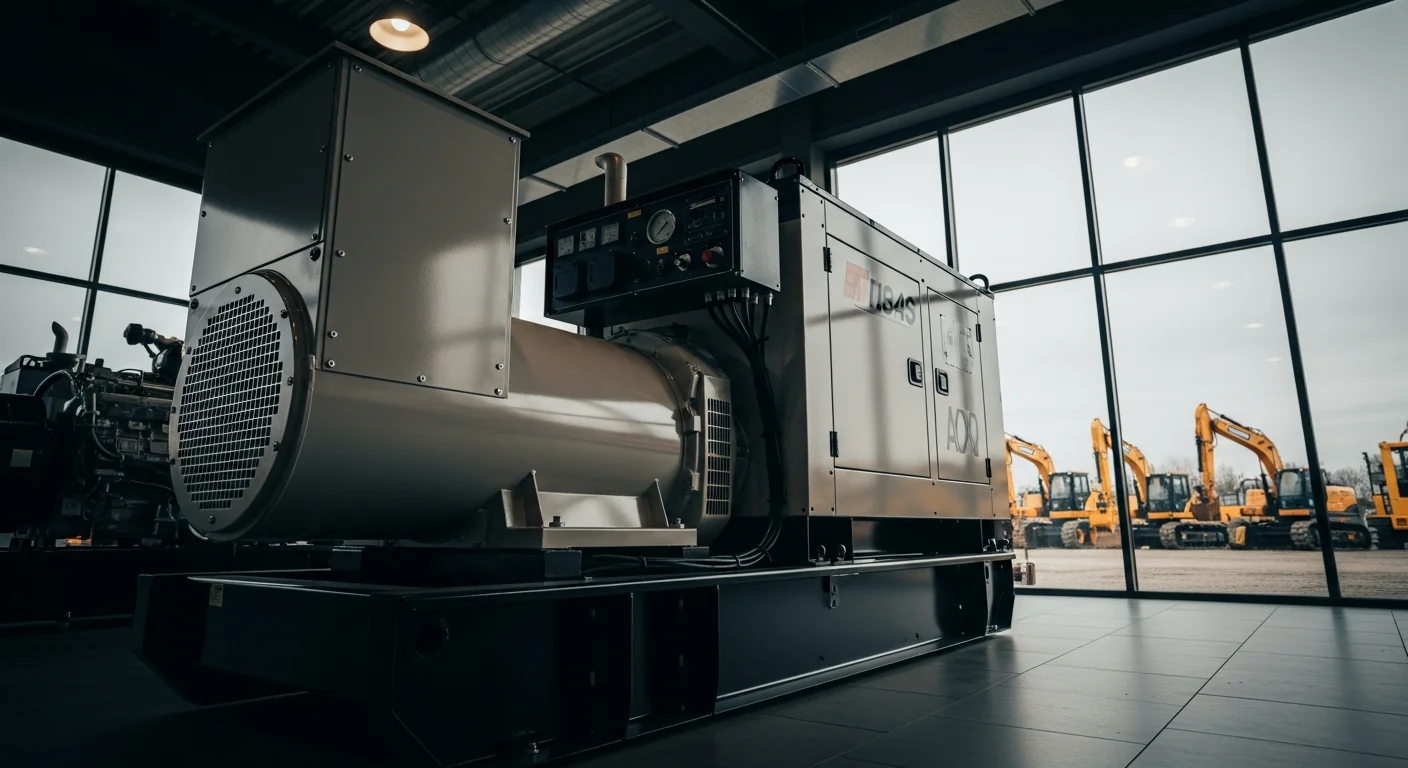
Rental companies advertise daily rates but hide the total cost equation. Here's the transparent breakdown by generator size:
20kW Portable Generators: $150-$250/day base rate. Add $75-$150 delivery, $38-$154/day fuel (1.2-1.6 gallons/hour depending on load), $10-$15 environmental fees, and $50/week damage waiver. Total daily cost: $273-$569.
50kW Towable Units: $250-$400/day base rate. Add $150-$300 delivery, $83-$346/day fuel (2.6-3.6 gallons/hour), $15-$20 environmental fees, and $75/week damage waiver. Total daily cost: $459-$1,077.
100kW Towable Generators (480V Three-Phase): $400-$600/day base rate. Add $200-$500 delivery, $128-$576/day fuel (4-6 gallons/hour), $15-$25 environmental fees, and $100/week damage waiver. Total daily cost: $757-$1,715.
250kW+ Industrial Units: $800-$1,500/day base rate. Add $300-$800 delivery, $304-$1,344/day fuel (9.5-14 gallons/hour), $20-$30 environmental fees, and $150/week damage waiver. Total daily cost: $1,454-$3,705.
The fuel consumption shock hits hardest. A 100kW generator running 24 hours at 75% load burns $576 in diesel daily—more than many base rental rates. Most contractors underestimate this because rental companies mention fuel as a footnote, not a primary cost driver.
The math says you should own it: If you're spending $757-$1,715/day on a 100kW rental, the equivalent financed unit costs $700-$1,200/month. You're literally paying more for temporary access than permanent ownership—while building zero equity.
Single-phase generators (120/240V) handle residential loads, lighting, and small tools. They're widely available with shorter lead times and cost 10-25% less than equivalent three-phase units.
Three-phase generators (480V) are required for industrial motors over 5HP, welding equipment, HVAC systems, and commercial building electrical panels. If you're powering construction equipment like tower cranes, concrete pumps, or large compressors, 480V three-phase is mandatory—not optional.
The practical test: photograph your electrical panel and equipment nameplates. If you see "480V 3-Phase" anywhere, you need a three-phase generator. Running single-phase power to three-phase equipment through converters creates efficiency losses of 15-25% and potential equipment damage.
Stop building zero equity: Whether you need single-phase or three-phase, financing the right generator eliminates the configuration guessing game. You own the exact unit your operation requires instead of accepting whatever rental inventory is available.
Delivery and Pickup: $2-$5 per mile with $75-$150 minimum each direction. For a job site 50 miles away, expect $200-$650 in transport costs alone.
Fuel Surcharges: Most vendors charge $25-$75/day if they supply fuel, or require you to return the unit with the same fuel level—creating liability for theft or measurement disputes.
Environmental Fees: $10-$25/day EPA compliance charge that appears on every invoice but gets mentioned nowhere in advertisements.
Damage Waivers: $50-$200/week reduces your liability from $5,000-$25,000 down to $500-$2,500. Declining this coverage means you're personally liable for theft, vandalism, or accident damage.
After-Hours Delivery: +$150-$500 premium for weekend or evening delivery, which contractors often need to meet project deadlines.
The financing advantage: When you own your generator, delivery costs $50-$200 one-time to transport it to your yard. No weekly damage waivers, no fuel surcharges, no after-hours premiums. These hidden fees alone often exceed monthly financing payments.
Based on EquipFlow's analysis of current financing rates and rental costs, diesel generator ownership breaks even versus rental in 12-24 months for most commercial applications.
A $50,000 100kW generator financed at 10% APR over 60 months costs $1,062/month. Comparable rental rates run $2,000-$3,600/month including delivery and fees. The financing payment is 30-50% lower than rental costs, meaning you're cash-flow positive from day one while building equipment equity.
According to IRS Publication 946, Section 179 allows businesses to deduct up to $2,560,000 in equipment purchases during 2026. For that $50,000 generator, this generates $10,500-$17,500 in immediate Year 1 tax savings depending on your bracket—effectively reducing your net equipment cost to $32,500-$39,500.
Five-Year Cost Comparison (100kW Generator):
- Total Rental Cost: $120,000 ($2,000/month × 60 months) with zero residual value
- Total Financing Cost: $63,720 payments plus $5,000 maintenance minus $15,000 residual value = $53,720 net cost
- Cash Purchase Cost: $50,000 minus $15,000 residual value = $35,000 net cost
The financing advantage becomes overwhelming for contractors using generators 90+ days annually. Every rental payment builds zero equity while financing builds ownership of a depreciating but valuable asset.
Operating non-compliant generators triggers expensive violations. EPA Tier 4 Final engines (2015+) are required for most California applications and federal contract sites. Non-compliance fines start at $37,500 per violation under current OSHA standards.
Noise ordinances create another compliance trap. Standard generators produce 75-88 dB at 7 meters—equivalent to busy traffic. Residential zones typically limit noise to 55-60 dB daytime, 50-55 dB nighttime. Sound-attenuated models reduce noise to 62-73 dB but cost $50-$250/week extra in rental premiums.
Permit requirements vary by application: construction sites over 50kW typically require electrical permits ($50-$500, 3-10 day lead time), while special events need fire marshal inspections ($100-$750, 14+ day lead time). Industrial facilities using generators over 500 hours annually often trigger air quality permits costing $200-$2,000+ with 2-6 week processing times.
The rental model made sense when generators were $100,000+ capital investments requiring specialized maintenance. Today's industrial generators cost $35,000-$80,000 new, with financing available at 6-14% APR depending on creditworthiness.
Used generators lose 18% of value in year one but only 6% annually afterward, making them stable collateral for lenders. This depreciation curve means financing a 2-3 year old unit often provides better ROI than renting new equipment.
Contractors financing generators report 40% faster fleet growth because they reinvest rental savings into additional equipment rather than paying for temporary access. The math is compelling: 8% financing cost versus 20% opportunity cost of cash tied up in rentals with zero equity building.
Instead of bleeding cash on rentals with zero equity, smart contractors are financing their generators and keeping the equity. Here's how Ava matches you with lenders who compete for your deal:
Ava analyzes your equipment requirements, usage patterns, and financial situation. Whether you need a 20kW portable unit for residential backup or a 480V three-phase towable generator for construction sites, she identifies the optimal financing structure based on your cash flow and tax situation.
Ava connects you with 3-4 lenders from our network who specialize in generator financing. When lenders compete for the same deal, rates typically drop 0.5-2 percentage points. This isn't theory—it's what we see consistently across equipment categories.
You'll receive detailed proposals showing monthly payments, total interest costs, and tax implications. See exactly how each offer affects your cash flow compared to continued rental expenses. Most contractors discover they're cash-flow positive from day one.
You control the decision—no pressure, no obligation. Once you select your preferred lender, they handle the paperwork and funding. Most deals close within 5-7 business days, getting you out of the rental cycle permanently.
Instead of bleeding cash on rentals with zero equity, smart contractors are financing their generators and keeping the equity. Here's how Ava matches you with lenders who compete for your deal:
Ava analyzes your equipment requirements, usage patterns, and financial situation. Whether you need a 20kW portable unit for residential backup or a 480V three-phase towable generator for construction sites, she identifies the optimal financing structure based on your cash flow and tax situation.
Ava connects you with 3-4 lenders from our network who specialize in generator financing. When lenders compete for the same deal, rates typically drop 0.5-2 percentage points. This isn't theory—it's what we see consistently across equipment categories.
You'll receive detailed proposals showing monthly payments, total interest costs, and tax implications. See exactly how each offer affects your cash flow compared to continued rental expenses. Most contractors discover they're cash-flow positive from day one.
You control the decision—no pressure, no obligation. Once you select your preferred lender, they handle the paperwork and funding. Most deals close within 5-7 business days, getting you out of the rental cycle permanently.
Instead of bleeding cash on rentals with zero equity, smart contractors are financing their generators and keeping the equity. Here's how Ava matches you with lenders who compete for your deal:
Ava analyzes your equipment requirements, usage patterns, and financial situation. Whether you need a 20kW portable unit for residential backup or a 480V three-phase towable generator for construction sites, she identifies the optimal financing structure based on your cash flow and tax situation.
Ava connects you with 3-4 lenders from our network who specialize in generator financing. When lenders compete for the same deal, rates typically drop 0.5-2 percentage points. This isn't theory—it's what we see consistently across equipment categories.
You'll receive detailed proposals showing monthly payments, total interest costs, and tax implications. See exactly how each offer affects your cash flow compared to continued rental expenses. Most contractors discover they're cash-flow positive from day one.
You control the decision—no pressure, no obligation. Once you select your preferred lender, they handle the paperwork and funding. Most deals close within 5-7 business days, getting you out of the rental cycle permanently.
When 3-4 lenders compete for the same deal, rates typically drop 0.5-2 percentage points below posted rates. EquipFlow's network includes both traditional equipment lenders and generator specialists who understand diesel engine depreciation curves and resale values.
Banks reject 67% of generator loans over 7 years old due to emissions compliance concerns and technology obsolescence. Ava identifies lenders who finance older units and understand EPA Tier requirements, expanding your options beyond conventional banks.
Every day without your own generator costs $500-$2,000 in rental fees. Ava streamlines the application process, delivering competing offers within 24-48 hours instead of the 5-15 day timeline typical with direct lender applications.
Compare multiple financing structures—60-month terms for lower payments, 36-month terms for faster payoff, or seasonal payment plans matching your cash flow cycles. You control the decision with complete transparency on rates, terms, and total costs.
When 3-4 lenders compete for the same deal, rates typically drop 0.5-2 percentage points below posted rates. EquipFlow's network includes both traditional equipment lenders and generator specialists who understand diesel engine depreciation curves and resale values.
Banks reject 67% of generator loans over 7 years old due to emissions compliance concerns and technology obsolescence. Ava identifies lenders who finance older units and understand EPA Tier requirements, expanding your options beyond conventional banks.
Every day without your own generator costs $500-$2,000 in rental fees. Ava streamlines the application process, delivering competing offers within 24-48 hours instead of the 5-15 day timeline typical with direct lender applications.
Compare multiple financing structures—60-month terms for lower payments, 36-month terms for faster payoff, or seasonal payment plans matching your cash flow cycles. You control the decision with complete transparency on rates, terms, and total costs.
When 3-4 lenders compete for the same deal, rates typically drop 0.5-2 percentage points below posted rates. EquipFlow's network includes both traditional equipment lenders and generator specialists who understand diesel engine depreciation curves and resale values.
Banks reject 67% of generator loans over 7 years old due to emissions compliance concerns and technology obsolescence. Ava identifies lenders who finance older units and understand EPA Tier requirements, expanding your options beyond conventional banks.
Every day without your own generator costs $500-$2,000 in rental fees. Ava streamlines the application process, delivering competing offers within 24-48 hours instead of the 5-15 day timeline typical with direct lender applications.
Compare multiple financing structures—60-month terms for lower payments, 36-month terms for faster payoff, or seasonal payment plans matching your cash flow cycles. You control the decision with complete transparency on rates, terms, and total costs.
When 3-4 lenders compete for the same deal, rates typically drop 0.5-2 percentage points below posted rates. EquipFlow's network includes both traditional equipment lenders and generator specialists who understand diesel engine depreciation curves and resale values.
Banks reject 67% of generator loans over 7 years old due to emissions compliance concerns and technology obsolescence. Ava identifies lenders who finance older units and understand EPA Tier requirements, expanding your options beyond conventional banks.
Every day without your own generator costs $500-$2,000 in rental fees. Ava streamlines the application process, delivering competing offers within 24-48 hours instead of the 5-15 day timeline typical with direct lender applications.
Compare multiple financing structures—60-month terms for lower payments, 36-month terms for faster payoff, or seasonal payment plans matching your cash flow cycles. You control the decision with complete transparency on rates, terms, and total costs.
.png)