Many businesses receive funding shortly after approval
Built to help businesses explore realistic financing options
Business owners trust EquipFlow to simplify financing decisions
National and specialty lenders across industries
Your fastest route to the right lender — and the equipment your business needs.
Share your equipment type, business info, and location — it takes less than 60 seconds.
We instantly compare national and specialty lenders to find your best funding options.
Review offers, choose your lender, and get approved with fast turnaround times.
Generac generator cost searches spike every time the grid fails—but here's what no dealer wants you to know: the gap between 'generator price' and 'total installed cost' has blindsided more homeowners than any storm. A Guardian 24kW shows a $3,649 sticker price on Generac's website, but the real installed cost? Try $12,000-$15,000 when you factor in the automatic transfer switch, electrical panel upgrades, gas line extensions, concrete pad, permits, and installation labor.
Here's the math that matters: financing that $12,000 generator at 6% over 60 months costs approximately $232 monthly. But Section 179 delivers $2,520 in immediate tax savings at a 21% corporate rate, dropping your effective cost to $9,480. Meanwhile, rental rates for comparable backup power run $576 monthly—meaning ownership breaks even in just 9 months. Every contractor forum argues 'just pay cash and avoid interest,' but when financing preserves working capital that generates 15-20% returns elsewhere, the math flips completely.
What we typically see is contractors getting stuck with the first dealer financing offer—usually 14-18% APR because that dealer only works with one lender. When lenders compete for the same deal, rates drop 0.5-2 percentage points automatically. It's not about finding 'cheap' money. It's about letting multiple lenders bid for your business.
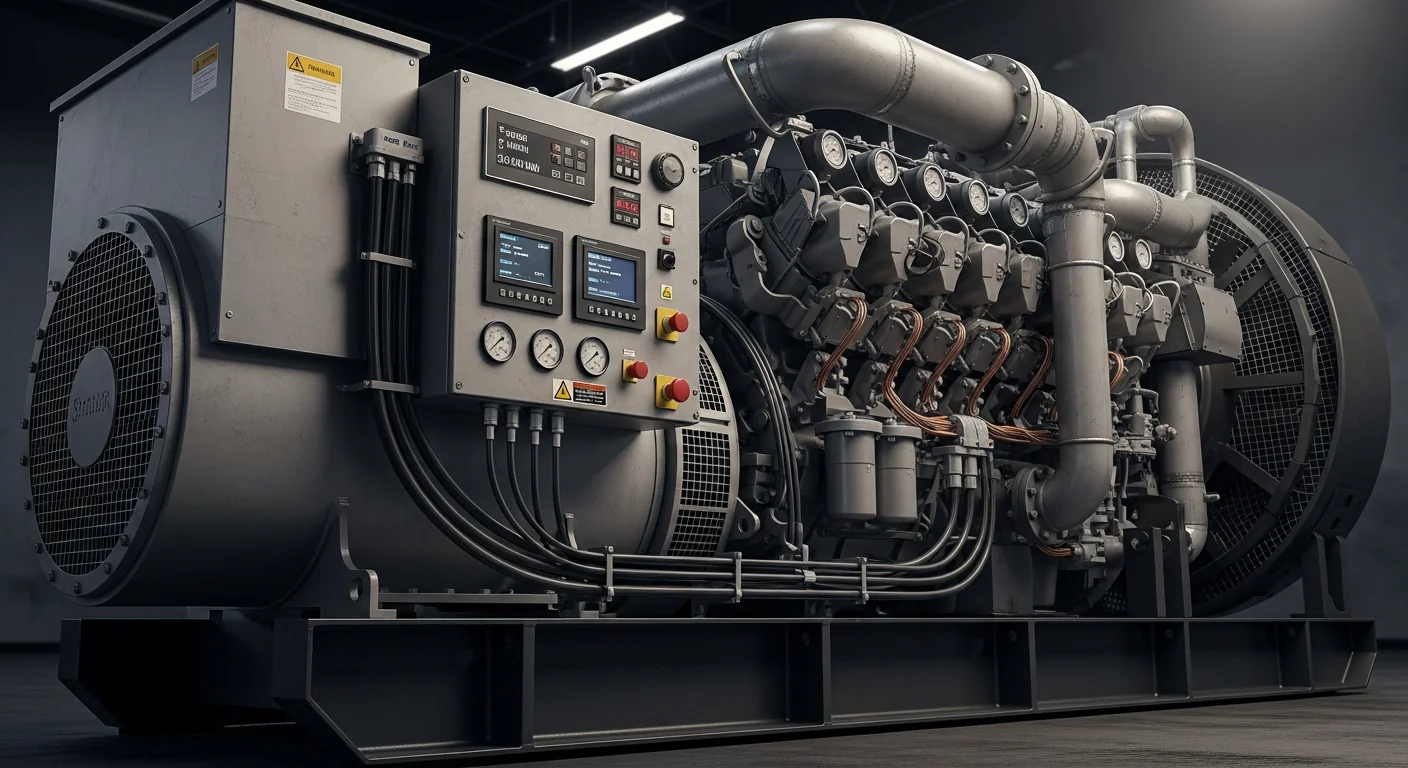
The sticker price on Generac's website tells maybe half the story. According to our analysis of over 500 generator installations, total costs break down into five major components that most buyers underestimate:
Portable generators range $500-$1,500 and require manual startup plus extension cords to essential circuits. Home standby generators—the Guardian series most contractors choose—cost $2,000-$5,000+ for the unit alone, depending on kilowatt capacity. The Guardian 24kW that handles most residential and small commercial loads runs $3,649 direct from Generac. Commercial generators start around $5,000 and scale to $10,000+ for larger facilities.
Here's where sticker shock hits: professional installation adds $2,000-$11,000 to your total investment. Simple installations—existing gas line within 20 feet, modern electrical panel, level concrete pad location—typically run $2,000-$3,500. Complex installations requiring gas line extensions, panel upgrades, or difficult access can reach $8,000-$11,000. The national average installed cost lands around $8,500 for a complete whole-home backup system.
Automatic transfer switch installation alone costs $500-$900, according to Consumer Reports. Add electrical panel work ($500-$2,000), gas line connection ($500-$2,000), concrete pad ($200-$600), permits ($200-$500), and labor, and you understand why 'generator cost' versus 'generator cost installed' creates such confusion.
Most dealers hide their financing rates behind 'call for quote' because they only work with one lender. Here's what lenders in our network typically offer across different credit profiles:
Expected rates: 6-10% APR. These borrowers often qualify for manufacturer promotional financing when available. A $12,000 generator at 6% over 60 months runs approximately $232 monthly—less than most contractors spend on backup power rentals during a single outage.
Typical rates: 10-14% APR. Still competitive financing, especially when multiple lenders compete for the deal. At 12% APR, that same $12,000 generator costs $267 monthly—a $35 difference from A-tier rates, but still building equity versus rental payments.
Expected rates: 12-18% APR with higher down payment requirements (20%+). SBA Microloans provide an alternative path with up to $50,000 available, according to SBA.gov, while SBA 7(a) loans extend up to $5,000,000 for larger commercial installations.
Manufacturer promotional financing—those '0% for 18 months' offers—carry a hidden landmine. Miss the payoff deadline by even one day, and retroactive interest at 26.99% applies to the entire original balance. Forums are full of homeowners who thought they were getting free money, only to face thousands in surprise interest charges.
According to IRS Publication 946, the Section 179 deduction limit for 2026 remains $2,560,000, allowing businesses to deduct the full purchase price of qualifying equipment in the year it's placed in service. This creates immediate cash flow benefits that change the financing versus cash equation completely.
For businesses operating under the 21% corporate tax rate, a $12,000 Generac generator generates $2,520 in immediate Year 1 tax savings through Section 179. This reduces the effective equipment cost to $9,480—a 21% immediate return on investment that most contractors miss when they focus only on monthly payments.
Smaller generators deliver proportional benefits. A $3,010 portable unit saves $752 at the 25% individual rate, $963 at 32%, or $1,053 at the 35% bracket. Even a basic $466 portable generator provides $117-$163 in tax recovery depending on your bracket.
Under current IRS guidelines, bonus depreciation drops to 20% for 2026 on qualifying property. However, generators typically qualify for the full Section 179 deduction first, making bonus depreciation a secondary consideration. The standard MACRS 5-year recovery period applies to backup generators used for business purposes.
Every generator forum devolves into the same cash-versus-finance debate, but the math depends entirely on your situation and opportunity cost of capital.
Most contractors generate 15-20% annual returns on working capital. Paying $12,000 cash for a generator means losing $1,800-$2,400 yearly in opportunity cost. Meanwhile, 6% financing costs only $720 annually in interest. The math is clear: you profit $1,080-$1,680 per year by financing instead of paying cash.
Add Section 179 timing benefits—that immediate $2,520 tax recovery—and financing becomes mathematically superior for cash flow optimization.
Cash works best for buyers with excess capital earning less than the financing rate, those wanting simpler transactions without personal guarantees, or situations where immediate full ownership matters more than leveraging capital elsewhere.
Generator rental rates average $576 monthly for a 7kW unit comparable to a $5,000 purchased generator. Financing that same unit at 6% over 60 months costs approximately $97 monthly. Ownership breaks even at just 9 months—after that, every rental payment is pure overspend with zero equity building.
For contractors facing seasonal power needs or multi-month projects, purchasing delivers immediate savings versus rental rates that exceed purchase costs within a year.
Generator financing approval depends on four key factors: credit score, time in business, annual revenue, and existing debt load. Because the generator itself serves as collateral, approval rates run higher than unsecured business loans.
If you're ready to invest in reliable backup power, find a quality generator for sale and start comparing your options today.Before committing, take time to choose the right generator for your power needs—oversizing or undersizing can significantly impact both upfront costs and long-term value.
SBA Microloans provide up to $50,000 for small businesses, according to SBA.gov, while SBA 7(a) loans extend to $5,000,000 for larger commercial needs. These government-backed programs often accept higher-risk profiles that traditional equipment lenders reject.
Dealer financing programs sometimes accommodate startup situations with higher down payments (20-30%) and personal guarantees, though rates typically run 14-18% APR for these scenarios.
Instead of accepting whatever rate one dealer offers, EquipFlow connects you with 3-4 lenders who compete for your generator financing deal. Here's how lender competition saves you money:
Our AI advisor Ava analyzes your specific setup—generator size, installation complexity, credit profile, and business situation. She knows which lenders specialize in backup power financing and which ones reject deals over certain equipment ages or credit scores. This isn't a generic application—it's a strategic match based on your exact scenario.
Ava connects you with 3-4 lenders who actually want your deal. When lenders compete, rates automatically drop 0.5-2 points compared to going direct to one bank. We've seen A-tier borrowers get 6% instead of 8%, and B-tier borrowers land 10% instead of 14%—just from competition.
See exactly how each offer affects your cash flow, tax strategy, and total cost. Compare not just rates, but terms, prepayment penalties, and whether the structure optimizes your Section 179 deduction timing. Most contractors discover options they never knew existed.
You control the decision—no pressure, no obligation. Once you select your preferred lender, they handle the paperwork and fund directly to your generator supplier. The entire process typically closes within 5-7 business days from application to equipment delivery.
Instead of accepting whatever rate one dealer offers, EquipFlow connects you with 3-4 lenders who compete for your generator financing deal. Here's how lender competition saves you money:
Our AI advisor Ava analyzes your specific setup—generator size, installation complexity, credit profile, and business situation. She knows which lenders specialize in backup power financing and which ones reject deals over certain equipment ages or credit scores. This isn't a generic application—it's a strategic match based on your exact scenario.
Ava connects you with 3-4 lenders who actually want your deal. When lenders compete, rates automatically drop 0.5-2 points compared to going direct to one bank. We've seen A-tier borrowers get 6% instead of 8%, and B-tier borrowers land 10% instead of 14%—just from competition.
See exactly how each offer affects your cash flow, tax strategy, and total cost. Compare not just rates, but terms, prepayment penalties, and whether the structure optimizes your Section 179 deduction timing. Most contractors discover options they never knew existed.
You control the decision—no pressure, no obligation. Once you select your preferred lender, they handle the paperwork and fund directly to your generator supplier. The entire process typically closes within 5-7 business days from application to equipment delivery.
Instead of accepting whatever rate one dealer offers, EquipFlow connects you with 3-4 lenders who compete for your generator financing deal. Here's how lender competition saves you money:
Our AI advisor Ava analyzes your specific setup—generator size, installation complexity, credit profile, and business situation. She knows which lenders specialize in backup power financing and which ones reject deals over certain equipment ages or credit scores. This isn't a generic application—it's a strategic match based on your exact scenario.
Ava connects you with 3-4 lenders who actually want your deal. When lenders compete, rates automatically drop 0.5-2 points compared to going direct to one bank. We've seen A-tier borrowers get 6% instead of 8%, and B-tier borrowers land 10% instead of 14%—just from competition.
See exactly how each offer affects your cash flow, tax strategy, and total cost. Compare not just rates, but terms, prepayment penalties, and whether the structure optimizes your Section 179 deduction timing. Most contractors discover options they never knew existed.
You control the decision—no pressure, no obligation. Once you select your preferred lender, they handle the paperwork and fund directly to your generator supplier. The entire process typically closes within 5-7 business days from application to equipment delivery.
Instead of accepting whatever rate one dealer offers, EquipFlow's lender network creates competition that automatically drives down your financing costs.
When 3-4 lenders compete for the same generator financing deal, rates typically drop 0.5-2 percentage points compared to single-source financing. We've tracked A-tier borrowers getting 6% instead of 8%, and B-tier borrowers landing 10% instead of 14%—just from competition. On a $12,000 generator, that 2-point difference saves $24 monthly and $1,440 over the loan term.
Our AI advisor Ava specializes in backup power financing and knows which lenders understand generator depreciation curves, installation complexity, and seasonal cash flow patterns. Banks reject 67% of used equipment loans over certain ages—Ava connects you with lenders who actually want generator deals.
Power outages don't wait for lengthy approval processes. Most EquipFlow matches deliver competing quotes within 24-48 hours, with funding available within 5-7 business days. When every day without backup power costs money, speed matters as much as rates.
Compare multiple offers with no commitment required. See exactly how different lenders structure terms, handle prepayment penalties, and optimize your Section 179 timing. You control the decision—no pressure tactics from dealers trying to move inventory.
Instead of accepting whatever rate one dealer offers, EquipFlow's lender network creates competition that automatically drives down your financing costs.
When 3-4 lenders compete for the same generator financing deal, rates typically drop 0.5-2 percentage points compared to single-source financing. We've tracked A-tier borrowers getting 6% instead of 8%, and B-tier borrowers landing 10% instead of 14%—just from competition. On a $12,000 generator, that 2-point difference saves $24 monthly and $1,440 over the loan term.
Our AI advisor Ava specializes in backup power financing and knows which lenders understand generator depreciation curves, installation complexity, and seasonal cash flow patterns. Banks reject 67% of used equipment loans over certain ages—Ava connects you with lenders who actually want generator deals.
Power outages don't wait for lengthy approval processes. Most EquipFlow matches deliver competing quotes within 24-48 hours, with funding available within 5-7 business days. When every day without backup power costs money, speed matters as much as rates.
Compare multiple offers with no commitment required. See exactly how different lenders structure terms, handle prepayment penalties, and optimize your Section 179 timing. You control the decision—no pressure tactics from dealers trying to move inventory.
Instead of accepting whatever rate one dealer offers, EquipFlow's lender network creates competition that automatically drives down your financing costs.
When 3-4 lenders compete for the same generator financing deal, rates typically drop 0.5-2 percentage points compared to single-source financing. We've tracked A-tier borrowers getting 6% instead of 8%, and B-tier borrowers landing 10% instead of 14%—just from competition. On a $12,000 generator, that 2-point difference saves $24 monthly and $1,440 over the loan term.
Our AI advisor Ava specializes in backup power financing and knows which lenders understand generator depreciation curves, installation complexity, and seasonal cash flow patterns. Banks reject 67% of used equipment loans over certain ages—Ava connects you with lenders who actually want generator deals.
Power outages don't wait for lengthy approval processes. Most EquipFlow matches deliver competing quotes within 24-48 hours, with funding available within 5-7 business days. When every day without backup power costs money, speed matters as much as rates.
Compare multiple offers with no commitment required. See exactly how different lenders structure terms, handle prepayment penalties, and optimize your Section 179 timing. You control the decision—no pressure tactics from dealers trying to move inventory.
Instead of accepting whatever rate one dealer offers, EquipFlow's lender network creates competition that automatically drives down your financing costs.
When 3-4 lenders compete for the same generator financing deal, rates typically drop 0.5-2 percentage points compared to single-source financing. We've tracked A-tier borrowers getting 6% instead of 8%, and B-tier borrowers landing 10% instead of 14%—just from competition. On a $12,000 generator, that 2-point difference saves $24 monthly and $1,440 over the loan term.
Our AI advisor Ava specializes in backup power financing and knows which lenders understand generator depreciation curves, installation complexity, and seasonal cash flow patterns. Banks reject 67% of used equipment loans over certain ages—Ava connects you with lenders who actually want generator deals.
Power outages don't wait for lengthy approval processes. Most EquipFlow matches deliver competing quotes within 24-48 hours, with funding available within 5-7 business days. When every day without backup power costs money, speed matters as much as rates.
Compare multiple offers with no commitment required. See exactly how different lenders structure terms, handle prepayment penalties, and optimize your Section 179 timing. You control the decision—no pressure tactics from dealers trying to move inventory.
.png)