
Many businesses receive funding shortly after approval
Built to help businesses explore realistic financing options
Business owners trust EquipFlow to simplify financing decisions
National and specialty lenders across industries
Your fastest route to the right lender — and the equipment your business needs.
Share your equipment type, business info, and location — it takes less than 60 seconds.
We instantly compare national and specialty lenders to find your best funding options.
Review offers, choose your lender, and get approved with fast turnaround times.
Generator guide shoppers in 2026 are walking into a market where the average installer-quoted standby unit runs $11,500-$13,000 fully installed, financing rates span an 1,200-basis-point range based on credit tier (actual rates subject to credit approval), and Section 179 can legally cut your effective cost by 21-35% — but only if you finance and place the unit in service before December 31. Most buyers don't know any of this. They walk into a Home Depot, see a $7,899 Generac, and either pay cash (losing 15-20% in opportunity cost) or get suckered into Synchrony's '60 months no interest' promo without reading the retroactive-interest fine print.
Here's what most people miss: the question isn't 'should I finance a generator?' The question is 'which financing structure mathematically beats every alternative?' Because when you map the four real options — cash, finance, rent, do nothing — against tax treatment, opportunity cost, and total cost of ownership, financing wins for almost every business buyer in a 25%+ tax bracket. According to IRS Publication 946, the 2026 Section 179 deduction limit is $2,560,000 with 100% bonus depreciation on new and used equipment. That's not a tax loophole. That's the federal government literally writing you a check to finance equipment.
Ready to see competing lender rates? Get matched with 3-4 lenders in 24 hours — no obligation, soft credit pull only.
Let me be direct: this guide is what your installer's salesperson and your Synchrony rep won't tell you. Real APR ranges by credit tier. The break-even math on financing vs. rental (a 100kW unit beats Sunbelt at month 20). The compliance traps — EPA's 100-hour annual run limit, OSHA penalties up to $165,514 for willful violations — that turn a 'great deal' into a lawsuit. And the financing structures that let smart operators acquire a $16,404 generator for an effective $10,663 after taxes. Read this before you sign anything.
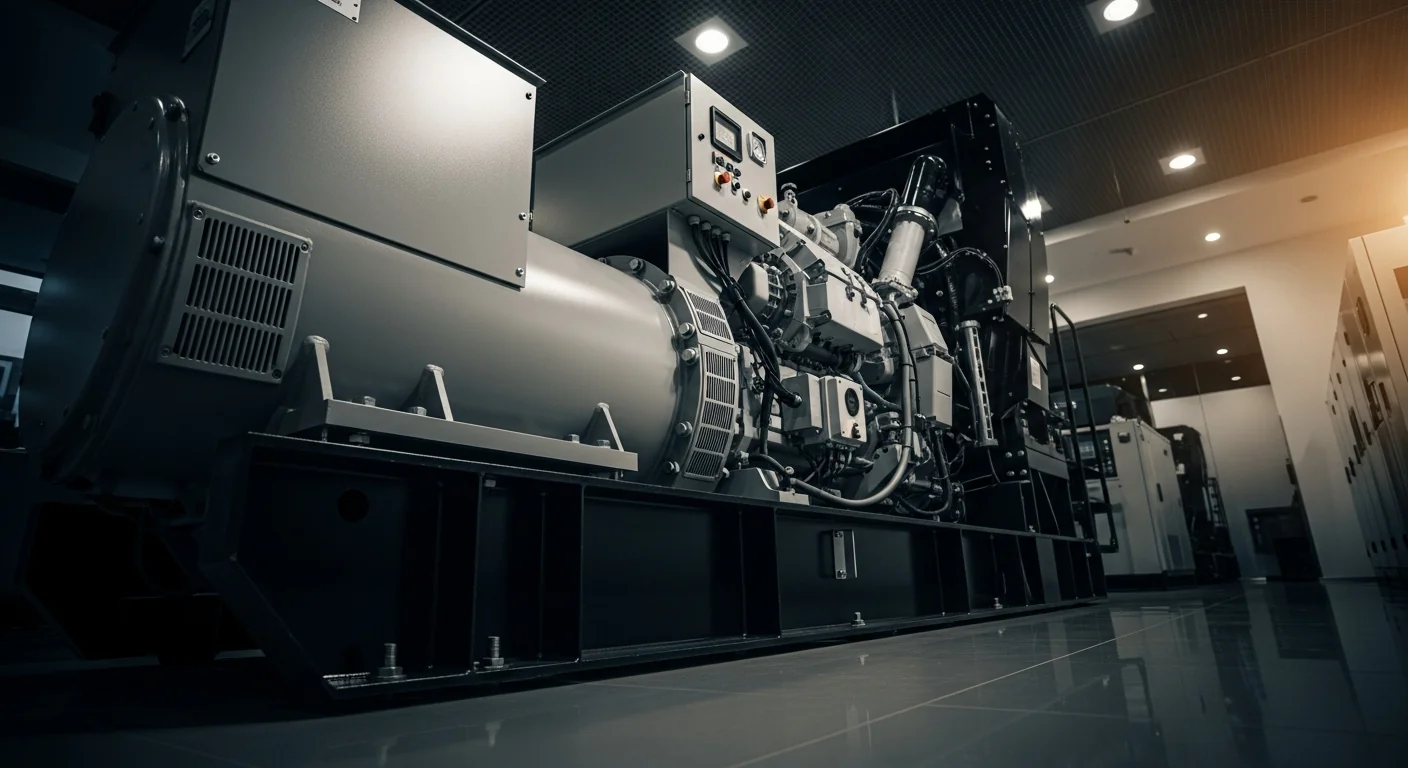
Most guides hide behind 'competitive rates.' Here's the actual data from lenders in our network. For a broader overview, explore our complete generator buying guide.
A-Tier borrowers (680+ FICO) typically see 6-10% APR. B-Tier (620-679) ranges from 10-14%. Startup or sub-620 credit lands at 12-18% (all rates subject to credit approval). The spread is enormous — 1,200 basis points between best and worst case. On a $15,000 generator over 60 months, that's the difference between a $290/month payment and $381/month. Over the life of the loan, A-tier borrowers pay roughly $2,400 in interest; sub-620 buyers pay closer to $7,860.
Don't guess your tier — get real lender quotes in 24 hours. Soft credit pull, no obligation.
On a $5,000 portable unit at 9% APR over 36 months: roughly $159/month. A $10,000 mid-tier standby at 8% over 60 months: about $203/month. A $15,000 22kW home standby at 8.5% over 60 months: roughly $308/month. A $45,000 100kW commercial unit at 7.8% over 60 months: approximately $908/month (actual rates may vary based on credit approval). These aren't promises — they're math against real rate ranges from lenders in our network.
Secured loans (the generator is collateral) run 2-4 points cheaper than unsecured. The tradeoff: default and the lender repos the unit. For most buyers, secured wins. Want to know what tier you actually qualify for? Ava can match you with competing lenders in 24 hours.
This is where cash buyers get crushed and smart financiers print money.
According to IRS Publication 946, the 2026 Section 179 deduction limit is $2,560,000 with 100% bonus depreciation on new and used equipment. Generators used >50% for business qualify. The unit must be placed in service (not just purchased — actually installed and operational) by December 31, 2026.
Based on EquipFlow's analysis using verified IRS data: a $7,899 commercial Generac standby unit qualifies for full Section 179 expensing, generating $1,658.79 in immediate Year 1 tax savings at the 21% C-corp rate. A $16,404 generator drops $4,101 in savings at 25%, $5,249 at 32%, and $5,741 at 35%. That last number means the federal government effectively subsidizes 35% of your acquisition cost on day one. Scale up to a $10,199.99 Nature's Generator MyGrid 10K and you're looking at $2,141.99 in first-year tax recovery at the 21% corporate rate.
Lock in your Section 179 savings before December 31. See financing options that preserve your full deduction.
File Form 4562 with your tax return for the year the unit is placed in service. Miss December 31 and you depreciate over 5-7 years instead of expensing year one. That's a massive cash flow hit. This is exactly why financing beats cash for business buyers — you keep capital working while still capturing the full deduction.
Sunbelt rents a 100kW unit at roughly $2,285/month. That same 100kW unit financed at 7.8% APR over 60 months runs about $908/month (subject to credit approval). Break-even versus rental hits at month 20-24 — after that, every month you're banking $1,377 in equity instead of bleeding rent. Over 5 years of consistent need, you've spent $137,100 on rental versus $54,480 on financing payments (and you own the asset).
Residential buyer, no business tax benefit, sub-7% APR not available, fully funded emergency fund, generator under $5,000. In that scenario, cash usually wins. But check the math — if your cash is earning 5% in a money market and you can finance at 8%, the spread is only 300 basis points. After Section 179, that flips for any business buyer.
Project duration under 6 months total. Construction site needing 90 days of power. Event production. If the cumulative use is under ~$15,000 in rental fees, renting beats ownership. Above that, the math says own it.
If you finance a Generac through Synchrony's '60 months no interest' promo and miss the payoff date by even one day, retroactive interest applies from day 1 — turning a $12,000 generator into a $14,800 mistake. Read the deferred-interest fine print or skip these promos entirely.
Multi-account store cards often allocate payments to lowest-APR balances first, leaving promo balances accruing. Account closures crush your credit utilization ratio (instant 30-50 point drop). Post-promo APRs commonly jump to 26.99%+. None of this is in the marketing brochure.
Generac's PowerBase program runs promotional financing on qualifying Guardian and Protector models — terms vary by dealer (subject to credit approval). Kohler periodically offers 0% APR for 24 months on 20kW+ units (verify current terms with the dealer). For used generators: most lenders cap age at 2-5 years and hour meters at 500-1,000 hours, with rates 2-4 points higher than new (OAC). Generac and Kohler captive financing typically refuses used units — you'll need a general equipment lender or credit union, which is exactly where Ava's matching shines.
Under EPA New Source Performance Standards, generators are limited to 100 hours per year of maintenance and testing operation. Run more than that without proper emissions certification and you're in violation. This matters because some buyers finance industrial units expecting unlimited use, then face EPA enforcement.
SBA Microloans cap at $50,000 — perfect for a single residential or small commercial standby. SBA 7(a) caps at $5,000,000 — covers most commercial standby installations. SBA 504 caps at $5,500,000 — built for industrial standby installations tied to real estate or major fixed assets. Rates run prime + 2.75% to prime + 4.75% (subject to SBA approval), generally beating conventional equipment financing for borrowers who qualify.
Want to see if you qualify for SBA rates? Get matched with SBA-preferred lenders in our network.
Home Depot stocks portable inverter generators and small open-frame units under $500 — typically 1,000-2,500W output. These cover a refrigerator, a few lights, and phone charging during short outages. At this price point, financing usually doesn't make sense — most lenders set minimum loan amounts at $1,000-$3,000. If you need power for occasional 4-12 hour outages and have basic essential loads under 2,000W, a $400 portable plus a $150 manual transfer switch is your move. The financing math only kicks in once you cross $3,000 — which usually means stepping up to a 7,500W+ unit.
Fuel choice drives total cost of ownership more than sticker price. Gasoline portables: cheapest upfront ($300-$1,500), but fuel storage limits run time and gas degrades in 30-90 days. Propane: cleaner burn, indefinite storage, but 10-15% less power output per gallon equivalent. Natural gas: ideal for whole-house standby (Generac 22kW, Kohler 26kW) since you tap an existing utility line — no refueling. Diesel: dominant in industrial 50kW+ applications for fuel efficiency and longevity. EPA's March 2026 guidance removed the DEF sensor requirement for diesel equipment, simplifying compliance. Dual-fuel units (Firman 3200W/4000W from Costco runs gasoline + propane) hedge fuel availability during supply disruptions.
Generator pricing splits into clear tiers. Under $500: small portable inverters, emergency-only use. $500-$3,000: mid-size portables 3,000-8,000W, can run a partial home circuit. $3,000-$8,000: large portables and entry-level standby (14kW Generac Guardian). $8,000-$15,000: mainstream whole-house standby (22kW Generac, 24-26kW Kohler/Honeywell). $15,000-$25,000: premium standby with extended warranties and large transfer switches (Costco's Kohler 26kW with 200A ATS). $25,000+: commercial and industrial. Costco generator inventory tops out around $25,000. Above that, you're buying through commercial dealers — and that's exactly where Ava's lender matching matters most, because captive dealer financing rarely beats market rates when 3-4 lenders compete.
The #1 mistake buyers make: oversizing because installer commission scales with unit size. Use Home Depot's free generator sizing calculator or this formula: total essential watts × 1.25 safety margin. Most 2,500 sq ft homes need 14-18kW, not the 22-26kW commonly quoted. Essentials only (fridge, lights, a few outlets, well pump): 5,000-7,500W. Whole-home minus AC: 10,000-14,000W. Whole-home with central AC: 18,000-22,000W. Large home with multiple HVAC zones: 24,000kW+. Get three independent load calculations before financing — oversizing by 8kW often adds $3,000-$5,000 to the financed amount, which is $60-$100/month in payments you didn't need.
When comparing generators, filter by these decision-driving specs in order: (1) kW output matched to your actual load calculation, (2) fuel type based on your local availability, (3) transfer switch type — automatic for standby, manual for portable, (4) decibel rating (look for <70 dB at 23 feet for HOA compliance), (5) warranty length (5-year is standard on premium standby, 2-3 on portables), (6) EPA/CARB certification if you're in California or another CARB state. Skip the marketing fluff filters (color, brand 'prestige') — they don't affect total cost of ownership. Once you've filtered to 2-3 candidates, run financing math on each.
Generators split into four functional categories. Portable: wheel-mounted, gasoline or dual-fuel, manual start, $300-$3,000. Best for camping, jobsites, occasional outages. Inverter: clean power for sensitive electronics (computers, medical devices), quieter, more expensive per watt. Home Standby: permanently installed, automatic transfer switch, $5,000-$20,000 installed. Best for grid-tied homes with frequent outages. Industrial/Commercial: 50kW+, diesel or natural gas, $25,000-$500,000+. Best for facilities, hospitals, data centers, agricultural operations. Each category has different financing landscapes — portables under $3,000 rarely justify financing, while industrial deals almost always do because Section 179 deductions on a $100,000 unit can return $35,000+ in tax savings.
The major players each have lending personality. Generac dominates residential standby (Guardian, Protector, PowerPact lines) — captive financing through Synchrony with the deferred-interest traps mentioned above. Kohler competes premium-tier (20RES, 26RCA) with periodic 0% APR promotions on 20kW+ units (subject to credit approval). Briggs & Stratton plays the budget-to-mid-tier portable and standby market. Honeywell (Costco's 22kW unit is popular) is actually rebadged Generac equipment. Cummins/Onan owns the RV and light commercial space. Caterpillar and Kohler Industrial dominate 100kW+ commercial. Captive dealer financing is rarely the best deal — it's optimized for the dealer's spiff, not your APR. This is exactly why lender competition matters.
Honeywell 22kW Home Standby with Transfer Switch (sold at Costco) is essentially a Generac Guardian rebadge — covers most 2,000-3,000 sq ft homes including central AC, runs on natural gas or propane, typically prices $4,500-$5,500 for the unit alone before installation. Installed cost lands around $9,000-$12,000. Jackery Explorer 3000 Solar Generator with 500W Solar Panel (3,024Wh capacity) is a portable power station, not a traditional fuel generator — runs sensitive electronics silently, recharges via solar, ideal for medical equipment backup or RV use, prices $2,000-$3,500. EcoFlow River 3 Plus Wireless Boost Combo is a smaller portable power station (286Wh, expandable) for short outages and portable electronics — $300-$500 range. None of these three justify financing on their own under most lender minimums, but if bundled with a larger system (solar panels, additional batteries, whole-home integration), the package can cross financing thresholds.
When financing generators under $500, you're typically looking at portable units perfect for camping, tailgating, or emergency backup for essential appliances. These entry-level generators usually range from 1,000 to 3,000 watts and include inverter models from brands like Champion, WEN, and Westinghouse. While the purchase price seems manageable, financing can still make sense for cash flow management or building business credit.
Most equipment financing companies have minimum loan amounts of $5,000 to $10,000, making traditional equipment loans impractical for sub-$500 generators. However, you have several financing alternatives. Equipment credit lines often have lower minimums around $1,000, allowing you to finance multiple small generators or combine the purchase with other equipment. Business credit cards offer another option, especially those with 0% introductory APR periods lasting 12-18 months.
For contractors or rental businesses buying multiple units, bundling several generators under $500 into a single financing package makes more economic sense. A purchase of 10 generators at $400 each creates a $4,000 transaction that approaches minimum financing thresholds. Consider seasonal financing programs too – many lenders offer special terms for generators purchased before hurricane season or winter months when demand peaks.
Generator fuel type significantly impacts both yfinancing options through our partners options and total cost of ownership, making it a crucial consideration when structuring your equipment loan. Gas generators typically cost 20-30% less upfront than diesel equivalents, reducing your initial financing amount. However, diesel units often qualify for longer financing terms due to their extended lifespan – up to 84 months versus 60 months for gas models.
Diesel generators command higher resale values, which strengthens your loan-to-value ratio and may qualify you for better interest rates. Lenders view diesel units as lower-risk collateral because they maintain 60-70% of their value after five years compared to 40-50% for gas generators. This residual value advantage can reduce your required down payment from 20% to 10-15%.
Natural gas and propane generators present unique financing considerations. While fuel costs are typically 30-40% lower than diesel, the units themselves cost 15-25% more initially. However, many utility companies offer rebates for natural gas generators, and some lenders provide green financing incentives for cleaner-burning units. Bi-fuel and tri-fuel generators offer operational flexibility but require higher financing amounts – expect to pay 25-35% more than single-fuel equivalents.
Generator price ranges directly correlate with financing terms and qualification requirements, making it essential to understand how different price tiers affect your loan structure. Generators under $10,000 typically qualify for unsecured financing or equipment credit lines with rates ranging from 8-18% APR. Units in the $10,000-$50,000 range access traditional equipment loans with 5-12% rates and terms up to 60 months.
Commercial generators exceeding $50,000 unlock the most favorable financing options. These high-value units qualify for SBA loans with rates as low as 4-6% and terms extending to 120 months. Lenders also offer seasonal payment structures for agricultural or construction applications, allowing you to align payments with cash flow cycles. Down payment requirements typically decrease as purchase prices increase – while a $15,000 generator might require 20% down, a $100,000 unit often needs only 10-15%.
Standby generators in the $15,000-$30,000 range represent the sweet spot for residential and small commercial financing. These units qualify for home improvement loans, equipment financing, or specialized generator financing programs. Many manufacturers partner with financing companies to offer promotional rates, sometimes as low as 0% APR for qualified buyers during peak selling seasons.
Generator power output measured in kilowatts (kW) or watts directly influences financing terms, equipment classification, and loan qualification criteria. Portable generators under 5kW typically fall into the small equipment category, limiting financing options to credit lines or short-term loans. However, standby generators from 10-20kW access standard equipment financing with competitive rates and extended terms.
Commercial generators exceeding 50kW qualify as heavy equipment, opening doors to specialized industrial financing programs. These high-power units often require custom financing structures due to their $100,000+ price points and specialized applications. Lenders evaluate power requirements against your business needs – a 100kW generator for a small retail store raises red flags, while the same unit for a manufacturing facility makes perfect sense.
Power rating also affects depreciation schedules and residual values in yfinancing options through our partners calculations. Higher-wattage commercial generators typically depreciate over 7-10 years for tax purposes, while smaller units follow 5-7 year schedules. This extended depreciation period can improve your debt-to-income ratios and qualify you for larger loan amounts. Additionally, generators with power outputs matching common commercial needs (25kW, 50kW, 100kW) maintain better resale values, strengthening your collateral position.
Filtering generator financing results by specific criteria helps you identify the most suitable loan products and terms for your particular situation. Most equipment financing platforms allow you to filter by loan amount, term length, interest rate ranges, and down payment requirements. Start by filtering for your target loan amount – this immediately eliminates lenders with minimum thresholds above your needs or maximum limits below your requirements.
Credit score filters prove particularly valuable since generator financing rates vary dramatically based on creditworthiness. Borrowers with scores above 700 should filter for prime lending options with rates below 10%, while those with scores in the 600-650 range need to focus on alternative lenders offering 12-20% rates. Industry-specific filters help contractors find lenders familiar with seasonal cash flows and equipment depreciation patterns.
Geographic filters matter more than many realize, as some lenders specialize in specific regions or have partnerships with local generator dealers. State-specific programs, utility rebates, and regional economic development incentives can significantly impact your total financing costs. Time-based filters help identify seasonal promotions – many lenders offer special generator financing terms before hurricane season (May-July) or winter months (September-November) when demand peaks and manufacturers provide dealer incentives.
Generator categories significantly impact financing qualification, terms, and documentation requirements, making proper classification essential for securing optimal loan conditions. Portable generators under 10kW typically fall into the small equipment category, limiting financing to credit lines, short-term loans, or lease options. These units rarely qualify for traditional equipment loans due to their mobility and higher theft risk.
Standby generators represent the most financeable category, with permanent installation reducing lender risk and improving collateral value. Residential standby units (10-25kW) often qualify for home improvement financing at rates 2-3% lower than equipment loans. Commercial standby generators access the full range of equipment financing options, including SBA loans for qualified businesses.
Industrial generators form their own specialized category, requiring custom financing structures due to their high values and specific applications. These units often exceed $500,000 and need project financing rather than traditional equipment loans. Emergency backup generators for hospitals, data centers, and critical infrastructure may qualify for special financing programs with government backing or utility incentives. Mobile generators used in construction or events face higher rates due to transportation risks but can access fleet financing programs when purchased in quantities of three or more units.
Generator brand selection significantly influences financing approval odds, interest rates, and loan terms due to varying manufacturer reputations, dealer networks, and resale values. Tier-one brands like Caterpillar, Cummins, and Generac command the best financing terms because lenders view them as lower-risk collateral. These established manufacturers typically maintain 65-75% residual values after five years, compared to 45-55% for lesser-known brands.
Caterpillar and Cummins generators often qualify for extended financing terms up to 84 months due to their commercial-grade construction and widespread service networks. Lenders recognize that parts availability and service support directly impact equipment longevity and resale value. Generac dominates the residential standby market, with many lenders offering specialized financing programs for their units, sometimes including installation costs in the loan amount.
Emerging brands like EcoFlow and Bluetti face financing challenges despite innovative technology, as lenders lack historical data on reliability and resale performance. However, some progressive lenders offer green financing incentives for battery-powered generators, recognizing the growing market demand. When financing lesser-known brands, expect higher down payment requirements (25-30% versus 10-20% for established brands) and shorter loan terms to mitigate lender risk.
The EcoFlow River 3 Plus Wireless Boost Combo represents the cutting edge of portable power station technology, but financing these innovative battery generators requires understanding their unique market position and lender perceptions. Priced around $800-$1,200 depending on configuration, this unit falls into the challenging financing range where traditional equipment loans don't apply due to minimum loan amounts, yet the cost exceeds typical credit card comfort zones.
Battery-powered generators like the EcoFlow River 3 Plus face financing skepticism from traditional equipment lenders unfamiliar with lithium battery technology and uncertain about long-term reliability. However, forward-thinking lenders increasingly recognize the commercial applications for silent, emission-free power solutions. Event planners, food truck operators, and mobile service businesses find these units invaluable for indoor applications where gas generators are prohibited.
Financing options for the EcoFlow River 3 Plus Wireless Boost Combo typically include manufacturer financing programs, equipment credit lines, or bundling with other purchases to reach minimum loan thresholds. EcoFlow partners with Affirm and other point-of-sale lenders to offer 6-24 month payment plans with rates ranging from 0-30% APR based on creditworthiness. For business applications, consider purchasing multiple units or combining with solar panels to create a larger financing package that qualifies for traditional equipment loans with better terms.
Many contractors and homeowners start their generator journey with budget-friendly units under $500. These entry-level generators typically range from 1,000 to 3,500 watts and include portable gas-powered models from brands like Champion, WEN, and Pulsar. While the upfront cost seems manageable, financing even these smaller purchases can preserve your working capital for other business needs.
Equipment financing for generators under $500 often comes with simplified approval processes. Many lenders offer same-day decisions for purchases in this range, with terms typically spanning 12 to 36 months. Monthly payments can be as low as $15-45 depending on your credit profile and chosen term length. For contractors just starting out, financing these smaller generators helps establish equipment credit history while keeping cash flow intact for materials and labor costs.
Consider that while $500 may seem like a small amount, financing allows you to potentially upgrade to a slightly more powerful unit within the same monthly budget. Instead of paying $450 cash for a basic 2,000-watt generator, you might finance a $750 unit with 3,000 watts for around $25 monthly, providing significantly more power for your job sites.
Generator fuel type significantly impacts both purchase price and ongoing operational costs, making it a crucial factor in yfinancing options through our partners decision. Gas generators typically cost 20-30% less upfront than comparable diesel units, while propane models fall somewhere in the middle. However, diesel generators often provide better long-term value through superior fuel efficiency and longer engine life.
When structuring equipment financing, lenders consider fuel type as part of the asset's residual value calculation. Diesel generators generally qualify for longer financing terms—up to 84 months for larger commercial units—due to their durability and strong resale values. Gas-powered generators typically max out at 60-month terms, while dual-fuel and tri-fuel models often receive preferential rates due to their operational flexibility.
Fuel costs should factor into your total cost of ownership calculations. While a diesel generator might require $2,000 more upfront financing, its 25-30% better fuel efficiency can save $500-1,000 annually in operating costs. Over a 5-year financing term, this efficiency gain often more than offsets the higher monthly payments, making diesel units attractive for contractors with consistent power needs.
Generator pricing spans an enormous range, from $300 portable units to $50,000+ commercial standby systems. Understanding these price tiers helps determine the most appropriate financing structure for your needs. Portable generators ($300-$3,000) typically qualify for unsecured equipment loans with 12-48 month terms. Mid-range standby generators ($3,000-$15,000) often require secured financing with 36-72 month options.
Large commercial generators ($15,000-$50,000+) unlock the most favorable financing terms, including equipment leases, municipal financing programs, and SBA loans. These higher-value purchases often qualify for rates as low as 4-8% APR with terms extending to 84 months. The monthly payment difference is substantial: a $5,000 generator financed over 48 months at 12% APR costs approximately $132 monthly, while a $25,000 unit over 72 months at 7% APR runs about $380 monthly.
Many lenders offer tiered pricing based on purchase amount. Loans under $25,000 might carry rates of 8-15%, while purchases above $25,000 often qualify for prime-plus pricing. This creates opportunities to bundle multiple smaller generators or add installation costs to reach more favorable rate tiers.
Generator power output, measured in watts or kilowatts, directly correlates with purchase price and financing options. Small portable units (1,000-5,000 watts) typically cost $300-$2,000 and qualify for basic equipment financing. Medium-duty generators (5,000-20,000 watts) range from $2,000-$8,000 and often receive preferential financing terms due to their commercial applications.
Large standby generators (20,000+ watts) represent significant investments of $8,000-$50,000+ but unlock the best financing opportunities. These high-power units often qualify for equipment leases with $1 buyout options, allowing businesses to deduct the full lease payment as an operating expense. Section 179 tax deductions may apply to generators over 6,000 pounds, providing additional financial benefits.
When evaluating power requirements, consider financing a slightly larger unit rather than upgrading later. The cost difference between a 15kW and 20kW generator might only add $50-75 to your monthly payment, but provides 33% more power capacity. This approach avoids the expense and hassle of refinancing or taking a second equipment loan within a few years as your power needs grow.
Effective generator selection requires filtering options by multiple criteria including power output, fuel type, brand, and price range. Most equipment financing companies provide online calculators that allow you to filter financing options based on your specific generator requirements. These tools help match your power needs with appropriate financing structures and monthly payment ranges.
When filtering financing options, consider both the generator specifications and your business profile. Contractors with established credit histories can filter for the lowest rates, while newer businesses might need to focus on lenders offering alternative approval criteria. Equipment age also matters—new generators typically qualify for the best rates and longest terms, while used units over 5 years old may face rate premiums of 2-4%.
Many lenders now offer pre-qualification tools that filter available programs based on your credit score, time in business, and desired equipment type. This filtering process can save hours of application time by identifying lenders most likely to approve your specific generator financing request at competitive rates.
Generators fall into distinct categories that influence financing options and terms. Portable generators represent the entry-level category, typically requiring minimal documentation and offering quick approval processes. Standby generators constitute the premium category, often qualifying for longer terms and lower rates due to their permanent installation and higher values.
Industrial generators form a specialized category with unique financing considerations. These units often exceed $100,000 and may qualify for municipal financing programs, especially for critical infrastructure applications. Many lenders offer specialized programs for this category, including step-down payment structures that align with project cash flows.
Rental generators represent another distinct category, with financing structured around revenue generation rather than traditional equipment loans. These arrangements often include maintenance packages and replacement guarantees, with terms typically ranging from 24-60 months. Monthly payments for rental-category generators usually run 15-25% higher than comparable purchase financing due to the additional services included.
Generator brand significantly impacts financing approval rates and terms offered by lenders. Tier-1 brands like Caterpillar, Cummins, and Kohler typically receive the most favorable financing terms due to their strong resale values and reliability records. These premium brands often qualify for rates 1-2% lower than lesser-known manufacturers and may receive longer repayment terms.
Mid-tier brands such as Generac, Champion, and Honda occupy the sweet spot for many financing applications. These manufacturers offer solid reliability at moderate price points, making them attractive to lenders while remaining affordable for borrowers. Financing approval rates for these brands typically exceed 85% for qualified applicants.
Emerging or lesser-known brands may face financing challenges, with some lenders requiring larger down payments or shorter terms. However, the lower purchase prices of these units often result in similar monthly payments despite less favorable terms. When brand selection impacts financing significantly, consider the total cost of ownership including interest charges, not just the generator's sticker price.
The EcoFlow River 3 Plus Wireless Boost Combo represents the cutting edge of portable power technology, combining a 286Wh battery capacity with wireless charging capabilities and multiple output options. Priced around $400-500, this unit exemplifies how modern portable power stations blur the lines between traditional generators and battery backup systems.
Financing options for advanced portable power stations like the EcoFlow River 3 Plus often mirror those of traditional small generators, with 12-36 month terms available through equipment lenders and manufacturer financing programs. EcoFlow offers direct financing through partnerships with Affirm and other consumer lenders, typically featuring 0% APR promotional periods for qualified buyers.
For contractors and mobile professionals, financing the EcoFlow River 3 Plus Wireless Boost Combo makes sense when preserving cash flow for other business needs. The unit's versatility—powering everything from power tools to mobile devices—can generate immediate ROI through increased job site efficiency. Monthly payments typically range from $15-25 depending on term length, making it accessible even for sole proprietors and new businesses establishing equipment credit.
We're a matching platform, not a lender. Ava — our AI financing advisor — analyzes your situation and puts your deal in front of 3-4 lenders who actually compete for it. Lender competition typically drops rates 0.5-2 percentage points versus walking into a single bank or accepting the dealer's captive financing offer. Here's the four-step process.
Generator type (portable, standby, industrial), kW capacity, new or used, business use percentage, your credit ballpark, time in business. Ava uses this to diagnose your financial situation — a 22kW Generac for a 3-year-old LLC with 700 credit gets matched to completely different lenders than a 250kW Caterpillar industrial unit for a startup (subject to lender approval). The match precision is the whole game.
Ava pulls 3-4 lenders from our network who specialize in your exact deal profile. Some lenders kill used generator deals over 5 years old. Others love them. Some refuse startups; others have dedicated startup programs. When lenders compete head-to-head for the same deal, rates drop and terms loosen. That's leverage you don't have walking into one bank.
You see real numbers side by side: APR, monthly payment, term length, down payment requirements, prepayment penalties (or lack thereof). No more guessing whether 'competitive rates' means 7% or 14% (all rates subject to credit approval). The math is in front of you.
You pick the offer that fits your cash flow. No pressure. No obligation. Most deals close in 24-48 hours from approval (subject to lender requirements). We don't make money unless you close — and we only get paid by the lender, not you.
We're a matching platform, not a lender. Ava — our AI financing advisor — analyzes your situation and puts your deal in front of 3-4 lenders who actually compete for it. Lender competition typically drops rates 0.5-2 percentage points versus walking into a single bank or accepting the dealer's captive financing offer. Here's the four-step process.
Generator type (portable, standby, industrial), kW capacity, new or used, business use percentage, your credit ballpark, time in business. Ava uses this to diagnose your financial situation — a 22kW Generac for a 3-year-old LLC with 700 credit gets matched to completely different lenders than a 250kW Caterpillar industrial unit for a startup (subject to lender approval). The match precision is the whole game.
Ava pulls 3-4 lenders from our network who specialize in your exact deal profile. Some lenders kill used generator deals over 5 years old. Others love them. Some refuse startups; others have dedicated startup programs. When lenders compete head-to-head for the same deal, rates drop and terms loosen. That's leverage you don't have walking into one bank.
You see real numbers side by side: APR, monthly payment, term length, down payment requirements, prepayment penalties (or lack thereof). No more guessing whether 'competitive rates' means 7% or 14% (all rates subject to credit approval). The math is in front of you.
You pick the offer that fits your cash flow. No pressure. No obligation. Most deals close in 24-48 hours from approval (subject to lender requirements). We don't make money unless you close — and we only get paid by the lender, not you.
We're a matching platform, not a lender. Ava — our AI financing advisor — analyzes your situation and puts your deal in front of 3-4 lenders who actually compete for it. Lender competition typically drops rates 0.5-2 percentage points versus walking into a single bank or accepting the dealer's captive financing offer. Here's the four-step process.
Generator type (portable, standby, industrial), kW capacity, new or used, business use percentage, your credit ballpark, time in business. Ava uses this to diagnose your financial situation — a 22kW Generac for a 3-year-old LLC with 700 credit gets matched to completely different lenders than a 250kW Caterpillar industrial unit for a startup (subject to lender approval). The match precision is the whole game.
Ava pulls 3-4 lenders from our network who specialize in your exact deal profile. Some lenders kill used generator deals over 5 years old. Others love them. Some refuse startups; others have dedicated startup programs. When lenders compete head-to-head for the same deal, rates drop and terms loosen. That's leverage you don't have walking into one bank.
You see real numbers side by side: APR, monthly payment, term length, down payment requirements, prepayment penalties (or lack thereof). No more guessing whether 'competitive rates' means 7% or 14% (all rates subject to credit approval). The math is in front of you.
You pick the offer that fits your cash flow. No pressure. No obligation. Most deals close in 24-48 hours from approval (subject to lender requirements). We don't make money unless you close — and we only get paid by the lender, not you.
We don't lend money. We make lenders fight for your deal. Here's why that matters.
When 3-4 lenders compete head-to-head for the same generator deal, rates typically drop 0.5-2 percentage points versus the single-lender alternative (actual savings subject to credit approval). On a $15,000 generator over 60 months, that's $1,200-$4,800 in saved interest. The dealer's captive financing isn't optimizing for your APR — it's optimizing for their spiff. Competition flips that math.
Some lenders refuse used generators over 5 years old. Others kill startup deals on day one. Ava — our AI financing advisor — knows which lenders in our network underwrite which deal types, and matches you accordingly (subject to lender approval criteria). She's processed thousands of equipment deals and knows the underwriting quirks captive dealer reps will never tell you about.
Most matches close within 24-48 hours from initial application to lender approval (subject to lender requirements). Every day without backup power during hurricane season or grid instability is real risk — Ava moves fast.
Get matched, compare offers, walk away if nothing fits. No fees. No commitment. We only get paid when you close, and the lender pays us — not you. Soft credit pull means no impact to your credit score during the matching process.
We don't lend money. We make lenders fight for your deal. Here's why that matters.
When 3-4 lenders compete head-to-head for the same generator deal, rates typically drop 0.5-2 percentage points versus the single-lender alternative (actual savings subject to credit approval). On a $15,000 generator over 60 months, that's $1,200-$4,800 in saved interest. The dealer's captive financing isn't optimizing for your APR — it's optimizing for their spiff. Competition flips that math.
Some lenders refuse used generators over 5 years old. Others kill startup deals on day one. Ava — our AI financing advisor — knows which lenders in our network underwrite which deal types, and matches you accordingly (subject to lender approval criteria). She's processed thousands of equipment deals and knows the underwriting quirks captive dealer reps will never tell you about.
Most matches close within 24-48 hours from initial application to lender approval (subject to lender requirements). Every day without backup power during hurricane season or grid instability is real risk — Ava moves fast.
Get matched, compare offers, walk away if nothing fits. No fees. No commitment. We only get paid when you close, and the lender pays us — not you. Soft credit pull means no impact to your credit score during the matching process.
We don't lend money. We make lenders fight for your deal. Here's why that matters.
When 3-4 lenders compete head-to-head for the same generator deal, rates typically drop 0.5-2 percentage points versus the single-lender alternative (actual savings subject to credit approval). On a $15,000 generator over 60 months, that's $1,200-$4,800 in saved interest. The dealer's captive financing isn't optimizing for your APR — it's optimizing for their spiff. Competition flips that math.
Some lenders refuse used generators over 5 years old. Others kill startup deals on day one. Ava — our AI financing advisor — knows which lenders in our network underwrite which deal types, and matches you accordingly (subject to lender approval criteria). She's processed thousands of equipment deals and knows the underwriting quirks captive dealer reps will never tell you about.
Most matches close within 24-48 hours from initial application to lender approval (subject to lender requirements). Every day without backup power during hurricane season or grid instability is real risk — Ava moves fast.
Get matched, compare offers, walk away if nothing fits. No fees. No commitment. We only get paid when you close, and the lender pays us — not you. Soft credit pull means no impact to your credit score during the matching process.
We don't lend money. We make lenders fight for your deal. Here's why that matters.
When 3-4 lenders compete head-to-head for the same generator deal, rates typically drop 0.5-2 percentage points versus the single-lender alternative (actual savings subject to credit approval). On a $15,000 generator over 60 months, that's $1,200-$4,800 in saved interest. The dealer's captive financing isn't optimizing for your APR — it's optimizing for their spiff. Competition flips that math.
Some lenders refuse used generators over 5 years old. Others kill startup deals on day one. Ava — our AI financing advisor — knows which lenders in our network underwrite which deal types, and matches you accordingly (subject to lender approval criteria). She's processed thousands of equipment deals and knows the underwriting quirks captive dealer reps will never tell you about.
Most matches close within 24-48 hours from initial application to lender approval (subject to lender requirements). Every day without backup power during hurricane season or grid instability is real risk — Ava moves fast.
Get matched, compare offers, walk away if nothing fits. No fees. No commitment. We only get paid when you close, and the lender pays us — not you. Soft credit pull means no impact to your credit score during the matching process.
.png)


