Many businesses receive funding shortly after approval
Built to help businesses explore realistic financing options
Business owners trust EquipFlow to simplify financing decisions
National and specialty lenders across industries
Your fastest route to the right lender — and the equipment your business needs.
Share your equipment type, business info, and location — it takes less than 60 seconds.
We instantly compare national and specialty lenders to find your best funding options.
Review offers, choose your lender, and get approved with fast turnaround times.
Generator rental costs sound reasonable until you run the actual numbers. A $400/month rental for a mid-range 3650W unit breaks down against ownership at month 20 when you finance at 7.8% APR—that's $151/month for 60 months versus $400/month with zero equity building. The rental company won't tell you where that break-even point is because they'd rather collect $9,600 over two years instead of selling you a generator for $7,500.
In our experience, most contractors and facility managers never see this math. They get quoted daily rates ($50-$200 for portable units, $500-$3,000+ for industrial), multiply by project days, and assume that's the end of the story. But rental costs include hidden fuel consumption, delivery fees, and overtime charges that can double your quoted rate. Meanwhile, financing that same generator builds equity, qualifies for Section 179 deduction up to $2,560,000, and often costs less per month than rental after the first year.
Here's what the rental industry doesn't want you to calculate: true total cost including all fees, the opportunity cost of zero equity building, and the tax advantages of ownership. We'll show you the real numbers, the break-even math, and when renting actually makes sense versus when you're just paying someone else's equipment loan.
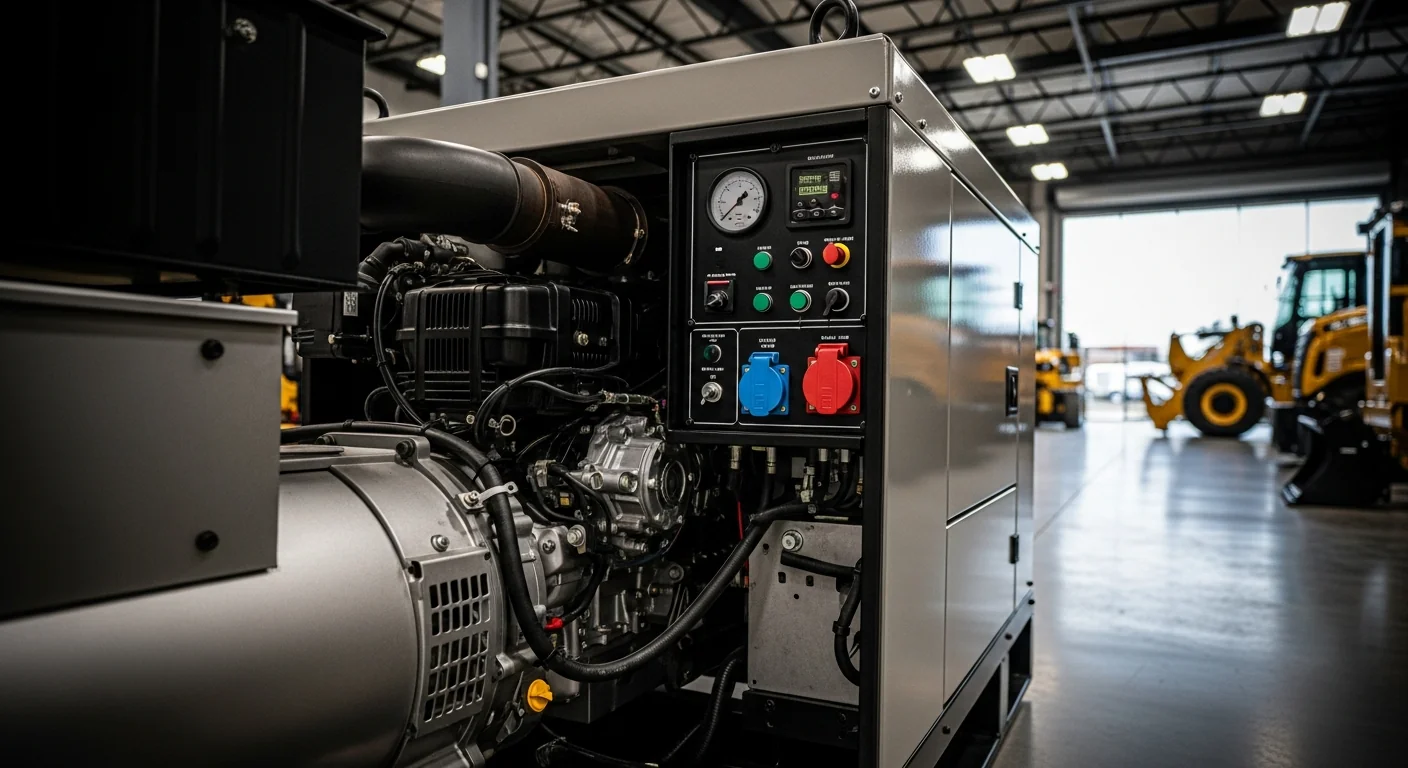
Generator rental pricing follows three distinct tiers that most rental companies blur together in their quotes. Here's what you'll actually pay once you add fuel, delivery, and fees.
Portable generators (2,000W-12,000W) rent for $50-$200 daily, $300-$1,200 weekly, and $800-$3,000 monthly. But the hidden cost is fuel consumption. A 2000W inverter generator runs 9.6 hours on one gallon of gas, while 3000-4000W units run up to 20 hours on 3.4 gallons. At current fuel prices, that's $25-$40 per day in fuel costs alone—often doubling your quoted rental rate.
For a typical 30-day construction project using a 3500W portable generator: $150/day base rate ($4,500) + $30/day fuel ($900) + $200 delivery/pickup = $5,600 total. Compare that to financing a $3,200 generator at 8% APR: $65/month for 60 months. You break even at month 15, not month 30.
Towable generators (20kW-350kW) span the widest rental range because power requirements vary dramatically. A 20kW diesel unit rents for $300-$400 daily, while a 350kW unit hits $600-$800 daily. These units require truck delivery ($150-$400 depending on distance) and burn 1.5-4 gallons of diesel per hour under load.
The math gets ugly fast. A 6-month project needing a 100kW generator: $500/day × 180 days = $90,000 rental cost. Finance a $45,000 used 100kW unit at 9% APR over 60 months: $934/month or $5,604 over six months. You'd save $84,396 by owning instead of renting.
Industrial generators (400kW-2,000kW+) require semi-truck delivery and professional installation. Daily rates start at $800 for 400kW units and exceed $3,000 for megawatt-class generators. These projects often involve 12-18 month timelines, making the rental-versus-purchase decision critical.
A data center backup project needing an 800kW generator for 18 months: $1,500/day × 540 days = $810,000 rental cost. Purchase price for a similar used unit: $180,000-$250,000. Even with maintenance, insurance, and storage costs, ownership saves $500,000+ over rental.
Rental makes mathematical sense in three specific scenarios. Outside these situations, you're paying someone else's equipment loan plus their profit margin.
For projects under 5 months, rental wins because you avoid the down payment and loan origination costs. A 90-day emergency backup need doesn't justify purchasing a $25,000 generator when rental costs $8,100 total. The break-even math simply doesn't work for short timelines.
If your projects require different generator sizes—20kW for one job, 150kW for the next—rental flexibility beats owning multiple units. Construction companies with varying project types often rent strategically rather than maintaining a diverse fleet.
Facilities needing backup power only during hurricane season or planned outages can't justify year-round ownership costs. A hospital renting a 500kW generator for 30 days annually pays $45,000 versus $200,000+ to purchase and maintain.
Here's the math rental companies don't want you to calculate. A typical 5kW portable generator costs $4,245 new. Financed at 8% APR over 60 months, your monthly payment is $86. Most rental companies charge $200-$300 monthly for equivalent power.
Break-even analysis: $86 (loan payment) versus $250 (average rental). You break even at month 17-20 depending on the specific rental rate. After month 20, every rental payment is pure waste—you're paying for equipment you'll never own.
The tax implications make ownership even more attractive. According to IRS Publication 946, Section 179 allows up to $2,560,000 in equipment deductions. On that $4,245 generator, a business in the 25% tax bracket saves $1,061 immediately, reducing the effective purchase price to $3,184.
Generators qualify for favorable financing because they're essential business equipment with predictable depreciation curves. Unlike vehicles or electronics, generators maintain value and generate measurable ROI through reduced downtime costs.
SBA 7(a) loans up to $5,000,000 and SBA 504 loans up to $5,500,000 both cover generator purchases. SBA backing reduces down payment requirements from 20-30% to as low as 10% for qualified borrowers. For smaller portable units under $50,000, SBA Microloans offer competitive rates with simplified paperwork.
Specialized equipment lenders understand generator depreciation and often approve deals traditional banks decline. A-tier credit typically sees 6-10% APR, while B-tier credit ranges from 10-14%. Even startup businesses can qualify at 12-18% APR—still cheaper than long-term rental. Explore generator financing options to find rates that match your credit profile.
Major generator manufacturers like Caterpillar, Cummins, and Generac offer promotional financing. Current programs include 0% APR for 36 months on select models and cash-back incentives up to $2,000. These manufacturer programs often beat bank rates by 2-4 percentage points. If you're wondering how much does a Generac generator cost, their promotional deals can make ownership surprisingly affordable.
Rental companies quote base daily rates but profit from add-on costs most customers discover after signing. Here's what the fine print includes:
Portable generators burn 0.5-2 gallons per hour depending on load. Industrial units consume 8-15 gallons per hour. Rental companies don't include fuel costs in base quotes, but fuel often exceeds the rental fee itself. A 100kW diesel generator running 12 hours daily burns 120 gallons of diesel—$420 in fuel costs alone.
If the numbers clearly favor buying, explore generator financing options to avoid the steep long-term costs that rentals quietly accumulate.Project delays trigger overtime charges—typically 150-200% of daily rates. A $500/day generator becomes $750-$1,000 per day if your project runs past the contracted return date. Equipment purchase eliminates these penalty structures entirely.
Renting generators transfers equipment responsibility but not safety liability. OSHA requires maintaining 3-4 feet of clearance on all sides and proper grounding regardless of ownership. EPA Tier 4 Final compliance is mandatory for prime power applications exceeding 100 hours annually.
Ownership lets you control maintenance schedules, ensure compliance training, and avoid the liability gaps that occur when rental equipment fails. OSHA penalties for serious violations range from $1,190-$16,550, while willful violations reach $11,524-$165,514. Rental agreements rarely indemnify renters for compliance violations.
When you realize that 20+ month projects make ownership mathematically superior to rental, EquipFlow's lender-matching platform becomes your path to equity-building equipment ownership.
Ava analyzes your specific generator requirements—power capacity, runtime needs, project duration, and budget. This isn't generic financing; it's matching you with lenders who understand generator depreciation curves and seasonal cash flow patterns. Most contractors discover they qualify for better terms than their bank initially offered.
Ava connects you with 3-4 lenders who specialize in generator financing and compete for your business. When lenders compete, rates typically drop 0.5-2 percentage points compared to single-lender quotes. You'll see offers from equipment finance companies, regional banks, and SBA-backed programs—each with different down payment requirements and terms.
See exactly how each offer affects your monthly cash flow versus continued rental payments. Ava shows you the total cost of ownership including tax benefits—like Section 179 deduction that can provide immediate cash flow recovery of 21-35% of the purchase price depending on your tax bracket.
Select the lender offer that makes the most financial sense for your situation. Most deals close within 24-48 hours, getting you from rental dependency to equipment ownership faster than most rental contracts get processed.
When you realize that 20+ month projects make ownership mathematically superior to rental, EquipFlow's lender-matching platform becomes your path to equity-building equipment ownership.
Ava analyzes your specific generator requirements—power capacity, runtime needs, project duration, and budget. This isn't generic financing; it's matching you with lenders who understand generator depreciation curves and seasonal cash flow patterns. Most contractors discover they qualify for better terms than their bank initially offered.
Ava connects you with 3-4 lenders who specialize in generator financing and compete for your business. When lenders compete, rates typically drop 0.5-2 percentage points compared to single-lender quotes. You'll see offers from equipment finance companies, regional banks, and SBA-backed programs—each with different down payment requirements and terms.
See exactly how each offer affects your monthly cash flow versus continued rental payments. Ava shows you the total cost of ownership including tax benefits—like Section 179 deduction that can provide immediate cash flow recovery of 21-35% of the purchase price depending on your tax bracket.
Select the lender offer that makes the most financial sense for your situation. Most deals close within 24-48 hours, getting you from rental dependency to equipment ownership faster than most rental contracts get processed.
When you realize that 20+ month projects make ownership mathematically superior to rental, EquipFlow's lender-matching platform becomes your path to equity-building equipment ownership.
Ava analyzes your specific generator requirements—power capacity, runtime needs, project duration, and budget. This isn't generic financing; it's matching you with lenders who understand generator depreciation curves and seasonal cash flow patterns. Most contractors discover they qualify for better terms than their bank initially offered.
Ava connects you with 3-4 lenders who specialize in generator financing and compete for your business. When lenders compete, rates typically drop 0.5-2 percentage points compared to single-lender quotes. You'll see offers from equipment finance companies, regional banks, and SBA-backed programs—each with different down payment requirements and terms.
See exactly how each offer affects your monthly cash flow versus continued rental payments. Ava shows you the total cost of ownership including tax benefits—like Section 179 deduction that can provide immediate cash flow recovery of 21-35% of the purchase price depending on your tax bracket.
Select the lender offer that makes the most financial sense for your situation. Most deals close within 24-48 hours, getting you from rental dependency to equipment ownership faster than most rental contracts get processed.
Smart contractors and facility managers use EquipFlow to escape the rental trap and start building equipment equity. Here's how our lender-matching platform saves money compared to single-source financing.
When 3-4 lenders compete for your generator financing deal, rates typically drop compared to your bank's first offer. EquipFlow's network includes equipment finance companies that specialize in generator loans and often beat traditional bank rates. A 1.5-point rate reduction on a $50,000 generator saves $3,800 over 60 months.
Ava analyzes your power requirements, project timeline, and credit profile to match you with lenders who understand generator depreciation patterns. Some lenders specialize in portable generators for contractors, while others focus on industrial backup power for facilities. This specialization often means better approval odds and terms.
Most generator financing through EquipFlow closes faster than commercial rental agreements. While rental companies run credit checks, require deposits, and negotiate delivery schedules, Ava can match you with competing lenders in 24 hours. Equipment ownership often happens faster than rental.
Comparing financing offers through EquipFlow carries no obligation to accept any deal. You can see exactly what ownership would cost monthly versus your current rental budget, then decide based on real numbers. Many contractors discover generators for sale options cost less than their current rental payments.
Smart contractors and facility managers use EquipFlow to escape the rental trap and start building equipment equity. Here's how our lender-matching platform saves money compared to single-source financing.
When 3-4 lenders compete for your generator financing deal, rates typically drop compared to your bank's first offer. EquipFlow's network includes equipment finance companies that specialize in generator loans and often beat traditional bank rates. A 1.5-point rate reduction on a $50,000 generator saves $3,800 over 60 months.
Ava analyzes your power requirements, project timeline, and credit profile to match you with lenders who understand generator depreciation patterns. Some lenders specialize in portable generators for contractors, while others focus on industrial backup power for facilities. This specialization often means better approval odds and terms.
Most generator financing through EquipFlow closes faster than commercial rental agreements. While rental companies run credit checks, require deposits, and negotiate delivery schedules, Ava can match you with competing lenders in 24 hours. Equipment ownership often happens faster than rental.
Comparing financing offers through EquipFlow carries no obligation to accept any deal. You can see exactly what ownership would cost monthly versus your current rental budget, then decide based on real numbers. Many contractors discover generators for sale options cost less than their current rental payments.
Smart contractors and facility managers use EquipFlow to escape the rental trap and start building equipment equity. Here's how our lender-matching platform saves money compared to single-source financing.
When 3-4 lenders compete for your generator financing deal, rates typically drop compared to your bank's first offer. EquipFlow's network includes equipment finance companies that specialize in generator loans and often beat traditional bank rates. A 1.5-point rate reduction on a $50,000 generator saves $3,800 over 60 months.
Ava analyzes your power requirements, project timeline, and credit profile to match you with lenders who understand generator depreciation patterns. Some lenders specialize in portable generators for contractors, while others focus on industrial backup power for facilities. This specialization often means better approval odds and terms.
Most generator financing through EquipFlow closes faster than commercial rental agreements. While rental companies run credit checks, require deposits, and negotiate delivery schedules, Ava can match you with competing lenders in 24 hours. Equipment ownership often happens faster than rental.
Comparing financing offers through EquipFlow carries no obligation to accept any deal. You can see exactly what ownership would cost monthly versus your current rental budget, then decide based on real numbers. Many contractors discover generators for sale options cost less than their current rental payments.
Smart contractors and facility managers use EquipFlow to escape the rental trap and start building equipment equity. Here's how our lender-matching platform saves money compared to single-source financing.
When 3-4 lenders compete for your generator financing deal, rates typically drop compared to your bank's first offer. EquipFlow's network includes equipment finance companies that specialize in generator loans and often beat traditional bank rates. A 1.5-point rate reduction on a $50,000 generator saves $3,800 over 60 months.
Ava analyzes your power requirements, project timeline, and credit profile to match you with lenders who understand generator depreciation patterns. Some lenders specialize in portable generators for contractors, while others focus on industrial backup power for facilities. This specialization often means better approval odds and terms.
Most generator financing through EquipFlow closes faster than commercial rental agreements. While rental companies run credit checks, require deposits, and negotiate delivery schedules, Ava can match you with competing lenders in 24 hours. Equipment ownership often happens faster than rental.
Comparing financing offers through EquipFlow carries no obligation to accept any deal. You can see exactly what ownership would cost monthly versus your current rental budget, then decide based on real numbers. Many contractors discover generators for sale options cost less than their current rental payments.
.png)


