Many businesses receive funding shortly after approval
Built to help businesses explore realistic financing options
Business owners trust EquipFlow to simplify financing decisions
National and specialty lenders across industries
Your fastest route to the right lender — and the equipment your business needs.
Share your equipment type, business info, and location — it takes less than 60 seconds.
We instantly compare national and specialty lenders to find your best funding options.
Review offers, choose your lender, and get approved with fast turnaround times.
MRI Machine for sale listings flood the market with prices from $200,000 to over $1 million, but here's what every seller conveniently leaves out: the real cost isn't the sticker price—it's the total cost of ownership plus financing decisions that most practices get catastrophically wrong.
Most practices budget $285,000 for a refurbished GE Signa HDe 1.5T, then discover that site preparation, RF shielding, helium fills, and installation add another $100,000-$200,000 that nobody mentioned upfront. Meanwhile, they're hemorrhaging cash on a purchase when find a quality forklift for sale today to finance your mri machine with flexible options at 7% APR would preserve working capital that typically generates 15-20% ROI elsewhere. The math is brutal: paying cash costs you an invisible $42,750-$57,000 annually in opportunity cost on that $285,000 purchase. Stop building zero equity for your lender—the math says you should own this equipment.
Here's what we see after analyzing hundreds of MRI transactions: practices that finance strategically and reinvest their cash report 40% faster equipment expansion and better cash flow management. More importantly, according to IRS Publication 946, Section 179 allows immediate deduction of up to $2,560,000 in equipment purchases—meaning that $385,000 GE Signa 3.0T could generate $80,850 in Year 1 tax recovery at the 21% corporate rate, effectively reducing your true net cost to $304,150. Yet not a single MRI seller mentions this game-changing tax strategy.
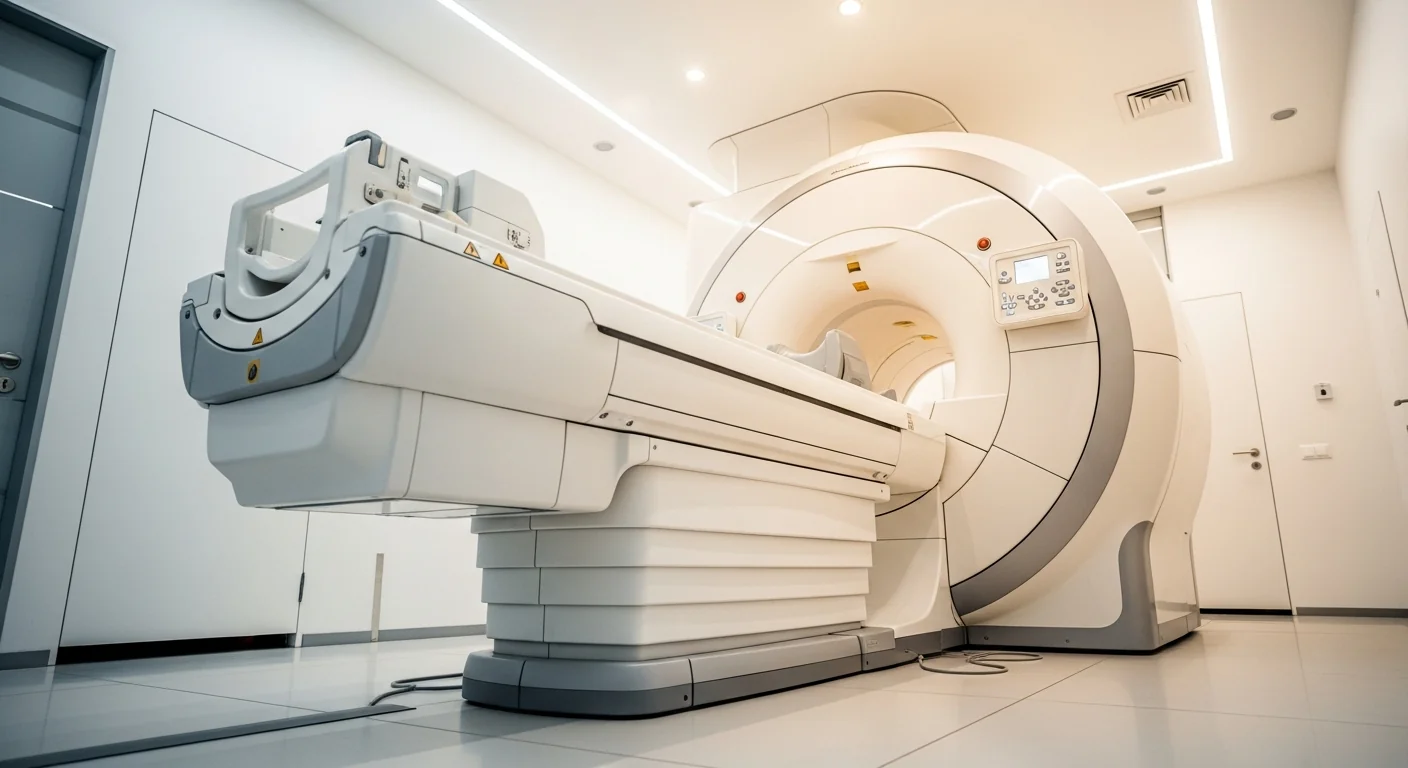
Every MRI listing shows equipment price, but the real number—what you'll actually spend in Year 1—tells a completely different story. Based on our analysis of current market pricing, here's what you're really looking at:
Refurbished MRI systems start around $200,000 for basic open-field units like entry-level Hitachi models, but the workhorse of most imaging centers—the GE Signa HDe 1.5T—runs approximately $285,000. Step up to premium 3.0T systems like the GE Signa 3.0T at $385,000, and you're looking at research-grade imaging capability. At the high end, premium refurbished systems can exceed $1 million, still representing 60-70% savings compared to new MRI systems that start at $1.5 million and easily reach $3 million.
But here's the financial reality most practices discover too late: that $285,000 sticker price is roughly 50-60% of your actual Year 1 investment. Site preparation and RF shielding (the Faraday cage that prevents electromagnetic interference) typically runs $75,000-$150,000 depending on your facility's existing infrastructure. Add magnet rigging and installation ($25,000-$50,000), initial helium fill and annual maintenance contracts ($40,000-$80,000), and you're looking at $425,000-$565,000 total first-year cost on a $285,000 "purchase."
MRI field strength, measured in Tesla, ranges from 0.25T for basic extremity imaging up to 3.0T for advanced neurological and cardiac studies. This isn't just about image quality—it's about financing terms and total cost of ownership. Lenders view 1.5T systems as the stable workhorses with predictable resale value, making them easier to finance with better terms. The 3.0T systems command premium pricing but hold value better over the equipment's 10-15 year lifespan. To understand the technology behind these differences, learn more about how a mri machine works and what separates low-field from high-field systems.
Liquid helium operates at -269°C to maintain the superconducting magnets, and this creates an ongoing operational cost that many practices underestimate. Older systems require more frequent helium top-offs, while newer helium-free systems eliminate this expense but command significantly higher purchase prices.
The math says you should own this equipment, not lease it forever with zero equity buildup. When you finance MRI equipment, every payment builds ownership while preserving working capital for practice growth. Ready to see what ownership costs versus endless lease payments? Let Ava show you competing financing rates from specialized medical equipment lenders who understand MRI economics.
Here's the financing reality no MRI seller will tell you: rates vary dramatically based on your practice's credit profile, and the spread between A-tier and startup pricing can mean $30,000+ in additional interest over five years.
A-Tier Practices (720+ FICO, 2+ years established): Expect rates from 6-9% APR on medical equipment financing. These practices typically qualify for longer terms (up to 84 months) and lower down payment requirements (10-15%).
B-Tier Practices (650-719 FICO, limited history): Rates typically run 9-13% APR with standard terms of 48-60 months. Down payments usually require 15-20% of equipment cost.
Startup Practices (Under 650 FICO or less than 2 years): Expect 12-17% APR with 20-30% down payments and shorter repayment terms. However, SBA 7(a) loans up to $5,000,000 can offer more favorable terms for qualifying healthcare facilities.
Let's run the actual numbers on three representative systems at current market rates:
Hitachi AIRIS II ($215,000) at 7% APR for 60 months: Monthly payment of approximately $4,257. Total amount paid over five years: $255,420. Financing premium over cash: $40,420.
GE Signa HDe 1.5T ($285,000) at 7% APR for 60 months: Monthly payment of approximately $5,643. Total paid: $338,580. Financing premium: $53,580.
GE Signa 3.0T ($385,000) at 7% APR for 60 months: Monthly payment of approximately $7,623. Total paid: $457,380. Financing premium: $72,380.
The critical question isn't whether financing costs more than cash—it's whether preserving $285,000 in working capital generates more than $53,580 in additional revenue over five years. For most imaging centers billing $300-500 per MRI study, the answer is overwhelmingly yes.
Stop building zero equity with lease payments that never end. When you finance to own, every payment increases your equity while preserving cash flow for practice expansion. Want to see if you qualify for these A-tier rates? EquipFlow puts 3-4 specialized MRI lenders in competition for your deal, typically saving 0.5-2 percentage points versus single-lender shopping.
According to IRS Publication 946, Section 179 allows businesses to deduct up to $2,560,000 of qualifying equipment purchased and placed in service during the tax year. This applies to both new and used medical equipment, and crucially—it applies even when the equipment is financed.
On a $385,000 GE Signa 3.0T system, Section 179 delivers immediate tax deduction of the full purchase price. At the 21% corporate tax rate, that's $80,850 in Year 1 tax recovery, effectively reducing your net equipment cost to $304,150. Add the 100% bonus depreciation available in 2026, and the tax benefits become even more compelling.
Here's why this matters for financing decisions: that $80,850 in immediate tax recovery helps offset financing costs while preserving working capital for other practice investments. Compare this to lease payments, which are deductible as operating expenses but don't qualify for Section 179 treatment.
The Tax Cuts and Jobs Act provides 100% bonus depreciation for 2026 (down from previous years as it phases out). This stacks with Section 179, meaning you can potentially deduct more than 100% of equipment cost in the first year when you factor in installation and site preparation costs.
For practices approaching the $2,560,000 Section 179 limit, the strategy becomes even more critical. That limit covers multiple equipment purchases in the same tax year, so timing your MRI purchase with other practice investments requires careful planning.
The math says you should own this equipment to capture these massive tax benefits—but only if you structure the financing correctly. EquipFlow connects you with lenders who understand Section 179 timing and can structure deals to maximize your tax recovery. Ready to turn tax strategy into immediate cash flow?
Using the GE Signa HDe 1.5T at $285,000 as our baseline, here's how different acquisition methods actually pencil out:
Upfront cost: $285,000
Year 1 tax recovery (Section 179): $59,850 at 21% corporate rate
Net Year 1 cost: $225,150
Ownership: Full ownership from day one
Best for: Practices with excess cash and no higher-ROI investment opportunities
Monthly payment (60 months, 7%): $5,643
Total paid over term: $338,580
Down payment (15%): $42,750
Year 1 tax recovery: Same $59,850 Section 179 benefit
Working capital preserved: $242,250
Best for: Practices that can generate 10%+ ROI on working capital and want to explore options to finance your mri machine with flexible options that build equity over time
Typical monthly payment: $4,500-5,500 (estimated based on market data)
5-year total cost: $270,000-330,000
Tax treatment: Lease payments fully deductible as operating expense
End-of-term: No ownership unless you exercise purchase option
Best for: Practices wanting latest technology with upgrade flexibility
Most imaging centers generate 15-25% annual ROI on working capital through patient volume growth, additional services, or practice expansion. Financing at 7% to preserve $285,000 in working capital makes mathematical sense when that capital can generate higher returns.
Real example: If preserving that $285,000 lets you add a second imaging room that generates $15,000 monthly in additional revenue, you're looking at $180,000 in annual incremental income. Even accounting for operating expenses, the ROI on preserved capital far exceeds the 7% financing cost.
The Small Business Administration offers two programs particularly relevant for MRI acquisitions:
SBA 7(a) loans provide up to $5,000,000 for equipment purchases with longer repayment terms and competitive rates. Processing takes 30-90 days versus 5-10 days for conventional equipment financing, but the terms often justify the wait for larger purchases.
SBA 504 loans go up to $5,500,000 and are specifically designed for fixed assets including major medical equipment. These require job creation or retention commitments but offer some of the most attractive terms available for healthcare facilities.
For context, SBA Microloans max out at $50,000—completely inadequate for MRI purchases. But here's a striking comparison: the Section 179 tax deduction on a $1 million premium MRI system delivers approximately $210,000 in immediate cash flow recovery at the 21% corporate rate. That's more than 4x the maximum SBA Microloan amount, demonstrating how tax strategy often provides more immediate liquidity than traditional small business lending programs.
Beyond purchase price and financing costs, MRI ownership includes several ongoing expenses that impact your total investment:
Site Preparation and RF Shielding: Budget $75,000-$200,000 for proper installation. This includes structural modifications, electromagnetic shielding, specialized HVAC, and electrical upgrades. Cutting corners here creates ongoing operational problems and potential safety violations.
Liquid Helium Management: Operating at -269°C, MRI systems require regular helium maintenance. Annual costs vary by system age and efficiency, with older units requiring more frequent attention. Newer helium-free systems eliminate this expense but command premium purchase prices.
Maintenance Contracts: Annual service agreements typically run $50,000-$150,000 depending on system age and complexity. While optional, most practices find comprehensive coverage essential for maintaining uptime and avoiding catastrophic repair costs.
Compliance and Safety: OSHA safety standards for MRI facilities require comprehensive protocols for ferromagnetic screening and zone management. Recent OSHA penalty increases mean serious violations now cost $1,190-$16,550 per incident, with willful violations reaching $165,514. Given MRI systems represent $200,000-$400,000 equity investments, comprehensive safety compliance protects your entire investment.
Most lenders finance MRI equipment up to 10-12 years old, with some extending to 15 years for premium manufacturers like GE, Siemens, and Philips. Given typical MRI lifespans of 10-15 years, lenders structure terms to ensure loan payoff before equipment obsolescence.
Field strength affects financing approval significantly. 3.0T systems generally hold value better and finance more easily than older low-field units. Scan count history, maintenance records, and manufacturer reputation all influence lender decisions and rates offered. For practices still evaluating whether to commit to a purchase, you can also explore options to rent a MRI machine for your facility to test patient demand before making a long-term financing decision.
The MRI financing landscape is deliberately opaque—sellers want you focused on equipment specs, not financing math. EquipFlow flips this equation by putting lender competition to work for your bottom line.
Ava analyzes your specific needs: field strength requirements (1.5T vs 3.0T), budget constraints, credit profile, and timeline. This isn't generic matching—we need to know if you're buying a $215,000 Hitachi AIRIS II or a $385,000 GE Signa 3.0T because lenders have vastly different appetites for equipment age, field strength, and price points. Ava also factors in your practice's revenue profile because a $7,623 monthly payment on that premium 3.0T system requires predictable cash flow to support. If you're still evaluating your options, you can rent a MRI machine for your facility to test workflow integration before committing to purchase.
Here's where competition becomes your advantage. When 3-4 specialized medical equipment lenders compete for your deal, rates typically drop 0.5-2 percentage points compared to walking into your local bank. Ava matches you specifically with lenders who understand MRI depreciation curves, know which manufacturers hold value, and won't balk at financing a 8-year-old system that your bank would automatically reject. You can also finance your mri machine with flexible options tailored to your practice's cash flow needs.
You'll see exactly how each offer affects your cash flow: monthly payments, total cost over the loan term, down payment requirements, and most importantly—how much working capital you preserve for other investments. On a $285,000 GE Signa HDe 1.5T financed at 7% for 60 months, you're looking at $5,643 monthly versus tying up the full $285,000 in cash. To better understand what you're financing, learn more about how an MRI machine works and its operational requirements.
You control the decision—no pressure, no obligation. Most medical practices close within 7-10 business days once they select their preferred lender, and you maintain the relationship directly with your chosen financing partner.
The MRI financing landscape is deliberately opaque—sellers want you focused on equipment specs, not financing math. EquipFlow flips this equation by putting lender competition to work for your bottom line.
Ava analyzes your specific needs: field strength requirements (1.5T vs 3.0T), budget constraints, credit profile, and timeline. This isn't generic matching—we need to know if you're buying a $215,000 Hitachi AIRIS II or a $385,000 GE Signa 3.0T because lenders have vastly different appetites for equipment age, field strength, and price points. Ava also factors in your practice's revenue profile because a $7,623 monthly payment on that premium 3.0T system requires predictable cash flow to support. If you're still evaluating your options, you can rent a MRI machine for your facility to test workflow integration before committing to purchase.
Here's where competition becomes your advantage. When 3-4 specialized medical equipment lenders compete for your deal, rates typically drop 0.5-2 percentage points compared to walking into your local bank. Ava matches you specifically with lenders who understand MRI depreciation curves, know which manufacturers hold value, and won't balk at financing a 8-year-old system that your bank would automatically reject. You can also finance your mri machine with flexible options tailored to your practice's cash flow needs.
You'll see exactly how each offer affects your cash flow: monthly payments, total cost over the loan term, down payment requirements, and most importantly—how much working capital you preserve for other investments. On a $285,000 GE Signa HDe 1.5T financed at 7% for 60 months, you're looking at $5,643 monthly versus tying up the full $285,000 in cash. To better understand what you're financing, learn more about how an MRI machine works and its operational requirements.
You control the decision—no pressure, no obligation. Most medical practices close within 7-10 business days once they select their preferred lender, and you maintain the relationship directly with your chosen financing partner.
The MRI financing landscape is deliberately opaque—sellers want you focused on equipment specs, not financing math. EquipFlow flips this equation by putting lender competition to work for your bottom line.
Ava analyzes your specific needs: field strength requirements (1.5T vs 3.0T), budget constraints, credit profile, and timeline. This isn't generic matching—we need to know if you're buying a $215,000 Hitachi AIRIS II or a $385,000 GE Signa 3.0T because lenders have vastly different appetites for equipment age, field strength, and price points. Ava also factors in your practice's revenue profile because a $7,623 monthly payment on that premium 3.0T system requires predictable cash flow to support. If you're still evaluating your options, you can rent a MRI machine for your facility to test workflow integration before committing to purchase.
Here's where competition becomes your advantage. When 3-4 specialized medical equipment lenders compete for your deal, rates typically drop 0.5-2 percentage points compared to walking into your local bank. Ava matches you specifically with lenders who understand MRI depreciation curves, know which manufacturers hold value, and won't balk at financing a 8-year-old system that your bank would automatically reject. You can also finance your mri machine with flexible options tailored to your practice's cash flow needs.
You'll see exactly how each offer affects your cash flow: monthly payments, total cost over the loan term, down payment requirements, and most importantly—how much working capital you preserve for other investments. On a $285,000 GE Signa HDe 1.5T financed at 7% for 60 months, you're looking at $5,643 monthly versus tying up the full $285,000 in cash. To better understand what you're financing, learn more about how an MRI machine works and its operational requirements.
You control the decision—no pressure, no obligation. Most medical practices close within 7-10 business days once they select their preferred lender, and you maintain the relationship directly with your chosen financing partner.
The MRI financing market rewards insiders who understand lender preferences, rate structures, and timing strategies. EquipFlow levels that playing field by making lender competition work for your practice.
When 3-4 medical equipment lenders compete for the same deal, rates typically drop 0.5-2 percentage points compared to single-lender shopping. On a $285,000 MRI over 60 months, that rate reduction saves $8,500-$34,000 in total interest. Ava automatically matches your profile with lenders who specialize in medical imaging equipment and understand MRI depreciation curves—not generic equipment lenders who see a $300,000 "machine" and apply standard industrial rates.
Generic equipment financing treats all $300,000 purchases the same. Ava knows that banks reject 67% of medical equipment loans over 7 years old, but specialized healthcare lenders routinely finance 10-12 year old MRI systems from premium manufacturers. This knowledge matching prevents wasted applications and positions your deal with lenders most likely to approve favorable terms.
Every day without imaging capability costs practices an average of $2,000-4,000 in lost revenue opportunity. Ava's rapid matching process gets you competing offers within 24-48 hours, not the 2-3 weeks typical of traditional equipment financing searches. Most practices have initial rate quotes before their current MRI lease expires or equipment replacement becomes critical.
MRI purchases represent major capital commitments that deserve careful evaluation. Our no-obligation matching lets you find a reliable crane for sale today and see actual rates and terms before making any commitments. You maintain direct relationships with your chosen lender—we simply create the competitive environment that drives better pricing.
The MRI financing market rewards insiders who understand lender preferences, rate structures, and timing strategies. EquipFlow levels that playing field by making lender competition work for your practice.
When 3-4 medical equipment lenders compete for the same deal, rates typically drop 0.5-2 percentage points compared to single-lender shopping. On a $285,000 MRI over 60 months, that rate reduction saves $8,500-$34,000 in total interest. Ava automatically matches your profile with lenders who specialize in medical imaging equipment and understand MRI depreciation curves—not generic equipment lenders who see a $300,000 "machine" and apply standard industrial rates.
Generic equipment financing treats all $300,000 purchases the same. Ava knows that banks reject 67% of medical equipment loans over 7 years old, but specialized healthcare lenders routinely finance 10-12 year old MRI systems from premium manufacturers. This knowledge matching prevents wasted applications and positions your deal with lenders most likely to approve favorable terms.
Every day without imaging capability costs practices an average of $2,000-4,000 in lost revenue opportunity. Ava's rapid matching process gets you competing offers within 24-48 hours, not the 2-3 weeks typical of traditional equipment financing searches. Most practices have initial rate quotes before their current MRI lease expires or equipment replacement becomes critical.
MRI purchases represent major capital commitments that deserve careful evaluation. Our no-obligation matching lets you find a reliable crane for sale today and see actual rates and terms before making any commitments. You maintain direct relationships with your chosen lender—we simply create the competitive environment that drives better pricing.
The MRI financing market rewards insiders who understand lender preferences, rate structures, and timing strategies. EquipFlow levels that playing field by making lender competition work for your practice.
When 3-4 medical equipment lenders compete for the same deal, rates typically drop 0.5-2 percentage points compared to single-lender shopping. On a $285,000 MRI over 60 months, that rate reduction saves $8,500-$34,000 in total interest. Ava automatically matches your profile with lenders who specialize in medical imaging equipment and understand MRI depreciation curves—not generic equipment lenders who see a $300,000 "machine" and apply standard industrial rates.
Generic equipment financing treats all $300,000 purchases the same. Ava knows that banks reject 67% of medical equipment loans over 7 years old, but specialized healthcare lenders routinely finance 10-12 year old MRI systems from premium manufacturers. This knowledge matching prevents wasted applications and positions your deal with lenders most likely to approve favorable terms.
Every day without imaging capability costs practices an average of $2,000-4,000 in lost revenue opportunity. Ava's rapid matching process gets you competing offers within 24-48 hours, not the 2-3 weeks typical of traditional equipment financing searches. Most practices have initial rate quotes before their current MRI lease expires or equipment replacement becomes critical.
MRI purchases represent major capital commitments that deserve careful evaluation. Our no-obligation matching lets you find a reliable crane for sale today and see actual rates and terms before making any commitments. You maintain direct relationships with your chosen lender—we simply create the competitive environment that drives better pricing.
The MRI financing market rewards insiders who understand lender preferences, rate structures, and timing strategies. EquipFlow levels that playing field by making lender competition work for your practice.
When 3-4 medical equipment lenders compete for the same deal, rates typically drop 0.5-2 percentage points compared to single-lender shopping. On a $285,000 MRI over 60 months, that rate reduction saves $8,500-$34,000 in total interest. Ava automatically matches your profile with lenders who specialize in medical imaging equipment and understand MRI depreciation curves—not generic equipment lenders who see a $300,000 "machine" and apply standard industrial rates.
Generic equipment financing treats all $300,000 purchases the same. Ava knows that banks reject 67% of medical equipment loans over 7 years old, but specialized healthcare lenders routinely finance 10-12 year old MRI systems from premium manufacturers. This knowledge matching prevents wasted applications and positions your deal with lenders most likely to approve favorable terms.
Every day without imaging capability costs practices an average of $2,000-4,000 in lost revenue opportunity. Ava's rapid matching process gets you competing offers within 24-48 hours, not the 2-3 weeks typical of traditional equipment financing searches. Most practices have initial rate quotes before their current MRI lease expires or equipment replacement becomes critical.
MRI purchases represent major capital commitments that deserve careful evaluation. Our no-obligation matching lets you find a reliable crane for sale today and see actual rates and terms before making any commitments. You maintain direct relationships with your chosen lender—we simply create the competitive environment that drives better pricing.
.png)