.png)
Many businesses receive funding shortly after approval
Built to help businesses explore realistic financing options
Business owners trust EquipFlow to simplify financing decisions
National and specialty lenders across industries
Your fastest route to the right lender — and the equipment your business needs.
Share your equipment type, business info, and location — it takes less than 60 seconds.
We instantly compare national and specialty lenders to find your best funding options.
Review offers, choose your lender, and get approved with fast turnaround times.
3D printer comparison shopping just got a reality check. That $399 Creality Ender you're eyeing? According to 3DWithUs.com, it'll cost you $1,200+ in the first year once you factor in filament at $15-45 per kilogram, nozzle replacements every 15-30 minutes of labor, and the inevitable LCD screen failure at $200-500. Meanwhile, a $1,749 Bambu Lab X1 Carbon might actually cost LESS per print due to efficiency and reliability.
Here's what every comparison page leaves out: for business buyers, Section 179 allows you to deduct up to $2,560,000 of equipment purchases in 2026, according to IRS Publication 946. That means a mid-range printer delivers $367 in immediate tax savings at 21% corporate rate—a liquidity multiplier that drops your net cost to $1,382. Most contractors are paying cash and leaving money on the table.
In our experience, 90% of buyers focus on specs and sticker price. Smart operators look at total cost of ownership, tax implications, and financing that preserves working capital for revenue-generating activities. Let me show you the math that matters.
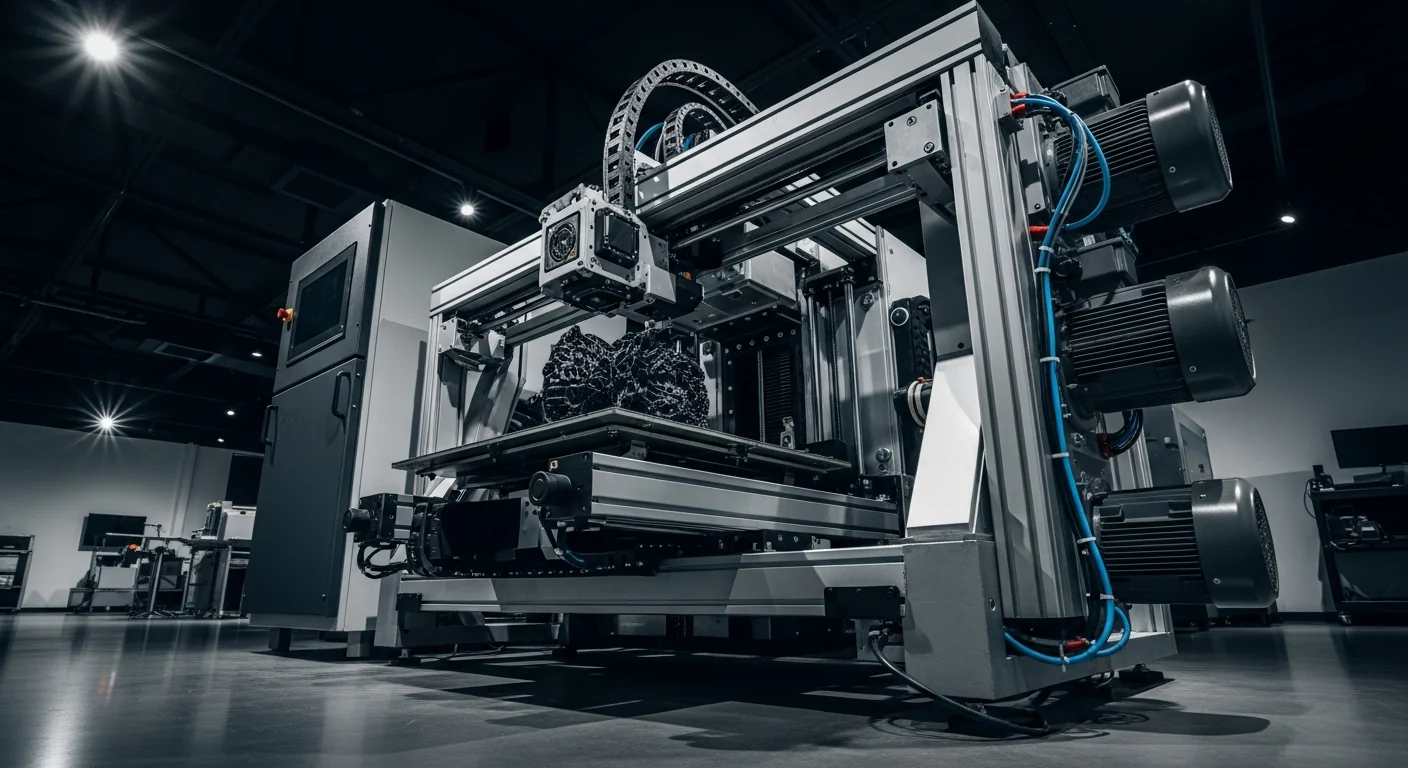
Most comparison sites show you purchase prices and call it a day. That's like buying a car based on the sticker price without factoring in gas, insurance, or maintenance. According to 3DWithUs.com, a benchmark 3DBenchy print costs $0.51 in materials alone—or $3.51 when you include labor. Scale that across hundreds of prints, and material costs dwarf your initial investment. If you're wondering how much does a 3d printer cost when you factor in everything, the answer is far more than the sticker price.
Here's the math no competitor shows you. An entry-level $399 FDM printer requires:
- Filament: $15-45/kg for PLA; specialty filaments cost 3-5 times more according to PrintPal.io
- Nozzle replacements: 15-30 minutes of labor each time, per 3DWithUs.com data
- Build plate replacements: $25-75 depending on material and size
- Electricity: 150-300 watts continuous during prints
- Software subscriptions: some ecosystems charge monthly fees
By contrast, a $1,749 Bambu Lab X1 Carbon uses materials more efficiently, requires fewer manual interventions, and delivers higher reliability. Over 12 months, the "expensive" printer often costs less per successful print.
Resin printer owners get hit the hardest. LCD screens cost $200-500 to replace and last only 2-3 years under normal use, according to 3DWithUs.com. That's your largest recurring expense, and zero comparison sites mention it.
FDM printers aren't immune. Reducing infill from 20% to 10% saves 15-25% on filament per print, and bulk purchasing cuts material costs another 20-40%, per PrintPal.io. These optimizations can slash annual operating costs by up to 55%—but only if you know about them.
Let me be direct: paying cash for equipment is often the wrong financial decision. Here's why smart operators finance instead.
According to IRS Publication 946, businesses can deduct up to $2,560,000 of qualifying equipment purchases in 2026 under Section 179. For that $1,749 Bambu Lab X1 Carbon, you're looking at $367 in immediate tax savings at 21% corporate rate—dropping your effective cost to $1,382. At 32% individual rate, savings jump to $560.
Bonus depreciation adds another 20% first-year deduction on new and used equipment. Combined with Section 179, you're looking at substantial immediate cash flow recovery that makes financing mathematically superior to cash purchases.
The SBA Microloan Program offers up to $50,000—enough to cover virtually any consumer, prosumer, or small print farm setup. For larger operations, SBA 7(a) loans extend to $5,000,000, and SBA 504 loans reach $5,500,000 for real estate plus equipment packages.
Here's what matters: SBA lenders understand manufacturing equipment and offer more flexible terms than traditional banks. They're not confused by your 3D printing business model like some commercial lenders might be.
For a $1,749 printer financed over 48 months:
- A-tier credit (6-10% APR): approximately $34-38/month
- B-tier credit (10-14% APR): approximately $38-42/month
- Startup credit (12-18% APR): approximately $42-50/month
If your printer generates $4,000/month in service revenue at 40% margins—the standard rate according to 3DPrintingCostCalculator.com—you're cash-flow positive from day one while preserving working capital for growth. To understand your full financial picture, explore 3d printer financing options for your business.
For buyers evaluating 3D printers as revenue-generating assets, profit margins matter more than print speed. According to 3DPrintingCostCalculator.com:
- Competitive pricing: 25% margins
- Standard pricing: 40% margins
- Premium/custom work: 60% margins
A $1,749 printer that reliably hits 40% margins pays for itself in under 5 months at modest volumes. The financing payment becomes irrelevant when the equipment generates immediate positive cash flow. You can use our 3d printer cost calculator tool to estimate your specific return. If you're just getting started, check out our complete 3d printer guide for beginners to make sure you choose the right machine for your needs.### Which Printers Generate the Best ROI?Speed and reliability drive profitability. A printer that completes jobs overnight without failures beats a slower model that requires constant supervision. Material versatility also matters—printers that handle specialty filaments command premium pricing but those materials cost 3-5 times more than PLA, per PrintPal.io. Ready to invest? Find a quality 3d printer to buy and start generating revenue.Bambu Lab models ($549-$2,399 range) excel at reliability and multi-material capabilities. Sovol CoreXY printers ($359-$2,000+ range) offer solid value for print farms. Entry-level models work for prototyping but struggle with production volumes.
What no comparison page tells you: workplace 3D printer operations face OSHA requirements. According to NIOSH Publication 2024-103, facilities need minimum 6 air changes per hour for makerspaces using 3D printers. ABS, ASA, and resin printing require dedicated ventilation—that's additional cost and complexity.
Local exhaust ventilation with HEPA filtration achieves 97-99% particle emission reduction but adds $100-500 to your setup cost depending on requirements. For business operations, this isn't optional—it's regulatory compliance that affects your insurance and liability exposure.
Smart 3D printer financing options for your next 3d printer isn't about finding 'any' lender—it's about finding lenders who understand equipment depreciation curves and compete for your business.
Ava analyzes your specific needs: hobbyist upgrading to business use, established shop scaling production, or startup launching a print service. She factors in your target printer models, intended use case, and business structure to match you with lenders who specialize in your exact scenario. Different lenders have different appetites—some love manufacturing equipment, others avoid startups completely.
This is where lender competition saves you money. When 3-4 lenders compete for the same deal, rates typically drop 0.5-2 percentage points. Ava's network includes lenders who understand that a $1,749 3D printer isn't just equipment—it's a revenue-generating asset with 25-60% profit margins according to 3DPrintingCostCalculator.com.
See exactly how each offer affects your cash flow. A-tier borrowers might see 6-10% APR, while B-tier gets 10-14%, and startups face 12-18%. But here's the key: preserving $1,749 in working capital that generates 15-20% ROI elsewhere makes even 12% financing mathematically smart.
You control the decision. No pressure, no obligation, no surprises. The lender handles underwriting and approval—EquipFlow just makes the introductions that save you money.
Smart 3D printer financing options for your next 3d printer isn't about finding 'any' lender—it's about finding lenders who understand equipment depreciation curves and compete for your business.
Ava analyzes your specific needs: hobbyist upgrading to business use, established shop scaling production, or startup launching a print service. She factors in your target printer models, intended use case, and business structure to match you with lenders who specialize in your exact scenario. Different lenders have different appetites—some love manufacturing equipment, others avoid startups completely.
This is where lender competition saves you money. When 3-4 lenders compete for the same deal, rates typically drop 0.5-2 percentage points. Ava's network includes lenders who understand that a $1,749 3D printer isn't just equipment—it's a revenue-generating asset with 25-60% profit margins according to 3DPrintingCostCalculator.com.
See exactly how each offer affects your cash flow. A-tier borrowers might see 6-10% APR, while B-tier gets 10-14%, and startups face 12-18%. But here's the key: preserving $1,749 in working capital that generates 15-20% ROI elsewhere makes even 12% financing mathematically smart.
You control the decision. No pressure, no obligation, no surprises. The lender handles underwriting and approval—EquipFlow just makes the introductions that save you money.
Smart 3D printer financing options for your next 3d printer isn't about finding 'any' lender—it's about finding lenders who understand equipment depreciation curves and compete for your business.
Ava analyzes your specific needs: hobbyist upgrading to business use, established shop scaling production, or startup launching a print service. She factors in your target printer models, intended use case, and business structure to match you with lenders who specialize in your exact scenario. Different lenders have different appetites—some love manufacturing equipment, others avoid startups completely.
This is where lender competition saves you money. When 3-4 lenders compete for the same deal, rates typically drop 0.5-2 percentage points. Ava's network includes lenders who understand that a $1,749 3D printer isn't just equipment—it's a revenue-generating asset with 25-60% profit margins according to 3DPrintingCostCalculator.com.
See exactly how each offer affects your cash flow. A-tier borrowers might see 6-10% APR, while B-tier gets 10-14%, and startups face 12-18%. But here's the key: preserving $1,749 in working capital that generates 15-20% ROI elsewhere makes even 12% financing mathematically smart.
You control the decision. No pressure, no obligation, no surprises. The lender handles underwriting and approval—EquipFlow just makes the introductions that save you money.
Most buyers either pay cash (and lose opportunity cost) or get declined by generic Buy Now Pay Later at checkout. Here's why lender competition delivers better outcomes.
When multiple lenders compete for your deal, rates drop. It's simple economics. Ava's network includes lenders who specialize in manufacturing equipment and understand that 3D printers generate revenue. They're not confused by your business model like generic consumer lenders might be.
Compare this to clicking "finance" at checkout and hoping Affirm approves you. No competition, no rate shopping, no recourse if you're declined. That's not financing—that's hoping.
Some lenders love equipment deals under $5,000. Others specialize in SBA programs for larger setups. Ava knows which lenders approve 3D printer purchases, which ones offer the most competitive terms, and which ones understand manufacturing cash flow cycles.
This matters because banks reject deals they don't understand. A lender who's never financed a 3D printing operation might decline your application simply because they can't evaluate the business model.
Every day without proper equipment costs money. If you're currently outsourcing prints at $0.50-2.00 per gram when you could produce them for $0.10-0.30, the delay costs real cash flow. Fast matching means fast decisions and faster equipment deployment.
You're under zero obligation to accept any offer. Check what you qualify for, compare multiple lenders, then decide. The worst outcome is learning you have better financing options than you thought.
Most buyers either pay cash (and lose opportunity cost) or get declined by generic Buy Now Pay Later at checkout. Here's why lender competition delivers better outcomes.
When multiple lenders compete for your deal, rates drop. It's simple economics. Ava's network includes lenders who specialize in manufacturing equipment and understand that 3D printers generate revenue. They're not confused by your business model like generic consumer lenders might be.
Compare this to clicking "finance" at checkout and hoping Affirm approves you. No competition, no rate shopping, no recourse if you're declined. That's not financing—that's hoping.
Some lenders love equipment deals under $5,000. Others specialize in SBA programs for larger setups. Ava knows which lenders approve 3D printer purchases, which ones offer the most competitive terms, and which ones understand manufacturing cash flow cycles.
This matters because banks reject deals they don't understand. A lender who's never financed a 3D printing operation might decline your application simply because they can't evaluate the business model.
Every day without proper equipment costs money. If you're currently outsourcing prints at $0.50-2.00 per gram when you could produce them for $0.10-0.30, the delay costs real cash flow. Fast matching means fast decisions and faster equipment deployment.
You're under zero obligation to accept any offer. Check what you qualify for, compare multiple lenders, then decide. The worst outcome is learning you have better financing options than you thought.
Most buyers either pay cash (and lose opportunity cost) or get declined by generic Buy Now Pay Later at checkout. Here's why lender competition delivers better outcomes.
When multiple lenders compete for your deal, rates drop. It's simple economics. Ava's network includes lenders who specialize in manufacturing equipment and understand that 3D printers generate revenue. They're not confused by your business model like generic consumer lenders might be.
Compare this to clicking "finance" at checkout and hoping Affirm approves you. No competition, no rate shopping, no recourse if you're declined. That's not financing—that's hoping.
Some lenders love equipment deals under $5,000. Others specialize in SBA programs for larger setups. Ava knows which lenders approve 3D printer purchases, which ones offer the most competitive terms, and which ones understand manufacturing cash flow cycles.
This matters because banks reject deals they don't understand. A lender who's never financed a 3D printing operation might decline your application simply because they can't evaluate the business model.
Every day without proper equipment costs money. If you're currently outsourcing prints at $0.50-2.00 per gram when you could produce them for $0.10-0.30, the delay costs real cash flow. Fast matching means fast decisions and faster equipment deployment.
You're under zero obligation to accept any offer. Check what you qualify for, compare multiple lenders, then decide. The worst outcome is learning you have better financing options than you thought.
Most buyers either pay cash (and lose opportunity cost) or get declined by generic Buy Now Pay Later at checkout. Here's why lender competition delivers better outcomes.
When multiple lenders compete for your deal, rates drop. It's simple economics. Ava's network includes lenders who specialize in manufacturing equipment and understand that 3D printers generate revenue. They're not confused by your business model like generic consumer lenders might be.
Compare this to clicking "finance" at checkout and hoping Affirm approves you. No competition, no rate shopping, no recourse if you're declined. That's not financing—that's hoping.
Some lenders love equipment deals under $5,000. Others specialize in SBA programs for larger setups. Ava knows which lenders approve 3D printer purchases, which ones offer the most competitive terms, and which ones understand manufacturing cash flow cycles.
This matters because banks reject deals they don't understand. A lender who's never financed a 3D printing operation might decline your application simply because they can't evaluate the business model.
Every day without proper equipment costs money. If you're currently outsourcing prints at $0.50-2.00 per gram when you could produce them for $0.10-0.30, the delay costs real cash flow. Fast matching means fast decisions and faster equipment deployment.
You're under zero obligation to accept any offer. Check what you qualify for, compare multiple lenders, then decide. The worst outcome is learning you have better financing options than you thought.
.png)